

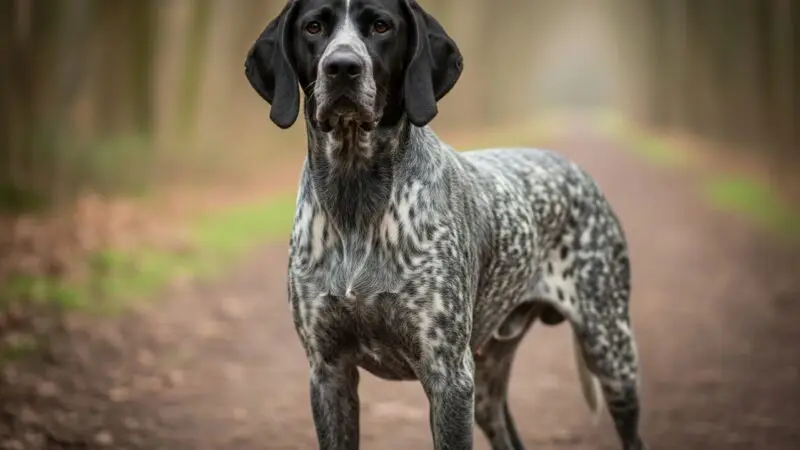
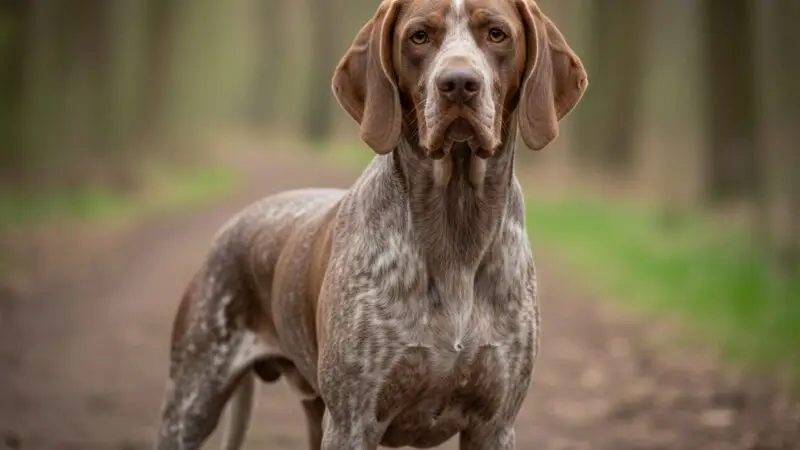

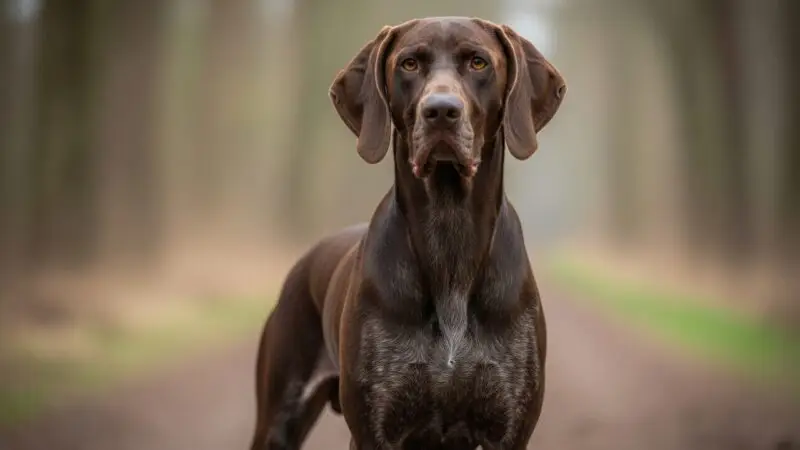

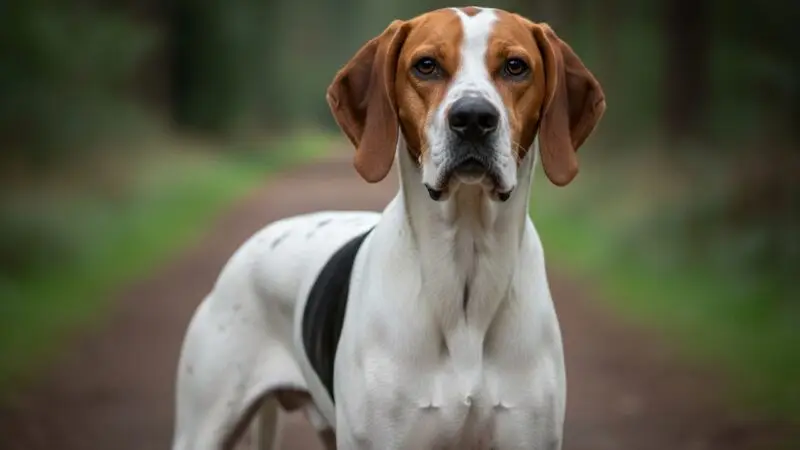
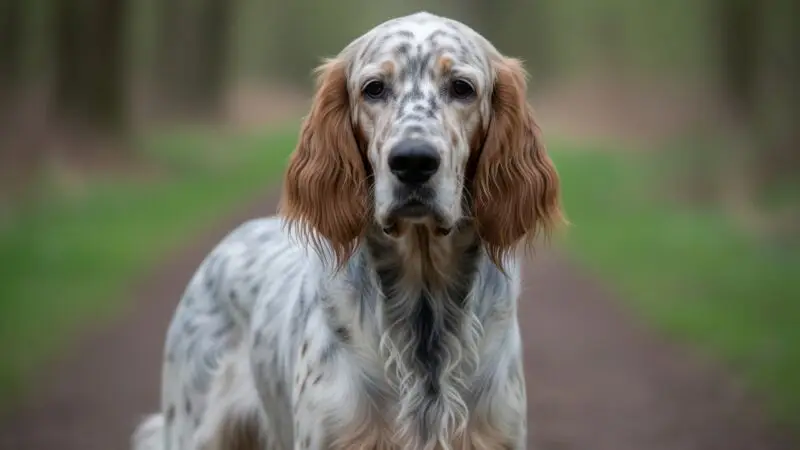
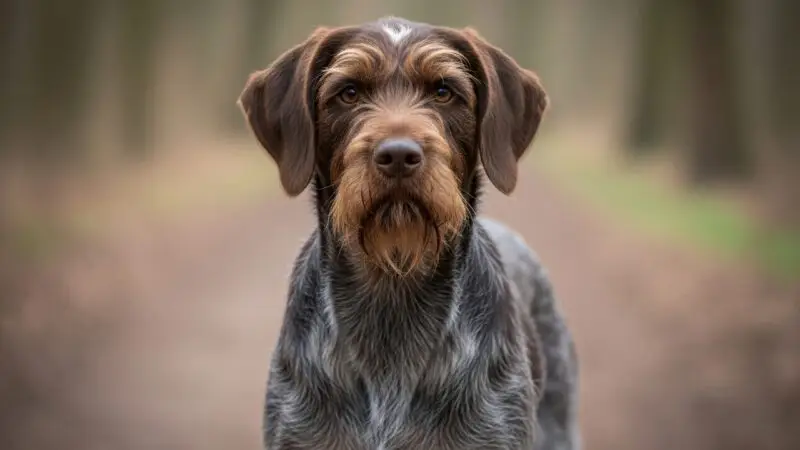
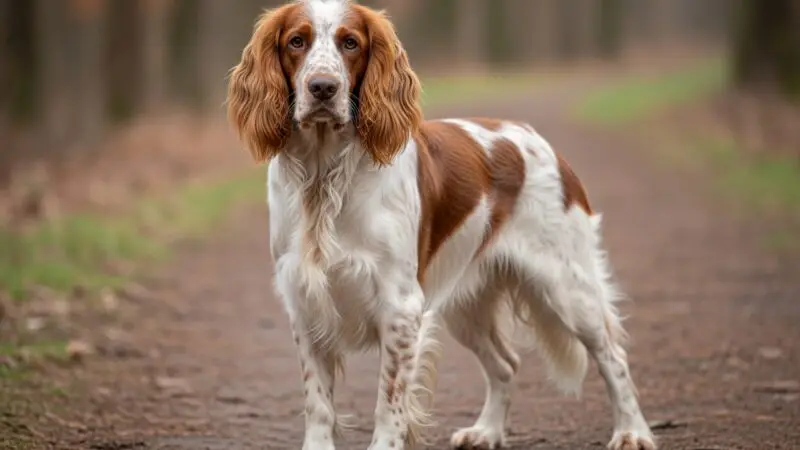
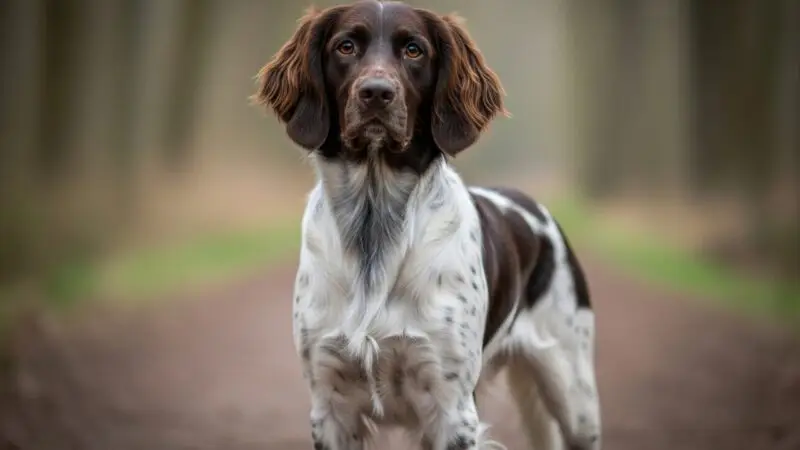


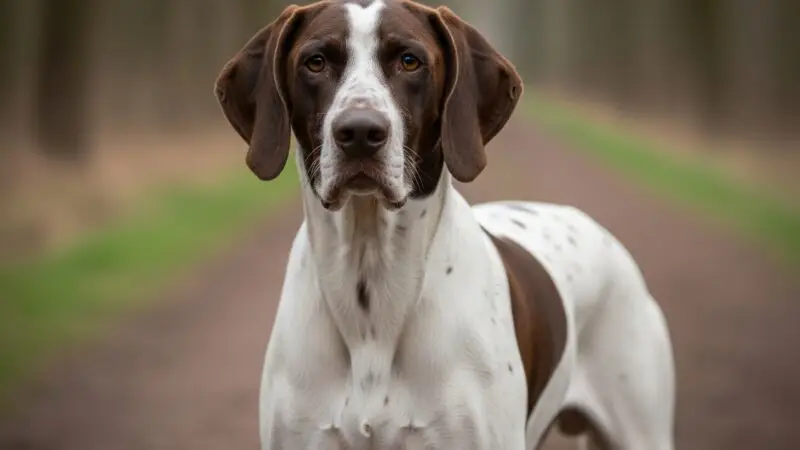
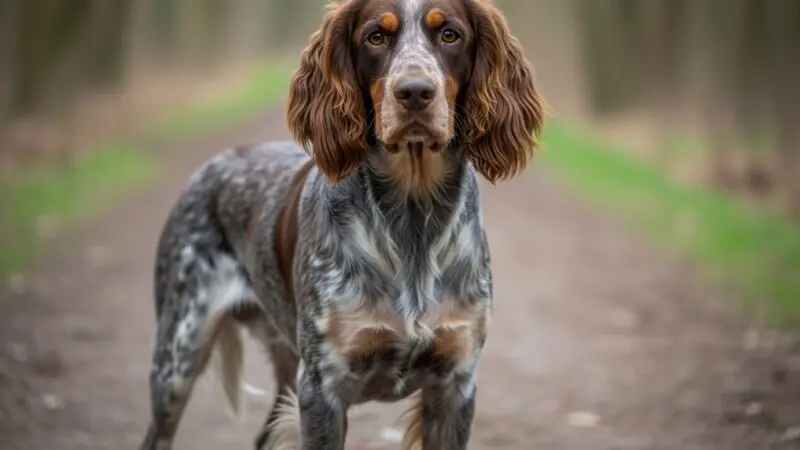

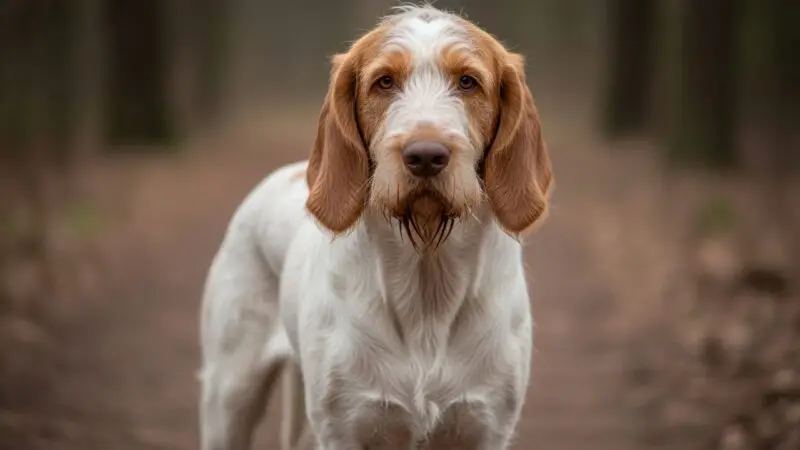
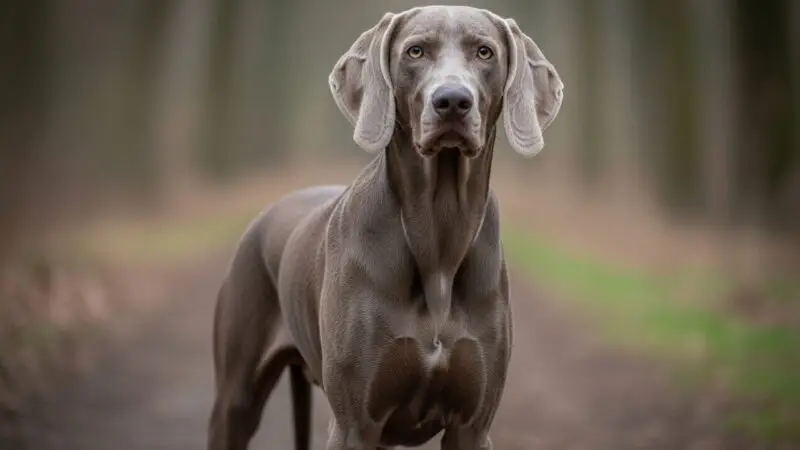
What makes pointing dogs special
Pointing dogs belong to the most widely used and versatile types of hunting dog worldwide. Their distinctive feature lies in an ability that is hardly or not at all characteristic of other groups of hunting dogs: pointing. The dog tracks down the game, stops, remains motionless and silent – thus giving the hunter time to approach and shoot. This behaviour is neither trained obedience nor instinctive hunting; it is a genetically fixed pause in the hunting sequence, a moment of controlled restraint that reflects cooperation with humans like hardly any other dog behaviour.
Continental and British pointing dogs
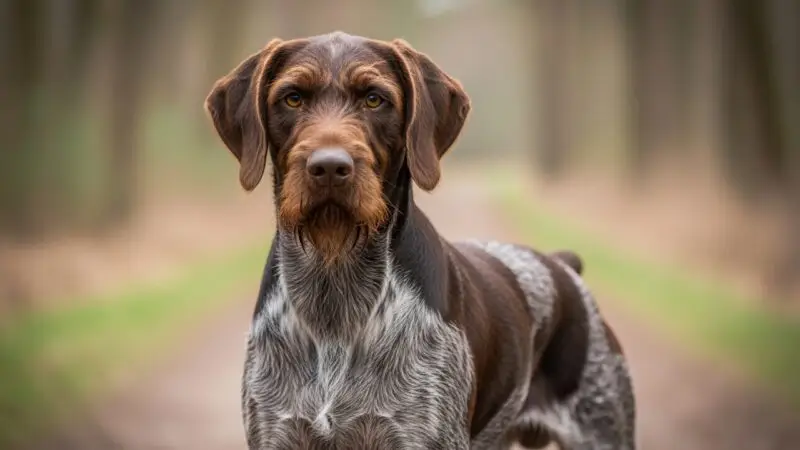
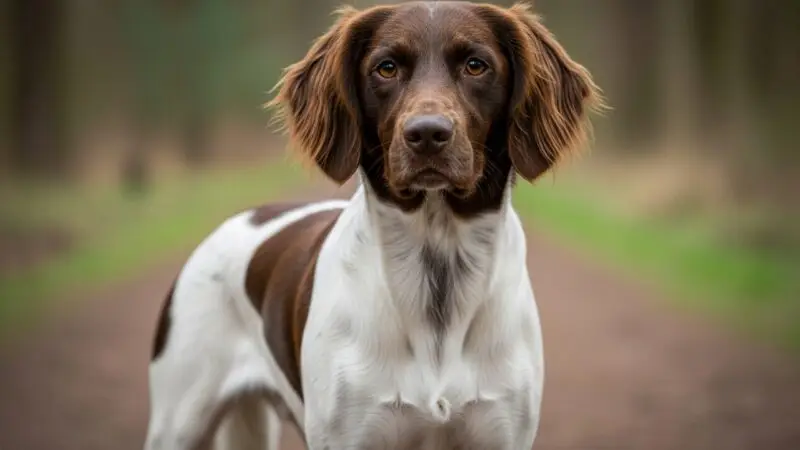
The FCI divides Group 7 into two sections: Continental Pointing Dogs (Section 1) and British and Irish Pointing Dogs (Section 2). Continental pointing dogs – including German Shorthaired Pointer, German Wirehaired Pointer, Weimaraner, Braque Français and Vizsla – are classically versatile: they hunt, point, indicate water game and retrieve. British Pointers and Setters were specialised for a purer pointing function and show less versatility, but greater perfection in pure pointing.
Well-known breeds and their profiles
German Shorthaired Pointer
The German Shorthaired Pointer is the most frequently bred continental pointing dog breed worldwide; Germany is the country that sets the standard. It is enduring, cooperative, water-resistant and retrieves reliably. In everyday family life, with sufficient stimulation, it is a sociable dog – but its drive to work demands several hours of active enrichment every day. If under-stimulated, it develops repetitive behaviours or becomes destructive.
Weimaraner
The Weimaraner is the pointing dog with the strongest bond to people. It is known as a “shadow dog” because it follows its key persons at every step – which makes it a close family partner, but also prone to separation anxiety. Weimaraners without meaningful enrichment develop anxiety disorders that manifest in destructive behaviour. As sporting partners in agility or versatility trials, they show their best sides.
Vizsla
The Hungarian Vizsla is rarer in D-A-CH than the German Shorthaired Pointer or Weimaraner, but appreciated by experts for its balanced character and robust health. It is lighter than the German pointing dogs, faster and less stubborn – which makes it somewhat more accessible for first-time owners with an interest in hunting dogs, but does not make it a beginner’s dog.
English Setter and Irish Setter
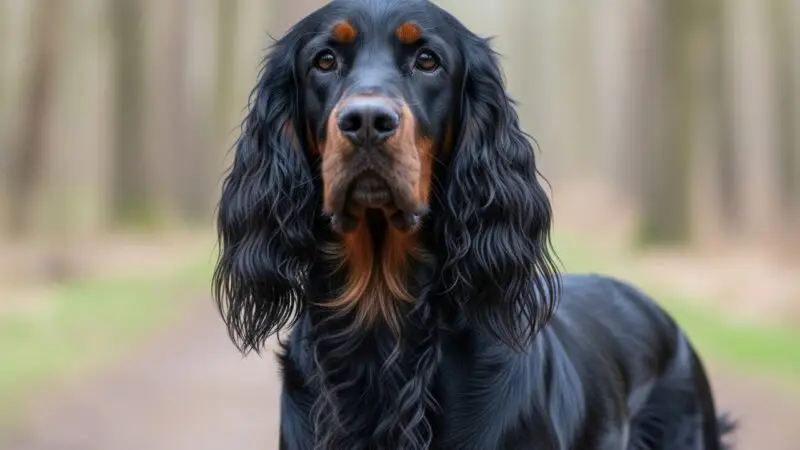
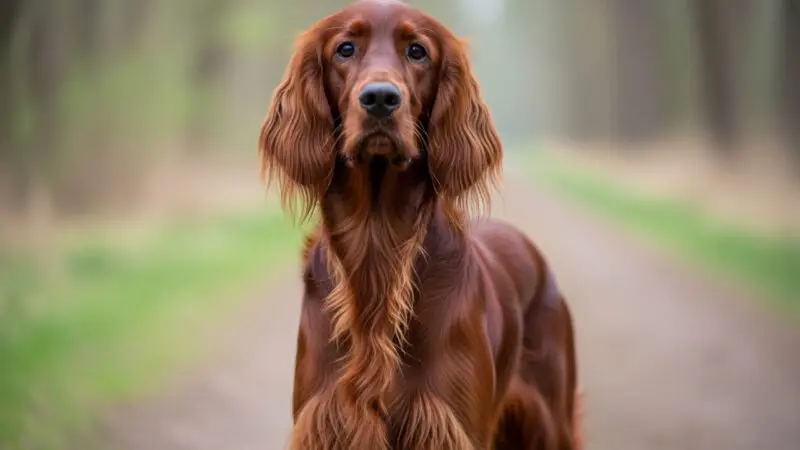
Setters are the most aesthetically striking pointing dogs: long silky coat, elegant movement, impressive appearance. The Irish Setter has a history as a trend object behind it that led to losses in quality – show lines differ considerably from working lines in character and health. An Irish Setter from a good working line is a lively, cheerful dog; a show animal can be more nervously unstable and have greater health burdens.
Common mistakes – and what really helps
You do not buy pointing dogs because of their elegance. The Weimaraner is one of the most photographed dog breeds at all – which has led to expectations that have little to do with the reality of keeping them. A Weimaraner that is left alone for five hours and goes around the block twice a day is a Weimaraner in crisis – not a dog that “simply does what it wants”.
What really helps: using pointing dogs in activities that demand their full profile. Hunting training, retrieving work, tracking work or versatility trials offer enough depth. Bikejoring or canicross are also suitable alternatives for highly enduring pointing dogs.
Health and breeding for harmful traits (Qualzucht)
In comparison within the FCI, pointing dogs count among the healthiest groups. Breeding for harmful traits (Qualzucht) characteristics are rare in the group – their function as hunting dogs has long protected breeding from optical exaggeration. The problem lies more in the split between working and show lines: Irish and English Setters have undergone partly neurotypical changes through show breeding, which manifest in increased startle response and reduced resilience.
In German Wirehaired Pointers and German Shorthaired Pointers, HD and elbow dysplasia are the relevant hereditary diseases; reputable breeders have both parent dogs examined radiologically. The Weimaraner has an increased predisposition to gastric torsion (bloat) – a life-threatening disease that occurs particularly frequently in large, deep-chested dogs.
When do you need professional support?
Pointing dogs with pronounced separation anxiety, which manifests in destructiveness or extreme vocalisation, require behaviourally oriented support – not classic obedience courses. Anyone who wants to train their pointing dog for hunting will find certified hunting dog guides and training areas in our directory.
Frequently asked questions
Can you keep a pointing dog without hunting?
Yes – but only with a clear enrichment concept that channels the prey drive. Mantrailing, tracking work, retrieving, agility and canicross are sensible alternatives. A pointing dog without any drive-based work is chronically under-stimulated, even if it runs for hours every day.
What is the difference between German Shorthaired Pointer and German Wirehaired Pointer?
The primary distinguishing feature is the coat: the short-haired variety has a smooth, short coat; the wire-haired variety has a rough, wiry coat with a beard and eyebrows. In terms of character, the wire-haired variety is considered somewhat more independent and hardy, while the short-haired variety is somewhat more cooperative. Both are versatile hunting dogs with a similar working profile.
How much exercise does a Weimaraner need?
Weimaraners require at least 2–3 hours of active enrichment every day, a significant portion of which should be in the form of structured work. They are not purely running dogs – mental challenge is just as important as physical stimulation. Keeping a Weimaraner in the city is possible, but without daily training it requires significantly more effort than most other breeds.