
01Summary
In a paragraph
If you only have 30 seconds.
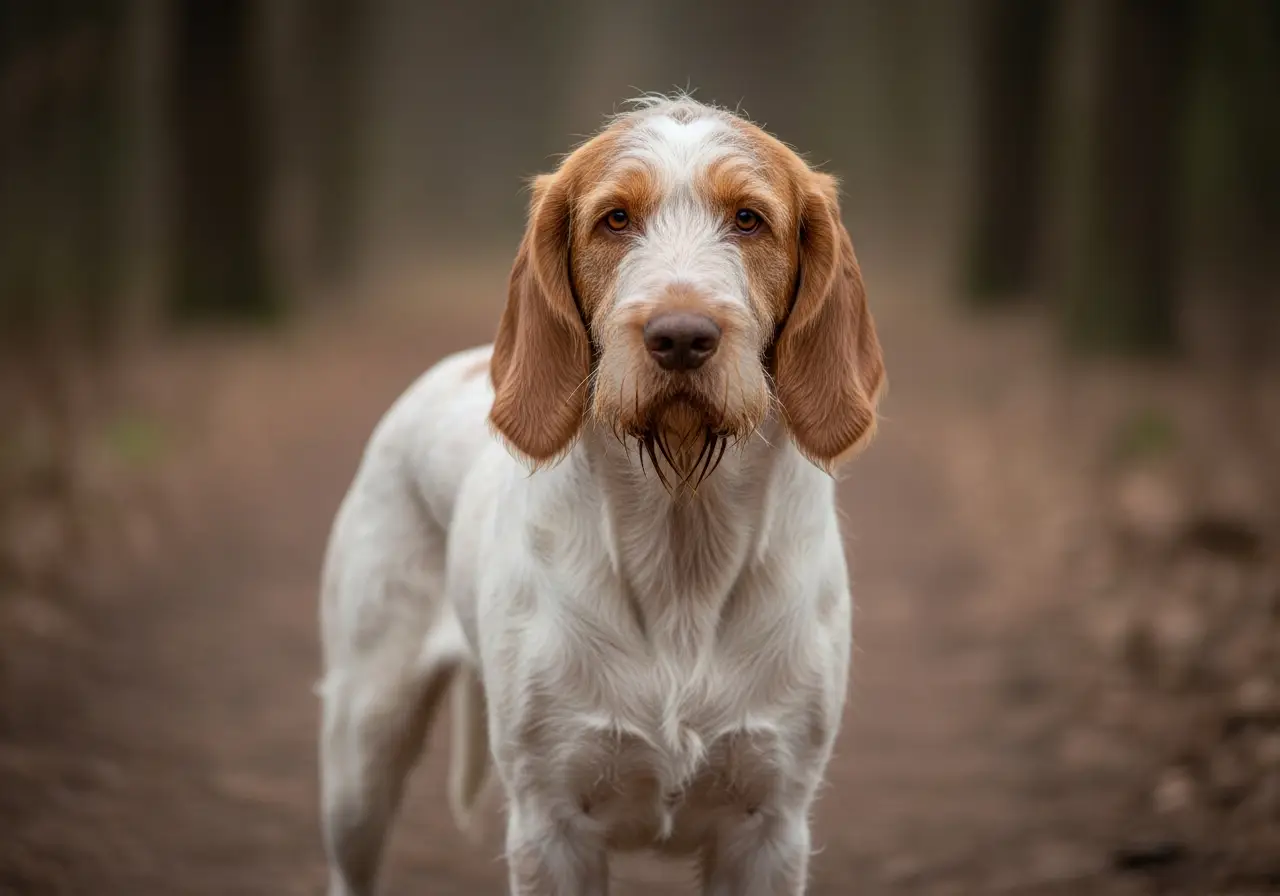
The Spinone Italiano is a wire-haired, enduring pointing dog from northern Italy with a calm nature and pronounced prey drive. Its gruff facial expression belies its sensitivity. Anyone keeping it needs 90 to 120 minutes of active exercise daily, consistent nose work and a clear daily structure. A dog for nature-oriented, experienced owners, not a sofa companion.
02Introduction
What makes the Spinone Italiano (Italian Griffon) special
Spinone Italiano: the gentle giant among pointing dogs, wire-haired and enduring with a bear-like gaze but a soft character
03Profile
Key facts and suitability
- Origin
- Italien
- Original purpose
- Hunting game birds
- FCI
- No. 165 · Group 7 · Section 1.3
- height at the withers
- 60–70 cm
- Weight
- 28–37 kg
- Life expectancy
- 12–14 Years
- Coat type
- Wire-haired
- Minimum exercise
- 90 min/day
- Puppy price
- 1'500–2'500 CHF
- Waiting period
- 5 months
- Sports
- Retrieving Swimming Scent work
04Temperament
How the Spinone Italiano (Italian Griffon) shows up in everyday life
When coming home, the Spinone greets its owner calmly and without excessive haste; a quick sniff, a wagging tail, then it lies down again. This subdued temperament in the house tempts one to underestimate its actual needs.
Internally, what the dog needs: The need for social contact is high. The Spinone is designed for a close bond with its primary caregiver, not for independence. Long periods of being left alone exceeding four hours are stressful for it. Mental work in the form of nose work, mantrailing, or hunting-related training is not a luxury but a daily necessity. Its exercise requirement corresponds to that of an active gundog: 90 to 120 minutes of structured activity daily, not just a casual walk.
Externally, how the dog reacts to stimuli: The Spinone shows an open to neutral attitude towards strangers. It is not a protection dog nor suspicious; a visitor is sniffed, assessed, and accepted. However, this openness does not mean that it reacts calmly to every stimulus. In open country, the prey drive kicks in: a bird taking flight or a scent trail activates pointing behaviour immediately. Anyone who walks the Spinone off-leash in unsecured terrain must expect a dog that follows its nose, regardless of recall.
In everyday life with children, it shows patience as long as the child acts calmly. Toddlers who touch it unpredictably can overwhelm it, not out of aggression but out of sensitivity. These two poles (calm bond indoors, active prey drive outdoors) define its character more precisely than any list of adjectives.
05Needs
What this breed needs daily
The Spinone Italiano requires at least 90 to 120 minutes of active exercise daily. This does not refer to the calm evening walk; it means sessions that challenge its body and nose: terrain runs, nose work, retrieving exercises, or hunting-related activities such as tracking blood trails or mantrailing.
Mental stimulation is equal in importance to physical exercise. The Spinone has been bred over centuries as a thinking gundog that makes independent decisions in the terrain. Without mental challenges, frustration patterns arise: excessive engagement with odours in the apartment, restlessness, or destructiveness.
The bond with the primary caregiver is deep. The Spinone does not work for strangers; it works for its owner. This means: consistency in handling is crucial. Changing caregivers or unclear rules confuse it more than other breeds.
Being left alone is possible but must be built up gradually. Four hours are considered a realistic upper limit for a well-conditioned dog. Beyond that, the stress level rises measurably.
A rural or at least suburban environment with access to open land is advantageous. Keeping in an apartment only works if sufficient daily exercise outdoors is ensured; a garden alone does not replace active stimulation.
Training should be calm, clear, and consistent. The Spinone reacts sensitively to pressure and harsh tones. Positive reinforcement combined with clear boundaries yields the best results. Impulse control training and a reliable recall are mandatory components of basic training.
Exercise
High
mental work
A lot
Social needs
High
training
Medium
06Sport & Mental and Physical Stimulation
What sports the Spinone Italiano (Italian Griffon) is suited for
Realistic in terms of physiology and genetics – not every breed suits every sport.
Structurally and physiologically suitable: Suitable for mantrailing, dummy work and tracking · CaniCross / bikejoring possible.
07Quick Check
08Suitability
Who this breed is suitable for – and who it isn't
✓Matches
The Spinone Italiano suits owners who can plan 90 to 120 minutes of active exercise outdoors daily, not as an occasional exception but as part of a structured routine. Access to open land, forest, or fields is clearly advantageous in this regard.
Suitable owners are those with experience in handling dogs with strong drives. Anyone who has already handled a hunting dog or another pointing breed understands the dynamic between bonding and prey drive. Owners keen on dog sports, actively practising nose work, mantrailing or tracking, will also find a motivated partner in the Spinone.
Families with children of school age are suitable provided daily life offers sufficient exercise and clear rules. The Spinone tolerates calm children well, provided the parents consistently take responsibility for leadership.
Owners who spend a lot of time at home or work from home benefit from its strong bond orientation. It needs closeness and continuity, which suits owners who actively integrate their dog into daily life.
Individuals with a nature-oriented lifestyle (hikers, runners, hunters) are also suitable owners, provided they respect the sensitive side of the dog and refrain from harsh training methods.
×Doesn't match
The Spinone Italiano is not suitable for owners who can offer less than 90 minutes of active exercise daily. Anyone who is heavily committed professionally, has no access to open land or regularly leaves the dog alone for more than four hours will be permanently overwhelmed by this dog.
First-time owners without prior experience with dogs with strong drives should question whether a Spinone is right for them. Its calm nature tempts one to underestimate its prey drive; anyone who does not actively channel this drive will end up with a dog that makes its own decisions in open land and ignores the recall.
Owners looking for a dog content with a short city walk are making the wrong choice with the Spinone. Anyone who values a dog that copes easily with changing key people or in changing environments will be disappointed: The Spinone bonds deeply and reacts to instability with stress.
Anyone who acquires a Spinone as a cuddle dog because of its "gentle gaze" while ignoring the internal axis (high need for social contact, high exercise requirement, pronounced mental work) is doing neither themselves nor the dog a favour. The external calmness of the Spinone is not a sign of low requirements, but an expression of its balanced temperament under good keeping conditions.
10Line reality
Show line, working line, breeder market
The Spinone Italiano is today primarily bred in two directions of use: as a gundog and as a companion dog with an exhibition orientation. A line division as pronounced as that in the German Shorthaired Pointer or the Labrador Retriever does not exist in the Spinone; the populations are too small, and breeding is too manageable.
Nevertheless, differences exist. Dogs from active hunting breeding, predominantly originating from Italy, generally show a stronger work drive, higher endurance in the terrain, and more pronounced pointing behaviour. They are more demanding in terms of workload for owners without a hunting background.
Dogs from companion and exhibition breeding, which are more frequently found in Germany and Switzerland, often show a slightly calmer basic temperament; however, the prey drive remains typical of the breed and must not be underestimated.
Anyone who wishes to keep a Spinone as a pure companion dog without hunting activities should explicitly ask the breeder about the origin and purpose of the parent animals. A dog from an active hunting line requires a different workload concept than a dog from companion breeding, even if both are hardly distinguishable externally.
Regionally, the breed is most prevalent in Northern Italy. In the DACH region, there are few but committed breeders who are organised through the Spinone Italiano e.V.
11Health · Reality
What you need to plan for medically with your Spinone Italiano (Italian Griffon)
According to information from the Spinone Italiano e.V. and consistent breeder reports, the life expectancy of the Spinone Italiano is 10 to 12 years. Individual dogs reach 13 years, which is considered above average for a breed of this size.
Hip dysplasia (HD) is the most frequently documented orthopaedic disease in the Spinone. Large-framed pointing dogs generally have an increased risk of HD. Reputable breeders disclose HD X-ray findings of the parent dogs; a puppy without this documentation is a risky purchase. Elbow dysplasia (ED) occurs less frequently but should also be checked.
Cerebellar ataxia is documented as a hereditary neurological disease in the Spinone. It manifests as coordination disorders and usually occurs in puppy or young dog age. A DNA test for the known gene defect is standard with reputable breeders. Parent dogs should be tested as "clear" or "carrier" (not "affected").
Overweight poses a real risk in the Spinone, especially if the exercise requirement is not met. An adult male dog with an ideal weight of 37 kg that regularly weighs 2 to 3 kg too much measurably stresses joints and the cardiovascular system.
Preventive examinations: HD/ED X-rays are recommended from the 12th month of life. Eye and ear checks belong to regular preventive care, as the dense fur around ears and eyes retains moisture. Annual blood count checks from the seventh year of life are advisable.
12Structured data
Health by the numbers
Prone to diseases
Hip dysplasia Cerebellar cortical degeneration
Recommended health tests
Hip X-rays Neurological examination
13Myths ↔ Reality
What is often said incorrectly about this breed
Five myths, five realities, five sources.
“The Spinone is a cosy sofa dog that needs little exercise.
Its calm nature at home masks its actual exercise needs. The FCI standard describes it as an endurance-driven hunting dog with high work motivation. Without 90 to 120 minutes of active exercise and nose work daily, it develops frustration and stress behaviour.
“Its gentle nature makes it an uncomplicated beginner’s dog.
The Spinone reacts sensitively to pressure and inconsistent guidance. Its strong prey drive, particularly pointing and retrieving behaviour, requires owners to have experience with high-drive dogs. Without clear structure and impulse control training, typical problem behaviours such as uncontrolled bolting in open fields arise.
“Wire-haired dogs are easy to care for because the coat doesn’t require much effort.
The wiry double coat of the Spinone requires regular trimming, not clipping. If the coat is clipped instead of trimmed, its texture and protective function are permanently altered. Additionally, the beard and eyebrows collect dirt and moisture, which can lead to skin irritation without regular cleaning.
“The Spinone gets along with all dogs without any problems.
The Spinone generally shows a balanced basic attitude towards conspecifics. However, this does not rule out socialisation deficits. Males may show dominant behaviour towards other males. Solid socialisation from puppyhood remains essential; no breed exhibits universal compatibility.
“Hip dysplasia is not a relevant issue in the Spinone.
Large-framed pointing dogs, including the Spinone, have a statistically increased risk of HD. Reputable breeders X-ray parent animals and disclose findings. Anyone who cannot view the HD results of the parents at the time of purchase should regard this as a warning signal. Cerebellar ataxia is also documented as a hereditary disease in the Spinone.
14animal welfare
The animal welfare perspective
Breeder market, designer versions, animal shelter reality — what no one writes in the puppy ad.
The Spinone Italiano is a rare breed in the DACH region, which partly protects it from the fate of popular dog breeds but creates its own risks.
Backyard breeder market: Because the Spinone is rare and demand for puppies is constant, a small but active grey market exists. Offers from backyard breeding operations in Eastern Europe occasionally appear on German classifieds portals, often without health certificates, without club membership, with immediate availability. The lower price (under 800 euros) is not a bargain, but a signal for missing precautionary examinations and inadequate socialisation.
Breeding and keeping-related problems: The Spinone is not a breed with welfare-compromising traits in the strict sense. Its exterior is functional, its coat protective, its proportions suitable for work. The main problem lies in misjudging the keeping requirements: anyone looking for a calm, large dog while ignoring the prey drive and exercise needs creates living conditions that cause lasting harm to the dog. Under-stimulation in a pointing dog of this endurance is no trivial matter; it leads to chronic stress.
Cerebellar Ataxia as a breeding problem: The known genetic defect can be controlled through DNA tests. Breeders who do not provide ataxia test results are acting negligently. Buyers have the right to demand this proof.
Adoption as an equally valid option: In the DACH region, Spinoni are rare in animal welfare organisations. Anyone willing to search internationally, particularly through Italian animal welfare organisations or breed rescue networks, occasionally finds adult dogs with a known character. An adult Spinone from reputable adoption is not a stopgap solution, but an informed decision: the drive profile is assessable, and health is already partially documented. For experienced owners, this can be a clear advantage over a puppy.
15Costs · Transparency
What this breed realistically costs
A puppy from a reputable breeder recognised by the VDH or SKG costs between 1,500 and 2,200 euros in the DACH region. Offers significantly below this often come from backyard breeding operations without health certificates.
The annual living costs for an adult Spinone (approx. 32–37 kg) realistically lie between 2,000 and 3,500 euros, depending on food quality, grooming effort and health status:
- Food: 600 to 1,200 euros/year depending on the type of food (dry, wet or raw feeding)
- Grooming/trimming: 200 to 400 euros/year with a professional trimmer, recommended 2–3 times per year
- Vet (basic care): 300 to 600 euros/year for prevention, vaccinations, parasite prophylaxis
- Vet (orthopaedics/emergency): HD treatment or ataxia investigation can cost 500 to 3,000 euros; pet insurance (approx. 60 to 120 euros/month) is advisable to plan for this breed
Dog training school and nose work courses: 300 to 600 euros in the first year. Accessories (lead, collar, transport box, bowl): one-off 200 to 400 euros.
Total costs over the lifespan (10–12 years) realistically lie between 25,000 and 45,000 euros, excluding extraordinary vet costs.
16Puppy search
What you need to consider when choosing a breeder
- Reputable breeders of the Spinone Italiano are rare in the DACH region.
- Waiting times of a year or more are not exceptional.
- Anyone looking for a puppy should inform themselves early on with the Spinone Italiano e.V.
- (Germany) or via the SKG (Switzerland); both associations maintain breeder lists with VDH or SKG recognition.
- Characteristics of reputable breeding: parent animals with HD X-ray results and documented ataxia test (Cerebellar Ataxia is known as a hereditary disease in the Spinone), puppies are given away no earlier than eight weeks of age, the breeder asks questions about the living conditions and shows the mother interacting with the puppies.
- A reputable breeder does not quote prices without prior discussion and does not pressure for a quick purchase.
- Beware of offers without association membership, without health certificates of the parents or with immediate availability.
- The Spinone is so rare in Germany and Switzerland that a puppy available immediately without a waiting list represents a warning signal.
- Placement via animal welfare organisations is rare for the Spinone, but not excluded.
- International animal welfare contacts, particularly from Italy, can represent an equivalent option.
- Anyone taking on an adult dog gains the advantage of a character and drive profile that can already be assessed.
FAQ
Frequently asked questions about the Spinone Italiano (Italian Griffon)
Is Spinone Italiano (Italian Griffon) suitable for beginners?
Spinone Italiano (Italian Griffon) is considered suitable for first-time dog owners.
Is Spinone Italiano (Italian Griffon) a family dog?
Spinone Italiano (Italian Griffon) is considered suitable for families with good socialisation and species-appropriate care.
How much exercise does Spinone Italiano (Italian Griffon) need?
At least around 90 minutes of exercise per day.
Does Spinone Italiano (Italian Griffon) suit an apartment?
With enough exercise and enrichment, Spinone Italiano (Italian Griffon) can also be kept in an apartment.
What is the size and weight of Spinone Italiano (Italian Griffon)?
Fully grown, Spinone Italiano (Italian Griffon) reaches about 60–70 cm at the withers and weighs around 28–37 kg.
What is the life expectancy of Spinone Italiano (Italian Griffon)?
The life expectancy of Spinone Italiano (Italian Griffon) is approximately 12–14 years.
Which diseases are common in Spinone Italiano (Italian Griffon)?
Hip dysplasia Cerebellar cortical degeneration
17Breed clubs
Official breed clubs in DACH
19Related
Similar breeds – and their differences
You might also be interested in
Participate
Do you have a good photo of your Spinone Italiano (Italian Griffon)?
We are looking for expressive images for our breed profiles. Submit yours; the editorial team reviews every submission before publication.
Does this breed suit you?
Gentle pointing dog with dry humour – patient and very suitable for families with access to nature