
Senior dog: the changes you get used to
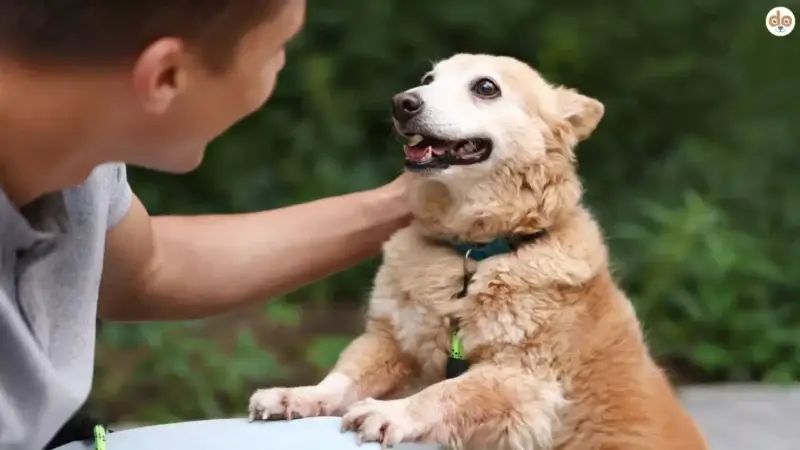
From about the seventh to tenth year of life, what your dog needs changes. Less exercise, more observation, different priorities at the vet. We accompany this phase consciously, no drama, but also no pretending.
Content
- What is really happening now
- Seven sentences almost everyone says
- What might be behind it
- What you can control
- What matters now
- And for you as owner
- Why we take this phase so seriously
- Frequently asked questions about senior dogs
- Where you read on next
- Guides for this phase
- When the time comes: Why early preparation for saying goodbye is important
- Farewell: Accompanying Your Dog on the Final Stage Until Death
- Farewell with Dignity: How to Make Your Dog’s Final Journey Easier
- A question of the heart: When should you put a dog down?
- Common Dog Diseases: The Lipoma (Fatty Tumour)
- Terms and definitions
Old age comes in small steps, and for each one you have an explanation.
You notice it first when getting up. He needs two attempts, shakes himself later than usual, takes the first steps cautiously. On the stairs, he hesitates briefly. Before jumping into the car, he waits until you help him.
For each of these observations, you have a plausible explanation. He did a lot yesterday. The floor is slippery. He has simply gotten older.
That is exactly what makes this phase difficult. Your dog does not age on a Thursday in May, but in micro-steps over months, and you are there for each one. Those who watch daily see change the worst.
Much of what takes quality of life from a senior dog is treatable. Someone just needs to notice.
Two to three percent.
That many dogs receive an osteoarthritis diagnosis per year.
X-rays show up to 57 percent of those over eight with joint complaints have changes.
Sources: VetCompass (455,557 dogs) · Roitner et al., The Veterinary Journal 2024
What is really happening now
When a dog becomes a senior depends mainly on its size, and the range is wide.
- Small breeds up to ten kilograms are seniors from eight to ten years of age and often live to be 14 to 16 years old.
- Medium-sized dogs from seven to eight years of age.
- Large breeds such as German Shepherd or Golden Retriever from six to seven years of age.
- Giant breeds over 45 kilograms already from five to six years of age, with a life expectancy of eight to ten years.
The American Animal Hospital Association defines it in its Canine Life Stage Guidelines (2019) as follows: a dog is senior as soon as it has reached around 75 percent of its estimated life expectancy, i.e. in the last quarter of its life.
Why you notice it last
In a puppy, every week is visible because everything changes. In an old dog, hardly anything changes per week and a lot over a year.
Added to this is a characteristic that distinguishes dogs from humans: they compensate for pain through movement patterns rather than showing it. A dog with osteoarthritis rarely whines. It takes shorter walks, goes up the stairs more slowly, stands up less often. Anyone waiting for a clear signal waits months.
So pain becomes normal stiffness, less appetite becomes eating less today, and less activity becomes just having gotten older.
Quick reference
The three terms around which this phase revolves are listed briefly and without jargon in the Wiki: Osteoarthritis · Dementia · Pain therapy
Old is not sick
Many dogs remain curious and eager to learn well into old age. Your goal in this phase is not to slow down ageing, that is not possible. It is about recognising pain early, removing avoidable burdens, and regularly checking quality of life consciously rather than estimating it.
Seven sentences almost everyone says
None of these sentences is stupid. All are plausible, all are sometimes true, and almost every owner has said at least three of them. They are rarely the whole explanation.
1 «He is a bit stiff in the morning, that goes away after a few steps.»
-
Stiffness that improves when walking is the textbook sign of osteoarthritis. That it gets better is part of the diagnosis and does not argue against it.
-
«He doesn’t like stairs anymore, he’s just become more cautious.»
Avoiding stairs and jumps is usually not a matter of character, but pain avoidance that it organises itself.
-
«He drinks a lot, it’s warm after all.»
Increased thirst is one of the early signs of kidney failure, diabetes and thyroid problems. Over weeks, it is a reason for a blood test.
-
«He only coughs briefly when he gets up.»
Coughing when getting up is a classic early indication of heart valve disease, especially in small breeds such as Cavalier, Dachshund or Yorkshire Terrier.
-
«He walks around at night, he’s probably slowly becoming demented.»
Could be. But it could also be pain, because osteoarthritis becomes more noticeable at night when it lies in one position for a long time. Both look the same and are treated completely differently.
-
«He doesn’t hear so well anymore, but he is old after all.»
Probably true. What matters is the consequence: visual signals instead of volume, and only addressing it when it can see you. A dog that is surprised gets startled.
-
«He has become calmer, that’s normal in old age.»
Sometimes. A decline in activity is also the most common way chronic pain goes unnoticed, because the dog reduces its load itself.
What helps in all seven cases is the same: not guessing, but measuring. Film your dog every three months when getting up, always in the same place, and compare the recordings. Changes that blur in everyday life are unmistakable on two videos side by side, and your vet gets a diagnosis rather than a memory.
What might be behind it
Osteoarthritis
The most common chronic disease in ageing dogs, and the one most reliably overlooked. How many dogs are affected depends on how it is measured: it is diagnosed in around 2.5 percent of all dogs per year. In X-rays, dogs over eight years old with joint problems show changes in 36 to 57 percent depending on the joint.
Between these two numbers lie all the dogs whose osteoarthritis is never recognised.
It is not curable, but well treatable. What works together: pain medication, physiotherapy, weight control, orthopaedic beds, non-slip floors and regular short exercise sessions. Individual miracle cures do not replace a veterinary plan.
-
Sources: VetCompass (455’557 dogs) · Roitner et al., The Veterinary Journal 2024
Heart, kidneys, thyroid
With age, the likelihood of heart valve disease, chronic kidney insufficiency and hypothyroidism increases. Visible symptoms appear late: coughing when getting up, increased thirst, scruffy coat, weight gain despite an unchanged ration.
Semi-annual blood and urine tests usually detect these conditions months before the first complaints arise, i.e. in the phase where treatment has the greatest effect.
Dementia
Canine Cognitive Dysfunction affects about a third of dogs from twelve years of age; among fifteen-year-olds, clinical studies show that around every second dog is affected. Typical signs are disorientation in one’s own home, changed social behaviour, staring into space, disturbed sleep-wake rhythm and the loss of learned routines, including house training.
An early diagnosis slows the progression through medication, cognitive training, adapted nutrition and a stable environment.
The order of investigation is important. Always rule out pain and metabolic issues first whenever there is a behavioural change in old age, before dementia remains as the explanation. Night-time restlessness looks the same with osteoarthritis and dementia, and often both are present at the same time.
Vision, Hearing, Smell
Sensory performance declines. The lens clouding of the old dog, nuclear sclerosis, is normal and hardly impairs vision, unlike cataracts. Hearing loss often develops so gradually that it only becomes noticeable when the dog no longer responds to its name.
What you can control
Nutrition
Seniors have a lower energy requirement with the same or slightly increased protein requirement. There is no one-size-fits-all senior diet, because different rules apply for impaired kidney function than for osteoarthritis with overweight.
The most important adjustment lever is the calorie amount. Many old dogs become too heavy because the ration stays the same while activity decreases. Reduce the ration moderately, check the weight every three weeks and adjust further.
In cases of chronic diseases, a veterinary nutritional consultation is worthwhile. An adapted ration can noticeably slow the progression of kidney insufficiency, heart disease or diabetes, which generic senior dry food rarely achieves.
Adapt exercise rather than eliminate it
Even an dog with osteoarthritis needs exercise. Several short walks of 15 to 30 minutes are more effective than one long walk. Avoid hard impact loads such as jumping out of the car, bikejoring or jerky play sequences. On soft ground, it runs more relaxed than on asphalt. Swimming is one of the best forms of exercise for dogs with joint disease, provided the water is warm enough and it enters voluntarily.
The most common well-intentioned mistake is going in the opposite direction. Out of concern for the joints, walks are cancelled, the dog lies around more, loses muscle mass, becomes stiffer and runs even less. Constant gentle loading maintains muscle mass and joint stability significantly better than rest.
Semi-annual preventive care
From senior age onwards, it is worthwhile to switch from annual to semi-annual preventive examinations. These include a general examination, blood count, blood chemistry, urine analysis, blood pressure measurement and a targeted pain assessment; from about ten years of age, additionally a geriatric profile with an echocardiogram for at-risk breeds.
In this rhythm, age-related diseases are detected in the phase where medical or dietary intervention can still effectively alter the course.
Three rules of thumb
Pain costs time. Effective pain therapy usually shows results within ten to 14 days. Those who wait waste months.
Weight is the adjustment lever with the greatest impact. Every kilo less relieves the joints with every step. How quickly weight is lost and by what means should be guided by a vet.
Two videos beat any memory. Film getting up, every three months, always in the same place.
What matters now
In other life phases, attention pays off in the long term. With the puppy, you learn for the next twelve years; with the adolescent dog, you work on the adult dog. Here, the timeframe is shorter and the effect becomes visible more quickly.
A dog whose osteoarthritis is recognised and treated moves differently two weeks later. One whose thyroid is adjusted becomes alert again within weeks. One whose dementia is detected early retains its routines longer.
That is why the senior phase has its own page on rundum.dog. Here, every observation changes something particularly quickly.
The path in the opposite direction is just as short.
Untreated pain costs not only mobility. It makes the dog irritable, disturbs sleep, reduces appetite and causes a dog that was never cautious to become so. What then looks like ageing is largely treatable.
Therefore, at the beginning of every behavioural change in old age stands the same question: Could this hurt?
And for you as owner
This part is rarely written about. The care of an old dog changes your daily life more than one thinks beforehand, and it does so quietly.
You reschedule appointments around medication times. You sleep worse because it becomes restless at night. You calculate vet costs and feel ashamed for calculating them. You observe it constantly and never know for sure whether you are reading too much or too little into things.
This burden has been investigated, and it has a clear cause. It is not the age of your dog that burdens you, but the care of an illness. A study at LMU Munich compared 67 owners of dogs with chronic paralysis with 90 owners of healthy dogs: The caregivers achieved significantly higher burden values while simultaneously having lower quality of life. A survey of 516 dog owners in Slovenia explicitly included owners of healthy old dogs as a comparison group, and the burden was significantly increased there in cases of dementia and cancer.
-
Sources: Pryjmak et al., LMU Munich, Frontiers in Veterinary Science 2026 · Pavlin et al., The Veterinary Journal 2026
Regarding the connection with anxiety and depression symptoms: Spitznagel et al., Veterinary Record 2017, conducted research at two US veterinary clinics with 238 dog and cat owners and is therefore not directly transferable.
An old dog alone does not push you to the limit. An illness that you accompany over months can do so.
What helps with this
Keep a diary. A few lines per week about food, exercise, sleep and good days. In retrospect, you will see a course of events rather than just a feeling.
Make decisions on good days. You make poorer decisions regarding what needs to be arranged in an emergency. Note down during calm phases what quality of life means for your dog.
Find a vet who speaks early. Good support does not wait until the last day to talk about quality of life.
Calculating is not unloving. Treatment costs are part of the decision. Those who state them make more honest decisions.
And if the low mood persists for weeks, you withdraw or no longer find joy in things that were previously good, then speak to your doctor. This is just as unembarrassing as a conversation with the vet about the dog.
The final decision
There is no objectively right time, but rather the moment when the bad days clearly outweigh the good ones.
A help for this is the HHHHHMM scale: Hurt, Hunger, Hydration, Hygiene, Happiness, Mobility, More good days than bad. You rate each of the seven points from one to ten and record the values over weeks. At the end, there is an observation rather than a gut feeling, and that is exactly what carries you through in the most difficult moment.
If pain relief and medication no longer bring improvement and the bad days predominate, discuss the timing with your vet. This decision is never easy. It belongs to the responsibility one takes on with a dog, and it is a final form of care.
When you do not wait: when behaviour or activity changes permanently. Less appetite over several days, increased thirst, more frequent urination or accidents in the house, coughing when getting up, restlessness at night, longer recovery after activity, weight loss without dieting. Each of these signs can indicate a treatable illness.
Why we take this phase so seriously
You have not seen any advertising here, no shop, no food brand and no paid links. This is intentional.
rundum.dog was created to curb the puppy trade.
This sounds far removed from a thirteen-year-old dog, but it is not. Those who experience how much an old dog still receives understand what a dog’s life actually costs in terms of time, money and attention. This exact calculation is never made when buying a puppy quickly.
The senior phase is also the time when dogs are given away for a second time. Old, expensive, requiring care. That is why it is explained here in such detail what is treatable.
Free of charge, without registration and without sales intent.
Frequently asked questions about senior dogs
At what age is my dog a senior?
This depends mainly on size. Small breeds up to ten kilograms are considered seniors from eight to ten years of age, medium-sized from seven to eight, large breeds from six to seven, and giant breeds over 45 kilograms already from five to six years of age. The American Animal Hospital Association defines it in its Canine Life Stage Guidelines (2019) as follows: A dog is a senior as soon as it has reached around 75 percent of its estimated life expectancy, i.e. in the last quarter of its life.
How do I recognise if my old dog is in pain?
Dogs rarely show pain by howling, but rather through behaviour. Look out for hesitant rising, shorter walks, avoided stairs and jumps, panting at rest, irritability when touched, increased licking of certain areas, a hunched back and weight shifting while standing. If two or more of these signs apply for longer than two weeks, it should go to a pain consultation. Pain therapy usually becomes visible within two weeks.
My senior sleeps a lot during the day. Is that normal?
To a certain extent, yes. Old dogs need more sleep than adults, 16 to 20 hours per day are possible. Pay attention to the quality of the awake phases: Is it interested, does it eat normally, does it react to you? Then more sleep is age-appropriate. If it appears apathetic, barely gets up, is restless at night and sleeps very deeply during the day, this should be checked. Dementia, pain or a metabolic disease could be behind it.
Should I still have my old dog operated on?
It does not depend on age, but on the general condition. A healthy thirteen-year-old often tolerates anaesthesia better than a six-year-old with pre-existing conditions. What matters are heart and kidney function, suitability for anaesthesia, and the realistic risk-benefit assessment in the specific case. Have the risks and the expected quality of life after the procedure explained clearly to you, seek a second opinion for major operations, and decide based on the expected outcome, not the date of birth.
Does my senior dog need senior food?
Not automatically. More important than the label is the calorie content, as energy requirements decrease while the portion usually remains the same. In cases of kidney disease, heart disease, or diabetes, specific rules apply that a generic senior food does not cover. Have the portion adjusted by a veterinary nutritionist in such cases.
How often should my old dog go for check-ups?
Every six months instead of annually, once it is in its senior years. Useful are a general examination, blood count, blood chemistry, urine analysis, blood pressure measurement, and a targeted pain assessment; from about ten years of age, additionally a geriatric profile. At this frequency, heart, kidney, and thyroid diseases are usually found months before the first visible symptoms appear.
It paces around at night. Is that dementia?
Perhaps, and perhaps not. Nighttime restlessness is one of the typical signs of dementia, but it is just as typical for osteoarthritis pain, which intensifies at night when lying in one position for a long time. Therefore, have pain and metabolism checked first. Often both are present simultaneously, and treating both improves the nights most quickly.
When is the right time for euthanasia?
There is no objectively right time. There is the moment when bad days clearly outweigh good ones. Helpful is the HHHHHMM scale with Hurt, Hunger, Hydration, Hygiene, Happiness, Mobility, and More good days than bad, where you rate each point daily from one to ten. Open veterinary support over weeks helps to assess quality of life honestly. This decision belongs to the responsibility as an owner and is a final form of care.
Where you read on next
Pain signs, osteoarthritis, and diseases that are treatable if detected early
You have just noticed something and want to know what it is
Daily life should become easier
Nutrition, exercise, and the adjustments in the home that make the most difference
The final time is approaching
Assessing quality of life, preparing decisions, finding support
Guides for this phase
When the time comes: Why early preparation for saying goodbye is important
Farewell: Accompanying Your Dog on the Final Stage Until Death
Farewell with Dignity: How to Make Your Dog’s Final Journey Easier
A question of the heart: When should you put a dog down?
Common Dog Diseases: The Lipoma (Fatty Tumour)
Terms and definitions
-
Haemangiosarcoma
Haemangiosarcoma is a malignant tumour of the blood vessels that can affect the spleen, heart or liver in dogs and is often detected only …
-
Laryngeal Wheezing
Laryngeal wheezing (laryngeal paralysis or laryngomalacia) refers to a partial or complete narrowing of the airways in the laryngeal area, where the vocal cords …
-
Myeloma
Myeloma is a malignant cancer in dogs that arises in the bone marrow from degenerate plasma cells, which divide uncontrollably and impair several vital …
-
Prostate Hyperplasia
Prostate hyperplasia (medically: benign prostatic hyperplasia, BPH) is a benign, hormonally controlled enlargement of the prostate gland that primarily affects older, intact male dogs.
-
Sclerosis
Sclerosis denotes a hardening or stiffening of tissues and organs, in which fibrous connective tissue accumulates and gradually displaces healthy tissue.