
01Summary
In a paragraph
If you only have 30 seconds.
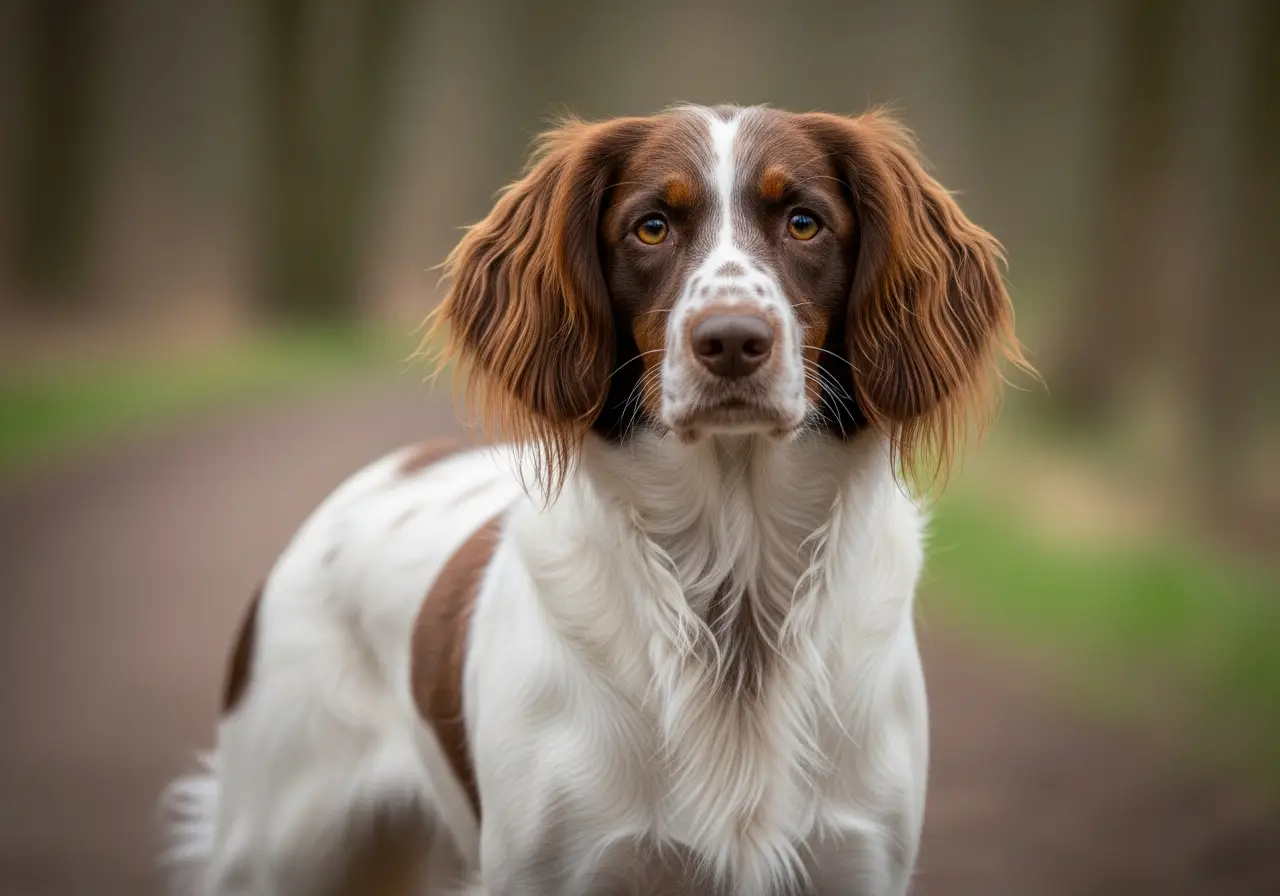
The Drentsche Patrijshond is a Dutch pointing dog that combines a love of work with strong family bonds, without being a simple leisure companion. Its pronounced prey drive, high need for social contact and substantial exercise requirements demand an owner who can provide daily time, structure and mental stimulation. Those who meet these needs gain an enduring, cooperative and deeply bond-oriented dog.
02Introduction
What makes the Drentsche Patrijshond (Drentse Partridge Dog) special
The Drentsche Patrijshond is a Dutch pointing dog, FCI Group 7, versatile and suitable as a family dog, shoulder height 55–63 cm.
03Profile
Key facts and suitability
- Origin
- Niederlande
- Original purpose
- Pointing and retrieving in Drenthe
- FCI
- No. 224 · Group 7 · Section 1.2
- height at the withers
- 55–63 cm
- Weight
- 20–25 kg
- Life expectancy
- 12–14 Years
- Coat type
- Long-haired
- Minimum exercise
- 90 min/day
- Puppy price
- 1'000–1'800 CHF
- Waiting period
- 9 months
- Sports
- Hunting · Field trials · Retrieving · Agility
04Temperament
How the Drentsche Patrijshond (Drentse Partridge Dog) shows up in everyday life
The morning walk reveals what distinguishes the Drentsche Patrijshond from a pure companion dog: The nose goes straight to the ground, the body turns in wide arcs away from the path, and the tail circles – behaviour that the FCI standard describes as a breed-typical characteristic when picking up a scent. This dog works, even if no hunter is present.
Internally, i.e. from its own genetics, the Drentsche Patrijshond has a high need for social contact. It actively seeks proximity to its key people, observes moods and reacts to changes in the household. Anyone who comes home exhausted in the evening will find that the dog registers this and adapts, but does not permanently forego stimulation.
Externally, i.e. in its reaction to strangers, the Drentsche Patrijshond is initially reserved, not shy. It observes before making contact. This reserve is not a deficiency, but a character trait: The FCI standard describes it as a dog that can certainly be reserved, but never fearful. With familiar people, it is open and cooperative.
These two axes must not be confused: a high need for social contact with the family does not mean that the dog will immediately warm up to every visitor. Anyone who expects this will misjudge the dog.
The Drentsche Patrijshond is generally tolerant towards other dogs, provided that socialisation was carried out early and consistently. In everyday life with children, it works well if clear rules exist and the children do not treat the dog as a toy.
05Needs
What this breed needs daily
The Drentsche Patrijshond requires at least 90 to 120 minutes of active exercise daily, not just walks, but activities in which it can use its nose and work independently. Off-leash running in secure terrain, dummy training, mantrailing or hunting guidance cover this need better than simple leash walks.
Mental stimulation is not an extra, but a must. The need for mental work of this breed is at the same level as the need for physical exercise. A dog that is physically tired but mentally under-stimulated will develop avoidance behaviour, excessive sniffing in the house, restlessness or barking.
The need for social contact is high. The Drentsche Patrijshond requires regular, high-quality contact with its key people. Times spent alone should be built up gradually and not permanently exceed four hours daily. A dog that is structurally left alone for too long will show this through stress symptoms.
For training, the approach should be calm, clear and varied. The FCI standard explicitly warns against coercive methods; this breed reacts to pressure with withdrawal, not cooperation. A structured training plan with positive reinforcement and clear impulse control work for wild stimuli is the foundation.
A rural or at least suburban environment with access to natural terrain significantly facilitates keeping the dog. Keeping it in an apartment is possible, but requires a consistent daily stimulation programme that does not depend on the weather or the dog's mood.
Exercise
High
mental work
A lot
Social needs
High
training
Easy
06Sport & Mental and Physical Stimulation
What sports the Drentsche Patrijshond (Drentse Partridge Dog) is suited for
Realistic in terms of physiology and genetics – not every breed suits every sport.
Structurally and physiologically suitable: Suitable for mantrailing, dummy work and tracking · CaniCross / bikejoring possible.
07Quick Check
08Suitability
Who this breed is suitable for – and who it isn't
✓Matches
The Drentsche Patrijshond suits owners who can plan 90 to 120 minutes of active exercise in natural terrain daily, not as an exception, but as part of everyday life. Suitable are active individuals or families with children from about eight years old, who integrate the dog into structured activities: dummy training, nose work, mantrailing or hunting guidance.
Anyone who lives in a rural or suburban environment and enjoys cooperative training will find an enduring and willing-to-learn partner in this breed. Even owners keeping a dog for the first time can cope with the Drentsche Patrijshond, provided they are prepared to attend a supporting dog training school and work consistently on impulse control.
Since the dog initially reacts cautiously towards strangers, it is well suited for households with manageable visitor numbers or for owners who actively promote this trait through early socialisation. Anyone who hunts or is interested in dog sports such as tracking work will receive a genetically predisposed working partner with this breed, which requires little basic training to develop its abilities.
×Doesn't match
The Drentsche Patrijshond does not suit owners who are regularly away from home for eight or more hours and cannot organise reliable care. Its high need for social contact is incompatible with structural isolation.
Anyone who views exercise as an occasional leisure activity and does not plan a fixed daily routine for the dog will be permanently overwhelmed by this breed. The need for exercise is non-negotiable and cannot be replaced by a large plot of land.
Anyone who equates the high need for social contact with openness towards strangers underestimates the external behavioural axis of this breed: the Drentsche Patrijshond is family-oriented, not generally sociable. Households expecting a dog that warmly greets every visitor immediately will be disappointed by this breed.
Anyone who is not prepared to work on impulse control for wild stimuli should not keep this breed in an urban environment with uncontrolled off-leash areas. The prey drive is genetically anchored and requires active training; it does not disappear through ignoring.
Owners who rely on coercive methods in training are also ill-equipped for this sensitive breed: the FCI standard explicitly states that coercion contradicts the dog's nature and leads to withdrawal rather than cooperation.
10Line reality
Show line, working line, breeder market
In the Netherlands and Germany, the Drentsche Patrijshond is managed exclusively as a uniform breed without formal division into show and working lines. The FCI standard requires a working test, which means that hunting utility is embedded in the breeding programme and is not treated as optional.
In practice, differences still exist between litters bred primarily for hunting performance and those in which character clarity and suitability as a family dog are weighted more heavily. These differences are not documented by official line designations, but are reflected in the breeding goals of individual breeders.
Anyone wishing to keep a Drentsche Patrijshond purely as a family dog without hunting use should specifically ask the breeder about litters in which both parent dogs have been tested for stable social behaviour and suitability for everyday life. A dog from a line with very high work drive can be significantly more demanding in a non-hunting household than a dog from a character-focused breeding, even if both carry the same breed name.
The small population size outside the Netherlands limits selection. In Germany, litters are rare, and waiting times with reputable breeders can be correspondingly long.
11Health · Reality
What you need to plan for medically with your Drentsche Patrijshond (Drentse Partridge Dog)
The Drentsche Patrijshond is considered a robust breed with a life expectancy of 12 to 14 years on average. Concrete population-wide health statistics are only limitedly available due to the small number of dogs outside the Netherlands.
Hip dysplasia (HD) is the most frequently documented hereditary condition in this breed. Reputable breeders have both parent dogs radiologically examined for HD before breeding and exclude dogs with poor results from breeding. Eye diseases — including progressive retinal atrophy (PRA) — are also known as a breed-specific risk. Eye examinations by a specialist vet in ophthalmology are part of the mandatory programme for responsible breeders.
The medium-length, dense coat requires regular care, particularly on the feathering and the fringes on the legs. Without weekly checks and grooming, tangles can form, which may lead to skin problems. After walks in rough terrain, checking for ticks and burrs is mandatory.
Overweight is an underestimated risk in this active breed if the need for exercise is not met. Adiposity promotes joint problems and demonstrably shortens life expectancy. Weight-controlled feeding and regular weight checks at the vet are recommended.
Preventive check-ups at the vet should take place at least once a year, and every six months from the seventh year of age onwards. In cases of lameness, eye abnormalities or changes in gait, prompt veterinary assessment is indicated.
12Structured data
Health by the numbers
Prone to diseases
Hip dysplasia, progressive retinal atrophy, Stargardt disease (PRCD-PRA)
Recommended health tests
Hip X-ray, DNA test for PRA, eye examination
13Myths ↔ Reality
What is often said incorrectly about this breed
Five myths, five realities, five sources.
The Drentsche Patrijshond is a calm family dog that requires little stimulation.
For centuries, the Drentsche Patrijshond has been bred as an enduring hunting dog. According to the breed standard and breeder recommendations, its exercise requirement is at least 90 to 120 minutes of active exertion daily. In addition, there is a high need for mental stimulation through nose work, dummy training or hunting guidance. A dog that does not receive this level of fulfilment often develops behavioural issues such as excessive barking or destructive behaviour.
The pronounced prey drive makes the Drentsche Patrijshond unsuitable as a family dog.
The FCI standard explicitly describes the Drentsche Patrijshond as a dog that, with good training, can be both a valued family dog and a valuable hunting companion. Its prey drive is present and clearly pronounced, but it is well manageable through consistent guidance and early impulse control work. The breed is considered cooperative and people-oriented, two characteristics that facilitate cooperation in everyday life.
Pointing dogs like the Drentsche Patrijshond are easy to train because they are so people-oriented.
People-orientation and trainability are related, but not identical, characteristics. The Drentsche Patrijshond reacts sensitively to moods and inconsistent rules. The FCI standard explicitly warns against training it with coercive methods. A clear, calm and varied training approach is a prerequisite; a lack of structure leads to problems more quickly in this breed than in less sensitive dogs.
The Drentsche Patrijshond manages easily on its own because it is an independent hunting dog.
Independence in the field does not mean emotional independence in everyday life. The Drentsche Patrijshond has a high need for social contact and is strongly oriented towards its key people. Longer periods of being left alone without prior gradual preparation often lead to stress symptoms in this breed. The recommended maximum time alone is about four hours, with appropriate preparation.
Because the breed is so rare, there are hardly any health problems; rare breeds are more robust.
The rarity of a breed does not automatically protect against hereditary diseases. In the Drentsche Patrijshond, hip dysplasia (HD) and eye diseases are known as breed-typical health risks. Reputable breeders carry out HD and eye examinations as mandatory screening before breeding. The small population size outside the Netherlands makes careful studbook management particularly important to preserve genetic diversity.
14animal welfare
The animal welfare perspective
Breeder market, designer versions, animal shelter reality — what no one writes in the puppy ad.
The Drentsche Patrijshond is a very rare breed in Germany. On the one hand, this protects it from the mass market; on the other, it makes the search for a puppy more susceptible to dubious offers that use its rarity as a sales argument.
Backyard breeders offering litters without pedigree numbers, without health certificates for the parent dogs and with immediate availability also exist for rare breeds. The higher price of such an offer does not signal quality. Anyone buying a Drentsche Patrijshond without reviewing the HD results and eye examinations of the parents bears the health risk alone.
A specific designer variant of the Drentsche Patrijshond does not currently exist. The risk with this breed lies less in breeding extremes than in underestimating the need for stimulation: hunting dogs kept as family dogs without hunting or sporting enrichment end up being rehomed disproportionately often. Underestimated exercise needs and uncontrolled prey drive in urban environments are the most common reasons for rehoming pointing dogs.
Adoption through animal welfare organisations or breed protection clubs is an equally valid option to buying from a breeder, not an inferior one. An adult dog from adoption comes with a known temperament, which often makes it easier to assess suitability for the household than with a puppy. As the breed rarely appears in German animal welfare, it is worth searching regionally and in the Netherlands. Breed protection clubs of the VDH can assist with rehoming.
15Costs · Transparency
What this breed realistically costs
A puppy from a reputable breeder with VDH papers, health certificates and a vaccination book costs between 1,200 and 1,800 euros in Germany. Offers significantly below this without pedigree numbers and health certificates are a warning sign.
The annual living costs for a Drentsche Patrijshond realistically lie between 1,500 and 2,500 euros. This includes high-quality food (approx. 600–900 euros/year depending on body weight and type of food), care requirements for the medium-length coat (approx. 100–200 euros/year), basic equipment as well as dog training school and training (approx. 300–600 euros in the first year).
Veterinary costs for routine care (annual vaccination, parasite prevention, routine examination) are approx. 200–400 euros annually. For HD treatment or eye diseases, individual procedures can quickly reach 1,000 to 3,000 euros.
Dog health insurance or pet health insurance with surgery cover costs between 30 and 80 euros monthly depending on the provider and scope of benefits, and can be sensible for this breed. The dog tax varies by municipality between 50 and 150 euros annually. Dog liability insurance is mandatory in several federal states and costs approx. 40–80 euros annually.
16Puppy search
What you need to consider when choosing a breeder
- Reputable breeders of the Drentsche Patrijshond can be found in Germany via the Verband Deutsch-Drentsche Patrijshond (VDD) or via the VDH.
- A reputable breeder provides health certificates for both parent animals, at least hip dysplasia X-ray results and an eye examination.
- Puppies leave the litter no earlier than eight weeks of age, are microchipped, vaccinated and dewormed.
- A visit to the breeder before booking is mandatory, not optional.
- Anyone who cannot or may not view the litter should stay away.
- Reputable breeders ask counter-questions; they want to know if the owner suits the breed.
- Offers on general classifieds portals without a stud book number, without parent animal certificates and with immediate availability are a clear warning signal.
- The price alone says nothing about reliability.
- Since the breed is rare in Germany, waiting times of one year or more can be realistic.
- This time can be used meaningfully: attend dog training school in advance, develop a training concept, prepare everyday life for the dog.
- Adoption via animal welfare organisations or breed protection clubs is an equally valid option.
- Drentsche Patrijshonds in animal welfare are rare, but not excluded, and an adult dog with a known temperament can be the more suitable choice for experienced owners.
FAQ
Frequently asked questions about the Drentsche Patrijshond (Drentse Partridge Dog)
Is Drentsche Patrijshond (Drentse Partridge Dog) suitable for beginners?
Drentsche Patrijshond (Drentse Partridge Dog) is considered suitable for first-time dog owners.
Is Drentsche Patrijshond (Drentse Partridge Dog) a family dog?
Drentsche Patrijshond (Drentse Partridge Dog) is considered suitable for families with good socialisation and species-appropriate care.
How much exercise does Drentsche Patrijshond (Drentse Partridge Dog) need?
At least around 90 minutes of exercise per day. As an active breed, more so — plus mental stimulation.
What is the size and weight of Drentsche Patrijshond (Drentse Partridge Dog)?
Fully grown, Drentsche Patrijshond (Drentse Partridge Dog) reaches about 55–63 cm at the withers and weighs around 20–25 kg.
What is the life expectancy of Drentsche Patrijshond (Drentse Partridge Dog)?
The life expectancy of Drentsche Patrijshond (Drentse Partridge Dog) is approximately 12–14 years.
Which diseases are common in Drentsche Patrijshond (Drentse Partridge Dog)?
Hip dysplasia, progressive retinal atrophy, Stargardt disease (PRCD-PRA)
17Breed clubs
Official breed clubs in DACH
19Related
Similar breeds – and their differences
You might also be interested in
Participate
Do you have a good photo of your Drentsche Patrijshond (Drentse Partridge Dog)?
We are looking for expressive images for our breed profiles. Submit yours; the editorial team reviews every submission before publication.
Does this breed suit you?
Good-natured, versatile Dutch hunting dog. Very popular as a family dog in the Netherlands.