
01Summary
In a paragraph
If you only have 30 seconds.
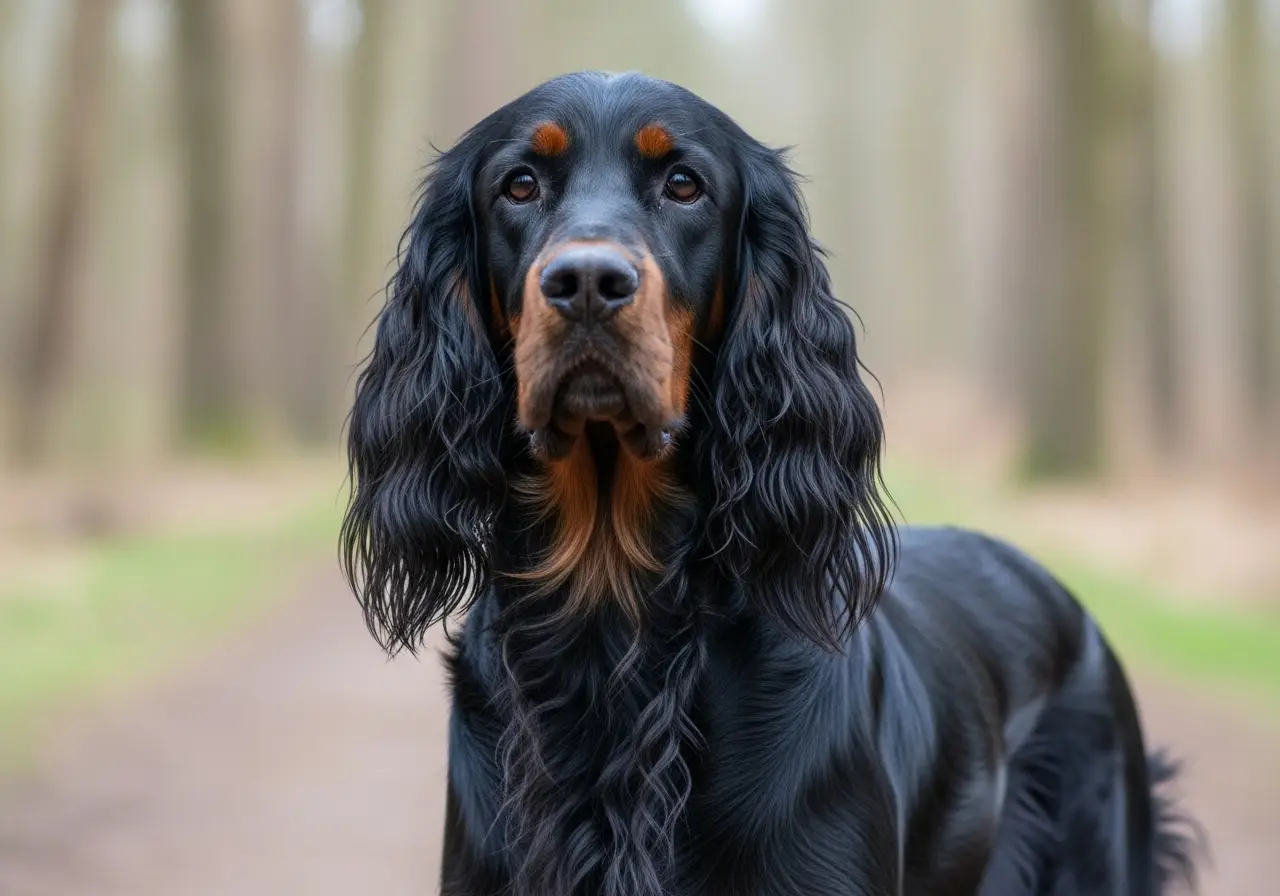
The Gordon Setter is the most robust and rarest of the British Setters, black-and-tan, enduring and with a prey drive that is deeply rooted genetically. It works closely with its primary caregiver but meets strangers with reserve. Anyone keeping one needs at least 120 minutes of intensive exercise daily, secure off-lead areas and experience in handling dogs motivated by hunting. It is not a sofa dog.
02Introduction
What makes the Gordon Setter special
The Gordon Setter is the rarest British setter, FCI Group 7, black-and-tan and enduring, from the Scottish Highlands, withers height 62–66 cm.
03Profile
Key facts and suitability
- Origin
- Schottland
- Original purpose
- Pointing game birds in the Scottish Highlands
- FCI
- No. 6 · Group 7 · Section 2.2
- height at the withers
- 62–66 cm
- Weight
- 20–32 kg
- Life expectancy
- 12–13 Years
- Coat type
- Long-haired
- Minimum exercise
- 90 min/day
- Puppy price
- 1'200–2'200 CHF
- Waiting period
- 9 months
- Sports
- Hunting · Field trials · Agility · Retrieving
04Temperament
How the Gordon Setter shows up in everyday life
The morning walk reveals what makes the Gordon Setter unique: as soon as it enters open terrain, it switches to a different mode. The nose goes down, the body stretches out, and the springy gallop begins. This is not exuberance; this is genetically anchored pointing behaviour that seeks expression daily.
Internally, the Gordon Setter requires a high degree of movement and mental work. The need for exercise is at least 120 minutes daily, with a significant portion as active free running in suitable terrain. Simple leash walks are not sufficient. In addition, there is a pronounced need for social contact with the primary caregiver: the Gordon Setter likes to work together, wants to be guided and reacts to isolation with restlessness.
Externally, he behaves differently than the high need for social contact would suggest. He meets strangers with reserve or a wait-and-see attitude; there is no aggressive behaviour, but also no exuberant greeting. Anyone who expects a people-oriented dog to be automatically open towards every visitor is mistaken. These two poles—close family bond and reticence towards strangers—must be understood from the outset and actively supported through early socialisation.
In everyday life with children, the Gordon Setter shows patience and calmness provided there is sufficient exercise. He is not a dog who imposes himself, but he seeks closeness to his people. In the evening, when the workload is appropriate, he settles down calmly; he is a balanced dog who knows his place. If the workload is lacking, this picture changes: restlessness, searching, barking or destructive behaviour are then not character flaws, but symptoms of an unmet need.
05Needs
What this breed needs daily
The Gordon Setter requires at least 120 minutes of active exercise daily, and this is a minimum threshold, not a recommendation. A significant portion of this should consist of free running in open terrain: meadows, forests, fields. Urban dog parks do not replace this on a permanent basis.
Mental work is just as obligatory as physical exercise. Nose work, Mantrailing, dummy training or structured search tasks engage the hunting instincts of the breed and help to channel the prey drive into orderly paths. Those without a hunting licence can find a sensible alternative in dog sport groups with a focus on nose work.
Being left alone must be built up early and gradually. The Gordon Setter tolerates being alone for up to about four hours, provided he is sufficiently exercised and has been accustomed to being alone from puppyhood. Longer absences without care are not suitable for this breed.
A rural or at least suburban environment with access to secure off-leash areas is not an optional extra, but a prerequisite. In densely populated urban areas, the pronounced prey drive can only be controlled with very high management effort; off-leash exercise without secure terrain carries considerable risk for this breed.
Socially, the Gordon Setter needs a primary caregiver who leads consistently and calmly. He reacts sensitively to pressure and impatience. Positive reinforcement with clear structure yields better results than correction methods. A dog training school with experience in hunting-motivated breeds is particularly recommended during the first two years of life.
Exercise
Very high
mental work
A lot
Social needs
High
training
Demanding
06Sport & Mental and Physical Stimulation
What sports the Gordon Setter is suited for
Realistic in terms of physiology and genetics – not every breed suits every sport.
Structurally and physiologically suitable: Suitable for mantrailing, dummy work and tracking · CaniCross / bikejoring possible.
07Quick Check
08Suitability
Who this breed is suitable for – and who it isn't
✓Matches
The Gordon Setter suits owners who can plan at least two hours of active outdoor exercise daily, not occasionally, but as a fixed part of everyday routine. A connection to nature and enjoyment of terrain runs are not extras, but a basic requirement.
Active individuals or couples with a rural living environment and access to secure off-leash areas are well suited. Families with children from about eight years old are suitable if the adults take on the main responsibility for exercise and training and everyday life offers sufficient structure.
Owners with prior experience in hunting-motivated breeds or basic knowledge of nose work benefit most from the Gordon Setter’s potential. Those who possess a hunting licence or are actively involved in hunting will find a capable partner in this breed, which was bred specifically for this task.
Owners without a hunting background can also live well with a Gordon Setter, provided they invest in dog sport with a focus on nose work, understand the limits of off-leash exercise without secure terrain, and are prepared to build up recall training over the long term and consistently. Those who bring experience with independently working dogs and enjoy a close relationship based on cooperation will build a deep bond with the Gordon Setter.
×Doesn't match
The Gordon Setter is not suitable for owners who are regularly away from home for more than four hours daily and cannot organise reliable dog care. The high need for social contact and exercise requirements cannot be shifted to weekends.
Anyone living in an urban apartment without proximity to secure off-leash areas will not be able to manage the Gordon Setter’s prey drive sufficiently on a permanent basis. A garden alone, even a large one, does not replace running in open terrain.
Owners looking for a dog that greets strangers openly and warmly will be disappointed by the Gordon Setter. The high need for social contact towards their own family does not mean openness towards every person; anyone who confuses these two axes significantly underestimates the effort required for socialisation.
For first-time owners without prior experience with hunting-motivated breeds, the Gordon Setter is a demanding choice. Recall training, prey drive management and independence in the terrain require patience, consistency and knowledge that cannot be grasped intuitively. Anyone looking for an uncomplicated everyday companion who adapts to the owner’s lifestyle should consider another breed. The Gordon Setter does not adapt; he demands an environment that meets his natural instincts.
10Line reality
Show line, working line, breeder market
The Gordon Setter is today kept in two different orientations: as a working dog with hunting use and as a show dog (show type). These lines differ noticeably in body structure and temperament.
Working line dogs are generally lighter built, more movement-loving and show a more intense prey drive. They were bred for hunting game birds in the Highlands and require keeping that actively engages these predispositions. Show type dogs are often heavier and broader, with more pronounced feathering; they correspond to the FCI breed standard in appearance but also bring a distinct prey drive.
In the German-speaking region, the distinction between working and show lines is less sharply pronounced than, for example, in the English Setter or the Irish Red and White Setter. The Gordon Setter Club Germany e.V. promotes the preservation of working traits and requires working tests for breeding, which keeps the lines closer together than in countries without this requirement.
Anyone who wants to use a Gordon Setter as a hunting dog should specifically look for puppies from tested working parents and seek contact with the breed club. Anyone keeping the breed without hunting use will also find a capable partner in show type dogs from reputable breeding, provided that the need for movement and mental work is covered by other activities.
11Health · Reality
What you need to plan for medically with your Gordon Setter
The life expectancy of the Gordon Setter is 10 to 12 years, a range typical for large dogs. Breed-typical documented diseases include hip dysplasia (HD), progressive retinal atrophy (PRA), hypothyroidism (underactive thyroid) and the risk of gastric torsion (gastric dilatation-volvulus, GDV).
Regarding HD prevalence: According to evaluations by the Gordon Setter Club Germany, HD findings are present in a relevant proportion of tested breeding animals; reputable breeders X-ray both parent dogs and disclose the findings. A study by the University of Bern (Agria/SVA data, 2023) shows that large-framed pointing dogs generally have an increased risk of HD.
PRA (Progressive Retinal Atrophy) leads to progressive blindness and is genetically detectable in the Gordon Setter. A DNA test for PRA should be mandatory before breeding; when buying a puppy, demand proof of testing.
The risk of gastric torsion is increased in deep-chested, large dogs such as the Gordon Setter. As a preventive measure, vets recommend several small meals instead of one large one, no intensive exercise immediately after eating, and observation for symptoms such as a distended abdomen, drooling and restlessness. In case of suspicion, immediate veterinary emergency care is required.
Recommended preventive examinations: HD X-ray (from 12 months), eye examination by a specialist vet (annually), thyroid values (TSH, T4) from the second year of life. Overweight increases the risk of HD and puts strain on the joints; regular weight checks at the vet are advisable.
12Structured data
Health by the numbers
Prone to diseases
Hip dysplasia, progressive retinal atrophy, thyroid problems, gastric torsion
Recommended health tests
Hip X-ray, eye examination, thyroid screening
13Myths ↔ Reality
What is often said incorrectly about this breed
Five myths, five realities, five sources.
"The Gordon Setter is like all setters an uncomplicated, cheerful family dog.
The Gordon Setter is the heaviest and most independent of the British setters. It shows clear reserve towards strangers and requires consistent socialisation. Its prey drive is strongly pronounced and demands structured management, which distinguishes it significantly from the Irish Setter, which is considered more open and effusive.
"A large garden replaces daily exercise.
A garden does not provide sufficient stimulation for the Gordon Setter. The breed requires at least 120 minutes of active movement daily, with the opportunity to run freely in suitable terrain. Without this workload, behavioural problems such as destructiveness or excessive barking develop; a garden alone does not compensate for this.
"Gordon Setters are easy to train because they are so people-oriented.
The strong bond with the primary caregiver does not mean obedience in every situation. The Gordon Setter shows pronounced independence in the field, a trait bred for hunting work. Recall training is demanding and requires considerable patience and consistent step-by-step training, especially when faced with hunting stimuli.
"The rare breed is automatically healthier than popular dog breeds.
Low litter numbers do not automatically protect against hereditary diseases. In the Gordon Setter, hip dysplasia (HD), hypothyroidism and progressive retinal atrophy (PRA) are documented as breed-typical. Reputable breeders provide X-ray findings, thyroid and eye tests; these should be requested before every purchase.
"As a hunting dog, the Gordon Setter is only suitable for hunters.
The Gordon Setter can also be kept without hunting use, although its working traits must be compensated by other forms of stimulation: mantrailing, nose work, field trials or dummy training. Anyone who does not consistently offer these alternatives underestimates the breed's needs.
14animal welfare
The animal welfare perspective
Breeder market, designer versions, animal shelter reality — what no one writes in the puppy ad.
The Gordon Setter is a rare breed in the German-speaking area, which partly protects it from the mass market but does not rule out problems. Breeding operations that respond to demand for "rare" or "noble" dogs also exist for this breed. Identifying features: no membership in the breed club, no health documents, puppies under 800 euros, handover without a personal conversation.
Designer versions of the Gordon Setter, such as crosses with other Setter lines under fantasy names, occasionally appear on social media. These dogs are neither FCI-recognised nor reliably assessable in terms of their health and character. Buying such animals promotes breeding without standards.
A keeping-related problem that occurs particularly frequently with the Gordon Setter: the exercise need is underestimated before purchase. Dogs kept in urban households without sufficient mental and physical stimulation develop behavioural problems and then end up in rehoming. This is not a character flaw of the breed, but a predictable consequence of a mismatch between dog and living conditions.
Adopting an adult Gordon Setter through animal welfare organisations or the breed club is a fully valid alternative to buying a puppy. Adult dogs from rehoming have a known character, are often already basic socialised and do not require extensive puppy management. The Gordon Setter Club Germany and the SPCS Switzerland occasionally rehome dogs from kennel closures or surrenders; direct contact is worthwhile before searching for a puppy.
Anyone who decides on a Gordon Setter takes responsibility for an animal with high exercise and social needs over 10 to 12 years. This decision deserves an honest self-assessment, not as a reproach, but as a basis for keeping that is fair to both sides.
15Costs · Transparency
What this breed realistically costs
A puppy from a reputable breeder with papers, health tests and club membership costs between 1,200 and 1,800 euros in the DACH region. Prices significantly below this signal missing preventive examinations or dubious rearing conditions.
The annual living costs for a Gordon Setter are typically between 2,000 and 3,500 euros. Included in this: high-quality food (approx. 600–1,000 euros/year for a large dog), grooming (the silky long hair requires regular brushing and occasional professional trimming, approx. 200–400 euros/year), basic equipment, leads, toys and training costs.
Vet costs vary greatly: routine vaccinations, deworming and annual preventive care cost approx. 300–500 euros/year. If HD treatment, thyroid therapy (lifelong medication for hypothyroidism: approx. 200–400 euros/year) or gastric torsion surgery (emergency: 2,000–5,000 euros) is added, costs rise considerably.
Dog liability insurance is compulsory in Switzerland, in Germany and Austria it is required or recommended depending on the federal state/canton. Costs: approx. 60–120 euros/year. Pet health insurance for a large dog costs between 600–1,200 euros/year depending on provider and scope of cover and can be useful for breed-typical diseases.
16Puppy search
What you need to consider when choosing a breeder
- Reputable breeders of the Gordon Setter are members of the Gordon Setter Club Deutschland e.V.
- or the Setter and Pointer Club Switzerland (SPCS) and breed with working tests in accordance with the FCI standard.
- They provide current HD X-ray reports, eye examinations (PRA) and thyroid values for both parent dogs without being asked.
- Puppies are handed over no earlier than eight weeks of age, are microchipped, vaccinated and dewormed.
- Warning signs: breeders who offer several breeds simultaneously, do not provide health documents or hand over puppies without a personal conversation and home visit.
- Very low prices are not a bargain; they often signal missing preventive examinations or poor rearing conditions.
- As the Gordon Setter is rare in the DACH region, waiting periods of six to twelve months with reputable breeders are normal.
- This time can be used productively: contact the breed club, visit existing owners and check whether your daily routine is compatible.
- Adoption through animal welfare organisations is an equally valid option.
- Adult Gordon Setters from rehoming often come into new hands due to underestimated exercise needs, which means a dog with a known character and without the uncertainties of the puppy phase.
- Breed club contacts can help in the search for dogs available for adoption.
FAQ
Frequently asked questions about the Gordon Setter
Is Gordon Setter suitable for beginners?
Gordon Setter is considered suitable for first-time dog owners.
Is Gordon Setter a family dog?
Gordon Setter is considered suitable for families with good socialisation and species-appropriate care.
How much exercise does Gordon Setter need?
At least around 90 minutes of exercise per day. As an active breed, more so — plus mental stimulation.
What is the size and weight of Gordon Setter?
Fully grown, Gordon Setter reaches about 62–66 cm at the withers and weighs around 20–32 kg.
What is the life expectancy of Gordon Setter?
The life expectancy of Gordon Setter is approximately 12–13 years.
Which diseases are common in Gordon Setter?
Hip dysplasia, progressive retinal atrophy, thyroid problems, gastric torsion
17Breed clubs
Official breed clubs in DACH
19Related
Similar breeds – and their differences
You might also be interested in



Participate
Do you have a good photo of your Gordon Setter?
We are looking for expressive images for our breed profiles. Submit yours; the editorial team reviews every submission before publication.
Does this breed suit you?
Rarest of the three classic British setters. Black-and-tan, robust and loyal. Less common than the Irish Setter.