Livestock guardian dog – what needs to be considered
Livestock guardian dogs think for themselves and guard rather than herd. Find out what you need before you take one in: space, experience and plenty of calm.
In short
Livestock guardian dogs act autonomously without direct human commands and guard rather than herd – they have been selected for independence over centuries and therefore fundamentally question commands.
Content
- Origin and history
- Typical breeds
- Character traits and instincts of livestock guardian dogs
- Keeping and everyday life: what matters
- Areas of use between tradition and modern life
- Training between acceptance and clarity
- Suitability as a family dog, an honest look
- Adoption and buying: what you need to know
- Frequently asked questions (FAQ)
- Further reading and contacts
Reviewed on July 16, 2025Responsible editor: Roger Klein
Livestock guardian dogs (LGDs) were originally bred to protect farm animals such as sheep or goats from predators and intruders on their own. They stay with the flock around the clock and only step in when it really matters, usually with threatening behaviour rather than an attack.
How they differ from herding dogs:
They are often confused with herding dogs such as the Border Collie or the Australian Shepherd. Herding dogs work on human command, driving or steering the flock. Livestock guardian dogs, by contrast, act largely autonomously, without direct instructions. They “guard” rather than “herd”.
Origin and history
Livestock guardian dogs have existed for thousands of years. Even in ancient cultures, from Anatolia across the Balkans to the Himalayas, dogs were selectively bred for protective behaviour. The task always stayed the same: keeping predators such as wolves, bears or lynx away without showing aggression themselves, as long as there was no real threat.
These dogs lived closely with the flock and were often placed among the lambs as puppies to build a firm bond with “their” animals. This has shaped their nature permanently.
Typical breeds
Livestock guardian dogs are not a single breed but a functional group with some very different types, adapted to geographical conditions and predator pressure.
Well-known examples:
- Maremma Sheepdog (Italy)
- Pyrenean Mountain Dog / Patou (France)
- Kangal (Turkey)
- Kuvasz (Hungary)
- Tornjak (Bosnia/Croatia)
- Sarplaninac (Balkans)
- Cao de Gado Transmontano (Portugal)
- Tibetan Mastiff (Asia)
- Central Asian Shepherd Dog (Ovcharka) (Central Asia)
All of these dogs are marked by a high degree of independence, a strong protective drive and a calm, observant nature. Their build is powerful but not excessively massive. They need stamina, not speed.
Character traits and instincts of livestock guardian dogs
Livestock guardian dogs have a very specific nature that differs clearly from other dog breeds. If you want to understand these dogs, you need to know their original task: watching over life and death in a flock independently and without human guidance. That still shapes their behaviour today.
Independence instead of obedience
Livestock guardian dogs are dogs that think for themselves. For centuries they were deliberately selected for independence, because on a remote mountain pasture the dog had to decide on its own when there was danger. This heritage brings major challenges in everyday life:
- They question commands.
- They do not “obey”, they cooperate when they consider it sensible.
- They are hard to impress, neither by pressure nor by rewards.
If you want an obedient “companion dog”, a livestock guardian dog will not make you happy.
Alertness and suspicion
These dogs are permanently alert. They register every change in their surroundings, whether a sound, a movement or a smell. Anything unfamiliar is first eyed critically, and strangers are treated with suspicion as a matter of principle. This basic scepticism is not “misbehaviour” but typical of the breed type:
- Visitors are not greeted enthusiastically but may be firmly turned away.
- Walkers who come too close to the property may be barked at or actively blocked.
- Noises or movements at night trigger immediate reactions.
This behaviour is genetically anchored and cannot be trained away. You can only defuse it through management, training and education.
Bonding, but in their own way
Livestock guardian dogs do not bond blindly with people; they check very carefully whom they trust. Once they have formed a bond, they are extremely loyal and gentle, always in their own way:
- They are not clingy, but they like to be nearby.
- They rarely seek closeness actively, but they are always present.
- They do not submit; instead they build a respectful relationship as partners.
These dogs do not “love” through obedience but through presence, protective behaviour and clear loyalty.
Processing stimuli and stress resistance
In its original environment, a livestock guardian dog spent days on end with the same animals, people and landscapes. Stimuli were rare but meaningful. Accordingly, in our overstimulating world they often react:
- with overload in the city (cars, bicycles, unfamiliar people, unfamiliar dogs)
- with strong territorial behaviour when their living space feels “too open”
- with high alertness even to everyday noises
A well-socialised livestock guardian dog can adapt. But that takes time, patience and an understanding of its genetic make-up.
The traits at a glance
| Trait | What it means in everyday life |
|---|---|
| Independence | Obedience is voluntary, not forced |
| Suspicion | Strangers are watched critically |
| Bonding | Loyalty instead of submission |
| Processing stimuli | Calm and low stimulation are essential |
| Protective behaviour | Can become problematic without clear guidance |
Keeping and everyday life: what matters
A livestock guardian dog is not a dog for everyone. It needs space, but just as much knowledge, patience and a great deal of responsibility. If you do not meet its needs, the dog, the people around you and you yourself will run into serious problems.
Not a dog for a flat or the city
Livestock guardian dogs need space, structure and low stimulation. Keeping one in a city flat, in a confined space or without a secure open area is difficult for most dogs in this group, even if some puppies seem calm at first.
Extended basic requirements:
- A generously fenced property (at least 1.50–2 m high, escape-proof)
- Visual screening or structured sections of terrain to prevent overstimulation
- Outdoor retreats (e.g. a hut or shelter) as well as access to the house
- A rural or quiet location without constant foot traffic
A Kangal, Kuvasz or Patou on a terraced house balcony? We advise against it.
Everyday life with structure instead of constant entertainment
Livestock guardian dogs need no action, no play sessions, no trick training. They need tasks, calm, stable relationships and clear routines.
What they need:
- Rituals: fixed times of day, clear routines
- Stable attachment figure(s) who radiate trust and calm
- Everyday training with practical relevance (e.g. lead training, social contact)
- Thoughtful walks: quiet places, no on-lead encounters, no dog parks
What they do not need:
- Dog playgrounds, clicker training, group classes at a dog school, jogging, ball throwing
A well-kept livestock guardian dog is not bored; it has a calm mind.
Living outdoors only? Justifiable only under certain conditions
Some livestock guardian dogs working with farm animals live outside permanently. That can be compatible with animal welfare if they:
- were raised to live among animals,
- have access to suitable shelters,
- receive veterinary care,
- are not kept in isolation but at least in pairs,
- are occupied in a way that suits the breed type (e.g. with a flock of sheep or a guarding task).
For private owners without a flock, keeping the dog outdoors only is neither appropriate for the breed type nor responsible.
Safety and responsibility
Many livestock guardian dogs show pronounced territorial behaviour and protective instincts. Without clear management this can become dangerous:
- Secure fencing is a must: the dog must not get out, and strangers must not get in.
- Visitors must be announced, accompanied and, if necessary, received separately from the dog.
- Postal workers, gardeners, neighbours along the boundary: clear communication, clear arrangements.
If you ignore this, you risk biting incidents and, in the worst case, the dog being put down.
Social contacts: yes, but selected
Livestock guardian dogs are social, but they do not “need a group”. Many live well with other dogs if:
- they were socialised early,
- there is enough space and enough places to retreat,
- they are not constantly overwhelmed by unfamiliar dogs.
Dog schools, on-lead contacts or encounters in residential areas are usually counterproductive. A few stable dog contacts are better than many changing ones.
The bottom line:
A livestock guardian dog is not an “outdoor dog” but a highly sensitive, independent partner with specific needs. If you give it space, security and calm and are willing to question yourself, living together will be fulfilling. If you “just want a big dog”, you will fail.
Areas of use between tradition and modern life
Livestock guardian dogs were bred for one very specific task: protecting farm animals from predators. Today many of these dogs no longer live on remote mountain pastures but in private households, as family dogs or even as “problem dogs” from animal welfare abroad. That brings opportunities and risks.
Classic livestock protection
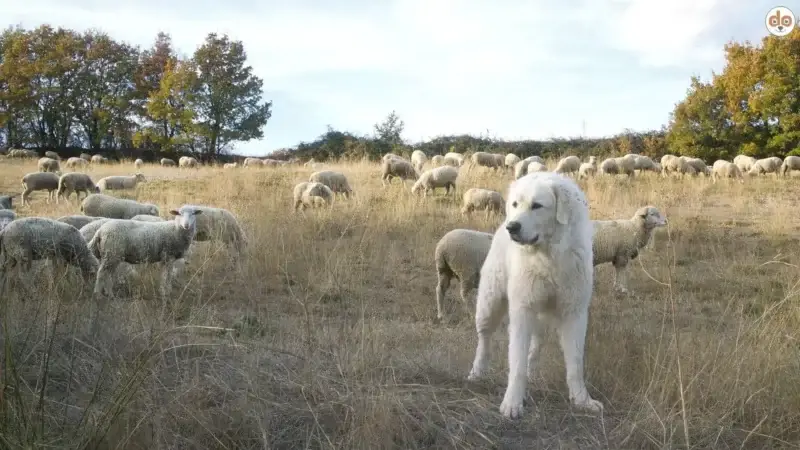
In their original areas of use, such as the Alps, the Pyrenees or the Balkans, livestock guardian dogs are indispensable helpers. They accompany sheep, goats or cattle to pasture, live in direct contact with the flock and defend it in an emergency against wolves, lynx or stray dogs.
Success factors for effective livestock protection:
- The dog grows up with the flock (imprinting from the 3rd week of life)
- It lives permanently with the animals, not alternating with life in a house
- It is kept at least in a pair or a group of three
- There is regular human contact (checks, care, guidance)
- It receives no “training” in the classic sense but is accompanied and observed
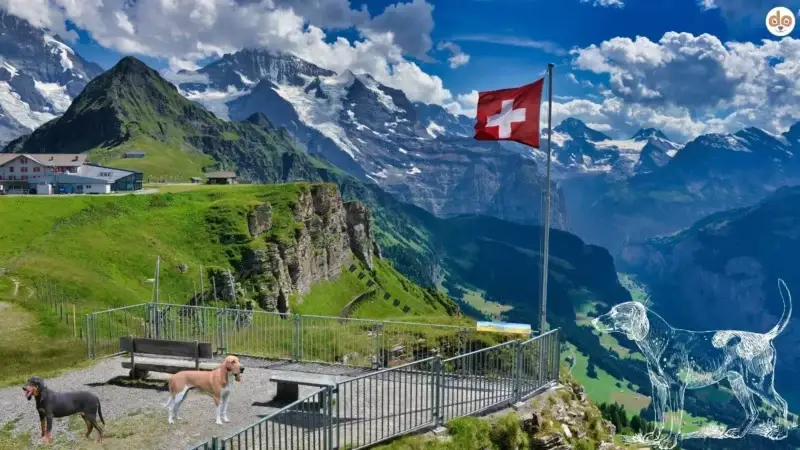
This way of keeping dogs is highly specialised and only suitable for farmers and professionals. In countries where wolves are returning, it is a mainstay of livestock protection, for example in Switzerland, where livestock guardian dogs receive state support (at the time of writing).
Family dog? Only if it fits
Livestock guardian dogs or crossbreeds are increasingly being rehomed as “family dogs”, for instance through animal welfare abroad or from breeders who focus on looks rather than function. That can work if the conditions are right:
A livestock guardian dog is only suitable as a family dog if:
- the people have experience with this kind of dog,
- the living environment is rural and low in stimulation,
- there is enough space and security,
- you are prepared to give up control and work with trust and structure instead.
Many of these dogs develop a deep, calm bond with “their” people. But they will never be a typical companion or sports dog.
Rescue dogs from abroad with livestock guardian behaviour
Rehoming dogs with an unknown history from regions where livestock guardian dogs are common (e.g. Romania, Greece, the Balkans, Turkey, Central Asia) is particularly critical. Many of these dogs show strongly pronounced protective instincts, suspicion and territorial behaviour, even without targeted breeding or early imprinting.
It becomes problematic when:
- these dogs end up in residential areas,
- families with children or frequent visitors take these dogs in,
- dogs “switch” during adolescence and suddenly become unmanageable.
Wanting to “train away” livestock guardian behaviour is unrealistic and an animal welfare issue. What is needed instead:
- Expert advice before adoption
- Honest communication from rehoming organisations
- Experience, patience and consistent management in the new home
Therapy dog, guard dog, sports dog? Common misconceptions
Livestock guardian dogs are not all-rounders.
| Purpose | Suitability |
|---|---|
| Therapy dog | No, too independent and too sceptical |
| Guard dog on an industrial site | No, too territorial and too unpredictable |
| Sports dog (agility etc.) | No, no interest, no motivation |
| Calm family companion | Possibly, under the right conditions |
| Livestock protection in agriculture | Ideal, with the right imprinting |
In short:
A livestock guardian dog does not want to please; it wants to be taken seriously. As a working dog in livestock protection it is indispensable. As a family member it can thrive if you are prepared to adapt to the reality of its life. If you try to reshape it, you will lose it. If you understand it, you will have a sincere, loyal partner.
Training between acceptance and clarity
Livestock guardian dogs cannot be “trained” in the classic sense. They are strong-willed, independent and not bred for cooperation. Nevertheless (or precisely because of this) they need clear orientation, good guidance and well-thought-out training. The difference lies in the approach: the goal is not obedience but trust, security and cooperation in the moment.
What works and what does not
These dogs do learn, but differently from other breeds, namely:
- through observation,
- through repetition,
- through trust,
- through consistent, fair structures.
What they do not learn (at least not permanently or reliably):
- blind obedience,
- tricks or sporting routines,
- impulsively following out of enthusiasm,
- recall at high arousal without a clear relationship.
A command like “Sit” can work, but only if the dog sees a point in it and the setting is right.
Trust instead of control
Livestock guardian dogs do not build relationships through food or toys but through mutual respect and clarity. If you try strictness or drill, you will fail or destroy the trust.
Instead:
- Lead through presence: be calm, clear and reliable.
- Learn to read the dog instead of dominating it.
- Build a bond before you expect anything.
- Set boundaries, but without force and in a way the dog can understand.
An example: a stranger enters the property. The dog barks and positions itself between the stranger and you.
The right reaction: speak to it calmly, convey security and take it out of the situation. No punishment, but with clarity.
The wrong reaction: shouting, dragging it away, intimidating it. That only reinforces insecurity and the need for autonomy.
No place for force or dominance theories
Livestock guardian dogs have a strong sense of self-worth. Anyone who works with lead jerks, alpha rolls or pressure will not achieve “submission” but:
- suspicion,
- refusal,
- in the worst case, aggressive resistance.
Positive reinforcement, patience, clear structures and social dialogue are the only viable way. Livestock guardian dogs are not dominant rebels but socially highly intelligent beings with strong protective instincts. They need security, not subjugation.
Dealing with problem behaviour
Some things can be improved with training, others cannot. Stay realistic.
| Behaviour | Trainable? | Comment |
|---|---|---|
| Basic obedience (sit, down) | Yes, with patience | Not a goal in everyday life, more of a bonus |
| Loose-lead walking | Yes, with structure | especially important in urban settings |
| Hunting behaviour | No, hardly controllable | usually weakly pronounced |
| Territorial behaviour | No, cannot be “trained out” | can only be defused through management |
| Overstimulation in the city | Partly adaptable | depends heavily on the individual |
| Resource guarding | Yes, with a good bond | requires expertise |
A dog that has grown up with a strong protective instinct will always judge certain situations in its own way. You can learn to deal with that, but you cannot “rewire” it.
Puppyhood: imprinting rather than training
The most important phase is puppyhood and adolescence. This is when it is decided whether the livestock guardian dog becomes a socially integrable partner or a dog that struggles with insecurity or conflict all its life.
Important aspects of the early phase:
- A low-stimulus but varied environment (people, sounds, places)
- Positive contact with different people (without overwhelming it)
- Calm, structured encounters instead of classic puppy play
- Contact with confident dogs instead of uncontrolled groups
- Rituals and stability instead of constant entertainment
The most important thing:
A livestock guardian dog does not “function” at the push of a button. It cooperates when the relationship is right. Training here does not mean “I teach it something” but “I show it that it can rely on me”. If you accept that, you have a partner.
Suitability as a family dog, an honest look
The question of whether a livestock guardian dog makes a good family dog is often romanticised. Yes, these dogs can be calm, loyal companions. But they are not easy family dogs, and they do not fit every way of life. If you want to do right by them, examine yourself critically and honestly.
Who is a livestock guardian dog (not) suitable for?
A livestock guardian dog is not suitable for:
- Families with small children, lots of visitors and constant hustle and bustle
- People in urban settings or without a secured open area
- First-time dog owners or people with little time
- Owners who define “training” through control and strictness
- Athletically ambitious people looking for a jogging or agility partner
A livestock guardian dog is well suited to:
- Calm, reflective people with experience of independent dogs
- People living in the country with plenty of space
- Owners who put bonding and relationship above obedience
- Families with older, sensible children and clear structures
- People who are willing to engage with the dog’s nature instead of changing it
Typical challenges in family life
A livestock guardian dog brings calm and presence, along with clear boundaries and instincts that you cannot “train away”:
| Everyday situation | Possible problems |
|---|---|
| Visitors drop by unannounced | Dog blocks, barks or steps in between |
| Children play loudly in the garden | Dog interprets this as conflict or a threat |
| Walk in a residential area | High density of stimuli can cause overload |
| Holidays, dog sitters, moving house | Little flexibility, strong attachment to its person and surroundings |
| Friends with dogs come to visit | territorial behaviour, protective behaviour towards other dogs |
In everyday life this often means constant management, clear agreements within the family and a willingness to cancel or manage visits when the dog needs it.
Children and livestock guardian dogs: a sensitive combination
Many livestock guardian dogs are tolerant of children if they have grown up with them. They are not born playmates for children. They tolerate, observe and protect, but rarely join in the play. They interpret noise and quarrels differently from other dogs, and they need clear places to retreat.
Parents must:
- always supervise interactions,
- explain to children that the dog is not a toy,
- respect the dog’s physical boundary signals,
- never “get the dog for the children”.
Living in the city? Usually not possible.
Most livestock guardian dogs cannot cope with an urban environment: too many stimuli, too many people, too little retreat. Individual dogs can adapt if they were socialised early, are very gentle and the environment is right. But that is the exception.
A garden alone is not enough. What counts: quiet surroundings, little traffic, good fencing, clear rules for visitors.
Can you take it everywhere with you?
Not really. Many livestock guardian dogs are:
- attached to their place and dislike changes of location,
- sceptical of strangers (restaurant visits, hotel stays, holiday flats = stress),
- poor at walking on a loose lead when stimulation is high,
- not suited to public transport or crowds.
Day trips, hikes, camping: often possible.
Restaurant visits in the old town, flea markets, shopping centres: better not.
The bottom line:
A livestock guardian dog can be a wonderful family dog, but only in a certain kind of family: calm, reflective, rural and willing to adapt to the dog. If you are looking for an uncomplicated dog for the city and lots of visitors, keep looking. If you are ready to engage with it, you may get a very honest canine partner.
Adoption and buying: what you need to know
Whether from animal welfare or from a breeder: if you decide on a livestock guardian dog, you take on great responsibility. A bad purchase or a poorly informed adoption leads to serious problems in everyday life and can severely impair the dog’s development, sometimes for life. So: inform yourself thoroughly, check honestly and do not rush anything.
Caution with dogs from abroad with livestock guardian genes
Many livestock guardian dogs end up in rescue, especially from southern and eastern Europe. They often come from rural areas where they were kept as guard or farm dogs, sometimes in isolation, often poorly socialised. Some arrive as puppies, but many only as adolescent or adult dogs.
Typical problems with such dogs:
- insufficient socialisation to people, environmental stimuli, the lead, everyday life
- a strong instinct of suspicion towards strangers
- strong territorial behaviour
- protective behaviour that escalates quickly in an urban setting
- often hard to judge whether and how strongly the livestock guardian behaviour is pronounced
Many of these dogs are not “family dogs in the making” but need specialised owners with experience, space and a management plan.
Good rehoming organisations give honest information
If an organisation or private individual offers you a “well-socialised, child-friendly livestock guardian dog”, ask questions:
- Where does the dog come from?
- At what age was it imprinted?
- How does it behave towards strangers, dogs, visitors?
- How does it react to confinement, restrictions, the lead?
- Is there a realistic assessment of its protective behaviour?
Beware of playing things down, such as:
“He’s just a little insecure”, “He just needs clear rules”, “Training will sort it out”.
A reputable animal welfare organisation is open about everything, including the possible limits of rehoming.
Puppies from breeders: only with good sense
There are breeders who breed livestock guardian dogs with a clear focus on health, character and working ability, for example for agriculture or livestock protection. These people do not sell their dogs to just anyone.
When buying a puppy, look for:
- Membership of a reputable breed club (e.g. SKG, VDH)
- Health certificates for both parents (HD, ED, genetic tests etc.)
- Rearing in a structured, stimulus-controlled environment (not a farm with ten puppies in the sheep shed)
- Early imprinting on environmental stimuli, people and sounds, without overwhelming the puppy
- Honest advice on suitability, no sugar-coating, no “it’ll sort itself out”
Good breeding costs money, and rightly so. A conspicuously cheap livestock guardian puppy is almost always a risk.
Livestock guardian crossbreeds: often hard to assess
In rescue in particular you will come across many “crossbreeds with livestock guardian ancestry”. That can be a dog with a little Pyrenean Mountain Dog in it or a genuine Sarplaninac with a dash of Border Collie. What is problematic:
- The genetic share says little about behaviour.
- Livestock guardian behaviour can come through strongly, even if the dog does not look like it.
- “Crossbreed” does not automatically mean “easier”.
That is why crossbreeds with a livestock guardian disposition should not be adopted lightly either. A behavioural assessment by experienced professionals is essential.
Checklist for anyone interested
If you are toying with the idea of taking in a livestock guardian dog, answer these questions honestly for yourself:
Do I have experience with independent dogs?
Do I live in the country and have enough space?
Can I fence the dog in securely?
Am I prepared to do without classic dog schools or dog parks?
Can I control visitors and limit them if necessary?
Does my family agree with the plan?
Am I ready to take on a genuine long-term project?
Do I have professional support at my side if in doubt?
If several answers are “No”, a livestock guardian dog is probably not the right choice. That is perfectly fine. This is about responsibility, not ideal images.
In short:
A livestock guardian dog is not a trendy dog, a status symbol or a bargain. Decide with clear resources and a realistic view of yourself. Then the idea can become a lasting bond for both sides.
Frequently asked questions (FAQ)
There is a lot of half-knowledge and a few myths about livestock guardian dogs. Here we answer the most common questions clearly and practically, without sugar-coating.
Are livestock guardian dogs aggressive?
No, but they are ready to defend.
Livestock guardian dogs are not aggressive by nature. They are calm, observant and act deliberately. However, if they perceive a threat to themselves, their people or “their” territory, they intervene decisively.
Important: what a livestock guardian dog interprets as a threat is not always what we understand by it. That is why clear guidance, trust and forward-looking management are needed.
Can you let your livestock guardian dog off the lead?
As a rule: no.
Livestock guardian dogs are independent-thinking dogs with a strong protective drive. They make their own decisions, and that can become dangerous in unsecured terrain, for example when meeting strangers or animals.
An off-lead area with high fencing, a good overview and few stimuli can work. Public off-lead areas are usually unsuitable.
Does a livestock guardian dog get along with other dogs?
It depends. They are not pack dogs.
Many livestock guardian dogs live with other dogs without problems, especially if they grew up together. Unfamiliar dogs, however, are often treated with suspicion or even hostility, particularly in confined spaces or on their own territory.
You have to test compatibility individually. They are usually out of place in dog parks or dog groups.
What should you do if your livestock guardian dog will not let anyone into the house?
Do not punish, structure instead.
Territorial behaviour is typical of the breed type. If it is ignored or handled incorrectly, it can get worse. What matters:
- Clear rituals for visits (e.g. announcement, a place to retreat, greeting on the lead)
- No forced contact
- Management instead of confrontation
If needed, get help from trainers with livestock guardian dog experience. Classic dog schools are often out of their depth.
Can you keep a livestock guardian dog in a flat?
No, or only under very special conditions.
These dogs need space, overview and retreat. A city flat, even with a balcony, is unsuitable. In exceptional cases (e.g. a very calm dog, a ground-floor flat with a garden in a quiet location, very experienced owners) it can work, but it is more theory than practice.
Realistically, a livestock guardian dog belongs in the country.
Can livestock guardian dogs be adaptable?
Yes, but at their own pace and never completely.
With patience, clarity and positive imprinting, some livestock guardian dogs can learn an astonishing amount and fit into everyday structures. But they always remain strong-willed, independent and alert. If you are looking for a dog that “functions”, you will be disappointed.
If you are looking for an authentic, reliable dog with character, you have a lot to gain.
Can you go on holiday with a livestock guardian dog?
Yes, if you plan it properly.
Camping, a holiday home with a garden, hikes in quiet surroundings: that works. Hotels, city breaks, restaurant visits, train journeys? Usually difficult.
Plan trips with a livestock guardian dog with foresight, calmly and according to its needs.
In short:
Many questions about livestock guardian dogs can be answered in one sentence: “It depends, and it takes experience, patience and clarity.”
These dogs challenge you. They give a lot back if you accept them as independent animals with their own history and instincts.
Further reading and contacts
If you want to keep a livestock guardian dog, you need more than good intentions: sound knowledge, support and above all access to honest, experienced people. Here you will find points of contact for information and advice (at the time of writing).
Organisations, associations and advisory services (German-speaking countries)
These organisations offer information, training, advice or rehoming, with a focus on animal welfare and expertise.
Switzerland:
- Agridea / Herdenschutz Schweiz
Information on working livestock guardian dogs, support programmes, training
Germany:
- Herdenschutzhundhilfe e. V.
Rehoming, advice, education
Trainers with livestock guardian dog experience
Most dog schools are out of their depth with livestock guardian dogs. It is worth looking specifically for trainers with experience in this area.
When choosing, look for:
- force-free, bond-based training
- experience with independent and territorial breeds
- no “alpha theory” or outdated dominance concepts
- openness to management instead of control
You can often find good trainers through:
- Recommendations from rehoming organisations
- Networks of trainers who work with positive methods
- Veterinary behaviourists who work with positive methods
Finally:
With a livestock guardian dog at your side, you are starting a long-term project. If you take your time, build up knowledge and seek honest advice, you will gain a strong-willed, loyal companion.