4 sourcesUpdated September 12, 2026Responsible editor: Roger KleinText: Redaktion rundum.dog
01Summary
In a paragraph
If you only have 30 seconds.
The Border Collie originates from the Anglo-Scottish border region and was selected exclusively for working performance over generations. Its herding instinct, reaction speed and need for mental work are genetically hard-wired and cannot be switched off through training. Anyone who keeps one takes on a full-time job with a dog. This is not a disadvantage, but the profile of the breed.
02Introduction
What makes the Border Collie special
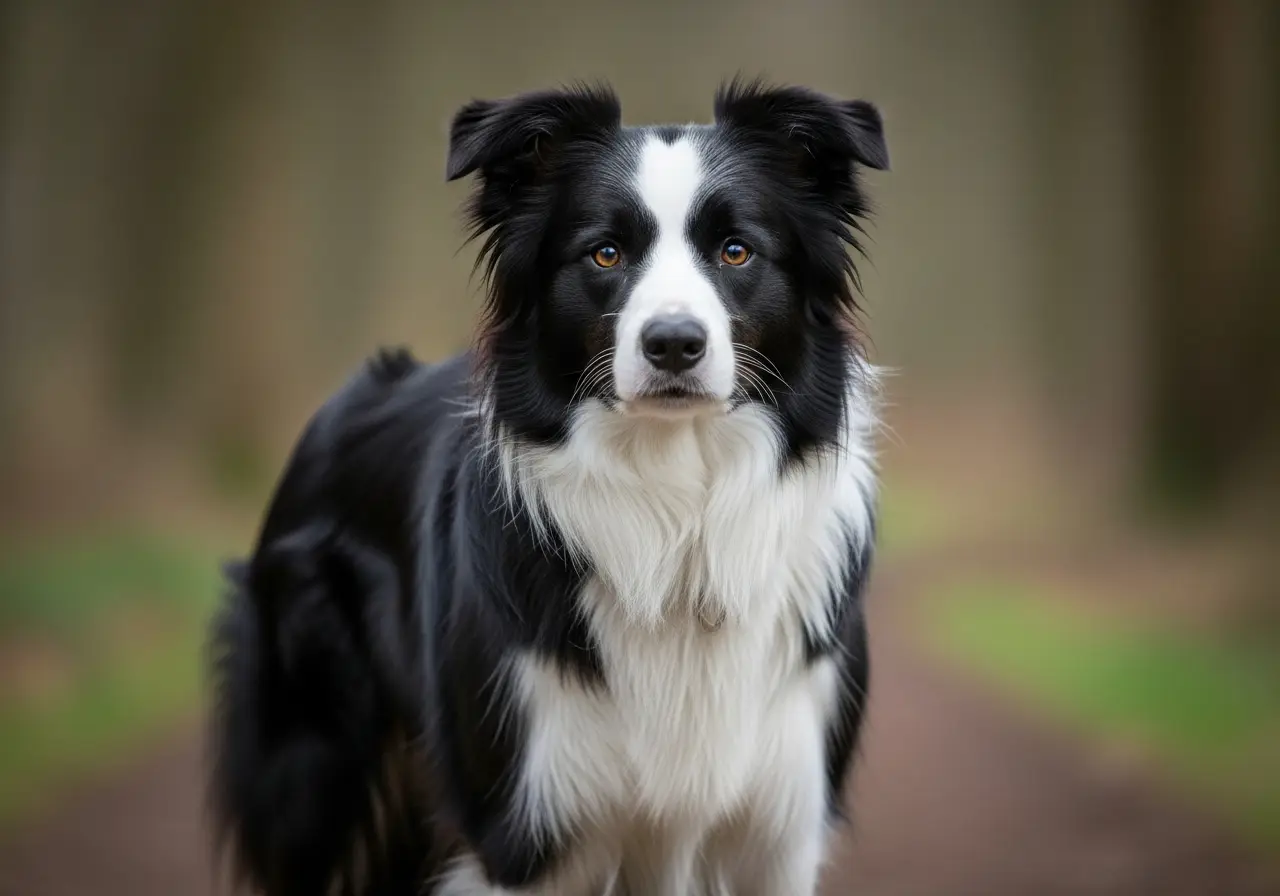
The Border Collie is a British herding dog, FCI Group 1, considered the most intelligent dog breed in the world, requiring daily intensive enrichment, with a withers height of 46–56 cm.
03Profile
Key facts and suitability
- Origin
- Grossbritannien
- Original purpose
- Sheep herding on the Scottish-English border
- FCI
- No. 297 · Group 1 · Section 1
- height at the withers
- 46–56 cm
- Weight
- 12–20 kg
- Life expectancy
- 12–15 Years
- Coat type
- Long-haired
- Minimum exercise
- 150 min/day
- Puppy price
- 1'200–2'500 CHF
- Waiting period
- 6 months
- Sports
- Agility · Flyball · Frisbee · Herding work · Obedience · Treibball
04Temperament
How the Border Collie shows up in everyday life
At 7 am in the morning: you get up; the Border Collie has already been watching you, how long you don’t know. It registers every change in your posture, gaze and walking speed. This is no coincidence; this is herding instinct in real time.
**What the dog needs:** The need for social contact of a Border Collie is high but specific. It wants to work with its primary caregiver, not just be in their proximity. Being left alone, even for three hours, is already a strain for many dogs of this breed. Mental work is not an additional offer: without structured mental stimulation, tension builds up that discharges into stereotypies, excessive barking or herding behaviour towards everyday objects. The exercise requirement is at least 90 to 120 minutes daily, but only makes sense if this movement is linked with tasks.
**How the dog reacts to the outside world:** The Border Collie typically shows reserve towards strangers. It observes, assesses and then decides. This is not mistrust in a negative sense; it is the behaviour of a dog that has learned to read situations before acting. Visitors spontaneously extending a hand will not thrill it. Running children trigger its herding instinct: it tries to control them with eye contact, body pressure and sometimes nipping at heels. This is not aggression but a serious everyday problem in families with young children.
**The confusion that costs owners dearly:** High need for social contact does not mean openness towards everyone. A Border Collie closely attached to its primary caregiver can simultaneously be reserved towards strangers and selective towards other dogs. Anyone who conflates the two will experience surprises.
05Needs
What this breed needs daily
Time per day: At least 90 to 120 minutes of active enrichment, a significant portion with a mental component. Pure mileage without a task only counts to a limited extent.
Mental work: This is the decisive factor. Border Collies need tasks that challenge their thinking: herding training (even without sheep, e.g. with balls), structured obedience training, demanding nose work, agility with precision requirements. Free play in the garden does not replace this.
Forms of exercise: Endurance running, bikejoring, swimming (all possible and sensible, but always as a supplement to structured work, not as a replacement. The Border Collie is not a dog that calms down through exhaustion; it recovers quickly and wants to continue).
Being left alone: A maximum of two to three hours is realistic for well-socialised dogs of this breed. Longer periods without a primary caregiver and without tasks cause stress. Anyone who is regularly away from home for eight hours must organise reliable care, such as dog daycare, a dog sitter, or a family member with experience.
Calmness training: Often underestimated. Border Collies tend to be in a state of constant alertness. Active calmness training (holding the down position, relaxation exercises, establishing a retreat area) is just as important as mental and physical stimulation. Anyone who only provides activity without training calmness breeds permanent tension.
Social structure: The dog needs a clear, consistent primary caregiver with a training routine. Changing rules or inconsistent communication create insecurity, and an insecure Border Collie compensates for this by controlling its environment.
Exercise
Very high
mental work
A lot
Social needs
High
training
Demanding
06Sport & Mental and Physical Stimulation
What sports the Border Collie is suited for
Realistic in terms of physiology and genetics. Not every breed suits every sport.
Structurally and physiologically suitable: Suitable for herding work, treibball and coursing · CaniCross / bikejoring possible.
07Quick Check
08Suitability
Who this breed suits and who it doesn't
✓Matches
The Border Collie suits people who can plan at least two hours of structured enrichment daily, not as an exception, but as part of everyday life. Specifically: owners with experience in active dog sports (agility, obedience, herding work), who enjoy precise training and are willing to continuously reflect on their own communication.
Suitable for individuals or couples with a flexible daily routine who integrate the dog into their activities (running, hiking, dog sports) while firmly anchoring structured training sessions. Also suitable for families with children from about ten years old, if both parents have experience with dogs and the herding instinct towards children is actively trained.
A rural or suburban environment with access to training areas is advantageous. Keeping a dog in an apartment is possible if mental and physical stimulation is implemented consistently and daily, not as a compromise, but as a conscious decision with the corresponding effort.
Anyone who already has experience with working dogs or herding dogs will understand the profile of this breed more quickly. For people who actively pursue dog sports as a leisure activity and are looking for a partner that thinks and works along, the Border Collie is a consistent choice, provided expectations are realistic.
×Doesn't match
The Border Collie does not suit people who are looking for a dog that fits into everyday life without fundamentally changing it. Anyone who is away from home for eight hours daily and has no reliable care solution will run into serious problems with this breed, regardless of how much exercise is possible in the evening.
Not suitable for first-time owners without prior experience with high-drive working dogs. Anyone who has previously experienced dog ownership as "walking the dog and cuddling" systematically underestimates the training effort required for this breed.
Families with small children under six years old should take the herding instinct seriously: running children trigger control behaviour, which is not a training issue, but genetics. Anyone who assesses this point as "it will settle down on its own" is mistaken.
Anyone who confuses a dog's close family bond and high mental workload with openness towards strangers (i.e. expects a "family-oriented" dog to automatically be sociable and approachable with visitors) will be surprised by reality. Reserve towards strangers is not an outlier in this breed, but standard. Anyone looking for an uncomplicated companion dog for city life will find one elsewhere.
09Related
Similar breeds and how they differ
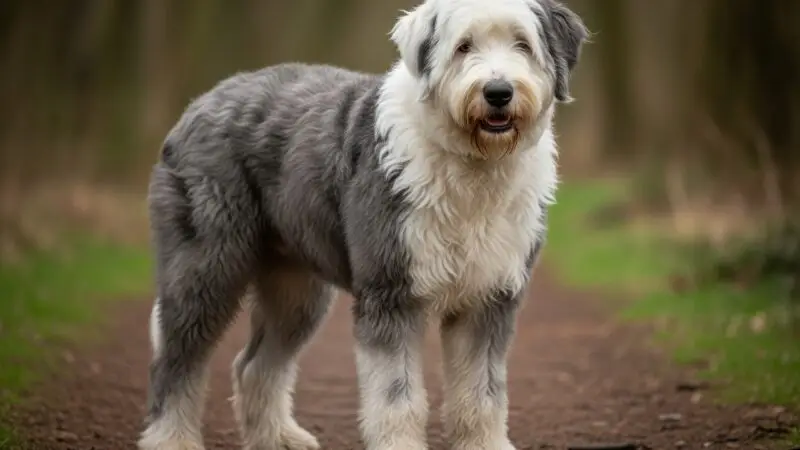
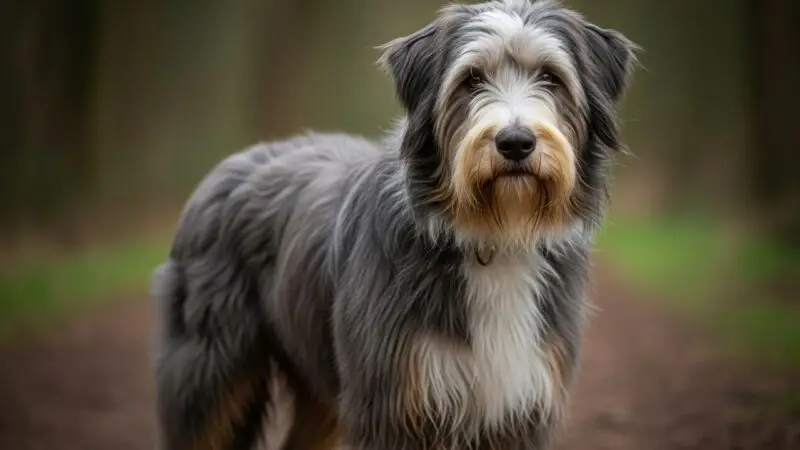
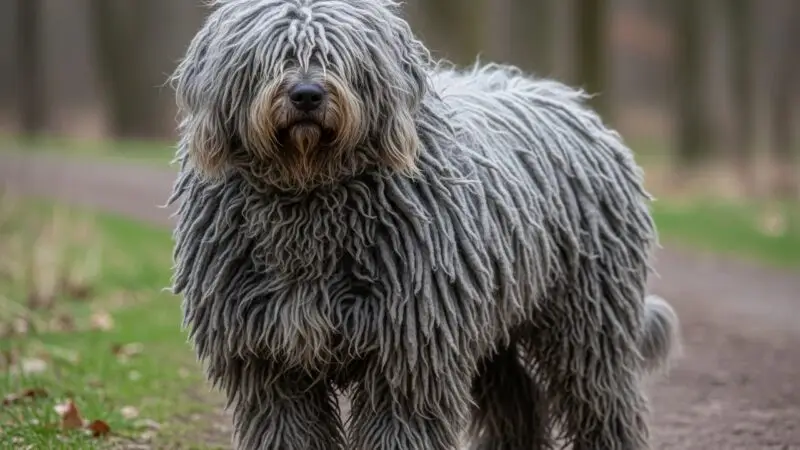
10Line reality
Show line, working line, breeder market
In Switzerland, two clearly distinguishable lines exist for the Border Collie, which differ considerably in temperament, drive intensity and suitability for everyday life.
Working lines (ISDS-registered): These dogs are selected exclusively based on herding performance. Their drive intensity is extremely high, their “eye” strongly pronounced, and their stress tolerance geared towards working situations. In everyday family life without a herding task, they present a serious challenge for most owners. They need several hours of structured work daily; agility or walks are not sufficient.
Show lines (FCI-registered): These dogs are bred according to FCI Standard No. 297, with emphasis on exterior and show suitability. Their working drive is generally somewhat more moderate than in pure working lines but remains very high compared to other breeds. Anyone buying an FCI-registered Border Collie should not assume they will receive a “more relaxed” dog.
Sport and agility lines: Some breeders select specifically for agility suitability, high body tension, quick reactions and close bonding with the handler. These dogs are very high-performing in the context of dog sports but are also demanding in pure everyday family life.
Anyone buying or taking on a Border Collie should actively ask about line affiliation and have the parent animals shown, ideally during work. The line largely determines what enrichment offer the dog needs daily.
11Health · Reality
What you need to plan for medically with your Border Collie
The Border Collie is considered robust in comparison with other breeds, but has specific genetic risks that should be known before purchase.
Eye diseases: Collie Eye Anomaly (CEA) and Progressive Retinal Atrophy (PRA) are the most common hereditary eye diseases of the breed. According to data from the Animal Health Trust (UK), CEA occurs in up to 70–80% of untested working-line populations, often without clinical relevance in mild forms, but with a risk of blindness in severe forms. Reputable breeding includes DNA testing of both parent dogs.
Hip dysplasia (HD): Less common than in large breeds, but present. The VDH recommends HD X-rays of the parent dogs before breeding.
Epilepsy: Idiopathic epilepsy occurs more frequently in Border Collies than in the breed average. First seizures usually appear between the first and third year of life. A genetic cause is likely; a validated DNA test is currently (as of 2024) not yet available for all forms.
MDR1 mutation: Some Border Collies carry the MDR1 mutation (also ABCB1 defect), which leads to severe intolerances to certain medications, including common deworming agents and anaesthetics. A DNA test before the first vet visit is advisable.
Life expectancy: 12 to 15 years, with good preventive healthcare and species-appropriate keeping. Overweight is rarer in this active breed than in others, but a real risk if kept inactive.
12Structured data
Health by the numbers
Prone to diseases
MDR1 mutation, Collie eye anomaly, epilepsy, hip dysplasia, osteochondrosis
Recommended health tests
DNA test for MDR1 and CEA, hip X-rays, eye examination
13Myths ↔ Reality
What is often said incorrectly about this breed
Five myths, five realities, five sources.
"Border Collies are so intelligent that they can entertain themselves.
The opposite is the case. Precisely because Border Collies learn extremely quickly and process stimuli intensely, they require structured enrichment from their owner, not freedom to organise themselves. An under-stimulated Border Collie develops strategies for self-entertainment that are almost always problematic for the owner: destruction, herding children or vehicles, stereotypies.
“Lots of exercise is sufficient; anyone who runs for two hours a day has a balanced Border Collie.”
Physical exercise alone is not enough. The Border Collie was bred for coordinated mental work under guidance. Pure mileage without a mental task produces a fit but still under-stimulated dog. Mental work (herding training, obedience, structured nose work) is not a bonus but a basic need.
“Border Collies are friendly towards all people and therefore suitable as a family dog.”
Border Collies often show reserve to reticence towards strangers; this is typical of the breed and not a training error. Their high need for social contact applies to their primary caregiver, not to the general public. As a family dog, the breed only works if the workload requirement is fully met, regardless of family size.
“A large garden replaces structured enrichment.”
A garden offers space but no task. Border Collies left to their own devices in the garden begin pacing, barking or checking fences, an expression of herding instinct without a meaningful goal. Structured interaction with the owner cannot be replaced by any outdoor area.
“Border Collies are beginner dogs because they learn so quickly.”
Quick learning also means quickly learning undesirable behaviours. Border Collies store patterns permanently, including those arising from inconsistent handling. Inexperienced owners often underestimate how precise and consistent training must be. The breed demands experience with the timing of reinforcement and clear communication.
14animal welfare
The animal welfare perspective
Breeder market, designer versions, animal shelter reality: what no one writes in the puppy ad.
In Germany and Switzerland, Border Collies belong to the breeds with the highest surrender numbers in animal shelters and breed rescue organisations. The main reason is documented and consistent: the mental workload requirement is systematically underestimated before purchase.
Backyard breeder market: The popularity of the breed (fueled by agility competitions, social media appearances, and the image of the "smartest dog in the world") has created a market for puppies that is not underpinned by breeding responsibility. Offers without health tests, without pedigree papers, and with prices significantly below the market level for serious breeding are not uncommon. These puppies often come from backyard breeder litters where neither parent dogs were tested for CEA, HD nor epilepsy.
Keeping-related problems: A Border Collie that is insufficiently stimulated daily develops behaviours that are burdensome for both owner and dog: constant barking, herding children or vehicles, destruction, stereotypies such as circling or shadow chasing. These behaviours are not character flaws; they are the logical consequence of a brain built for work that receives none. Many of these dogs end up in rehoming after six to eighteen months.
Rehoming as an equally valid option: Breed-specific rehoming organisations, including the Club für Britische Hütehunde e.V. and the BCCS, rehome Border Collies with known history, behavioural assessment, and professional support. An adult dog from rehoming is not a stopgap solution. Its character is assessable, its drive intensity known; these are pieces of information missing with a puppy. Anyone interested in a Border Collie should actively consider rehoming before buying a puppy.
15Costs · Transparency
What this breed realistically costs
Getting a dog: Puppies from serious breeding with FCI papers, health tests, and breeder support cost between 1,200 and 1,800 EUR or CHF in Germany and Switzerland respectively. Offers below this signal missing investment in preventive healthcare; it saves money at purchase, not at the vet. Rehomed dogs from breed rescue organisations usually cost a protection fee of 300 to 500 EUR.
Running costs per year: Food (high quality, for active dogs): 600 to 1,000 EUR. Care (coat, claws, ears; Border Collies are high-maintenance in the rough-coat variant): 200 to 400 EUR. Dog sport membership, training fees: 300 to 600 EUR; for this breed, not an optional item.
Vet: Basic care (vaccinations, parasite prophylaxis, annual check-up) approx. 300 to 500 EUR/year. Genetic tests (CEA, MDR1, HD X-ray) one-off 200 to 400 EUR. In case of illness, e.g., epilepsy treatment or eye surgery, individual costs can quickly reach 1,500 to 3,000 EUR.
Insurance: A dog health insurance for Border Collies costs 50 to 120 EUR/month depending on provider and scope of cover. Given the genetic risks (epilepsy, eye diseases), coverage is sensible; the policy should be taken out before the first vet visit, as pre-existing conditions are otherwise excluded.
16Puppy search
What you need to consider when choosing a breeder
- Reputable Border Collie breeders can be identified by specific criteria: The parent dogs are tested for hip dysplasia (HD), eye diseases (CEA, PRA) and, in appropriate lines, for the MDR1 mutation as well as genetically predisposed epilepsy.
- Test results are provided unsolicited, not only upon request.
- Puppies are given away no earlier than eight weeks of age.
- The breeder asks questions about your daily life, your experience and your enrichment concept; anyone who does not do this is not selecting for suitable owners.
- Viewings take place at the breeder's, with the opportunity to observe the mother in her daily routine.
- Beware of offers without a pedigree, without health tests and with immediate availability.
- Low prices for Border Collies are not a bargain; they signal a lack of investment in preventive healthcare.
- Adoption as an equally valid option: Border Collies are among the most frequently surrendered breeds in German and Swiss animal shelters.
- Breed-specific adoption organisations such as the Club für Britische Hütehunde e.V.
- or the BCCS place dogs with a known background and provide professional support during the handover.
- An adult dog from adoption has the advantage that character and drive intensity can already be assessed, which significantly reduces surprises.
FAQ
Frequently asked questions about the Border Collie
Is Border Collie a family dog?
Border Collie is considered suitable for families with good socialisation and species-appropriate care.
How much exercise does Border Collie need?
At least around 150 minutes of exercise per day. As an active breed, more so — plus mental stimulation.
What is the size and weight of Border Collie?
Fully grown, Border Collie reaches about 46–56 cm at the withers and weighs around 12–20 kg.
What is the life expectancy of Border Collie?
The life expectancy of Border Collie is approximately 12–15 years.
Which diseases are common in Border Collie?
MDR1 mutation, Collie eye anomaly, epilepsy, hip dysplasia, osteochondrosis
Participate
Do you have a good photo of your Border Collie?
We are looking for expressive images for our breed profiles. Submit yours; the editorial team reviews every submission before publication.
Does this breed suit you?
The most intelligent dog breed in the world. Without daily intensive enrichment, it develops destructive behaviour. Not a beginner's dog – not an apartment dog.