
Balto & Togo, sled dogs that made history
The full story of Balto and Togo: Why Togo ran 264 miles through ice and snow, but Balto became famous.
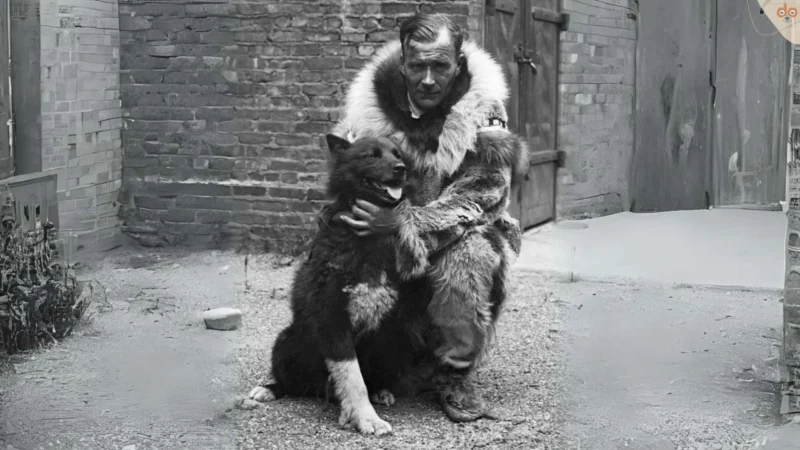
Content
Nome, Alaska, January 1925: Five children had already died of diphtheria. The life-saving antitoxin was 674 miles away in Nenana – and the only chance to get it was dog sleds. What followed is still considered today the most famous rescue mission in dog sledding history.
You probably know Balto. But do you also know the whole story? Two dogs became heroes, yet only one received the glory. Here you will find out what really happened.
Why was the diphtheria epidemic of 1925 so deadly?
Diphtheria hit Nome with full force. The indigenous population had no natural immunity – their bodies did not know this European disease. Dr Curtis Welch, the town’s only doctor, watched helplessly as children died within hours.
The problem: The only available antitoxin was already five years old and thus almost ineffective. Fresh serum was stored in Anchorage and Seattle – but how should it get to Nome? Aircraft could not take off at −40 °C. Ships were frozen in the ice.
Only the dog sled remained. Normally, the post took 25 days for the route from Nenana to Nome. The children in Nome did not have 25 days.
What role did Togo really play in the serum relay?
Here begins Togo’s true story – and it surpasses much of what cinema has made of it. Leonard Seppala set off on 28 January 1925 with his 12-year-old lead dog Togo from Nome. Their mission: to drive towards the approaching relay runner and take over the serum.
What no one expected: Seppala drove 170 miles to Shaktoolik – far beyond the original plan. Then he turned around and brought the serum back to Golovin. A total of 264 miles in three days, at temperatures around −30 °C and wind speeds of 65 km/h.
The most dangerous part came on the Norton Sound. Seppala decided to cut across the frozen sea – 20 miles over thin ice. The ice was already cracking under the paws, but Togo led the team safely across. A false step would have cost all their lives.
What made Balto the more famous of the two dogs?
Gunnar Kaasen took over the serum from Seppala in Golovin. His original route: 53 miles to Port Safety, where Ed Rohn was supposed to take over the final section. But Kaasen found Rohn asleep – and spontaneously decided to continue to Nome himself.
On 2 February at 5:30 am, Balto reached Front Street in Nome. The journalists were already waiting. Cameras clicked, headlines emerged: “Balto saves Nome!” The black Siberian Husky became famous overnight.
Togo, meanwhile, was already home with Seppala. No cameras, no headlines. Just an exhausted 12-year-old dog that had just performed the feat of its life.
What characteristics make Siberian Huskies endurance wonders?
Both dogs were Siberian Huskies – but what makes this breed so exceptionally enduring? Their metabolism can switch between carbohydrate and fat burning while running. This enables multi-day runs without a drop in performance.
Their paws function like natural snowshoes: broad toes with dense fur between the pads. The claws grip into the ice like spikes. At −40 °C, their paws do not freeze – blood circulation regulates itself automatically.
Togo was even exceptional by Husky standards. At 48 pounds, significantly lighter than Balto (about 60 pounds), he possessed an endurance that Seppala later described as “impossible”. In his career, Togo ran an estimated over 5,000 miles in front of the sled.
How did the serum relay change dog sledding?
The serum relay was the last major deployment of working dogs in Alaska. Only three years later, pilot Carl Ben Eielson flew medicine to Nome for the first time. The era of air freight began – that of dog sleds ended.
Just as dog sleds disappeared as a means of transport, America discovered them as a sport. The Iditarod Trail Sled Dog Race, run annually since 1973, follows the historical route of the serum relay.
Modern sled dogs differ significantly from Balto and Togo. Today’s Iditarod winners often weigh only 35–45 pounds – lighter and faster, but less robust. The genetics of the serum heroes lives on, however: Many breeding lines trace back to Togo and Seppala’s dogs.
Who arrived in Nome first?
Balto reached Nome as the last relay runner on 2 February 1925 at 5:30 am with the life-saving serum.
How old was Togo during the serum relay?
Togo was already 12 years old – for a sled dog, almost retirement age. His performance was all the more remarkable.
Which dog ran the longest distance?
Togo with 264 miles in three days. Balto ran the last 53 miles of the total 674-mile route.
Are there still descendants of the two dogs today?
From Togo, yes – Seppala continued breeding with him. Balto was castrated after his fame and could not sire offspring.
Where can you see the taxidermied dogs today?
Balto stands in the Cleveland Museum of Natural History, Togo in the Iditarod Trail Sled Dog Race Museum in Wasilla, Alaska.