
The Chihuahua: Origin, Characteristics and Lineage
Genetic studies prove: The gene for the tiny stature of the Chihuahua already existed in 50,000-year-old wolves. Origin, characteristics and why Teacup variants are problematic.
Content
- Does the Chihuahua really descend from the wolf?
- Where does the Chihuahua originate?
- What characteristics make the Chihuahua special?
- Do Chihuahuas need less exercise than large dogs?
- Why are Teacup Chihuahuas problematic?
- How do I recognise a responsible Chihuahua breeder?
- Frequently asked questions about the Chihuahua
You look at your Chihuahua – this 1.5-kilogram bundle with the huge ears – and think: How on earth does that descend from a wolf? The answer is actually more surprising than one would expect. A study published in „Current Biology” in 2017 identified the IGF1 gene, which controls the tiny stature, in 50,000-year-old wolf fossils. Fifty thousand years. That sinks in.
Does the Chihuahua really descend from the wolf?
Yes – and more directly than research long thought. All domestic dogs trace back to the wolf, but the Chihuahua carries a special gene variant with it. The IGF1 gene, which regulates certain growth factors, was already present in prehistoric wolves, long before any human domestication.
This mutation drastically reduced body size. Incidentally, the same variant is also found today in Pomeranians and Pekingese. The Chihuahua is therefore not an „artificially downsized” dog from which something was bred away – it carries ancient genes within itself that have always been there.
Where does the Chihuahua originate?
Mexico is considered the homeland of the modern Chihuahua. The Aztecs kept the Techichi, a small, partly hairless dog that was not only a companion but also had religious significance – archaeological finds clearly prove this.
There is also another theory: Spanish conquerors brought ancestors from Malta. DNA analyses speak a clear language, however – the Chihuahua shows far more genetic markers of Mexican than European origin.
The name itself comes from the Mexican state of Chihuahua, where American tourists bought the first specimens in the 1850s and took them to the USA.
What characteristics make the Chihuahua special?
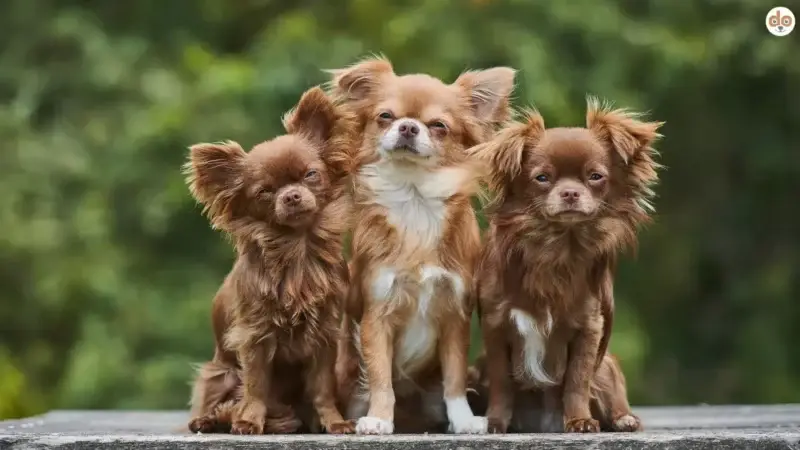
One to three kilograms, a maximum height at the withers of 23 centimetres – it is the smallest recognised dog breed worldwide. But if you therefore consider it delicate in character, you have been thoroughly mistaken.
Chihuahuas have a pronounced territorial instinct. A two-kilogram light dog defends its home just as resolutely as a shepherd dog – this does not come by chance, but from their history as guard dogs in Mexican households.
In addition, they live longer than average: 14 to 18 years are realistic. Their body temperature is between 38.5 and 39 °C, their body surface-to-volume ratio is unfavourable – they therefore freeze significantly faster than larger breeds, which owners often underestimate.
Do Chihuahuas need less exercise than large dogs?
No. That is a persistent myth that endures because it sounds convenient. A minimum of 30 minutes of exercise daily, split across several sessions, is the baseline – not optional.
Without sufficient enrichment, Chihuahuas develop destructive behaviour. Chewed furniture, torn cushions – these are not isolated incidents but classic consequences of under-stimulation. Anyone renting a property knows the risk.
Mentally, they are just as trainable as large breeds. Miniature agility or consistent trick training surprisingly tire them out well – and strengthen the bond in the process.
Why are Teacup Chihuahuas problematic?
“Teacup” variants weigh under 1.8 kilograms and come with serious health problems. Hypoglycaemia – low blood sugar – can occur in them after just a few hours without food; this is not a marginal phenomenon.
Their bones are so thin that a fall from the sofa can cause fractures. The skull often remains incompletely closed – an open fontanelle, as known from human newborns.
In extremely small bitches, caesarean sections are almost always necessary because the puppy heads are too large for the birth canal. Reputable breeders avoid this extreme breeding – for good reason.
How do I recognise a responsible Chihuahua breeder?
Good breeders show you both parent dogs and their health certificates – without any ifs or buts. They ask you about your living situation before they even talk about prices. And they do not release any puppies before the 12th week of life.
Warning signs to watch out for: multiple litters available simultaneously, puppies under 1.5 kilograms advertised as “particularly valuable”, handover at neutral locations such as car parks or motorway service areas.
A healthy Chihuahua puppy often costs between 800 and 1,500 euros depending on the breeder and region. Prices significantly below that are not a bargain – they are a warning signal.
Frequently asked questions about the Chihuahua
Can Chihuahuas live with children?
Yes, but with limitations: children from about 8 years old who can assess the dog’s fragility get along well with it. Toddlers can accidentally injure it – this is not a criticism, simply reality.
Why do Chihuahuas tremble so often?
Mostly it is simply due to the cold – their body surface-to-volume ratio makes them susceptible. Excitement and stress can also trigger trembling. If you are unsure, you should ask your vet whether both apply.
Are Chihuahuas difficult to housebreak?
Their small bladder requires more frequent breaks – going out every two to three hours is normal at the beginning, not the exception. Those who remain consistent will be rewarded. Those who let it slide have longer work ahead.
Do Chihuahuas get along with other dogs?
Quite possibly, with early socialisation. The problem: they tend to feel significantly larger than they are. Encounters with unknown dogs – especially large ones – should be kept in view.
How old do Chihuahuas get on average?
With good care, many reach 14 to 18 years. Dental problems and heart disease can impair quality of life in old age – regular vet visits literally pay off here.