
Why Do Huskies Have Different Eye Colours? Heterochromia in Dogs
Content
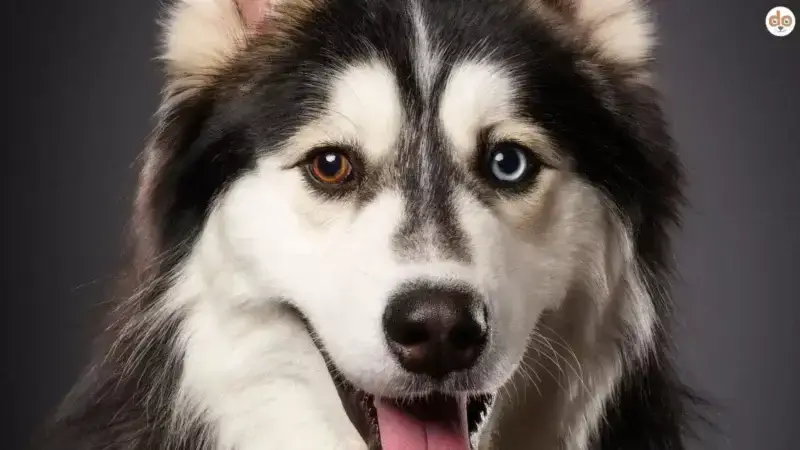
If you have ever looked into a Husky’s eyes, you know: it can literally stop you in your tracks. One eye ice-blue, the other warm brown – or both blue, or one split half brown, half blue. Huskies exhibit this trait more frequently than almost all other breeds, and it has a name: heterochromia. We take a closer look here at what lies behind it – genetically and in terms of health. And we also cover which other breeds have similarly striking eyes.
What Is Heterochromia Anyway?
In short: heterochromia means that the eyes of an animal (or even a human) do not have the same colour. There are two variants, which differ quite distinctly:
- Complete Heterochromia: The classic form – one eye blue, the other brown. Each eye has its own uniform colour.
- Sectoral Heterochromia: Here, the iris of a single eye is divided into two colours – for example, a predominantly brown iris with a blue “wedge” in it. This looks even more stunning than the complete form.
In Huskies, you encounter both forms – although the classic picture with one blue and one brown eye is the most well-known.
Why Do Huskies Have Different-Coloured Eyes in the First Place?
Eye colour depends directly on melanin – the pigment that also colours skin and fur. Lots of melanin in the iris results in brown eyes, little melanin makes the iris appear blue. With Huskies, the matter is somewhat more specific: researchers have identified a mutation in the ALX4 gene on chromosome 18, which causes affected eyes to produce less melanin – and thus appear blue.
Interestingly: just a single copy of this mutation can be enough for a Husky to develop heterochromatic eyes. Nevertheless, it is not automatic – not every Husky with this gene variant necessarily gets a blue eye. Other factors apparently play a role too, and research into this is still ongoing. The genetic basis is therefore clear, but not fully deciphered.
Other Dog Breeds with Heterochromia
Huskies get the most spotlight when it comes to different-coloured eyes – but they are not alone. In some other breeds, heterochromia also appears, albeit less frequently or for different genetic reasons:
- Australian Shepherd: Here, heterochromia is often linked to the Merle gene, which irregularly influences pigment distribution across the entire coat – and thus also in the iris.
- Border Collie: Different eye colours also occur in Border Collies, often as a combination of one blue and one brown eye.
- Louisiana Catahoula Leopard Dog: This breed is almost famous for its wildly patterned eyes – heterochromia and striking coat markings are almost part of the brand identity.
- Dalmatian and Chihuahua: In both breeds, heterochromia is more the exception, but it does occur – and naturally stands out.
Does heterochromia make the dog sick?
This is the question that keeps many dog owners awake at night once they hear about different-coloured eyes. The short answer: For Huskies, no. Heterochromia in this breed is usually purely cosmetic – vision is not impaired, and studies show no link between eye colour and visual quality. Vision problems due to iris colour are rare in Huskies. If you still want to be on the safe side, have the eyes checked by the vet – this makes sense for every breed, regardless of eye colour.
What lies behind the eye colour genetically?
In the end, it all comes down to melanin and the genes that control how much of it ends up in the iris. The ALX4 mutation in Huskies is a good example of how a single small change in the genetic makeup can produce a visible – and quite spectacular – trait. This trait is passed on within certain lines, so it is not a coincidence but has a clear origin. The fact that it makes the affected dogs look so distinctive is, in a way, a side effect of genetics – but not an unwelcome one.