
The Screw Tail in Dogs: Origin, Breeds and Possible Problems
Content
Some dogs carry their tail like a small rolled-up snail over their back – and anyone seeing this for the first time inevitably asks: Is that normal? Where does it come from? And: Should you worry? The short answer is usually no. But the longer path to that conclusion is quite fascinating.
What exactly is a screw tail?
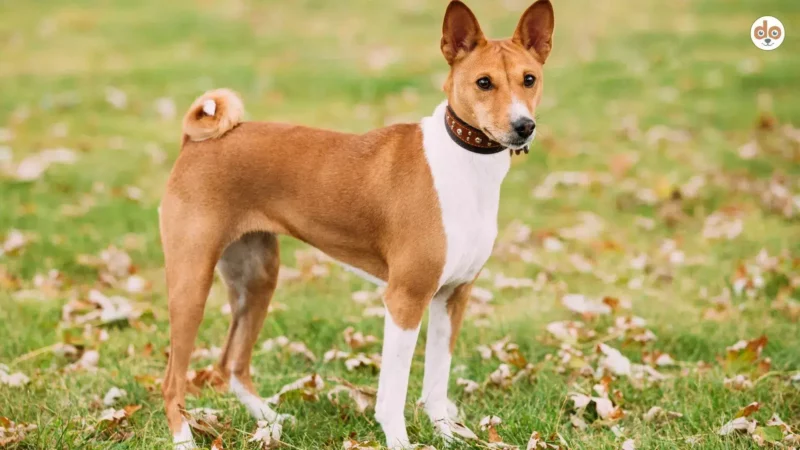
With a curled tail, the tip of the tail curls spirally or ring-shaped upwards or to the side – instead of hanging loosely down at the back. The result looks like a small curl or an almost closed circle at the end of the back. Anyone who knows a Shiba Inu immediately knows what is meant.
Important: This is not a malformation. It is a natural, breed-typical characteristic – arising from a very specific arrangement of the tail vertebrae and musculature, which gives the tail this characteristic curvature.
There are differences here. Some dogs carry a very tight, almost perfect spiral. In others, the curve appears looser, semi-circular, sometimes even slightly curved on both sides. The direction also varies – upwards, to the side, or both combined.
Genetic and Historical Backgrounds
The curled tail is not a coincidence of nature that appeared at some point and simply remained. It has reasons – genetic and historical.
Many breeds with a curled tail originally come from cold corners of the world: North Asia, Siberia, arctic regions. And there, this tail presumably had a very practical function: When the dog curled up, it protected its nose and snout from the cold with its tail. A natural protection against the cold, therefore – simple and effective.
Genetically, the curled form is passed on by dominant or recessive genes that have persisted in breeding lines over many generations. The exact molecular mechanics are not yet fully deciphered, but that it is a heritable trait is beyond doubt.
If you look at the distribution of these breeds on a world map, you quickly see a pattern: Origin from northern climate zones or from regions with particularly demanding living conditions. The characteristic has simply proven itself.
Dog Breeds with a Natural Screw Tail
For some breeds, the curled tail is part of the fixed appearance – and is even recorded in the official breed standard.
The best-known representatives:
- Shiba Inu: The small Japanese breed carries a dense, tightly curled tail that sits proudly over the back. Hard to miss.
- Akita Inu: The bigger brother of the Shiba – also from Japan, with a strong, full tail and a distinctive curl.
- Chow Chow: Robust Chinese breed, bushy tail carried firmly over the back – very typical for its overall appearance.
- Basenji: (also visible on the title image) The African hunting dog shows an elegant, spiral-shaped tail curve – one of its unmistakable features.
- Keeshond: Nordic dog with a lavish, furry tail that adorns the back.
- Samoyed: White, friendly, irresistible – and with a bushy, strongly curved screw tail.
- Alaskan Malamute (partially): Not in all individuals, but this Nordic sled dog breed frequently shows a loose spiral shape to the tail.
Are there health risks associated with a screw tail?
Usually: no. The curled tail is a completely normal characteristic for the affected breeds, which many of them have carried for centuries – without significant restrictions.
Nevertheless, there are a few points that you as a dog owner should pay attention to:
- Skin irritation and inflammation: The tight curve can create skin folds or damp areas where dirt and bacteria accumulate. This can lead to so-called ring-tail dermatitis – an inflammation at the base of the tail or in the curves. Not dangerous, but uncomfortable and requiring treatment.
- Injuries and wounds: Small scratches or wounds in the curled area often heal poorly due to lack of ventilation. Sometimes they remain open longer or become inflamed.
- Mobility and posture: In rare cases, misalignments of the tail vertebrae can lead to pain or limitations. However, this is the exception, not the rule.
- Care requirements: A ring tail occasionally needs some attention – regular checking, cleaning, and removing tangles if necessary. Not a major effort, but it is part of the routine.
Does your dog show itching, redness, swelling or pain on the tail? Then it is better to visit the vet too often than too little. If treated early, chronic problems can be prevented in almost all cases.
In short: The curled tail is no cause for concern – but if you look closely and do not neglect care, you are doing your four-legged friend a real favour.