
The 11 best guard dogs: protective four-legged animals with instinct
These 11 dog breeds come with a genuine protective instinct but require experienced owners. What legal requirements and keeping costs mean.
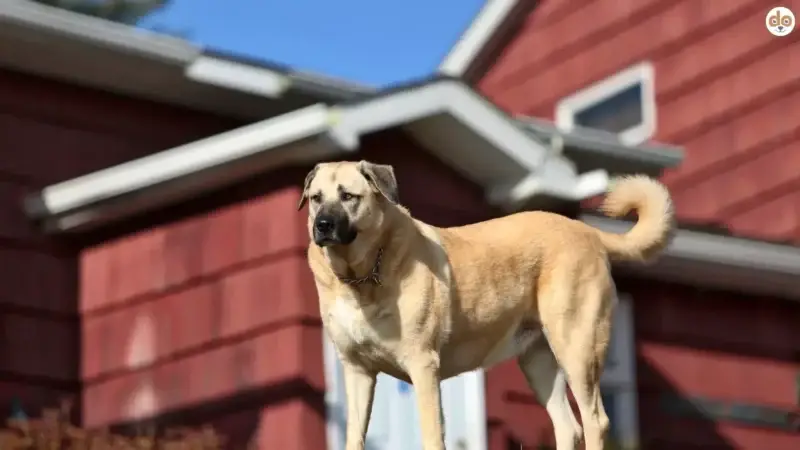
Content
- What makes a good guard dog?
- What legal aspects must you consider with guard dogs?
- Akbash: The independent livestock guardian
- Boerboel: Family dog with a pronounced protective instinct
- Dogo Argentino: The brave protector
- Dobermann: Intelligence meets readiness to protect
- Fila Brasileiro: The uncompromising guardian
- Kangal: The fearless herd guardian
- Mastino Napoletano: Imposing presence as a deterrent
- Owtscharka: Independent decision-makers
- Pyrénées Mountain Dog: Calm giant
You want your home to be properly guarded – not just by a dog that barks when the neighbour’s cat walks past? Then you need a real guard dog. One that does not understand territory as an abstract concept, but instinctively feels: I belong here, I hold my ground here. This is no trick you teach a dog. It is predisposition – and in some breeds it is so deeply ingrained that it is hardly switchable.
What distinguishes such a dog from your typical family dog? In short: guard dogs do not wait for instructions. They observe their territory independently, weigh up and act – if they deem it necessary. This makes them reliable protectors. And a real challenge for anyone who has never worked with such breeds.
What makes a good guard dog?
Territorial behaviour, a healthy dose of mistrust towards strangers – and yet the ability to distinguish a harmless situation from a real threat. That is the combination that counts. A dog that goes berserk at every postman is not a guard dog. That is a bundle of nerves.
Most breeds that are truly suitable for this task come from livestock guardian or protection dog breeding. For generations, they have been selected to make decisions independently and take responsibility for their territory. This means conversely: these dogs need an experienced hand. Anyone who thinks they can somehow muddle through is wrong.
What legal aspects must you consider with guard dogs?
This gets concrete – and unpleasantly surprising for many. Several of the breeds presented here are on breed lists in Germany, Austria or Switzerland. Kangal and Owtscharka are considered listed dogs in some federal states: proof of expertise, temperament test, muzzle obligation or lead requirement may be mandatory.
Before you get any of these dogs: call your municipality. Do not Google, call – the regulations differ partly from district to district. And expect your liability insurance to become significantly more expensive. Some insurers exclude certain breeds completely.
Akbash: The independent livestock guardian
When you meet an Akbash for the first time, you might think: It’s quite calm. True. Until it isn’t. This Turkish livestock guardian dog observes quietly, assesses – and then acts decisively if it deems it necessary. Distrust of strangers is not a trained behaviour; it is its baseline state.
It needs at least 1,000 square metres of fenced land – and a meaningful task. Without that, it will become unbalanced and develop problems. Keeping it in an apartment? Forget it. This is not a dog for an apartment; this is a dog for an estate.
Boerboel: Family dog with a pronounced protective instinct
The South African Boerboel is one of those rare combinations: at home, a true family person – outside, a dog that critically assesses every stranger. Not because you taught it to be so. Because it develops a loyalty towards its family that overshadows everything else.
60 to 80 kilograms. This is no small animal. What looks cute as a puppy can become dangerous with an adult Boerboel if the training was not consistent from the start. At least two hours of exercise daily, plus mental enrichment – this is not a suggestion; this is the minimum.
Dogo Argentino: The brave protector
Originally bred for hunting pumas and wild boar. This origin alone says everything about the character of the Dogo Argentino: courage, determination, zero fear of physical confrontation. It is territorial anyway, and its bond with its family is close.
In several German federal states, it is on the breed list – proof of expertise and a temperament test are then mandatory. When planning the annual costs, you should know: Higher insurance premiums and regulatory requirements can increase the effort by 1,000 to 2,000 euros per year.
Dobermann: Intelligence meets readiness to protect
Developed as a guard dog at the end of the 19th century, the Dobermann is today one of the most versatile working dogs of all. It learns quickly – really quickly. It registers changes in its environment before you even notice that something is wrong.
It views strangers critically and lets acquaintances pass. It can learn this distinction – but only if you teach it to do so. Three hours of enrichment daily, physically and mentally. If you cannot or will not provide that, you should choose a different dog.
Fila Brasileiro: The uncompromising guardian
With the Fila Brasileiro, there is one word that explains everything: “Ojeriza”. The natural, deep aversion towards unknown people. This is not a trained behaviour; it is a breeding trait. This makes it one of the most effective guard dogs – and a dog that is truly demanding in everyday life.
Only for very experienced owners, with a remote property. The Fila cannot be “switched off” – it guards around the clock and makes its own decisions. Planning visits becomes a logistical task. You have to like that – or better: You need to know that before you get this dog.
Kangal: The fearless herd guardian
From Anatolia, bred to defend herds against wolves and bears. Not against urban foxes – against wolves and bears. The estimated bite force is over 700 PSI, more than that of a lion. This is not a comparison for intimidation; this is simply physiology.
A large, securely fenced territory is mandatory – without a clear task, the Kangal develops behavioural problems. In some German federal states, it is on the breed list, which entails keeping regulations.
Mastino Napoletano: Imposing presence as a deterrent
Up to 70 kilograms, deep skin folds, a gaze that stops strangers in their tracks. The Mastino Napoletano does not have to do much – its appearance is often enough. Anyone who comes closer quickly realises: Behind this calm facade, constant observation is taking place.
Slobber? Lots of it. Hair? All year round. A life expectancy of only 8 to 10 years – this is a factor when getting a dog that you should consider honestly. Food costs are around 150 to 200 euros per month.
Owtscharka: Independent decision-makers
Caucasian and South Russian Owtscharkas were bred to protect large herds in rough terrain. These dogs make their own decisions – and they cannot be dissuaded from them. Not even by their owners, when it comes down to it.
Only for owners with large, remote properties. An Owtscharka in a residential area is not a good idea – for no one in the neighbourhood. It views every stranger as a threat. That is its job. Just not a job for every living situation.
Pyrénées Mountain Dog: Calm giant
What distinguishes the Pyrénées Mountain Dog from many other guard dogs: It does not bark at every little thing. It waits, assesses – and only reacts when something is truly wrong. This sovereignty is rare and makes it a remarkably pleasant guard dog, without excessive aggression.
The dense, white coat needs daily grooming – especially during shedding season, this is a real time commitment. Up to 60 kilograms, requiring accordingly more space and food. Not a dog for small premises.
Is a guard dog right for you?
Large property, preferably remote? Experience with independent breeds? Willingness to comply with legal regulations and plan for higher costs? If you can answer yes to all three questions – then a guard dog might actually suit you.
Can guard dogs be kept in a family?
Yes – but only with genuine experience, not with good intentions alone. Breeds such as the Boerboel or Dobermann can be wonderful family dogs. The prerequisite is consistent training from puppyhood. Anyone who waits until the dog is fully grown has missed the window of opportunity.
How expensive is keeping a guard dog?
Allow for 200 to 400 euros per month – food, insurance, veterinary care. In addition, there are one-off costs: the certificate of competence costs around 150 to 300 euros, and higher insurance premiums depending on the breed come on top.
Are guard dogs allowed to run freely in the garden?
Only on securely fenced properties. Most of these breeds do not voluntarily leave their territory – but the fence must keep strangers out. Not half-hearted, not “that should be enough”. Securely fenced means: secure.