4 sourcesUpdated September 11, 2026Responsible editor: Roger KleinText: Miriam Schäfer
01Summary
In a paragraph
If you only have 30 seconds.
The Chihuahua is the smallest recognised dog breed in the world, but it is not a lap dog. It bonds closely, alerts reliably, and reacts sensitively to inconsistent handling. With a life expectancy of 14 to 17 years, it belongs to the long-lived breeds, but brings breed-typical risks regarding teeth, patella, and heart. Anyone who takes it seriously receives an alert companion with clear opinions. Anyone who treats it as cute produces behavioural problems and systematically underestimates its health needs.
02Introduction
What makes the Chihuahua special
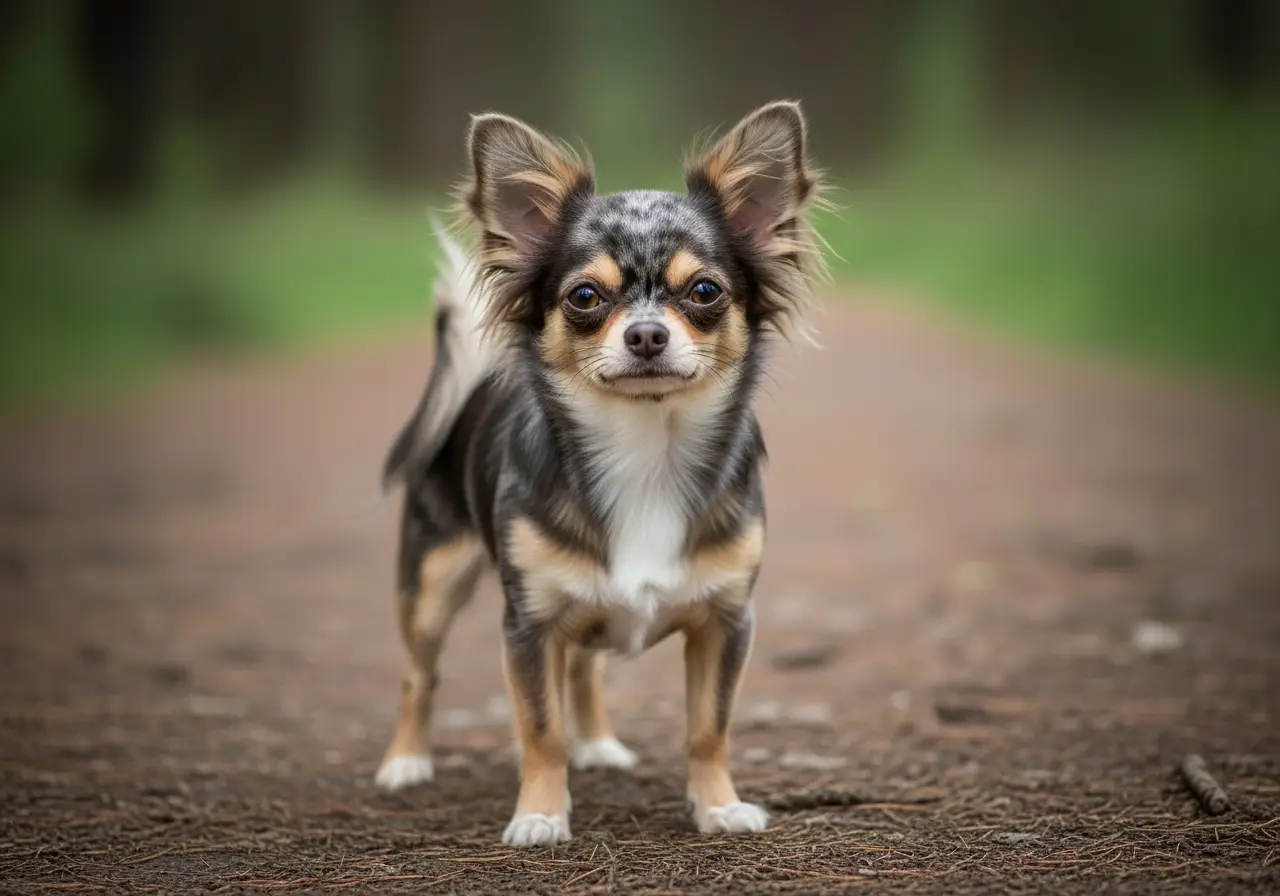
The Chihuahua is the smallest dog breed in the world from Mexico, FCI Group 9, long-lived and sensitive to cold, withers height 15–23 cm.
03Profile
Key facts and suitability
- Origin
- Mexiko
- Original purpose
- Companion dog, possibly ritualistic
- FCI
- No. 218 · Group 9 · Section 6
- height at the withers
- 15–23 cm
- Weight
- 1–3 kg
- Life expectancy
- 14–17 Years
- Coat type
- Short-haired
- Minimum exercise
- 20 min/day
- Puppy price
- 1'000–2'500 CHF
- Waiting period
- 9 months
- Sports
- Obedience · Tricks
04Temperament
How the Chihuahua shows up in everyday life
The Chihuahua has two sides that must not be confused. Within the family, it has a high need for social contact: it wants to be with its human, follows from room to room and seeks physical contact. Towards strangers, it reacts reservedly up to mistrustfully. An intense bond with the reference person therefore does not mean that the dog is open to every visitor. Anyone who confuses this will be surprised by barking at the door.
When coming home, this means concretely: The Chihuahua greets intensively, wants to be picked up, spins two circles around the legs. If the doorbell rings an hour later, it stands barking in the hallway and needs clear instruction. On a walk, it meets an unknown dog and puffs itself up. Its small body size does not protect it from conflicts; on the contrary.
In the household, it takes position. It does not lie passively in its basket, but observes events from an elevated point. It alerts at noises. With guests, it decides itself whether approach is desired, and that takes time. Very small children, hectic movements or rough play situations overwhelm it.
With a clear daily structure, it is an adaptable companion that also copes well in a city apartment. Without structure, it develops its own agenda: guarding the sofa, barking at every noise, resource guarding towards the partner.
05Needs
What this breed needs daily
The Chihuahua needs around 45 to 60 minutes of exercise daily in several smaller units. Two to three walks with sniffing breaks are more sensible than one long tour, because its stride frequency is high and longer distances put more strain on the joints of small dogs. At temperatures below approximately 8 degrees, it needs a coat. The small body mass cools down quickly, and shivering is stress, not cuteness.
Mental and physical stimulation is equivalent to exercise. Nose games in the apartment, simple trick training, search games with food and target object training challenge it without physical overload. A training session of 10 to 15 minutes a day is sufficient, provided it is consistent. The Chihuahua learns quickly, but also forgets quickly if rules are applied inconsistently.
Socialisation must take place early and systematically. Puppies should experience different people, noises, surfaces and calm dog contacts from the eighth week of life onwards. A supporting dog training school with experience in small dog training is strongly recommended, because standard puppy groups with larger breeds pose a risk of injury.
Rest phases are mandatory. An adult Chihuahua needs 16 to 20 hours of rest and sleep per day. Without clear rest anchors, it becomes over-excited and develops barking and guarding behaviour that is difficult to correct. Being left alone is possible, but should be built up gradually. Four hours are considered a realistic upper limit for a well-trained dog.
Exercise
Low
mental work
Medium
Social needs
High
training
Medium
06Quick Check
07Suitability
Who this breed suits and who it doesn't
✓Matches
The Chihuahua suits people with a calm, structured daily routine who want a small companion dog with its own opinion. Concretely: Individuals or couples working from home or in part-time mode, who plan 1 to 1.5 hours daily for exercise, training and mental and physical stimulation. Seniors with sufficient mobility for several short walks are a good profile, provided they train consistently and do not soften behavioural rules out of compassion.
Families with children from around 10 years old work if the children have learned to treat a small dog respectfully and calmly. A city apartment is no hindrance. On the contrary: the breed is well suited for urban keeping, provided stairwells and lifts are handled safely. Owners should be prepared to attend a supporting dog training school and engage with small-dog-specific health issues such as patellar luxation and dental care.
×Doesn't match
The Chihuahua is not suitable for households with very young children under 6 years of age or a hectic atmosphere. Fall injuries caused by careless movements are the greatest risk, and the dog reacts to haste with stress or aggression. Anyone looking for an uncomplicated family dog that interacts openly with all people and tolerates bustle should choose a different breed, since Chihuahuas show little friendliness towards strangers.
The breed is unsuitable for owners who confuse a small dog with a low-maintenance dog. Anyone unwilling to set consistent boundaries produces barking behaviour and resource guarding. Those who are away from home for 8 to 10 hours and cannot arrange care also fail to meet the attachment needs. Owners looking for outdoor sports in all weather conditions are also mistaken.
08Related
Similar breeds and how they differ



09Line reality
Show line, working line, breeder market
In the Chihuahua, there is no distinction between working and show lines as seen in hunting or herding dogs, because the breed is classified purely as a companion dog (FCI Group 9, without working tests). The relevant differentiation runs along other criteria: coat variety, breeding goal focus and regional breeding traditions.
The FCI distinguishes two coat varieties: short-haired and long-haired. Both are described in the same standard (No. 218) and may be bred together. Long-haired lines are characteristically considered somewhat calmer, but this varies greatly individually and is not a hard rule.
More important is the difference between FCI-compliant breeding and so-called Teacup or XXS lines. The latter are not an recognised breeding type, but a marketing construct that selects for extreme underweight. FCI breeders aim for a final weight of 1.5 to 2.5 kilograms with a compact, healthy body structure.
Regionally, differences emerge between American show lines (often somewhat more extreme in apple head shape, more compact), European lines (closer to the original type) and Mexican origin lines (often slightly larger and more robust). Anyone looking for a Chihuahua should ask the breeder about breeding goals, the final weight of the parent animals and health checks, as these factors are more indicative than pedigree origin alone.
10Health · Reality
What you need to plan for medically with your Chihuahua
The life expectancy is 14 to 17 years, which is among the highest of all breeds. A study by the Royal Veterinary College London (VetCompass, 2024) determined an average life expectancy of 11.8 years for British Chihuahuas. The discrepancy with higher values is partly explained by early losses in extremely small lines.
Three complexes are relevant as breed-typical. Patellar luxation occurs with increased frequency in small dog breeds. Heart diseases, particularly mitral valve insufficiency in old age, are documented. Dental diseases are the most common health problem overall: Due to the shortened jaw, crowding, tartar, and early tooth loss occur. The VetCompass study identified dental diseases as the most frequent diagnosis in British Chihuahuas.
Further relevant topics are hydrocephalus in strongly apple-headed lines with an open fontanelle, hypoglycaemia in puppies under 1 kilogram body weight, and tracheal collapse. Overweight is an underestimated risk: already 200 grams too much correspond to 10 percent overweight in a 2-kilogram dog.
Preventive care includes annual dental checks from the 3rd year of life, patellar check-ups at the vet, cardiac auscultation from the 8th year of life, and consistent weight management. In case of coughing, exercise intolerance, or a hopping gait, investigation is advisable.
11Structured data
Health by the numbers
Prone to diseases
hydrocephalus, molera (open fontanelle), patellar luxation, heart problems (mitral valve dysplasia), hypoglycaemia, dental problems
Recommended health tests
cardiac examination, patella screening, skull X-ray
12Myths ↔ Reality
What is often said incorrectly about this breed
Five myths, five realities, five sources.
A Chihuahua needs hardly any exercise because it is so small.
The daily exercise need lies at around 45 to 60 minutes plus mental and physical stimulation. Whoever only transports the Chihuahua in the handbag promotes muscle loss, overweight and behavioural abnormalities. The breed is classified as a companion dog, not as sofa inventory.
Chihuahuas are aggressive yappers by nature.
Uncontrolled barking is usually a consequence of coddling, lack of socialisation and inconsistent training. The Chihuahua shows breed-typical guarding behaviour and scepticism towards strangers. With clear leadership and early socialisation, the barking behaviour can be regulated well.
Teacup Chihuahuas are a separate recognised variant.
The term Teacup is a marketing concept and not an FCI standard. Standard No. 218 requires a weight between 1.5 and 3.0 kilograms, ideally 1.5 to 2.5 kilograms. Animals under 1.5 kilograms have significantly increased risks of hypoglycaemia, bone fractures, hydrocephalus and premature mortality.
Chihuahuas are ideal dogs for beginners because they are so small.
Small size does not replace training. The Chihuahua is sensitive, willful and responds strongly to the moods of its owner. Without consistent structure, resource guarding, leash aggression and separation stress can quickly develop. Beginners need a supporting dog training school.
13animal welfare
The animal welfare perspective
Breeder market, designer versions, animal shelter reality: what no one writes in the puppy ad.
The Chihuahua belongs to the breeds most frequently produced by backyard breeders in the German-speaking region. Online platforms are full of advertisements for puppies under 500 euros, often from Poland, the Czech Republic, or Slovakia, transported in small vans without veterinary supervision. These animals are often given away too young, unvaccinated, unchipped, and carry parvovirus or distemper. The animal welfare association has been pointing to this market for years. Anyone planning a Chihuahua should factor in that a reputable puppy costs between 1,800 and 2,800 euros in the DACH region.
The second problem concerns breeding itself. So-called Teacup lines are selectively bred for extreme underweight. Animals under 1.5 kilograms have a significantly shortened life expectancy, frequent hypoglycaemic episodes, and a high fracture risk. Excessively apple-headed lines with an open fontanelle and tendency towards hydrocephalus are also marketed by some breeders as standard-compliant, although the FCI standard prescribes the apple shape but not pathological expression.
Obesity is a man-made problem. Studies by the Royal Veterinary College show that overweight is disproportionately common in small and companion dogs because owners underestimate the small amounts of food and compensatorily give treats. Lack of exercise due to constant carrying exacerbates the effect.
Adoption from animal shelters and breed-specific emergency organisations is a fully valid option. Chihuahuas are surrendered disproportionately often because owners have underestimated the barking behaviour, attachment intensity, or training requirements. Adult animals have the advantage that character, health, and behaviour are already recognisable. Organisations such as the Chihuahua Club Germany also place animals in distress from dissolutions.
14Costs · Transparency
What this breed realistically costs
A responsibly bred Chihuahua puppy costs between 1,800 and 2,800 euros in the DACH region, depending on lineage, health checks of the parent dogs and region. Advertisements under 1,000 euros generally indicate backyard breeder structures or imports from abroad. The fee for rehoming from an animal shelter is between 250 and 450 euros.
Ongoing costs per year range between 800 and 1,400 euros. High-quality food is only required in small quantities for the Chihuahua: approximately 40 to 70 grams of dry food daily, which corresponds to annual food costs of 200 to 400 euros. Routine vet costs for vaccination, deworming and annual check-ups are between 200 and 350 euros. Dental treatments under anaesthesia, frequently required from middle age onwards, cost between 400 and 900 euros per procedure.
Pet insurance or surgery insurance is advisable and costs 30 to 60 euros monthly. The dog tax in Germany is between 90 and 180 euros annually depending on the municipality, with comparable rates in Austria and Switzerland. Over the average lifespan of 14 to 17 years, total costs add up to 15,000 to 25,000 euros.
15Puppy search
What you need to consider when choosing a breeder
- A reputable breeder shows the mother dog, littermates, and rearing environment in their own household.
- Puppies are given away no earlier than 10 to 12 weeks of age, because for small dogs longer maternal imprinting is important for stable socialisation.
- Health examinations of the parent animals must be available: patellar findings, cardiac auscultation, eye examination.
- The breeder asks questions in return, checks the owner, and does not place puppies with just anyone.
- Scepticism is warranted for online advertisements using terms such as Teacup, Mini-Chihuahua, or XXS.
- Animals with an adult weight of under 1.5 kilograms contradict the FCI standard and carry massive health risks.
- Caution is also advised regarding puppies from Eastern European car transport, which often originate from backyard breeder structures without veterinary care.
- Adoption from animal welfare organisations is an equally valid option.
- Chihuahuas frequently end up in animal shelters because their training requirements were underestimated.
- Adult animals already show their character, which makes selection easier.
FAQ
Frequently asked questions about the Chihuahua
Is Chihuahua suitable for beginners?
Chihuahua is considered suitable for first-time dog owners.
How much exercise does Chihuahua need?
At least around 20 minutes of exercise per day.
Does Chihuahua suit an apartment?
With enough exercise and enrichment, Chihuahua can also be kept in an apartment.
What is the size and weight of Chihuahua?
Fully grown, Chihuahua reaches about 15–23 cm at the withers and weighs around 1–3 kg.
What is the life expectancy of Chihuahua?
The life expectancy of Chihuahua is approximately 14–17 years.
Which diseases are common in Chihuahua?
hydrocephalus, molera (open fontanelle), patellar luxation, heart problems (mitral valve dysplasia), hypoglycaemia, dental problems
Participate
Do you have a good photo of your Chihuahua?
We are looking for expressive images for our breed profiles. Submit yours; the editorial team reviews every submission before publication.
Does this breed suit you?
The smallest dog in the world – but not a toy. Extremely sensitive to cold. Prone to ‘Small Dog Syndrome’ without clear leadership. Not suitable for young children.