
Top 10 Snouts: Which Dog Breeds Have the Best Sense of Smell?
Bloodhounds have 230 million olfactory cells and can follow trails that are 300 hours old. We show you which 10 dog breeds have the best snouts – with concrete figures and surprising differences.
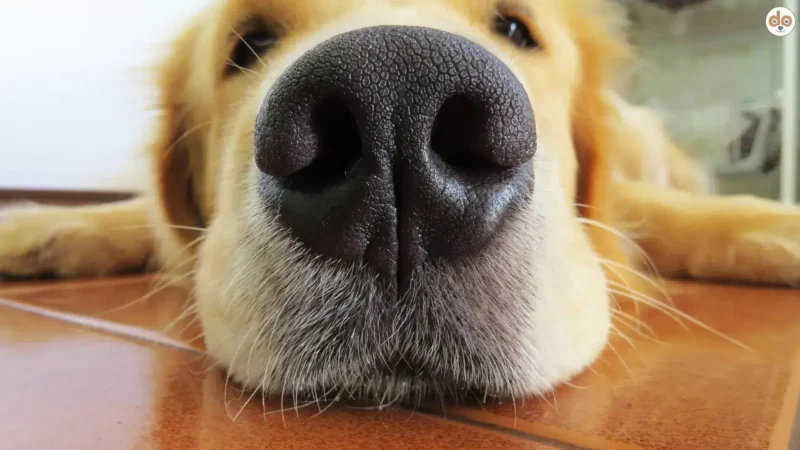
Content
Why do some dog breeds smell so much better than others?
A Bloodhound comes with around 230 million olfactory cells – in humans, there are only 5 million. But if you think that explains everything, you’re wrong. The shape of the nasal cavity, the surface area of the olfactory mucosa, and a centuries-old breeding history also play a decisive role in determining which dog becomes a true scent hound.
Dogs with long snouts simply have more space for olfactory tissue – that’s anatomy, not coincidence. Breeds that have been bred over generations for tracking work developed not only a finer nose but also the behaviour to stubbornly follow a scent trail. A Dachshund can technically smell better than a Golden Retriever – it just uses this gift in its own unique way.
An often underestimated factor: nasal moisture. A dry dog nose absorbs odour molecules significantly worse. So when scent hounds constantly lick their noses, that’s not a nervous twitch – that’s active scent work.
Which 10 dog breeds smell the best?
This ranking is based on studies of olfactory cells, deployment statistics from rescue services, and anatomical measurements of the olfactory mucosa. Of course, not every individual dog of a breed reaches top values – but these ten have been given the best possible prerequisites.
Bloodhound: The Uncontested Champion
230 million olfactory cells, a nasal cavity roughly the size of a tennis ball, and distinctive skin folds on the head that literally channel odour molecules towards the nose. A Bloodhound can follow a trail that is 300 hours old for over 200 kilometres – it sounds like exaggeration, but it is documented.
The Belgian police use Bloodhounds to track down missing persons – even when rain has long since diluted the trail. And those long, floppy ears? Not just a design feature. They stir up ground scents while sniffing and measurably increase the odour concentration around the nose.
Basset Hound: Low-Flying Scent Machine
The short legs bring its 220 million olfactory cells directly to where scent trails are most concentrated – namely close to the ground. The oversized ears act like dust wands for molecules that would otherwise simply dissipate.
French hunters originally bred Bassets for hare hunting in dense undergrowth. Where larger dogs simply cannot get through, the Basset works its way through with its nose. Its seemingly relaxed, almost sleepy demeanour is highly deceptive – at the scent of game, it becomes a laser.
Coonhound: Specialist for Difficult Trails
210 million olfactory cells, plus a nasal mucosa that is around 40% larger than in the average hunting dog. What makes Coonhounds particularly valuable: they can distinguish between fresh and old trails – an ability that is worth its weight in gold in rescue operations.
In Tennessee, they hunt raccoons that deliberately obscure their trails by crossing water. A trained Coonhound finds the trail again even after river crossings. Other breeds? They often simply give up at this point.
German Shepherd: Versatile Working Nose
180 million olfactory cells – and the intelligence to distinguish between different categories of odours. German Shepherds demonstrably learn faster than most other breeds to separate harmless from suspicious smells.
Customs officers value precisely this trait: the dog sniffs out drugs in a suitcase without simultaneously reacting to perfume or food. This selective perception makes it a reliable, precise partner in daily work.
Belgian Malinois: High-Performance Scent Dog
175 million olfactory cells – and a concentration ability that has no equal. What distinguishes the Malinois from many other scent dogs: it does not lose focus even after hours of searching. No letting up, no drifting away.
Military dogs of this breed find explosives in active war zones – noise, stress, chaos notwithstanding. Other dogs would have long since switched off. The Malinois’s endurance in scenting is simply legendary among experts.
Weimaraner: Precise Game Trail Nose
170 million olfactory cells in a long-drawn snout that filters odours rather than simply letting them pass through. Weimaraners do not just smell intensely – they smell selectively. They filter out irrelevant scent notes and pursue relevant ones with endurance.
Austrian hunters use them for tracking wounded game. A Weimaraner follows a blood trail for hours and ignores all other game scents around it – as if it had an internal filter.
English Springer Spaniel: Water-Resistant Snout
165 million olfactory cells and a nasal mucosa that functions reliably even in damp conditions. English Springer Spaniels can track game that has fallen into water – an ability that only a few breeds truly master.
British rescue teams rely on them precisely during floods. Where other dogs’ wet noses impair their scenting performance, Springer Spaniels simply keep working – unfazed.
Pointer: Scent Compass for Long Distances
160 million olfactory cells and a behaviour that makes scent sources detectable even over great distances. Pointers do not just “point” – they actively triangulate odours through targeted head movements, almost like a biological tracking device.
When searching for birds, they systematically work through different wind directions to capture even weak scent signals. This methodical, almost cool approach makes them remarkably efficient tracking dogs.
Doberman: Intensive Short-Range Nose
150 million olfactory cells, optimised for strong scent concentrations. The Doberman is not a tracker for faded, old trails – but it reacts lightning-fast when a relevant scent is present. Strength triggers reaction, without delay.
Security services value exactly that: the dog detects fear sweat or concealed weapons in a crowd faster than practically any other breed. Precision at short range rather than endurance on the trail.
Labrador Retriever: Reliable All-Purpose Nose
145 million olfactory cells – combined with a willingness to cooperate that is hard to beat. A Labrador may not find the very faintest trail. But it does not give up. Not in bad weather, not during long shifts, not when things get tough.
Airport security teams around the world rely on exactly this thoroughness. The Labrador systematically searches suitcase after suitcase without getting distracted. Sometimes consistency is simply what really matters.
Can other factors influence the sense of smell?
Yes, and more significantly than many think. From the seventh year of life onwards, olfactory performance declines by about 10% per year. Overweight worsens nasal breathing. Certain medications noticeably dampen scent perception – not without reason do vets specifically ask about ongoing treatments before deployment of tracking dogs.
Training can enormously enhance existing aptitudes. An untrained Bloodhound with 230 million olfactory cells can perform worse in the field than an intensively trained Labrador. Genetics provides the potential – but only practice turns it into a real skill.
And then there is daily form. Dogs smell better in the morning than in the evening, better with high humidity than in dry conditions. Stress blocks scent processing – a relaxed mixed-breed dog can easily outperform a tense purebred on a good day. This remains sometimes hard to explain, but it is so.