
01Summary
In a paragraph
If you only have 30 seconds.
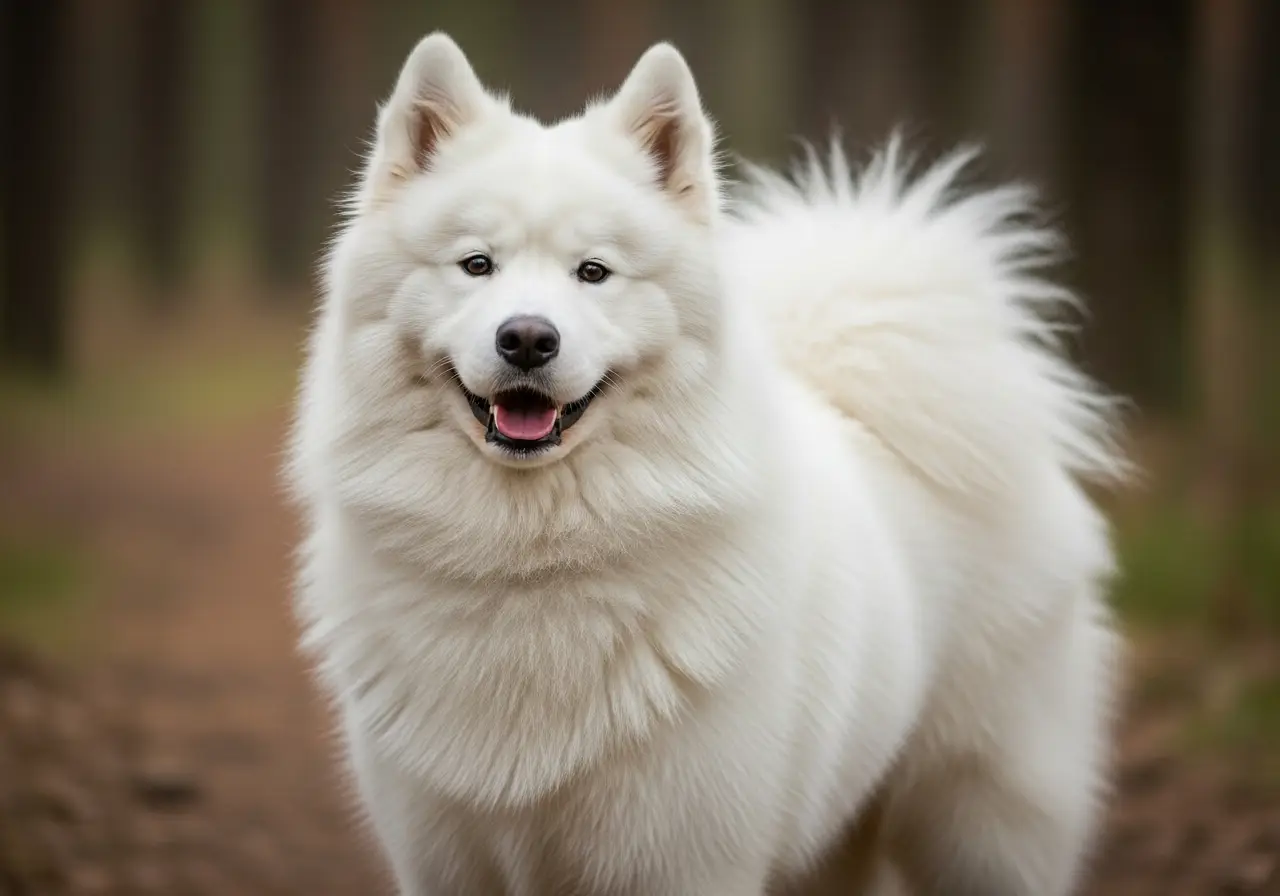
The Samoyed is a Nordic working dog with Siberian roots, carrying sledding and reindeer herding in its genetics. The white coat and characteristic "smile" disguise its actual demands: This dog needs at least 90 minutes of active exercise daily, intensive social contact and consistent enrichment. Anyone who underestimates this ends up with a destructive, noisy housemate.
02Introduction
What makes the Samoyed special
Samoyed: white-shining Siberian working dog, sociable and energetic with high-maintenance coat and permanent smile
03Profile
Key facts and suitability
- Origin
- Sibirien/Russland
- Original purpose
- Sled pulling Herding
- FCI
- No. 212 · Group 5 · Sektion 1: Nordische Schlittenhunde
- height at the withers
- 50–60 cm
- Weight
- 16–30 kg
- Life expectancy
- 12–14 Years
- Coat type
- Doppel
- Minimum exercise
- 90 min/day
- Puppy price
- 1'800–3'000 CHF
- Waiting period
- 5 months
- Sports
- Sled dog sports Agility Canicross
04Temperament
How the Samoyed shows up in everyday life
When you come home, the Samoyed greets you loudly and physically close; it jumps up, vocalises and seeks immediate contact. This is not an isolated incident but a daily pattern. The dog has three hours of being left alone as an upper limit, not as a comfort zone.
On the walk, the internal axis becomes clearly apparent: the Samoyed pulls, sniffs intensively and reacts to movement stimuli (bicycles, joggers, wild animals) with increased arousal. Off-leash running without a secure environment is not standard practice but the result of long-term training development. The hunting and running drive is present and activated by stimuli.
The external axis behaves differently: towards strangers, the Samoyed usually shows openness or neutral curiosity. It barks, sniffs and then allows itself to be touched. Aggressive territorial behaviour is not typical for the breed; the FCI standard explicitly states it is unsuitable as a guard dog. However, this openness towards strangers does not mean that the dog occupies itself or waits calmly.
In the household, the Samoyed seeks closeness to its primary caregiver. It follows through rooms, lies down within sight and makes itself heard acoustically if it lacks interaction. Barking is a means of communication and becomes a problem when stimulation and social contact are lacking.
It is crucial to distinguish between both axes: a high need for social contact with the family does not automatically mean sociability in every situation. The Samoyed bonds closely with its reference group and needs this bond actively lived out daily, not just passively present.
05Needs
What this breed needs daily
The Samoyed requires at least 90 minutes of active exercise daily, not walking at a leisurely pace but stimulation with speed and tasks. Canicross, skijoring, bikejoring or extended hikes correspond to its genetic profile as a sled dog. Pure walks on short routes are not sufficient.
In addition to physical exercise, the dog needs mental enrichment. Nose work, search games and structured training challenge it cognitively. A Samoyed that is physically stimulated but mentally under-stimulated will develop behavioural problems such as barking, digging and destroying objects.
The need for social contact is high and non-negotiable. The dog requires daily, active contact with its primary caregiver or group. Being left alone for more than three hours is a strain for most Samoyeds, manifesting as separation anxiety or vocalisations. Anyone who regularly has longer absences must plan for reliable care solutions.
A securely fenced exercise area significantly facilitates management. The fence must be escape-proof; Samoyeds dig and climb if motivated.
Grooming is an independent time factor: outside of shedding periods, two to three brushing sessions per week are required. During the twice-yearly shedding period, effort increases to daily brushing over several weeks. Anyone who underestimates this time commitment risks matting that can only be remedied by clipping, which damages the coat.
Exercise
Very high
mental work
A lot
Social needs
Very high
training
Demanding
06Sport & Mental and Physical Stimulation
What sports the Samoyed is suited for
Realistic in terms of physiology and genetics – not every breed suits every sport.
Structurally and physiologically suitable: Suitable for mantrailing, dummy work and tracking · CaniCross / bikejoring possible.
07Quick Check
08Suitability
Who this breed is suitable for – and who it isn't
✓Matches
The Samoyed suits owners who can plan at least 90 minutes of active exercise with the dog daily, not as an occasional exception but as a fixed daily structure. Sled dog sports, canicross or regular hikes are concrete forms of enrichment that correspond to this profile.
Households where the dog is rarely alone for more than three hours are suitable. Home office situations, multi-person households with staggered working hours or willingness to organise dog care are relevant prerequisites.
Families with children of school age are suitable if the offer of movement and structure are right. The dog tolerates lively households well but needs clear retreat options.
Experienced owners who have already worked with independent Nordic breeds will find in the Samoyed a willing learner but not an unconditionally obedient partner. Anyone who understands consistent, long-term training as a process, not as a one-off course, works successfully with this breed.
Owners with access to secure open land, rural surroundings or regular dog sports opportunities benefit from the possibilities the dog brings. Also suitable for single persons if social contact and stimulation are structurally secured.
×Doesn't match
The Samoyed does not suit owners who are regularly away from home for eight or more hours without having a reliable care solution. The high need for social contact is not a character trait that reduces through habituation; it is genetically anchored.
The breed is not suitable for people who limit exercise to short walks. Anyone with physical limitations or no access to dog sports activities structurally underestimates the need for movement.
Anyone who equates the Samoyed's openness towards strangers with low maintenance requirements confuses the external reaction axis with the internal needs profile. A friendly dog is not a self-sufficient dog.
First-time owners without guidance from an experienced dog training school face a steep learning curve: The Nordic independence requires consistency and patience over months, not weeks.
Anyone who does not have the time or willingness for regular grooming should not choose this breed. Neglected care leads to matting and skin problems; this is not an aesthetic issue but a welfare concern. Households with very young children under four years of age should realistically assess the high energy level and pulling on the lead.
10Line reality
Show line, working line, breeder market
The Samoyed is bred predominantly as a companion dog today. A pronounced separation into working and show lines, as exists for example with the German Shepherd or Labrador Retriever, is less sharply defined in this breed, but present.
Show lines focus on coat quality, pigmentation, the characteristic "Samoyed smile" and the proportions described in the FCI standard. Dogs from these lines are often somewhat calmer in temperament but retain the breed's basic need for movement.
Work-oriented lines (bred for sled dog sports, skijoring or canicross) show higher drive, greater endurance and stronger pulling instinct. These dogs require a structured sports programme and are less suitable for keeping as pure companion dogs without a sporting component.
Regional differences exist: in Scandinavian countries and Russia, Samoyeds are still partly bred closer to their original working tasks. In Central Europe, companion dog breeding under the FCI standard dominates.
Anyone looking for a Samoyed for sled dog sports should explicitly ask the breeder about line affiliation and performance records of the parent animals. A dog from pure show breeding may not meet sporting requirements to the same extent as a dog from work-oriented breeding, and conversely, a working-line dog may be under-stimulated in a quiet household.
11Health · Reality
What you need to plan for medically with your Samoyed
According to data from the German Club for Nordic Dogs, the life expectancy of the Samoyed is on average 12 to 14 years, with a range that depends heavily on breeding quality and living conditions.
Hip dysplasia (HD) is known in the breed. Reputable breeders have parent dogs examined radiologically before breeding and prove breeding suitability. When buying a puppy, proof of HD examination for both parent dogs should be available.
Samoyed Hereditary Glomerulopathy (SHG) is a breed-typical, hereditary kidney disease that occurs exclusively in Samoyeds. It is inherited in an X-linked manner and affects males more severely than females. Affected males often develop progressive renal insufficiency already at puppy age. Reputable breeders test for this defect; a genetic test is available.
Eye diseases, particularly Progressive Retinal Atrophy (PRA) and cataracts, occur in the breed. An ophthalmological examination of the parent dogs by a specialist vet for ophthalmology is recommended.
Overweight is an underestimated risk: The Samoyed tends to gain weight with insufficient exercise and overfeeding, which strains joints and metabolism. Regular weight checks at the vet, at least once a year, are sensible.
Preventive examinations: HD screening of parents before breeding, SHG genetic test, ophthalmological check-up, annual general examination including blood count from the fifth year of life onwards.
12Structured data
Health by the numbers
Prone to diseases
Hip dysplasia Eye problems Heart problems Diabetes
Recommended health tests
Hip X-ray Eye examination Heart examination
13Myths ↔ Reality
What is often said incorrectly about this breed
Five myths, five realities, five sources.
"The Samoyed is an uncomplicated family dog for everyone due to its friendly nature.
The FCI standard describes the Samoyed as friendly and sociable, but at the same time as a dog with very low prey drive and high need for social contact. Friendliness towards people does not mean low care requirements. The dog needs at least 90 minutes of active exercise daily and tolerates a maximum of 3 hours being left alone. Anyone who does not meet these requirements gets a dog that compensates by barking, digging and destroying.
"The white coat of the Samoyed is extremely high-maintenance and unsuitable for allergy sufferers.
The dense double coat of the Samoyed does indeed require several hours of grooming per week during shedding. Outside of shedding, two to three brushing sessions per week are sufficient. However, the claim regarding suitability for allergy sufferers is not universally valid: No dog is truly hypoallergenic. Allergens are found in saliva, urine and skin flakes, not just in the coat. Individual reaction testing before purchase is essential.
"Samoyeds have little prey drive and can run freely without problems.
Although the FCI standard mentions a very low prey instinct, in practice Samoyeds show a clear running and chasing drive that is activated by certain stimuli (wild animals, bicycles, joggers). Free running without a secure environment poses a significant recall problem. Reliable free running requires consistent, long-term training and an environment with few stimuli.
"A Samoyed does not cope well in summer due to its thick coat.
The double coat of the Samoyed functions as natural insulation in both directions: it protects against cold in winter and against overheating from direct sunlight in summer. Shaving is counterproductive as it destroys the protective function of the coat. Sufficient shade, fresh water and shifting intense activities to the cooler morning and evening hours are crucial.
"As a Nordic breed, Samoyeds are loners and require little human closeness.
The opposite is true. The centuries-long coexistence with the Nenets, including shared overnight stays in tents, has ingrained a pronounced ability to bond and a high need for social contact into the breed. The FCI standard explicitly describes the Samoyed as very sociable and unsuitable as a guard dog. Isolation and lack of contact lead to behavioural problems such as excessive barking and separation anxiety.
14animal welfare
The animal welfare perspective
Breeder market, designer versions, animal shelter reality — what no one writes in the puppy ad.
Samoyeds are surrendered to animal shelters and breed rescue organisations disproportionately frequently. The most common reason: underestimated need for movement combined with the time-intensive grooming effort. Dogs that require 90 minutes of active enrichment daily and can be left alone for a maximum of three hours do not fit into every lifestyle, even if the white coat and friendly face suggest otherwise.
The backyard breeder market exploits exactly this discrepancy. Samoyed puppies are offered on classifieds platforms at prices between 500 and 1,200 euros, without health tests of the parent dogs, without socialisation, without a pedigree. Demand for the breed has risen due to social media trends: The "smiling" fluffy animal achieves high reach. Behind the image stands a working dog with specific requirements that are rarely communicated in a trend context.
Breeding-related problems mainly concern Samoyed Hereditary Glomerulopathy (SHG) and eye diseases. Breeders without health testing pass on these diseases unchecked. Buyers then bear the emotional and financial consequences, often without knowing it at the time of purchase.
Husbandry-related problems arise from under-stimulation: Barking, digging, destruction and separation anxiety are not character flaws but symptoms of an unmet needs profile. Many of these dogs end up in rehoming after one to two years.
Rehoming an adult Samoyed is an equally valid option. Adult dogs show their true character (energy level, social behaviour, willingness to learn) without the unknown factor of puppyhood. Organisations such as the German Club for Nordic Dogs or the Swiss Club for Nordic Dogs rehome dogs with prior knowledge and provide expert guidance during the handover.
15Costs · Transparency
What this breed realistically costs
A Samoyed puppy from reputable, VDH-recognised breeding with health tests costs between 1,500 and 2,500 euros. Offers significantly below this, particularly on classifieds platforms without pedigree registration, often involve missing health tests and inadequate socialisation. The subsequent costs due to illnesses regularly exceed the savings made on purchase.
Ongoing annual costs: High-quality food for an adult Samoyed (20–30 kg) amounts to 600 to 1,000 euros annually, depending on the type and brand of food. Grooming (brushing, occasional professional trimming) incurs 100 to 300 euros per year if parts of it are outsourced.
Veterinary costs: The annual basic care (vaccinations, deworming, check-up) amounts to 200 to 400 euros. If an illness such as SHG or an orthopaedic diagnosis occurs, treatment costs can quickly rise into the four-figure range. Pet insurance for a Samoyed costs between 50 and 120 euros monthly depending on the provider and scope of benefits, and is a serious option for a breed with known hereditary diseases.
Dog training school, sledge dog sport equipment (harness, lead, sled or bike adapter) and care costs during absence are further items that should be realistically calculated before purchase.
16Puppy search
What you need to consider when choosing a breeder
- A reputable breeder has both parent dogs tested for HD, SHG (Samoyed Hereditary Glomerulopathy), and eye diseases before mating.
- The results of these tests must be available in writing and accessible upon request.
- If these proofs are missing, this is a clear exclusion criterion.
- Puppies leave the breeder no earlier than eight weeks of age, ideally at nine to ten weeks.
- They are vaccinated, dewormed, and have been seen by the vet.
- A pedigree entry with the VDH, SKG or ÖEKV is a quality feature, not a guarantee certificate, but a minimum standard.
- When visiting the breeder: The mother of the litter must be visible and accessible on site.
- The rearing area should be clean, stimulating and social; puppies that grow up only in kennels are poorly socialised.
- Questions about waiting times are legitimate: Reputable breeders rarely have puppies available immediately.
- Adopting an adult Samoyed through breed rescue organisations or the German Club for Nordic Dogs (dcnh.de) or the Swiss Club for Nordic Dogs (sknh.ch) is an equally valid alternative.
- Adult dogs often come with prior knowledge and allow a more realistic assessment of character.
- No named breeder recommendations; the breed clubs maintain current breeder lists.
FAQ
Frequently asked questions about the Samoyed
Is Samoyed a family dog?
Samoyed is considered suitable for families with good socialisation and species-appropriate care.
How much exercise does Samoyed need?
At least around 90 minutes of exercise per day. As an active breed, more so — plus mental stimulation.
What is the size and weight of Samoyed?
Fully grown, Samoyed reaches about 50–60 cm at the withers and weighs around 16–30 kg.
What is the life expectancy of Samoyed?
The life expectancy of Samoyed is approximately 12–14 years.
Which diseases are common in Samoyed?
Hip dysplasia Eye problems Heart problems Diabetes
17Breed clubs
Official breed clubs in DACH
19Related
Similar breeds – and their differences
You might also be interested in
Participate
Do you have a good photo of your Samoyed?
We are looking for expressive images for our breed profiles. Submit yours; the editorial team reviews every submission before publication.
Does this breed suit you?
Brush white coat daily – loves to bark and destructive when under-stimulated