
01Summary
In a paragraph
If you only have 30 seconds.
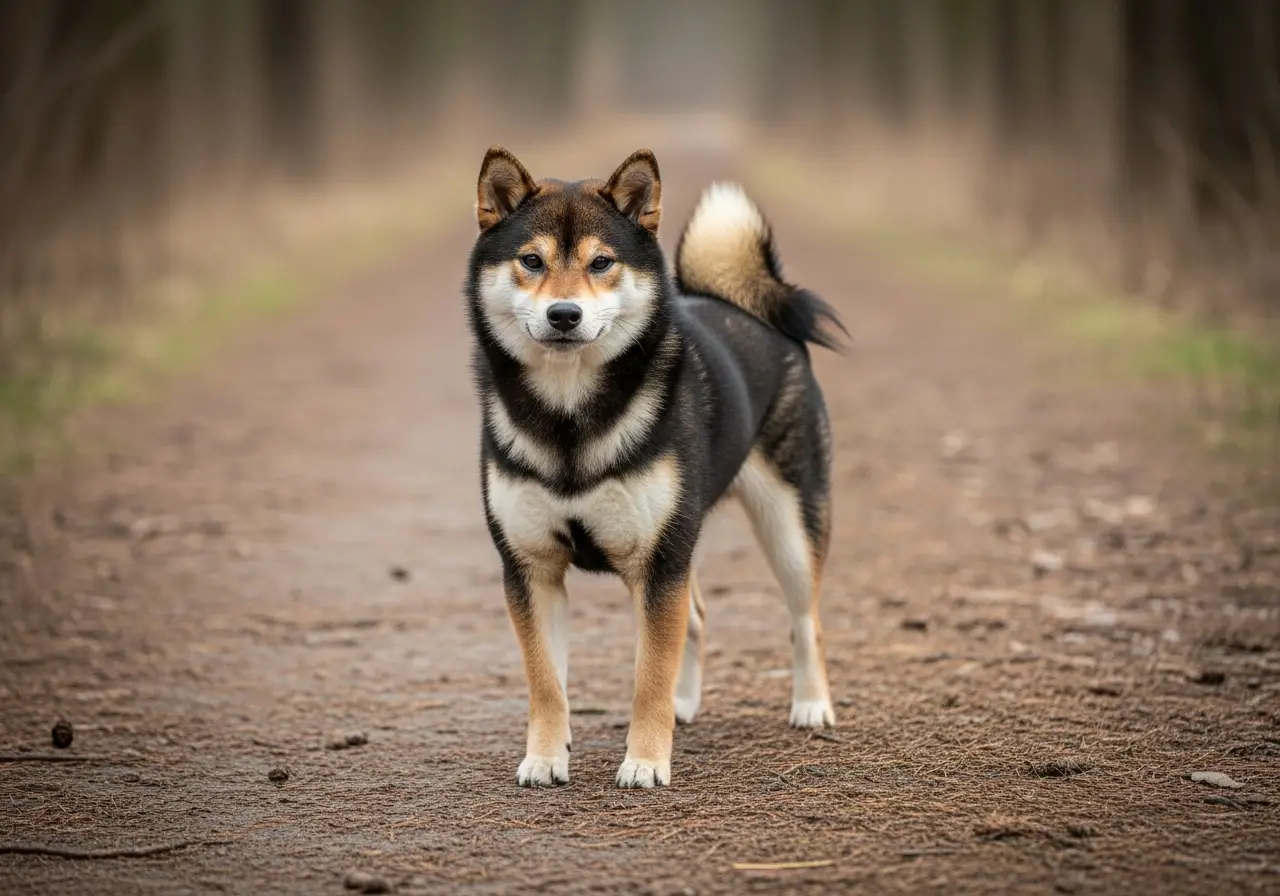
The Shiba Inu is a Japanese primitive-type dog with pronounced independence, clear prey drive, and a personality that demands consistent handling. Anyone looking for a compliant companion will fail with it. Anyone who brings experience, structure, and a secure outdoor area receives a loyal, character-strong dog with a long life expectancy and unmistakable demeanour.
02Introduction
What makes the Shiba Inu special
Shiba Inu: Japanese primitive spitz with a strong personality, clean and independent, suitable for patient owners
03Profile
Key facts and suitability
- Origin
- Japan
- Original purpose
- Hunting small game
- FCI
- No. 257 · Group 5 · 5
- height at the withers
- 34–41 cm
- Weight
- 7–11 kg
- Life expectancy
- 12–16 Years
- Coat type
- Doppel
- Minimum exercise
- 60 min/day
- Puppy price
- 2'000–3'500 CHF
- Waiting period
- 6 months
- Sports
- Agility Lure Coursing
04Temperament
How the Shiba Inu shows up in everyday life
When you come home, a Shiba Inu does not greet you with exuberant jumping; it registers your arrival, observes briefly and then decides whether to come towards you. This reserve is not disinterest. It is an expression of its personality: the Shiba Inu is attached to its key persons without appearing dependent on them.
Internally, what the dog needs: Its need for social contact is moderate but demanding in quality. It does not require permanent attention but reacts sensitively to inconsistency. Anyone who sets a boundary today and gives in tomorrow will quickly lose its willingness to cooperate. Mental work in the form of nose work, search games or structured training keeps it balanced; it rejects monotonous repetitions. Its exercise requirement is 60–90 minutes daily, divided into several sessions with the opportunity for free exploration in secure terrain.
Externally, how the dog reacts to its environment: The Shiba Inu behaves reservedly to rejectingly towards strangers. This is not aggression but breed-typical distance. Visitors who touch or crowd it immediately receive an unmistakable reaction. With other dogs, it can appear self-confident, especially towards animals of the same sex. Its prey drive is clearly pronounced: cats, small animals and fast-moving objects activate it immediately.
These two axes must not be confused: a high need for social contact with one’s own family does not mean that the Shiba Inu is open to everyone. Anyone who misinterprets this and pushes it into social situations with many strangers will overwhelm it, with predictable consequences. In everyday life with children, it works well with respectful handling but always requires a secure retreat area that no child may enter.
05Needs
What this breed needs daily
The Shiba Inu needs 60–90 minutes of active exercise daily, divided into at least two sessions. Pure walks on paved paths are not enough; it needs opportunities for free exploration, sniffing and acting out its curiosity. A securely fenced yard is not a comfort solution but a safety requirement: its prey drive makes it an unpredictable risk in open terrain off-lead.
Mental stimulation is equivalent to physical exercise. Nose work, search games and structured training with short, varied sessions keep it balanced. It rejects monotonous repetitions or long drill sequences; it loses its willingness to cooperate before it refuses the task.
Being left alone is possible but must be built up gradually and consistently. Four hours are considered a realistic maximum for a well-conditioned adult. Anyone who is regularly away from home for longer needs a reliable care solution.
Socialisation starts early and does not end with puppyhood. The Shiba Inu requires continuous, positive encounters with various people, dogs, and environments, without being overwhelmed but with regularity. Recall training requires long-term, patient work and remains situation-dependent even with good training.
A dog training school experienced with independent breeds is recommended, not as a one-off measure but as a permanent part of ownership. Positive reinforcement works; pressure and coercion lead to withdrawal or resistance.
Exercise
Medium
mental work
Medium
Social needs
Medium
training
Demanding
06Sport & Mental and Physical Stimulation
What sports the Shiba Inu is suited for
Realistic in terms of physiology and genetics – not every breed suits every sport.
Structurally and physiologically suitable: Suitable for mantrailing, dummy work and tracking.
07Quick Check
08Suitability
Who this breed is suitable for – and who it isn't
✓Matches
The Shiba Inu suits owners with proven experience in handling independent dogs. Anyone who has already handled a dog with pronounced stubbornness and knows how to set boundaries calmly and consistently brings the basic prerequisites.
Suitable are individuals or couples with a structured daily routine who can plan 60–90 minutes of active exercise daily and have access to a securely fenced outdoor area. Families with children from about 8 years old are possible if the children are socialised in dealing with dogs and the dog has an undisturbed retreat area.
Owners who enjoy working with a dog that offers cooperation rather than delivering obedience experience the Shiba Inu as an enriching companion. Anyone who appreciates nose work, search games, or calm terrain training will find an attentive partner in it.
Since the Shiba Inu reacts reservedly towards strangers, owners who respect its need for retreat and do not expect general sociability are a good fit. A calm household without constantly changing visitors suits its disposition. Anyone willing to build up recall training long-term and patiently, and who views the outdoor area as standard rather than an exception, creates the prerequisite for stable ownership.
×Doesn't match
The Shiba Inu does not suit households keeping a dog for the first time. Its independence, prey drive, and sensitivity to inconsistent handling regularly overwhelm first-time owners, as evidenced by surrender figures in animal welfare organisations.
Anyone looking for a dog that reliably responds on command and can be handled in every situation will not be happy with a Shiba Inu. Its recall remains situation-dependent even with good training; anyone who perceives this as a deficiency should choose another breed.
Households with very young children who do not yet understand when a dog needs distance pose a risk for both the child and the dog. Families in which the dog is constantly supposed to be at the centre of social activities with strangers underestimate its reservedness towards outsiders.
Anyone who is away from home for more than four hours daily and cannot organise a care solution exceeds their realistic maximum for being left alone. Anyone without access to secured outdoor areas and reliant on off-leash walking in open areas takes a permanent safety risk with its prey drive.
Anyone who chooses the Shiba Inu because of its appearance or internet presence and considers its character secondary makes a decision that, based on experience, ends in surrender to animal welfare, a burdensome experience for all parties involved.
10Line reality
Show line, working line, breeder market
The Shiba Inu is still bred in Japan in two functional contexts: as a hunting dog for small game and birds, and as a companion dog. This distinction is hardly reflected in breeding outside Japan; in Europe and the DACH region, companion dog breeding dominates, and an active working line with hunting trials does not exist here.
Within companion dog breeding, differences can nevertheless be observed: some breeders focus on show success and FCI-compliant type characteristics (body structure, coat structure, colour), while others prioritise temperament and nerve strength. These differences are not always communicated transparently, so a conversation with the breeder about their breeding goals is essential.
Historically, three lines existed regionally in Japan: the Shinshu-Shiba (compact body structure, red coat), the Mino-Shiba (darker colouring, more robust) and the Sanin-Shiba (larger, often black). After the Second World War, these lines were merged into today’s uniform breed. Traces of these regional differences are hardly traceable in modern breeding.
Anyone looking for a Shiba Inu with a particularly pronounced prey drive or high nerve strength should specifically ask for breeders who place value on temperament tests. Show-oriented lines can be significantly calmer in temperament and drive, which is an advantage or disadvantage depending on the living situation.
11Health · Reality
What you need to plan for medically with your Shiba Inu
The Shiba Inu is considered robust in comparison with other breeds but has documented breed-typical health risks that should be known before purchase.
Patellar luxation is one of the most common orthopaedic diseases in small to medium-sized breeds. In the Shiba Inu, it is regularly diagnosed; reputable breeders have parent animals tested for patellar luxation (Grade 0–4 according to OFA scheme). Hip dysplasia (HD) occurs but is rarer than in large breeds; HD screenings are nevertheless part of responsible breeding.
Eye diseases represent another focus: glaucoma (increased intraocular pressure) and progressive retinal atrophy (PRA) are described in the Shiba Inu. A DNA test exists for PRA, which breeders should use before mating. Cataracts also occur but are less frequent.
Atopic dermatitis, an allergy-induced skin condition, is common in the breed. It manifests as itching, paw licking, and recurring skin infections. Treatment is long-term and costly.
According to specialist literature, life expectancy is 12–15 years, with well-kept individuals reaching the upper end of this range through regular veterinary preventive care.
The seasonal coat change is extremely pronounced in the Shiba Inu; twice a year it sheds its undercoat in large quantities. This is not a health problem, but a care effort that owners must factor in.
Preventive examinations: eyes (annually), patella (before breeding), HD X-ray (from 12 months), dental check-up (annually). Overweight significantly increases the risk of joint problems; the breed tends to gain weight if fed incorrectly.
12Structured data
Health by the numbers
Prone to diseases
Patellar luxation Eye problems Hypothyroidism
Recommended health tests
Kneecap control Eye examination Thyroid test
13Myths ↔ Reality
What is often said incorrectly about this breed
Five myths, five realities, five sources.
“The Shiba Inu is like a cat, low-maintenance and requires little attention.
The comparison with a cat refers to its cleanliness and independence, not to its care needs. A Shiba Inu needs 60–90 minutes of exercise daily, mental stimulation and consistent daily structure. Anyone who leaves it to itself risks behavioural problems such as destruction, excessive barking or escape attempts.
“Small dogs are suitable for beginners, the Shiba Inu is small too.
Body size tells you nothing about the effort required to lead. The Shiba Inu actively questions inconsistent leadership, shows pronounced independence and has a strong prey drive. Animal welfare organisations report that it is surrendered at above-average rates due to being overwhelmed, mostly by first-time owner households who have underestimated its character.
“The Shiba Inu is a friendly family dog that likes all people.
The Shiba Inu shows pronounced reserve towards strangers; this is typical of the breed and not a training error. Its need for social contact is primarily directed at its key persons, not at outsiders. Children who do not respect its need for withdrawal can trigger defensive reactions. Early, broad socialisation reduces the risk but does not override the basic disposition.
“The Shiba Inu is easy to handle off-lead because it is so loyal.
Loyalty and reliable recall are two different things. The pronounced prey drive of the Shiba Inu can override the recall in fractions of a second. Even well-trained individuals pose a safety risk in open areas without secure fencing, both for themselves and for wildlife. Recall training requires years of consistent work and remains situation-dependent.
“The Shiba Inu is healthy and robust; it hardly needs to visit the vet.
The breed is considered comparatively robust but has breed-typical health risks: allergies (atopic dermatitis), eye diseases (glaucoma, cataracts) and joint changes (patellar luxation, hip dysplasia) are documented. Regular preventive examinations and breeding health tests with the breeder are not optional but a basic requirement for a serious purchase.
14animal welfare
The animal welfare perspective
Breeder market, designer versions, animal shelter reality — what no one writes in the puppy ad.
The Shiba Inu is among the breeds that end up in animal welfare organisations disproportionately often, not due to a character flaw, but because of a systematic gap between expectations and reality.
Backyard breeder market and online trade
The popularity of the Shiba Inu on social media has fuelled the market for dubious suppliers. Puppies are sold without health tests, without socialisation, and without advice via classifieds portals or through intermediaries from abroad. The price is often significantly lower than that of a reputable breeder, which may seem attractive in the short term but is associated with higher veterinary costs and behavioural problems in the long run. Anyone buying a Shiba Inu from such a source is funding a system that systematically subordinates animal welfare.
Breeding and husbandry-related problems
The most common reason for surrendering the dog is not aggression, but being overwhelmed: poor recall, hunting behaviour in everyday life, and the independence of the dog, which first-time owner households experience as stubbornness or unapproachability. In addition, there are dogs from show-oriented lines that were described in advertising as a "calm type", whose actual drive nevertheless exceeds expectations.
Adoption as an equally valid option
Adult Shiba Inus from animal welfare or club rehoming are a serious alternative to buying a puppy. Their character is already apparent, their health is often already documented, and experienced rehoming agents can provide an honest assessment of suitability. The Shiba Club Deutschland e.V. has rehoming contacts for dogs in distress. Anyone open to an adult dog often makes the more sustainable decision, for themselves and for the animal.
15Costs · Transparency
What this breed realistically costs
The acquisition costs from a reputable breeder with VDH/FCI papers and documented health tests are 1,200–1,800 EUR in the DACH region. Offers significantly below this often come from backyard breeding without health screening, which increases the risk of later veterinary costs.
The annual living costs consist of: food (quality dry food or fresh meat) approx. 600–900 EUR/year, care needs (brushing, seasonal coat change, occasional professional grooming) approx. 100–200 EUR/year, basic equipment (lead, collar, transport box, toys) one-off approx. 200–400 EUR.
Basic veterinary costs: annual vaccination and prevention approx. 150–250 EUR/year. If atopy (skin allergies) occurs, treatment costs of 500–1,500 EUR/year may arise, depending on severity and form of therapy. Eye examinations and orthopaedic checks are additional.
A dog liability insurance costs approx. 50–100 EUR/year and is mandatory in several federal states. A health insurance for the dog costs 40–120 EUR/month depending on provider and scope of benefits, and can be useful for chronic illnesses.
Total costs in the first year (incl. acquisition and initial equipment): realistically 2,500–3,500 EUR. From the second year: 1,200–2,500 EUR/year, depending on health status.
16Puppy search
What you need to consider when choosing a breeder
- A reputable breeder can be recognised by specific criteria: They are a member of the Shiba Club Deutschland e.V.
- or a comparable recognised breeding association and breed according to VDH/FCI guidelines.
- Parent animals are tested for patellar luxation, hip dysplasia, and eye diseases (incl.
- PRA DNA test), with results available in writing.
- The breeder asks questions about the living conditions and refuses a sale if the prerequisites do not match.
- Puppies leave the breeding facility no earlier than at eight weeks, are vaccinated, dewormed, and microchipped.
- Warning signs: no pedigree proof, no health tests of parents, puppies from abroad without personal inspection, prices significantly below 1,200–1,800 EUR, immediate availability without a waiting list.
- The rehoming of an adult Shiba Inu via the Shiba Club Deutschland e.V.
- or animal welfare organisations is an equally valid option.
- Adult dogs already show their character clearly, making it easier to assess suitability.
- No named recommendation of individual breeders by rundum.dog; the breeding list of the Shiba Club Deutschland e.V.
- at shibaclub.de is the appropriate starting point for the search.
FAQ
Frequently asked questions about the Shiba Inu
Is Shiba Inu a family dog?
Shiba Inu is considered suitable for families with good socialisation and species-appropriate care.
How much exercise does Shiba Inu need?
At least around 60 minutes of exercise per day.
Does Shiba Inu suit an apartment?
With enough exercise and enrichment, Shiba Inu can also be kept in an apartment.
What is the size and weight of Shiba Inu?
Fully grown, Shiba Inu reaches about 34–41 cm at the withers and weighs around 7–11 kg.
What is the life expectancy of Shiba Inu?
The life expectancy of Shiba Inu is approximately 12–16 years.
Which diseases are common in Shiba Inu?
Patellar luxation Eye problems Hypothyroidism
17Breed clubs
Official breed clubs in DACH
19Related
Similar breeds – and their differences
You might also be interested in
Participate
Do you have a good photo of your Shiba Inu?
We are looking for expressive images for our breed profiles. Submit yours; the editorial team reviews every submission before publication.
Does this breed suit you?
Independent dog with cat-like self-reliance – needs clear structures and consistent leadership