4 sourcesUpdated September 11, 2026Responsible editor: Roger KleinText: Roger Klein
01Summary
In a paragraph
If you only have 30 seconds.
The Chow-Chow is not a dog that adapts. It is an independent, territorially driven primitive spitz type from China that requires clear leadership and a calm environment. Anyone who regards its reserved nature towards strangers as a flaw has not understood the breed. Anyone who accepts it as a characteristic trait and acts accordingly will receive a loyal, dignified companion with a strong character.
02Introduction
What makes the Chow-Chow special
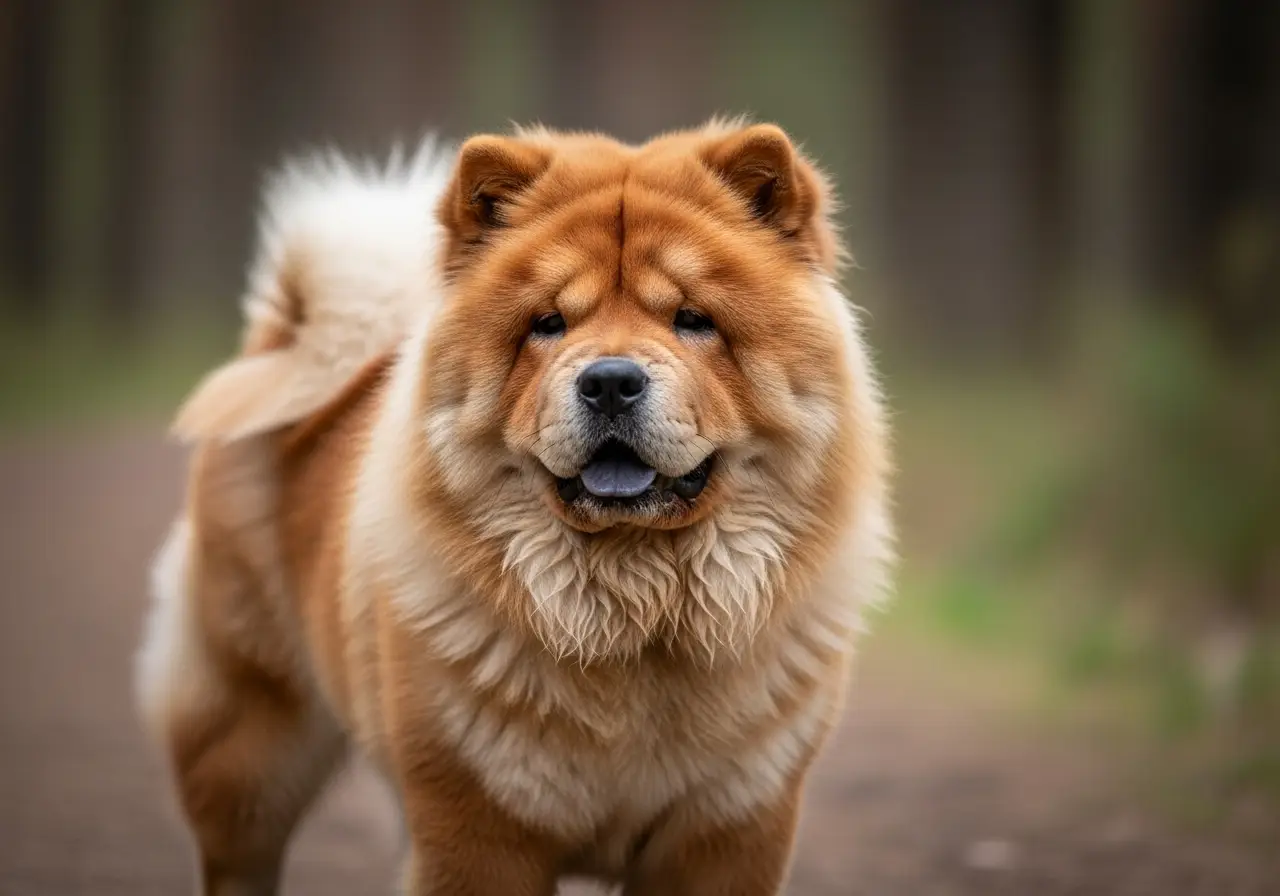
The Chow-Chow is a Chinese primitive spitz type, FCI Group 5, recognisable by its blue tongue, watchful and independent, with a withers height of 46–56 cm.
03Profile
Key facts and suitability
- Origin
- China
- Original purpose
- Hunting, guarding, source of meat and fur
- FCI
- No. 205 · Group 5 · Section 5
- height at the withers
- 46–56 cm
- Weight
- 20–32 kg
- Life expectancy
- 9–12 Years
- Coat type
- Doppel
- Minimum exercise
- 30 min/day
- Puppy price
- 1'500–3'000 CHF
- Waiting period
- 12 months
- Sports
- Obedience
04Temperament
How the Chow-Chow shows up in everyday life
When you come home, a Chow-Chow greets its reference person calmly: no jumping, no barking, no theatrical welcome. It registers the arrival, shows presence, and then returns to its place. Anyone expecting exuberance will be disappointed. Anyone who values dignity understands this breed.
In everyday life, the Chow-Chow displays two levels of behaviour that are clearly distinct. Towards its reference person and the familiar household, it develops a stable, loyal bond. It follows its reference person through the apartment, seeks spatial proximity without being intrusive, and reacts sensitively to mood changes in the household. Towards strangers, unknown dogs, or new situations, it switches to vigilance. A visitor entering the apartment is registered, observed, and categorised. Friendly greeting is not to be expected; tolerance is the realistic goal.
Towards other dogs, the Chow-Chow frequently shows dominant behaviour, especially towards animals of the same sex. A multi-dog household requires careful settling-in and permanent observation.
On a walk, the Chow-Chow moves leisurely and with endurance. It is not a sprinting dog. It marks its territory, observes the surroundings, and reacts to stimuli in a controlled manner, provided that socialisation in puppyhood was solid. Loose-leash walking requires consistent training, as the Chow-Chow naturally pulls and prefers its own rhythm.
It notices inconsistent handling immediately. It tests boundaries not loudly, but through selective cooperation: it obeys when it deems it sensible. Anyone who dismisses this as stubbornness underestimates the intelligence of this breed.
05Needs
What this breed needs daily
The Chow-Chow requires 60 to 90 minutes of moderate exercise daily. Intensive endurance exertion, jogging, or cycling accompaniment over longer distances do not correspond to its profile and are contraindicated in heat. Two to three structured walks per day with the opportunity for scent work and calm exploration cover its exercise needs.
The mental stimulation requirement is at a medium level. The Chow-Chow does not need high-frequency enrichment like a working dog, but reacts to under-stimulation with withdrawal or selective disobedience. Nose work, calm search games, and short training sessions with clear structure are well suited. Agility or intensive sports do not correspond to its nature.
Social continuity is central for the Chow-Chow. It bonds with a manageable reference group and requires stability in its social environment. Frequently changing reference persons, unstructured visiting situations, or loud, restless households create stress, which manifests itself in withdrawal or increased watchful behaviour.
It tolerates being left alone for up to five hours with a stable bond. Longer absences require a reliable care solution.
Grooming represents a considerable time commitment. The dense double coat, in both the long-haired and short-haired variety, requires brushing several times a week, and daily during moulting. Mats form quickly and are painful for the dog. Anyone who underestimates this grooming effort directly harms animal welfare.
Exercise
Low
mental work
Medium
Social needs
Low
training
Experts
06Quick Check
07Suitability
Who this breed suits and who it doesn't
✓Matches
The Chow-Chow suits owners with demonstrable experience in handling independent, territorially oriented dogs. Anyone who has already handled a similar breed and understands that selective cooperation is not a failure of training but breed character, brings the right basic attitude.
A calm, structured household with a regulated daily routine corresponds to the need profile of the Chow-Chow. Single persons or couples without small children, who value a dignified, loyal companion without expecting permanent interaction, find a suitable partner in this breed.
Families with older children from about ten years of age, who treat the dog respectfully and do not expect physically intensive play interaction, are also considered, provided that the parents take full responsibility for handling.
Owners with a garden or access to quiet green spaces benefit from being able to offer the dog a clearly defined territory. Keeping in an apartment is possible if the daily walks are consistently maintained and the living environment is not permanently loud and restless.
Anyone who is prepared to plan at least 60 to 90 minutes daily for exercise, perform grooming several times a week, and design training sessions in the long term and consistently, meets the basic prerequisites for successful ownership.
×Doesn't match
The Chow-Chow does not suit owners without prior experience with demanding breeds. Anyone who has never handled a dog that cooperates selectively and independently explores boundaries will be structurally overwhelmed by the Chow-Chow, regardless of motivation and good will.
Households with small children under six years of age are to be viewed critically. The Chow-Chow does not tolerate unpredictable physical approaches and shows no natural compliance towards children. The risk of misunderstandings is high.
Anyone who regards the Chow-Chow's reserved nature towards strangers as temporary and hopes to "thaw" the dog through numerous social contacts fundamentally misunderstands the breed. The reserve towards unknown people is genetically anchored, not situational.
Owners who are away from home for more than five hours during the day and cannot organise reliable care do not meet the requirements for keeping a dog.
Anyone who does not have the time or willingness to provide regular, intensive grooming should not choose this breed, as matted fur is a direct animal welfare problem, not an aesthetic one.
Active sportspeople looking for a running or cycling companion will find the Chow-Chow to be the wrong partner. Its exercise profile is moderate and it is sensitive to heat.
08Related
Similar breeds and how they differ
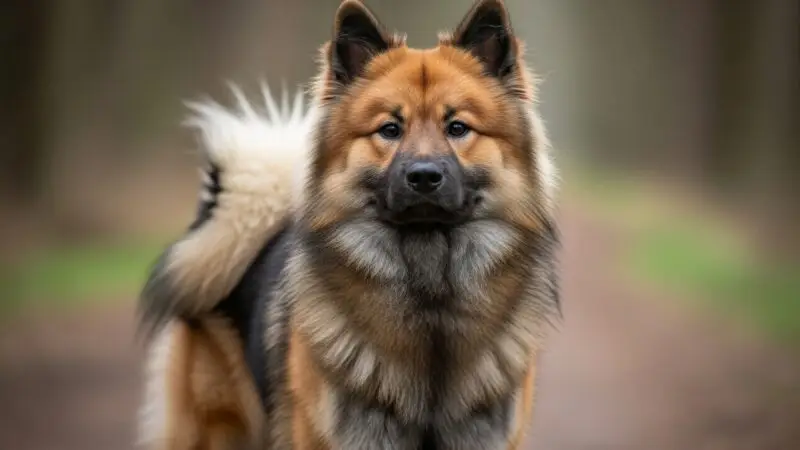
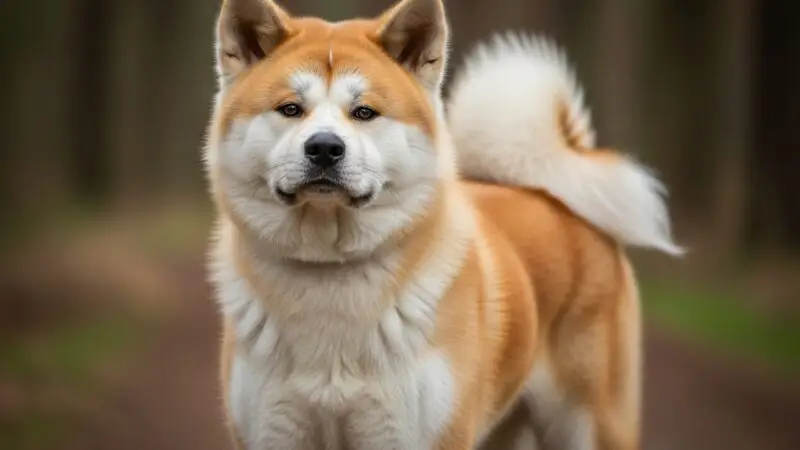
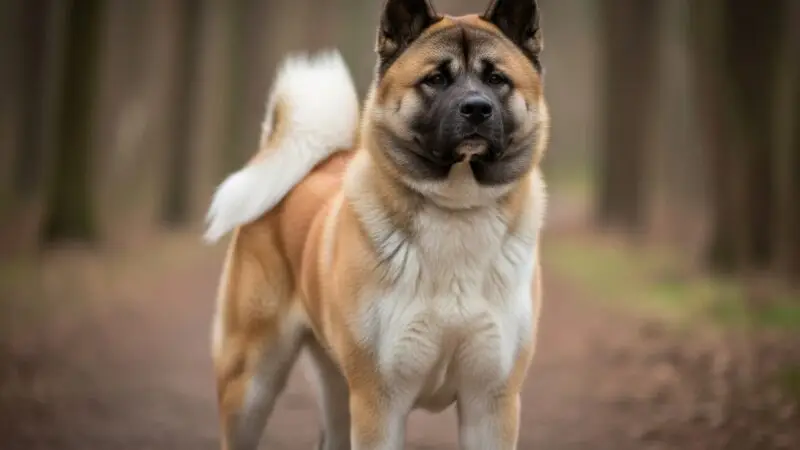
09Line reality
Show line, working line, breeder market
The Chow-Chow exists in two coat variants: the long-haired and the short-haired variety. Both are judged according to the same FCI standard and differ exclusively in coat texture, not in temperament or measurements.
A pronounced differentiation between working lines and show lines, as known for example with the German Shepherd Dog or the Labrador Retriever, does not exist in comparable form for the Chow-Chow. The breed has been bred primarily as a companion dog for decades; an active working line with selection for hunting or protection service no longer exists in organised breeding.
However, there are regional differences in breeding philosophy within show breeding. Some lines place greater emphasis on pronounced mass and dense coat coverage, which can lead to restricted movement and increased grooming effort. Other lines prioritise health and freedom of movement in accordance with the FCI standard specification, which explicitly states that the coat must not hinder the dog's activity.
Anyone acquiring a Chow-Chow from breeding should specifically ask for lines that document health tests (HD, ED, eyes) and do not aim for exaggerated mass. The General Chow-Chow Club e.V. as well as the Swiss Chow-Chow Club SCCC maintain stud books and can provide information on tested lines.
10Health · Reality
What you need to plan for medically with your Chow-Chow
The life expectancy of the Chow-Chow is on average 9 to 12 years according to data from the Kennel Club (UK, 2024), with a range that depends heavily on breeding quality and living conditions.
Hip dysplasia (HD) is one of the most common orthopaedic diseases in the breed. Elbow dysplasia (ED) also occurs but is documented less frequently.
Eye diseases represent another breed-specific risk. Entropion (an inward rolling of the eyelid) is common in Chow-Chows and requires surgical correction in pronounced cases. The FCI standard explicitly states that an eye free from entropion must never be rated lower solely on account of its size. An ophthalmological examination of the parent animals is strongly recommended before purchase.
Skin diseases, including pemphigus foliaceus and other autoimmune dermatoses, occur frequently in the breed. The dense coat makes early detection considerably more difficult.
Overweight is a real risk, as the Chow-Chow has moderate exercise needs and tends to gain weight. Regular weight checks at the vet are advisable.
Preventive examinations should include HD and ED X-rays, an eye examination by a specialist vet, and thyroid values. Breeding clubs require these tests for breeding approval.
11Structured data
Health by the numbers
Prone to diseases
eye problems (entropion, ectropion), hip dysplasia, elbow dysplasia, thyroid problems, gastric torsion
Recommended health tests
eye examination, hip and elbow X-rays, thyroid screening
12Myths ↔ Reality
What is often said incorrectly about this breed
Five myths, five realities, five sources.
"The Chow-Chow is a calm dog, so also suitable for beginners.
Calm does not mean cooperative. The Chow-Chow decides independently whether to follow a request. Without experience with territorial, independent breeds, this regularly leads to loss of control. Animal welfare organisations report that Chow-Chows are frequently given up due to owner overwhelm.
"The blue tongue is a sign of illness or oxygen deficiency.
The blue-black tongue pigmentation is a breed-typical characteristic of the Chow-Chow and the Shar-Pei. It arises from increased melanin deposition in the mucous membrane and has no pathological significance. A light or spotted tongue in a Chow-Chow is considered a breeding fault according to the FCI standard.
"Chow-Chows are naturally aggressive.
The FCI standard describes the Chow-Chow as calm, watchful, willful and reserved, but not aggressive. Problematic behaviour arises almost exclusively from lack of socialisation in puppyhood, inconsistent leadership or incorrect care conditions. Well-socialised Chow-Chows show controlled guarding behaviour, not uncontrolled aggression.
"The dense coat of the Chow-Chow makes it heat-resistant.
The opposite is true. The double-layered, dense coat insulates strongly and significantly hinders heat dissipation. Chow-Chows are considered particularly at risk from heat. On hot days, intensive activities should be avoided; shade and fresh water must be provided. The FCI standard explicitly states that the coat must not hinder the dog's activity and must not cause suffering in hot weather.
"A Chow-Chow that is friendly towards its family is also open towards strangers.
Strong family bonding and openness towards strangers are two completely separate behavioural levels in the Chow-Chow. The breed shows pronounced loyalty towards its reference person, but remains structurally reserved to distrustful towards strangers. This behaviour is genetically anchored and not fundamentally changeable through training alone.
13animal welfare
The animal welfare perspective
Breeder market, designer versions, animal shelter reality: what no one writes in the puppy ad.
The Chow-Chow is one of the breeds that regularly appears in animal shelters and with animal welfare organisations, not because the breed is problematic, but because the discrepancy between expectation and reality is large for many owners. The dignified appearance, calm demeanour and rarity of the breed create purchase impulses that arise without sufficient preparation.
Backyard breeder market: Chow-Chows are regularly offered on classifieds platforms without pedigree entry, without health tests of the parent animals and at prices far below what reputable breeding costs. Puppies from such sources carry an increased risk of HD, eye problems and temperament instability. These often only appear in the second year of life, when the emotional bond already exists.
Designer versions: Crosses with other breeds under the label "Chow mix" or deliberately bred colour variants outside the FCI standard are a warning sign. They cannot be reliably assessed in terms of health or temperament.
Breeding and keeping-related problems: Excessive sizing in some show lines leads to restricted mobility and increased care requirements. Chow-Chows with excessively dense coats suffer from heat stress in warm climate zones. Anyone who chooses a dog with extreme coat density bears responsibility for the consequences of this breeding decision.
Reasons for surrender: The most common documented reasons for surrendering Chow-Chows are being overwhelmed by territorial behaviour, lack of loose-leash walking and incompatibility with other pets. These problems are generally due to a lack of socialisation and leadership experience, not the breed itself.
Adoption as an equally valid option: Adult Chow Chows from rescue are a serious alternative to buying a puppy. Reputable animal welfare organisations and breed clubs such as the Allgemeine Chow-Chow-Club e.V. rehome dogs with documented histories. An adult dog already shows its temperament, which makes assessing suitability easier. The Schweizerische Chow-Chow-Club SCCC and the Chow-Chow-Club Austria also have contacts for rehoming.
14Costs · Transparency
What this breed realistically costs
A Chow Chow puppy from reputable, VDH/FCI-approved breeding with documented health tests of the parent dogs costs between 1,500 and 2,500 EUR in Germany and Austria. Prices below this, particularly on classifieds platforms without a pedigree entry, are a warning sign for missing health checks and insufficient socialisation.
Annual living costs average between 2,000 and 3,500 EUR, depending on the type of keeping, region and health status. Of this, high-quality food for a Chow Chow weighing 25 to 32 kg accounts for around 600 to 1,000 EUR per year.
Grooming represents a significant cost factor: professional grooming appointments cost between 80 and 150 EUR per session depending on the region; with multiple sessions per year, this adds up to 300 to 600 EUR annually.
Veterinary costs for routine examinations, vaccinations and parasite prevention are between 300 and 500 EUR per year. Orthopaedic assessments (HD/ED X-rays) cost a one-off 150 to 300 EUR. Surgical correction of entropium comes at a cost of 500 to 1,500 EUR.
Dog liability insurance is mandatory in several federal states and costs between 50 and 150 EUR per year. Health insurance for the Chow Chow is recommended due to breed-specific health risks and costs between 600 and 1,200 EUR annually depending on the provider and scope of cover.
15Puppy search
What you need to consider when choosing a breeder
- A reputable breeder is a member of a recognised breed club, in Germany generally the Chow-Chow-Club e.V.
- (VDH member), in Switzerland the Swiss Chow-Chow Club SCCC (SKG member), and in Austria the Chow-Chow-Club Austria (ÖKV member).
- Membership obliges adherence to breeding regulations that prescribe health tests for parent animals.
- Concrete criteria of reliability: The breeder voluntarily provides HD and ED findings as well as eye assessments of the parent animals.
- The puppies are raised in the household and are at least eight weeks old at the time of handover.
- The breeder asks questions about the living situation and refuses a sale if the prerequisites are not met.
- A right of return is contractually regulated.
- Warning signs: No pedigree entry, no health documents, handover under eight weeks, sale via intermediaries or on marketplaces without personal contact.
- Rehoming an adult Chow-Chow through breed clubs or animal welfare organisations is an equally valid option.
- Adult dogs already show their character, which allows for a realistic assessment of suitability.
- Contacts for rehoming dogs are available through the breed clubs.
- Named breeder recommendations are not given here; the breed clubs maintain current breeder lists.
FAQ
Frequently asked questions about the Chow-Chow
How much exercise does Chow-Chow need?
At least around 30 minutes of exercise per day.
What is the size and weight of Chow-Chow?
Fully grown, Chow-Chow reaches about 46–56 cm at the withers and weighs around 20–32 kg.
What is the life expectancy of Chow-Chow?
The life expectancy of Chow-Chow is approximately 9–12 years.
Which diseases are common in Chow-Chow?
eye problems (entropion, ectropion), hip dysplasia, elbow dysplasia, thyroid problems, gastric torsion
Participate
Do you have a good photo of your Chow-Chow?
We are looking for expressive images for our breed profiles. Submit yours; the editorial team reviews every submission before publication.
Does this breed suit you?
Cat-like, independent character. Not a breed for beginners. Suffers extremely from heat due to its thick double coat.