
01Summary
In a paragraph
If you only have 30 seconds.
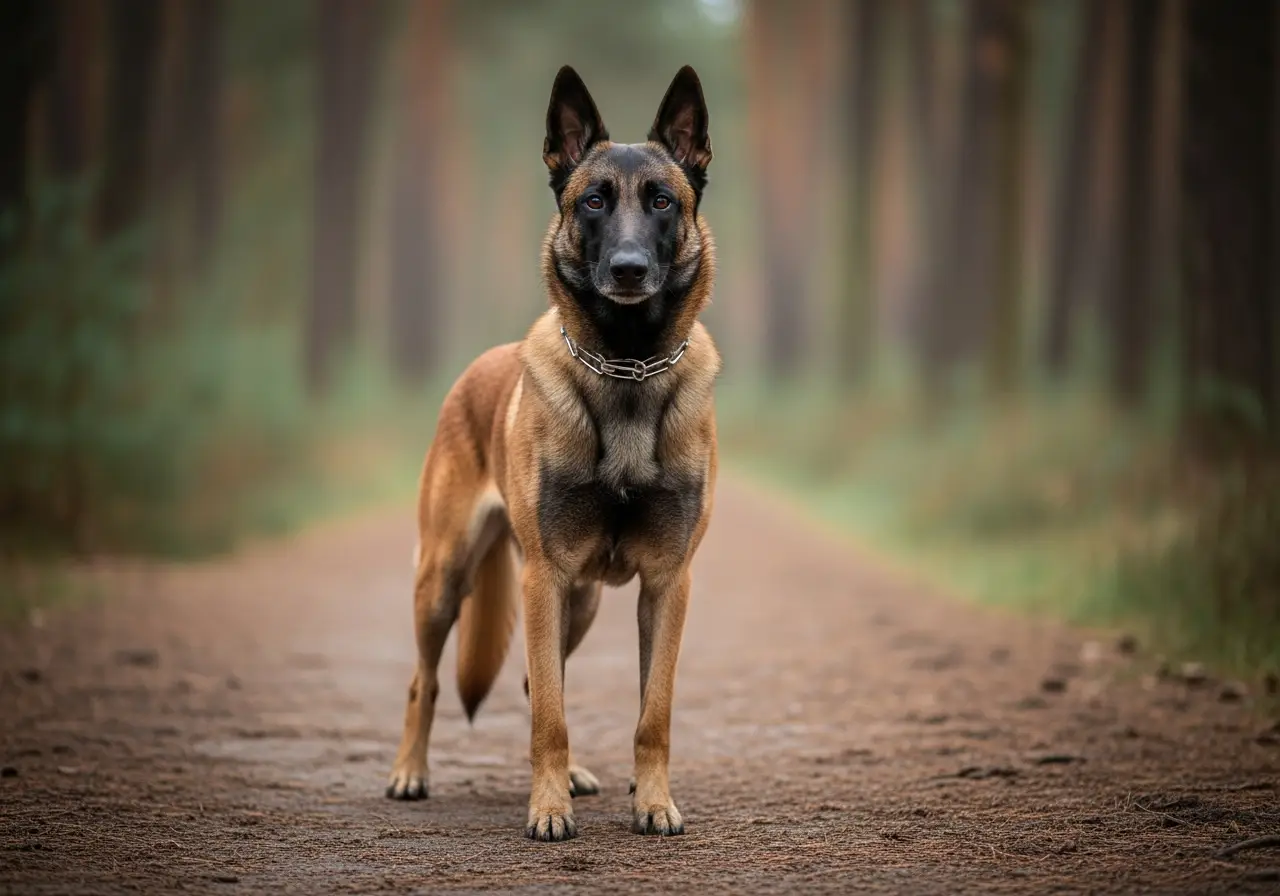
The Malinois is the most work-intensive variety of the Belgian Shepherd. Used worldwide in police and military operations, it requires at least two hours of structured mental and physical stimulation every day. Its drive to work is not just one characteristic among many; it is the core of this breed. Anyone who underestimates this will end up with a dog that creates its own tasks, which rarely brings joy to those involved.
02Introduction
What makes the Malinois – The Belgian Shepherd special
The Malinois is the world's leading police and military dog, FCI Group 1, extremely work-oriented and demanding, withers height 56–66 cm.
03Profile
Key facts and suitability
- Origin
- Belgien
- Original purpose
- Sheep herding, police and military dog
- FCI
- No. 15 · Group 1 · Sektion 1: Schäferhunde
- height at the withers
- 56–66 cm
- Weight
- 20–30 kg
- Life expectancy
- 12–14 Years
- Coat type
- Short-haired
- Minimum exercise
- 180 min/day
- Puppy price
- 1'500–3'000 CHF
- Waiting period
- 9 months
- Sports
- Schutzhund · Agility · Obedience · Scent work · Search and rescue · Military
04Temperament
How the Malinois – The Belgian Shepherd shows up in everyday life
When you come home, the owner does not expect a relaxed greeting ritual; the Malinois is already on alert. It registers every change in the room, every new person, every unfamiliar noise. This vigilance is not a mistake, but the result of over a hundred years of selection for reaction speed.
Internally, what the dog needs: The Malinois has a high need for social contact, but it is directed towards the primary caregiver, not towards broad social interaction. It wants to work, and specifically with its human. The need for mental work and the need for movement are both at the highest level. A Malinois that has received two hours of structured work appears calm and cooperative in the house. One that does not receive this stimulation seeks it out itself, through barking, destruction or over-arousal behaviour.
Externally, how the dog reacts: Towards strangers, the Malinois behaves vigilantly to reservedly. It observes, assesses and decides. This is not a sign of insecurity, but of protective instinct. Visitors who appear unannounced are initially classified as potential threats; the owner must actively guide these situations and give the dog clear signals.
With other dogs, the Malinois shows tolerance when properly socialised, but not without limits. Dominant behaviour towards conspecifics is typical of the breed and occurs particularly in unstructured situations.
In everyday life, this means: every walk is a training session, every encounter a leadership task. Anyone who perceives this as a burden has chosen the wrong breed. Anyone who sees it as a challenge will find an exceptionally precise partner in the Malinois.
05Needs
What this breed needs daily
The Malinois requires at least 120 minutes of structured, guided activity daily, and this is a minimum threshold, not a recommendation. Pure walks without tasks do not meet this need. The activity must be demanding both physically and mentally.
Suitable forms of exercise include protection work (IPO/IGP), nose work, tracking, agility, obedience at competition level or comparable structured sports. Free running without a task is no substitute; it increases arousal without channeling it.
The need for mental work is at the highest level. The Malinois requires daily tasks that demand its concentration: search games, nose work, obedience exercises with increasing difficulty. Anyone who does not provide this mental stimulation will end up with a dog that organises its own enrichment.
The need for social contact is primarily directed towards the primary caregiver. The Malinois wants to work with its human, not merely exist alongside them. Passive presence is insufficient; active interaction and shared tasks are prerequisites for a stable relationship.
Being left alone is possible if the dog is sufficiently stimulated and has been gradually accustomed to being alone. The limit lies at approximately four hours; beyond this, the risk of stress behaviour increases significantly. Dog care or a structured daily routine with multiple sessions is indispensable for working owners.
The living environment must be secure and low in stimuli. A Malinois left to its own devices in an unsecured garden will find ways to leave it or occupy itself; neither outcome is rarely desirable.
Exercise
Very high
mental work
A lot
Social needs
High
training
Demanding
06Sport & Mental and Physical Stimulation
What sports the Malinois – The Belgian Shepherd is suited for
Realistic in terms of physiology and genetics – not every breed suits every sport.
Structurally and physiologically suitable: Suitable for herding work, treibball and coursing · CaniCross / bikejoring possible.
07Quick Check
08Suitability
Who this breed is suitable for – and who it isn't
✓Matches
The Malinois suits owners who have already gained experience with drive-strong working dogs and actively integrate this experience into everyday life. Specifically: anyone who can plan at least three to four hours daily for structured work with the dog, not as an exception, but as part of their daily structure.
Suitable profiles: active dog sport enthusiasts with experience in IPO/IGP, protection work, nose work or agility at competition level. Owners willing to permanently involve a dog training school with working dog experience. People with a flexible daily routine or the ability to organise professional dog care.
Families with children are only suitable if both adults bring experience with the breed, the children are at least twelve years old, and the dog is professionally supported from the start. The Malinois is not a dog that protects children on its own initiative; it is a dog that requires clear leadership to remain stable in a family environment.
Anyone who owns a garden, leads an active lifestyle and already knows what drive work means will find an exceptionally high-performing partner in the Malinois. The external axis (reserve towards strangers, vigilance in new situations) must be actively supported through training and socialisation.
×Doesn't match
The Malinois does not suit owners keeping a dog for the first time, regardless of how motivated or athletic they are. The breed does not forgive leadership errors, and the learning process at the dog’s expense is not an acceptable option here.
The Malinois is not suitable for households where the dog regularly spends more than four hours alone without structured care being organised. Owners who can provide physical activity but no mental stimulation through structured tasks, perhaps because dog sports or nose work are not part of everyday life, systematically underestimate the need for mental work.
Anyone who chooses a Malinois because they want a vigilant, protective dog but lacks experience in handling protection dogs confuses the external axis (reserve towards strangers, pronounced protective instinct) with a trait that self-regulates. It does not.
Families with young children under twelve years old, seniors without an athletic background and owners looking for a calm companion dog for everyday life are structurally overwhelmed by this breed, not due to incompetence, but because the Malinois presents a different profile of demands than the everyday life of these groups offers.
10Line reality
Show line, working line, breeder market
The Malinois exists today in two clearly distinguishable lines that differ considerably in drive intensity, threshold of irritation and suitability for everyday life.
The working line, also known as the performance line, is selected for maximum drive intensity, nerve strength and endurance. Dogs from this line are used by the police, military, in protection work and in dog sports at competition level. Their threshold of irritation is low and their reaction speed high. These dogs are generally unsuitable for private everyday life without a professional background, not because of danger, but because of the workload requirements that are hardly met in civilian daily life.
The show line, selected in accordance with FCI standards for exterior and breed standard, generally shows a somewhat more moderate drive expression. This does not mean that these dogs need less stimulation, but the intensity of the drive work is often more manageable for experienced private owners with sporting ambitions.
A significant proportion of puppies offered in Germany and Switzerland come from lines where the origin is not communicated transparently. Anyone who buys a Malinois puppy without knowing the working line of the parent animals takes on considerable planning risk. The Deutsche Malinois Club e.V. explicitly recommends checking the performance certificates of both parent animals before purchase.
For those interested who have no experience in protection work or performance sports, the following applies: A dog from a more moderate show line with proven socialisation is the more realistic starting point, but even this dog demands daily structured work.
11Health · Reality
What you need to plan for medically with your Malinois – The Belgian Shepherd
Compared to other large working breeds, the Malinois is considered relatively robust. According to FCI standards and breed club data, life expectancy ranges from 12 to 14 years, a span significantly influenced by living conditions, stimulation, and preventive healthcare.
Hip dysplasia (HD) and elbow dysplasia (ED) occur in the breed but are less common than in heavier utility dog breeds. The German Malinois Club e.V. mandates HD screening for both parent dogs as a prerequisite for breeding approval. Anyone purchasing a puppy should review the documented HD/ED results for both parents, not just rely on verbal assurances.
Due to the high physical demands of work and sports use, soft tissue injuries, tendon issues, and overuse syndromes are a real risk. Veterinary checks after intensive training sessions and a structured build-up phase for young dogs, with no full workload before the 18th month of life, are professionally recommended.
Eye diseases such as progressive retinal atrophy (PRA) occur in the breed. Reputable breeders have breeding stock examined ophthalmologically. Proof of this should be available when purchasing a puppy.
Overweight is less common in Malinois due to their high activity level compared to other breeds, but it is not excluded, especially in dogs that receive less stimulation after an injury or in old age. Regular weight checks by the vet, at least once a year, are advisable. An annual preventive examination including blood work is standard from the seventh year of life onwards.
12Structured data
Health by the numbers
Prone to diseases
Hip dysplasia, eye problems, epilepsy
Recommended health tests
Hip X-ray, eye examination
13Myths ↔ Reality
What is often said incorrectly about this breed
Five myths, five realities, five sources.
The Malinois is an aggressive dog that is inherently dangerous.
The Malinois is not an aggressive dog in the sense of uncontrolled biting. Its protective instinct is genetically anchored and directed at threat stimuli, not random aggression. Well-socialised and consistently handled dogs show controlled behaviour in everyday life. Problems arise almost exclusively from a lack of guidance, under-stimulation or incorrect socialisation, not from the breed itself.
A large garden completely replaces the daily workload of the Malinois.
A garden does not provide structured enrichment for the Malinois. The breed requires at least 120 minutes of active, guided work every day, such as protection work, nose work, agility or comparable sports. A dog left to its own devices in the garden will develop stereotypies, over-arousal behaviour or destructive patterns. Space does not replace mental stimulation.
The Malinois is a recent fashion trend that became popular through military films.
The Malinois has been systematically used in police and military service since the early 20th century. The Belgian police already used it before the First World War. Its current prevalence in special forces units worldwide is the result of decades of selection for performance, not a trend, but a documented breeding history.
Anyone who lets their Malinois run a lot has a balanced dog.
Physical exercise alone is not enough for the Malinois. The breed has a need for mental work that is equal to its need for movement. A dog that runs ten kilometres every day but receives no structured task remains mentally under-stimulated. Nose work, protection work, obedience or comparable training methods are not optional extras; they are mandatory.
The Malinois is largely comparable to the German Shepherd and therefore suitable for the same owners.
Both breeds belong to FCI Group 1, but they differ considerably in drive intensity, reaction speed and threshold of irritation. The Malinois reacts faster, works more intensely and is less forgiving of handling errors. Experience with the German Shepherd is not sufficient preparation for the Malinois, as experts from protection work and dog sports regularly confirm.
14animal welfare
The animal welfare perspective
Breeder market, designer versions, animal shelter reality — what no one writes in the puppy ad.
The Malinois belongs to the breeds most frequently surrendered in German and Swiss animal shelters. The cause is the same in the vast majority of cases: the breed's work requirements were massively underestimated before purchase. Owners looking for a sporty, alert dog found themselves confronted with an animal that demands structured daily work in a way that cannot be managed in normal everyday life without preparation.
The backyard breeder market responds to the increased demand for Malinois (fueled by military documentaries, social media presence, and its reputation as a high-performance dog) with a growing supply of puppies without proof of origin, health tests, or socialisation. These animals end up disproportionately often in animal shelters or problematic living situations because buyers were not prepared for either the drive intensity or the leadership requirements.
Breeding and husbandry-related problems in Malinois are less anatomical in nature than in brachycephalic breeds, but no less severe: A Malinois that is chronically under-stimulated develops behavioural problems that are hardly reversible without professional intervention. Fear aggression, over-arousal behaviour, and hyper-reactivity are common consequences of living conditions that do not meet the breed's needs.
Rehoming an adult Malinois from a breed rescue organisation or animal shelter is not a stopgap solution; it is an informed decision. Many of these dogs are well-socialised, have received basic training, and were surrendered because their owners' daily lives changed, not because the dogs are problematic. An honest assessment by the rehoming agency, a trial period with professional guidance, and the willingness to invest in professional training make rehoming an equally valid option compared to buying a puppy.
Anyone interested in the Malinois does themselves and the dog a favour by actively co-training for at least three months in a Malinois-experienced dog club before purchasing or rehoming, not as a spectator but as an active participant.
15Costs · Transparency
What this breed realistically costs
A Malinois puppy from reputable association breeding with health certificates and socialisation costs between 1,200 and 2,000 euros in Germany and Switzerland. Offers significantly below this range often come from backyard breeders without health tests; the follow-up costs due to behavioural or health problems usually far exceed the initial savings.
Annual living costs for a Malinois are in the mid-range between 2,500 and 4,500 euros, depending on food choice, training effort, and health status. High-quality food for an active working dog costs between 60 and 120 euros per month. In addition, there are training fees for a specialised dog training school, which is not an optional expense for a Malinois, ranging from 50 to 150 euros per month.
Veterinary costs for routine prevention, vaccinations, and annual checks are between 300 and 600 euros per year. In case of injuries from sports or work use, treatment costs can quickly rise into the four-figure range. Pet insurance with surgical cover costs between 50 and 120 euros per month for a Malinois and is advisable given the breed's activity level.
Anyone who engages their Malinois in protection work or dog sports should additionally budget for equipment costs, examination fees, and travel expenses to competitions. These items are no surprise; they belong to the profile of this breed.
16Puppy search
What you need to consider when choosing a breeder
- A reputable breeder of Malinois provides proof of performance for both parent dogs; protection work tests, temperament tests or comparable proofs are not a bonus with this breed, but a quality feature.
- Breeders who do not provide information about the working line of the parent dogs should be questioned critically.
- Concrete criteria for reputable breeding: membership in the German Malinois Club e.V.
- or a comparable FCI-recognised association, proof of HD/ED examinations for both parent dogs, puppy rearing with proven socialisation (different environments, people, noises), willingness of the breeder to have several personal conversations before purchase.
- Anyone who finds a Malinois at a price below 1,000 CHF should check the origin particularly carefully.
- Cheap offers often come from mass breeding without health tests and without socialisation, which considerably increases the risk of behavioural and health problems.
- Rehoming an adult Malinois from an animal shelter or a breed rescue organisation is an equally valid option.
- Many surrendered dogs are not behaviourally problematic but have simply outgrown their owners' capabilities.
- An honest assessment by the rehoming agency and a trial period with professional guidance are crucial in this process.
FAQ
Frequently asked questions about the Malinois – The Belgian Shepherd
How much exercise does Malinois – The Belgian Shepherd need?
At least around 180 minutes of exercise per day. As an active breed, more so — plus mental stimulation.
What is the size and weight of Malinois – The Belgian Shepherd?
Fully grown, Malinois – The Belgian Shepherd reaches about 56–66 cm at the withers and weighs around 20–30 kg.
What is the life expectancy of Malinois – The Belgian Shepherd?
The life expectancy of Malinois – The Belgian Shepherd is approximately 12–14 years.
Which diseases are common in Malinois – The Belgian Shepherd?
Hip dysplasia, eye problems, epilepsy
17Breed clubs
Official breed clubs in DACH
19Related
Similar breeds – and their differences
You might also be interested in
Participate
Do you have a good photo of your Malinois – The Belgian Shepherd?
We are looking for expressive images for our breed profiles. Submit yours; the editorial team reviews every submission before publication.
Does this breed suit you?
World's most popular police and military dog. Extremely work-oriented – destructive without daily intensive tasks. Not a family dog.