











What characterises FCI Group 8
Dogs of FCI Group 8 were bred for work after the shot: finding, locating and retrieving game – without damaging it. This function has produced a type of dog over centuries that is soft-mouthed, cooperative towards humans and intrinsically motivated to fetch and bring things back. This explains the famous “Happy Retriever” phenomenon: these dogs almost always appear good-natured, helpful and constantly in action.
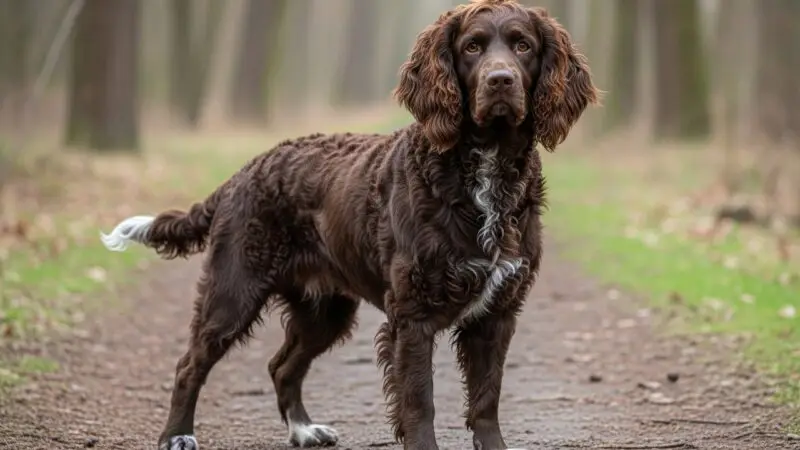
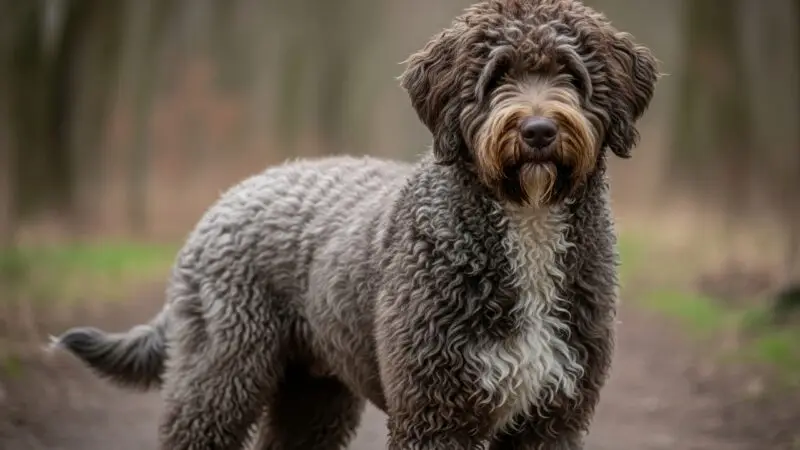
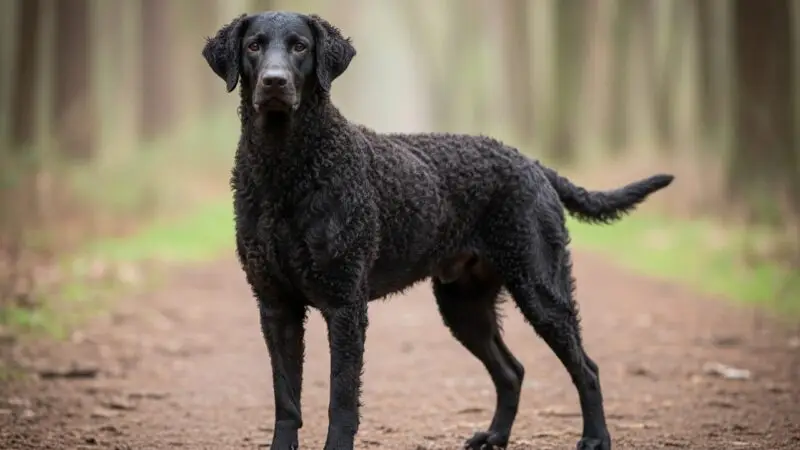
The group is divided into three sections: retrieving dogs (Section 1, including Labrador, Golden, Flat Coated Retriever), flushing dogs/Spaniels (Section 2, including English Springer Spaniel, Cocker Spaniel) and water dogs (Section 3, including Barbet, Portuguese Water Dog).
Well-known breeds and their profiles
Labrador Retriever
The Labrador is the most frequently registered dog breed worldwide – and this puts it in a quality crisis. The extreme demand has led to uncontrolled mass breeding, which has resulted in hip dysplasia (HD), elbow dysplasia (ED), progressive retinal atrophy (PRA) and – increasingly documented – a tendency towards overweight as well as compulsive disorders. Reputable breeders carry out HD, ED and PRA tests and actively select against overweight lines. A Labrador from good breeding is a robust, work-ready dog; a mass-bred Labrador is often already orthopaedically stressed by the age of five.
Golden Retriever
The Golden Retriever has one of the highest cancer rates among all dog breeds – approximately 60% of American Goldens die from cancer, mainly haemangiosarcoma, lymphoma and mast cell tumours. This finding is scientifically substantiated by the Golden Retriever Lifetime Study of the Morris Animal Foundation (since 2012, over 3,000 dogs). Whether the figures are identical for European lines remains unclear – but European breeder associations also register an above-average cancer rate. Anyone buying a Golden should plan for pet insurance and regular tumour screenings.
English Cocker Spaniel
The Cocker Spaniel was criticised for a time due to “Rage Syndrome” – a neuropsychiatric phenomenon that leads to sudden dominance attacks and was documented in English show lines from the 1970s to the 1990s. In reputable breeding lines, the problem has been significantly reduced today through strict selection. When buying a Cocker, the origin line remains decisive. Working lines and well-managed show lines differ considerably in character.
Flat Coated Retriever
The Flat Coated Retriever is considered the “Peter Pan among Retrievers” – it retains its juvenile, enthusiastic character into old age. This makes it charming and lively; but it also means that owners expecting a calm adult dog will be disappointed. Cancer diseases – particularly histiocytic sarcoma – are also disproportionately common in the Flat Coat.
Common mistakes – and what really helps
Retrievers have an image: the cosy family dog on the sofa, relaxed with children, without major demands. This image is not wrong – but incomplete. A Labrador or Golden that goes for a walk twice a day without further enrichment is a physically active hunting dog without satisfaction of its retrieving need. This manifests itself in biting everything that is not secured and a constant impulse to put things in the mouth.
What really helps: treating Retrievers as what they are – working dogs with a high motivation to work cooperatively. Retrieving games, nose work, water work, dummy training and dog sports channel their energy meaningfully. A Retriever that works regularly is indeed the balanced family dog one imagines.
Breeding for harmful traits (Qualzucht) and overbreeding in Group 8
The most significant issue of breeding for harmful traits in Group 8 affects the Cocker Spaniel due to extremely elongated floppy ears in show lines: they lead to chronic ear infections due to lack of ventilation in the ear canal. The same applies, albeit in a milder form, to the Basset-related area of the Spaniel section.
In the Labrador Retriever, there is debate about selection for extreme overweight in certain show dog lines. In fact, it has been proven that Labrador Retrievers with a specific gene mutation in the POMC gene (Pro-opiomelanocortin) have a significantly higher risk of being overweight than dogs without this mutation – around 25% of all Labradors carry this variant. This is one of the few cases where feeding behaviour in dogs can be explained genetically.
When do you need professional support?
Retrievers that become resource-guarding – over food, toys, or towards other dogs – require behaviourally oriented help, not just classic obedience training. Such behaviour is atypical for Retrievers and should be taken seriously. Our directory is available for reputable breeders and trainers in the D-A-CH region.
Frequently asked questions
Are Retrievers really so easy to keep?
Retrievers are cooperative, eager to learn and people-oriented – which makes them more accessible than many other groups. But a Labrador needs two hours of active enrichment daily, consistent dietary control and regular veterinary preventive care. “Easy” is relative – compared to a Border Collie, yes; compared to the Labradoodle myth, no.
Why do Retrievers get cancer so often?
In the Golden Retriever, the genetic background of the high cancer rate has not yet been fully elucidated. Genetic bottlenecks due to intensive inbreeding in the 1960s to 1980s and possibly environmental factors are suspected. The Morris Animal Foundation Golden Retriever Lifetime Study has been running since 2012 and is intended to provide long-term answers.
Which Retriever is the calmest?
Chesapeake Bay Retrievers and Nova Scotia Duck Tolling Retrievers are generally more energetic and independent than Labradors or Goldens. The Flat Coated Retriever remains lively throughout its life. Anyone looking for a somewhat calmer Retriever will most likely find one in the Labrador – provided it comes from a work-oriented, not overly energetic breeding line.
What is the difference between Spaniel and Retriever?
Spaniels were bred for actively flushing game from cover; Retrievers for locating and retrieving shot game. Spaniels are therefore more active and independent in their search; Retrievers are more cooperative and more people-oriented. In family life, this manifests as a somewhat more independent Spaniel.