
01Summary
In a paragraph
If you only have 30 seconds.
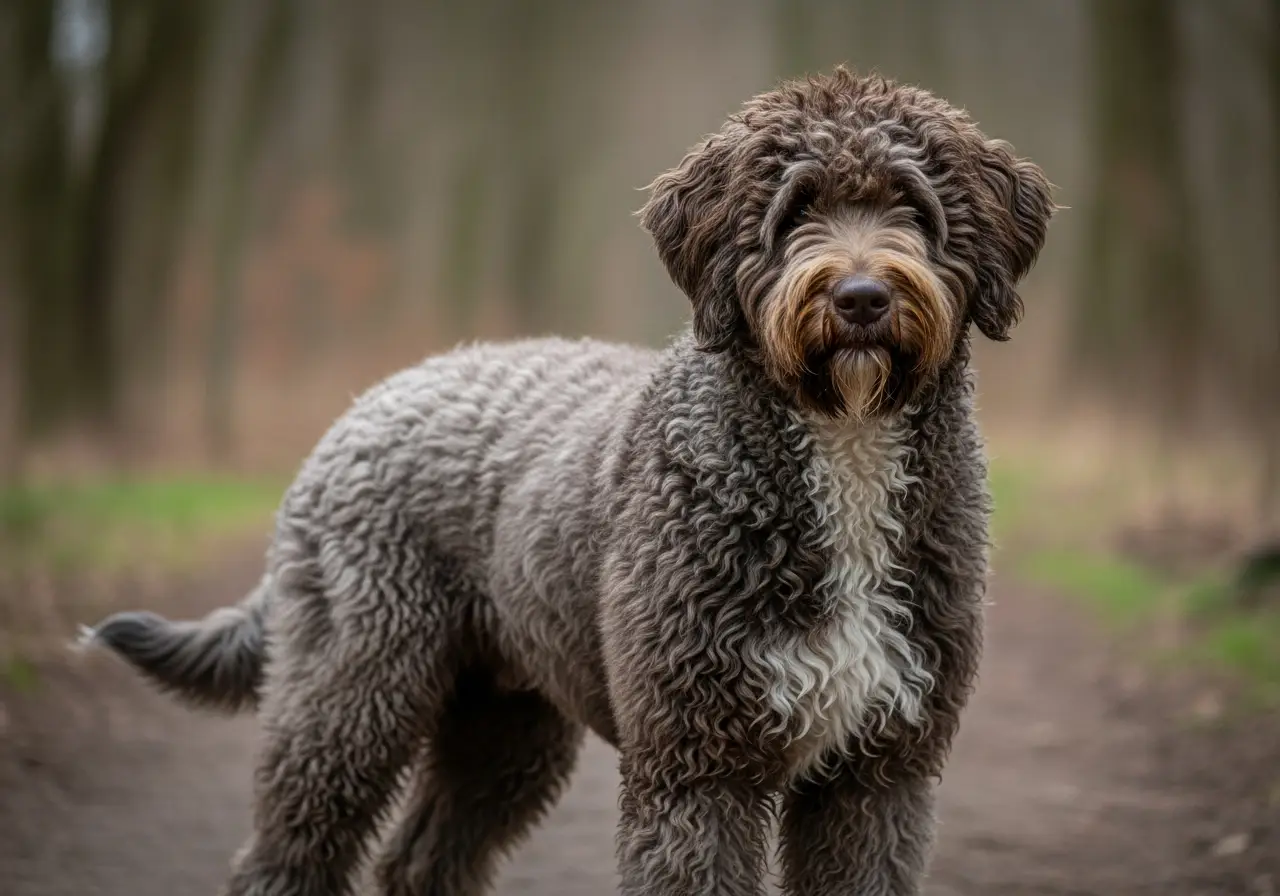
The Barbet is a French water dog with medieval roots, a dense curly coat and a pronounced willingness to work. It proves balanced and strongly bonded but demands at least 90 minutes of active exercise, mental stimulation and consistent grooming daily. Anyone who meets these three conditions receives a robust, cooperative companion. Anyone who underestimates one or more of them will face problems.
02Introduction
What makes the Barbet special
The Barbet is a French water dog, FCI Group 8, hypoallergenic and water-loving, considered an ancestor of the Poodle, height at withers 52–65 cm.
03Profile
Key facts and suitability
- Origin
- Frankreich
- Original purpose
- Water hunting dog, retrieving
- FCI
- No. 105 · Group 8 · Sektion 3: Wasserhunde
- height at the withers
- 52–65 cm
- Weight
- 17–28 kg
- Life expectancy
- 12–14 Years
- Coat type
- Gelockt
- Minimum exercise
- 60 min/day
- Puppy price
- 2'000–3'500 CHF
- Waiting period
- 12 months
- Sports
- Agility · Swimming · Retrieving · Dummy · Obedience
04Temperament
How the Barbet shows up in everyday life
The morning run at the pond shows what makes the Barbet special: It does not retrieve because it is asked to, but because it wants to. The willingness to work is genetically anchored; this is the internal axis. A Barbet that receives 90 minutes of active movement with a meaningful task daily returns home calm and satisfied. The same dog without sufficient stimulation becomes restless, seeks enrichment and usually finds it where it is unwanted.
The external axis, how the Barbet reacts to its environment, looks different from some other working dogs. Towards strangers, it generally shows calm openness or neutral reserve, rarely shyness or aggression. This means: A well-socialised Barbet greets visitors without excitement, but without enthusiastically greeting every stranger. This distinction is important; high need for social contact with one’s own family does not mean that the dog becomes equally warm with every person.
With conspecifics, the Barbet shows tolerance with good socialisation. Its prey drive is present and should not be underestimated; attention is required on a lead in areas rich in wildlife. It reacts sensitively to moods in the family and inconsistent guidance. Anyone who sets a boundary today but not tomorrow will notice this with a Barbet faster than with many other breeds.
The bond with the primary caregiver is close. Being left alone must be built up early and systematically; the Barbet is not a dog that tolerates isolation without problems.
05Needs
What this breed needs daily
The Barbet needs at least 90 minutes of active movement daily, not just walks, but movement with a task. Retrieving work, dummy training, mantrailing or swimming correspond to its genetic profile and simultaneously cover the need for mental work. Pure exercise time without a mental component is not sufficient.
The need for mental work is at a high level. The Barbet was selected over centuries for cooperative hunting work; it expects tasks that combine thinking and cooperation with the owner. Nose work, search games and structured obedience training belong in the weekly programme, not as an exception.
The need for social contact with the immediate family is pronounced. The Barbet wants to be integrated into everyday life, not kept in a kennel or left alone permanently. A maximum of four hours of being left alone is considered acceptable if the dog has been accustomed to it. Longer absences without alternative care are incompatible with this breed.
The coat requires weekly brushing and professional clipping or at least thorough trimming every eight to twelve weeks. Underestimating this risks matting down to the skin. Access to bodies of water (streams, lakes, dog swimming pools) is not a luxury but corresponds to the natural urge for movement of this breed.
Keeping the dog in an apartment works if mental and physical stimulation is implemented consistently. A garden alone does not replace active enrichment; it merely supplements it.
Exercise
High
mental work
A lot
Social needs
High
training
Easy
06Sport & Mental and Physical Stimulation
What sports the Barbet is suited for
Realistic in terms of physiology and genetics – not every breed suits every sport.
Structurally and physiologically suitable: CaniCross / bikejoring possible.
07Quick Check
08Suitability
Who this breed is suitable for – and who it isn't
✓Matches
The Barbet suits owners who can plan at least 90 minutes of active exercise with the dog daily, not as an occasional exception but as a fixed part of the day. Nature-oriented people with access to bodies of water or forested areas provide the Barbet with an environment that corresponds to its genetic profile.
Families with children from about six years of age are suitable if adults take on the leadership role and sufficient time is available for training and mental and physical stimulation. The Barbet gets along well with children when properly socialised, but requires clear rules and no chaotic daily structure.
Owners with experience in training working dogs or an interest in dog sports (dummy work, Mantrailing, water work) benefit from the high willingness to learn of this breed. First-time owners are also suitable if they bring a readiness for training, use a dog training school from the start and realistically plan for grooming.
Those who work from home or have flexible working hours can better meet the Barbet's need for social contact than someone with long, fixed periods of absence. An alternative care arrangement (dog day care, dog sitter) is mandatory, not optional, in case of regular absences exceeding four hours.
×Doesn't match
The Barbet does not suit owners who can or want to plan less than 90 minutes of active enrichment daily. Anyone looking for a calm, undemanding companion dog will not be happy with a Barbet, and the dog will not be happy with this form of keeping either.
Anyone who regards grooming as a secondary matter should not choose this breed. The curly coat mats considerably without regular care and causes skin problems. The time required for brushing and clipping is non-negotiable.
Households where the dog regularly remains alone for more than four hours without an alternative care arrangement being organised are unsuitable for the Barbet. Its pronounced need for social contact with the family makes prolonged isolation a stress factor.
Anyone who confuses the high need for social contact of the Barbet with general sociability (i.e. expects the dog to enthusiastically greet every stranger and be easily integrable everywhere) will be surprised by its calm reserve towards strangers. It is crucial to distinguish between these two axes.
Anyone who has no access to nature, water or dog sports and plans exclusively city walks structurally underestimates the need for movement and mental work of this breed.
10Line reality
Show line, working line, breeder market
Compared to other hunting dog breeds, the Barbet does not have a strongly pronounced line differentiation between working and show types. The total population is too small worldwide to establish parallel breeding lines with clearly different performance profiles.
Nevertheless, regional differences exist: French breeders, who are closely oriented towards the original hunting use, value love of water, retrieving instinct and endurance. Breeders in other countries, including the Netherlands and Scandinavia, have positioned the breed more strongly as a family and companion dog, without completely giving up the willingness to work.
Anyone looking for a Barbet for active water work or dummy sports should specifically ask for breeders who test their dogs for love of water and retrieving readiness. A puppy from a line with proven working enthusiasm shows more drive strength in everyday life than a dog from pure companion dog breeding.
For most owners in the DACH region, this distinction is less critical than with breeds with strongly diverging lines; the Barbet remains a dog with clear willingness to work and high need for social contact in all lines. Nevertheless, it is worth asking the breeder specifically about the activities of the parent animals.
11Health · Reality
What you need to plan for medically with your Barbet
The Barbet is considered a robust breed with a life expectancy of 12 to 15 years. This range is based on information from the Barbet Club Switzerland and international breeder associations; reliable epidemiological studies on the breed hardly exist due to the small population.
Hip dysplasia (HD) is the most frequently documented hereditary disease in the Barbet. Exact prevalence rates for the breed are not available in the form of large-scale studies; reputable breeders carry out HD X-rays of both parent dogs as a mandatory examination. For comparison: According to the OFA database (Orthopedic Foundation for Animals, status 2023), the HD rate in Labrador Retrievers is around 12%; for the Barbet, the data situation is thinner, but the risk is documented.
Hereditary eye diseases, including progressive retinal atrophy (PRA), have been described in the Barbet. Eye examinations of both parent dogs by a specialist veterinary ophthalmologist are part of the standard for reputable breeding.
The dense curly coat predisposes the dog to skin problems if it becomes matted or stays wet. Otitis externa (ear inflammation) occurs more frequently in water dogs with hairy ear canals than in short-haired breeds; regular ear checks after contact with water are advisable.
Overweight is a real risk for the Barbet if its need for exercise is not met. Excessive body weight puts strain on joints and predisposes the dog to joint problems. Preventive check-ups at the vet (at least once a year, every six months from the seventh year of life) help detect age-related changes early.
12Structured data
Health by the numbers
Prone to diseases
Hip dysplasia, epilepsy, eye problems
Recommended health tests
Hip X-ray, eye examination
13Myths ↔ Reality
What is often said incorrectly about this breed
Five myths, five realities, five sources.
“The Barbet is hypoallergenic; allergy sufferers can keep it without hesitation.
No dog is completely allergen-free. The allergen Can f 1 is found in saliva and skin flakes, not in the coat. The Barbet’s curly coat does reduce the amount of loose hair in the home, but it does not eliminate the risk of allergens. Allergy sufferers should undergo an allergy test before getting a dog and spend several hours with the specific dog.
“The Barbet is so rare that it has no hereditary diseases.
Small populations increase the risk of genetic bottlenecks (inbreeding depression); they do not reduce it. Hip dysplasia (HD) and hereditary eye diseases are documented in the Barbet. Reputable breeders have HD X-rays and eye examinations carried out before breeding. A small gene pool makes these tests more important, not redundant.
“The Barbet’s curly coat cares for itself; it hardly mats.
The opposite is true. The dense, woolly curly coat of the Barbet mats considerably without regular care. Without weekly brushing and regular clipping, mats form that can reach the skin and cause skin problems. The care effort is a frequently underestimated reason for surrendering this breed.
“The Barbet is a calm lap dog that requires little stimulation.
The Barbet was selected over centuries as a working dog for water hunting. It shows a balanced temperament when its need for movement and mental work is met, not by nature. Without sufficient stimulation, Barbets develop behavioural problems such as excessive barking, destructive behaviour or restlessness.
“As a predecessor of the Poodle, the Barbet is just as easy to keep.
The historical relationship with the Poodle says little about today’s care demands. The Barbet was functionally further bred as a hunting dog, while the Poodle has been selected for generations also as a companion dog. The Barbet shows a stronger prey drive and higher willingness to work than many Poodle lines, which requires correspondingly active keeping.
14animal welfare
The animal welfare perspective
Breeder market, designer versions, animal shelter reality — what no one writes in the puppy ad.
In Switzerland, the Barbet is considered a rare breed in Germany and Switzerland. This means: it rarely appears in animal welfare contexts, and the market for puppies is limited. It is precisely this rarity that makes it susceptible to two opposing problems.
On the one hand, there are backyard breeders who exploit the demand for the "exotic curly coat" without conducting health tests. Anyone offering a Barbet puppy without hip dysplasia X-rays and eye examinations of the parent animals is operating at the expense of the animals' health. The rarity of the breed does not protect against irresponsible breeding; it merely makes comparison more difficult for interested parties who lack reference points.
On the other hand, no significant designer versions of the Barbet are emerging because the breed is too little known. This is a relative advantage compared to breeds such as the Labradoodle or Goldendoodle, where uncontrolled crossbreeding floods the market.
Keeping-related problems are real and documented for the Barbet: underestimated grooming and insufficient mental and physical stimulation of its willingness to work are the most common reasons for surrendering the dog. Anyone who buys a Barbet as a calm companion dog with decorative coat underestimates the dog structurally. This is not an accusation; it is an information problem that can be solved through honest education before purchase.
Adoption as an equally valid option: An adult Barbet from a second home, via breeders with a take-back guarantee or breed-specific rehoming organisations, offers the advantage of a known character. For owners with experience, this can be the more sensible choice than a puppy. The search takes longer than for more common breeds, but it is worthwhile.
15Costs · Transparency
What this breed realistically costs
A Barbet puppy from responsible breeding with health tests costs between 1,800 and 2,800 EUR or CHF in the DACH region. Offers significantly below this, under 1,200 EUR, should be questioned critically, as responsible breeding with hip dysplasia X-rays, eye examinations and veterinary care of the litters rarely falls below this price floor.
Annual living costs range from 2,000 to 3,500 EUR depending on the type of keeping. This includes food (600–1,000 EUR/year depending on quality and body weight), grooming (professional clipping every 8–12 weeks, approx. 60–120 EUR per session, i.e., 600–1,500 EUR/year) as well as basic equipment and accessories.
Average vet costs: routine check-ups, vaccinations and parasite prevention amount to 300–600 EUR per year. In the event of illness or surgery, individual costs can quickly reach 1,500–5,000 EUR. Pet insurance for a Barbet costs 50–120 EUR per month depending on the provider and scope of cover, significantly reducing financial risk in the event of serious illness.
Dog training school and training, particularly recommended for this breed, cost 150–400 EUR for a basic course. Anyone who engages in dog sports such as dummy work or mantrailing should budget an additional 200–500 EUR per year for course fees.
16Puppy search
What you need to consider when choosing a breeder
- Reputable Barbet breeders have both parent dogs X-rayed for hip dysplasia (HD) and examined for hereditary eye diseases before breeding.
- The results should be available in writing and shown upon request.
- Anyone who does not present these documents is not a reputable contact.
- As the Barbet is a rare breed, waiting times of one year or more are common.
- Anyone who receives a puppy immediately should regard this as a warning sign.
- Reputable breeders ask questions about daily life, living conditions and the applicant's experience; they select their puppy owners, not the other way around.
- The Barbet Club Switzerland (barbet.ch) and the VBBFL (vbbfl.de) maintain breeder lists with members who adhere to breeding regulations.
- These lists are a sensible starting point but do not replace personal inspection on site.
- Adoption as an equally valid option: The Barbet rarely appears in animal welfare contexts; the breed is too rare for a high volume of surrenders.
- When Barbets are given up, it is often due to underestimated grooming or insufficient mental and physical stimulation.
- Breed-specific rehoming organisations and breeders with take-back guarantees are the most realistic points of contact for an adult Barbet from second-hand sources.
- An adult dog with a known character can be a sensible choice for experienced owners.
FAQ
Frequently asked questions about the Barbet
Is Barbet suitable for beginners?
Barbet is considered suitable for first-time dog owners.
Is Barbet a family dog?
Barbet is considered suitable for families with good socialisation and species-appropriate care.
How much exercise does Barbet need?
At least around 60 minutes of exercise per day. As an active breed, more so — plus mental stimulation.
Does Barbet suit an apartment?
With enough exercise and enrichment, Barbet can also be kept in an apartment.
What is the size and weight of Barbet?
Fully grown, Barbet reaches about 52–65 cm at the withers and weighs around 17–28 kg.
What is the life expectancy of Barbet?
The life expectancy of Barbet is approximately 12–14 years.
Is Barbet suitable for allergy sufferers?
Barbet is considered relatively hypoallergenic. There’s never a guarantee — test direct contact beforehand.
Which diseases are common in Barbet?
Hip dysplasia, epilepsy, eye problems
17Breed clubs
Official breed clubs in DACH
19Related
Similar breeds – and their differences
You might also be interested in



Participate
Do you have a good photo of your Barbet?
We are looking for expressive images for our breed profiles. Submit yours; the editorial team reviews every submission before publication.
Does this breed suit you?
Versatile, gentle water dog – known as a Poodle ancestor. Suitable for allergy sufferers. Rare, but growing popularity in the D-A-CH region.