
01Summary
In a paragraph
If you only have 30 seconds.
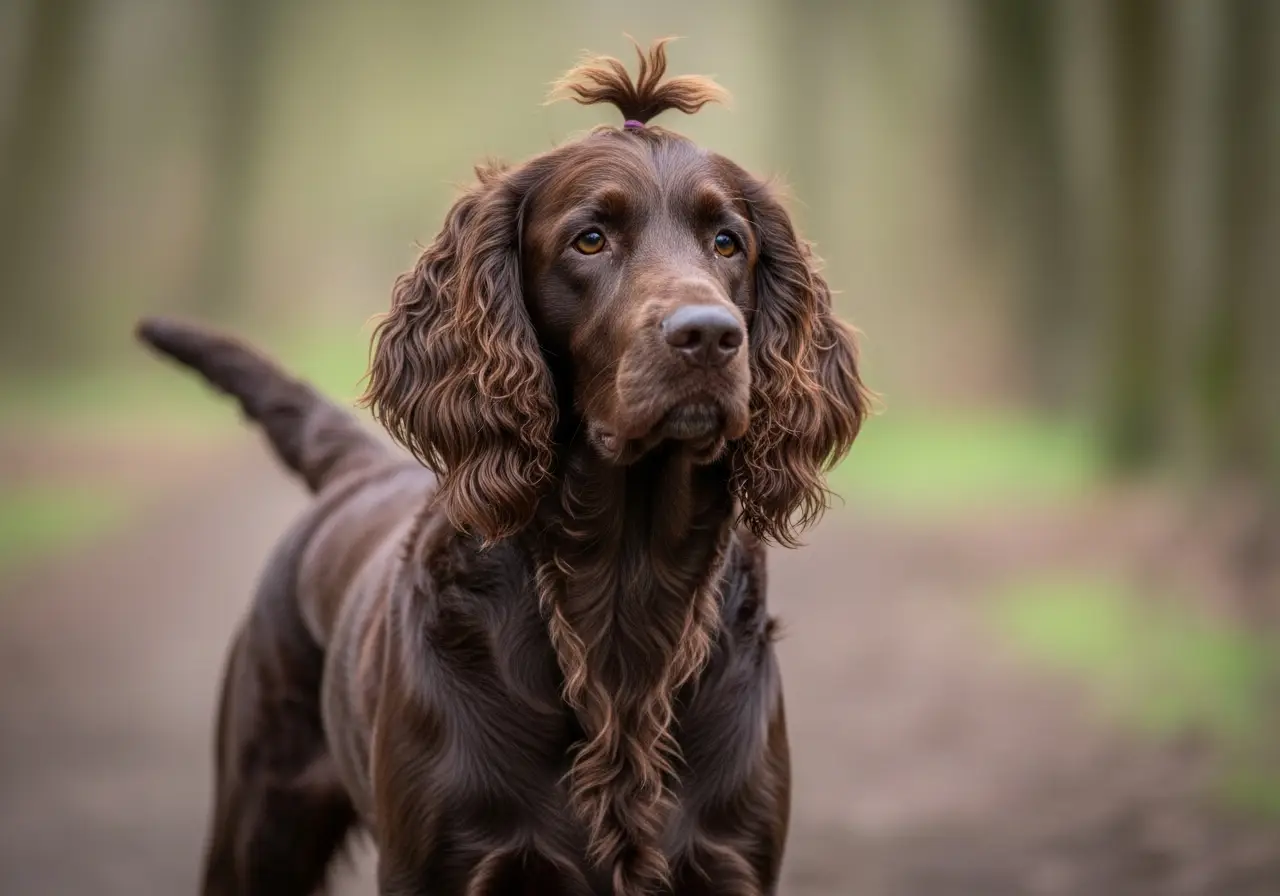
The Irish Water Spaniel is one of the oldest and rarest spaniel breeds in Europe, a working dog with a pronounced prey drive, dense curly coat and a bond with its primary caregiver that requires structure and consistency. Anyone who keeps it as a companion dog without hunting or sporting tasks underestimates its genetic predisposition. The breed does not forgive this without consequences in everyday life.
02Introduction
What makes the Irish Water Spaniel special
The Irish Water Spaniel is the largest of the Irish spaniels, FCI Group 8, hypoallergenic and water-obsessed, withers height 51–58 cm.
03Profile
Key facts and suitability
- Origin
- Irland
- Original purpose
- Waterfowl hunting and retrieving
- FCI
- No. 124 · Group 8 · Sektion 3: Wasserhunde
- height at the withers
- 51–58 cm
- Weight
- 20–30 kg
- Life expectancy
- 10–12 Years
- Coat type
- Gelockt
- Minimum exercise
- 90 min/day
- Puppy price
- 1'200–2'200 CHF
- Waiting period
- 9 months
- Sports
- Hunting · Swimming · Retrieving · Dummy · Agility
04Temperament
How the Irish Water Spaniel shows up in everyday life
When coming home, an Irish Water Spaniel greets its primary caregiver with clear intensity, not loudly, but present. It follows through the apartment, observes every move and waits for a signal that shows it what comes next. This close bond is no coincidence, but the result of decades of selection for teamwork with humans.
Internally (i.e. in what the dog itself needs), the breed shows a high need for social contact, a pronounced drive for mental work and a strong prey drive. A walk without a task is not enough. The dog needs structures: dummy work, nose work, water exercises or hunting training. If this stimulation is missing, it seeks it out itself, and rarely in a way that pleases the owner.
Externally, i.e. in its reaction to its environment, the Irish Water Spaniel behaves reservedly towards strangers. The FCI standard explicitly describes this mistrust as a breed characteristic. This means in everyday life: visitors are not greeted joyfully, but observed first. Children it knows and has grown up with, it accepts well; unknown children who behave unpredictably trigger withdrawal or tension.
These two poles, high internal need for social contact towards one's own family and external reserve towards strangers, must not be confused. A dog that is closely bonded to its family is not automatically open to everyone. Anyone who misinterprets this and overloads the dog in social situations risks stress reactions that become entrenched in the long term.
05Needs
What this breed needs daily
The Irish Water Spaniel needs at least 90 to 120 minutes of active exercise daily, not as a relaxed walk, but with a task. Swimming, retrieving from water, dummy training or hunting work correspond most strongly to its genetic make-up. Anyone who does not have access to bodies of water should seriously consider this before purchase.
The need for mental work is high. The breed was selected over generations for independent decision-making in the field. This means: A dog that is only physically stimulated is not sufficiently stimulated. Nose work, search games, retrieving tasks with variations and structured obedience training are part of the weekly programme.
The Irish Water Spaniel can tolerate being left alone for up to about four hours, provided it has been sufficiently enriched beforehand. Longer periods of solitude without preparation and without gradual habituation lead to restlessness and stress-related behaviour. A step-by-step introduction to being left alone from puppyhood is necessary.
The prey drive is pronounced and must be taken into account in training from the very beginning. Impulse control and a reliable recall are not optional supplementary exercises; they are a prerequisite for a safe everyday life. Free running in unsecured terrain without solid training is not advisable with this breed.
Positive reinforcement and varied training promote motivation. The breed reacts sensitively to pressure and inconsistent handling. Clear rules that are consistently adhered to create the basis for a stable relationship.
Exercise
High
mental work
A lot
Social needs
High
training
Medium
06Sport & Mental and Physical Stimulation
What sports the Irish Water Spaniel is suited for
Realistic in terms of physiology and genetics – not every breed suits every sport.
Structurally and physiologically suitable: Suitable for mantrailing, dummy work and tracking · CaniCross / bikejoring possible.
07Quick Check
08Suitability
Who this breed is suitable for – and who it isn't
✓Matches
The Irish Water Spaniel suits owners who can plan at least 90 to 120 minutes of active enrichment with the dog daily, a significant portion of which involves task-based activities. Hunting owners who use the dog in waterfowl hunting or retrieval training provide the optimal environment for the breed.
Active families with children from about eight years old, in which the dog is integrated into clear daily structures from the start, are also suitable, provided that at least one adult takes on consistent training.
Owners with access to bodies of water (lake, river, pond) enable the dog to engage in activities corresponding to its original purpose. Even without a hunting licence, water work can be meaningfully structured within the framework of dummy and retrieval training.
Experience with dogs with a pronounced prey drive is a clear advantage. Anyone who has already handled a pointing dog, retriever or spaniel with hunting instincts understands the demands on impulse control and recall training better than someone who has only kept companion dogs so far. Owners who are willing to attend a dog training school with a focus on hunting are well-prepared.
×Doesn't match
The Irish Water Spaniel does not suit owners who are away from home for more than four hours daily and cannot organise reliable care solutions. The breed tolerates periods of solitude only to a limited extent and requires regular human interaction.
Owners who consider the curly coat low-maintenance and do not plan for the effort involved in regular brushing and professional clipping will be surprised by the reality of grooming. Without consistent care, the coat mats, leading to skin problems and pain for the dog.
Anyone looking for a dog that is open and sociable towards strangers will not find the right profile in the Irish Water Spaniel. The breed-typical reserve towards unknown people is not a training problem that can be trained away; it is part of the FCI standard.
Households without experience with hunting-oriented dogs, who do not wish to attend a course focusing on impulse control and recall, underestimate the effort involved. The breed is equally unsuitable for owners who consider physical exercise sufficient and regard mental enrichment as optional. The dog needs both, daily, not occasionally.
10Line reality
Show line, working line, breeder market
The Irish Water Spaniel is kept today in two contexts: as a hunting dog in field work and as an exhibition dog. A line separation as clear as that of the Labrador Retriever or the German Wirehaired Pointer has not developed to the same extent in this breed due to the small population size in Central Europe.
In Great Britain and Ireland, where the breed has a somewhat broader breeding base, there are breeders with an explicitly hunting focus. These dogs are used in field trials and selected for working traits such as nose, retrieving willingness, and love of water. In continental Europe, exhibition breeding dominates, although reputable breeders still insist on working tests and health examinations.
For interested parties in Germany, Austria and Switzerland, this means: The selection of breeders is small. Anyone looking for a dog with proven hunting suitability may have to rely on breeders in Great Britain or Ireland. Anyone looking for a companion dog with retrieving interest will also find suitable dogs from continental breeders, provided they select for health and temperament tests.
The small breeding base increases the risk of inbreeding. A look at the coefficient of inbreeding (COI) of the planned litter is particularly important for this breed and should be actively requested from the breeder.
11Health · Reality
What you need to plan for medically with your Irish Water Spaniel
The Irish Water Spaniel is considered a robust breed, but has some health focus areas that should be known before purchase.
Hip dysplasia (HD) is documented in spaniels and retriever-related breeds. Reliable breed-specific HD rates for the Irish Water Spaniel are not available in sufficient sample sizes due to the small population size. As a guideline: For spaniels of FCI Group 8, health surveys by the VDH cite HD rates of 10–20% in non-selected populations (VDH Health Report 2022). Reputable breeders X-ray both parent animals and provide the results.
Eye diseases, particularly progressive retinal atrophy (PRA), are known in the breed. An eye examination of breeding animals by a specialist veterinarian is standard practice for responsible breeders.
Ear infections are an increased risk due to the long, hairy ears and water work. Regular ear checks and drying the ears after swimming measurably reduce the risk.
Thyroid disorders (hypothyroidism) are reported occasionally in the breed. A blood test including thyroid values is part of preventive care from middle age onwards.
The life expectancy is 11 to 14 years. Overweight demonstrably shortens this span: studies by the University of Liverpool (2019) show that overweight dogs die on average 2.5 years earlier than those of normal weight. The Irish Water Spaniel tends to gain weight with a lack of exercise; regular weighing and adjusted food quantities are necessary.
12Structured data
Health by the numbers
Prone to diseases
Hip dysplasia, thyroid problems, epilepsy
Recommended health tests
Hip X-ray, thyroid screening
13Myths ↔ Reality
What is often said incorrectly about this breed
Five myths, five realities, five sources.
„The Irish Water Spaniel is an uncomplicated family dog that is content with little exercise.
The FCI standard describes the breed as enduring, with a bold and inquisitive temperament. The need for exercise is at least 90–120 minutes daily, supplemented by mental stimulation. A dog of this breed without sufficient enrichment develops avoidance behaviour such as destruction or excessive barking.
„The curly coat of the Irish Water Spaniel is low-maintenance because it sheds very little.
The Irish Water Spaniel indeed loses few loose hairs. However, the dense curly coat mats considerably without regular care. Professional clipping every 8–12 weeks and weekly brushing are necessary to avoid skin problems and matting. The care requirement is higher than in many smooth-coated breeds.
„The Irish Water Spaniel is open and friendly towards all people.
The FCI standard explicitly states that the breed is suspicious of strangers. This trait is genetically anchored and not a training error. Early and consistent socialisation can mitigate the reaction, but it does not eliminate the fundamental reserve towards unknown people.
„As a water dog, the Irish Water Spaniel swims automatically and requires no acclimatisation.
The genetic predisposition for water work does not mean that every dog of this breed goes into the water without introduction. Positive first experiences with water in puppyhood are crucial. Dogs that have not received water acclimatisation as puppies can develop fears of contact that are difficult to correct.
„The Irish Water Spaniel is suitable as a hypoallergenic breed for allergy sufferers due to its curly coat.
No dog is completely allergen-free. Allergic reactions are primarily caused by the protein Can f 1 in saliva and skin flakes, not by loose hair alone. Whether an Irish Water Spaniel is tolerable for a specific allergy sufferer can only be determined through direct, repeated contact before purchase, not by coat structure alone.
14animal welfare
The animal welfare perspective
Breeder market, designer versions, animal shelter reality — what no one writes in the puppy ad.
The Irish Water Spaniel is so rare in Central Europe that an organised backyard breeder market in the classical sense hardly exists. This protects the breed from industrial mass production, but creates a different problem: the small breeding base increases the risk of inbreeding if breeders do not actively collaborate with international partners. Anyone buying an Irish Water Spaniel should know and be able to assess the inbreeding coefficient of the litter.
Designer versions or trend crosses with the Irish Water Spaniel are currently not a widespread phenomenon. This may change if the breed gains popularity through social media attention. The curly, low-shedding coat makes it attractive to buyers looking for a "hypoallergenic" dog, a term that is scientifically unsustainable and deliberately used for marketing purposes.
A keeping-related problem that occurs more frequently in practice than described in the literature: Irish Water Spaniels kept without hunting or sporting tasks develop behavioural problems. Destructive behaviour, excessive barking and hyperactivity are not character flaws; they are the result of living conditions that do not meet the genetic requirements of the breed. This is not a reproach to owners, but an indication of the need for honest advice before purchase.
Adoption via animal welfare organisations is rare for this breed, but possible. Specialised spaniel rescue organisations in Great Britain and Ireland occasionally place dogs abroad in Europe. Anyone with the necessary experience and time will find a fully worthwhile alternative to buying a puppy there, without this path requiring less commitment than buying from a breeder.
15Costs · Transparency
What this breed realistically costs
A puppy from a reputable breeder costs between 1,800 and 3,000 euros in Germany and Austria, and between 2,000 and 3,200 CHF in Switzerland. Offers significantly below this range without proven health examinations of the parent animals are a warning signal.
The annual living costs consist of food (approx. 600–900 euros/year for an adult dog with high-quality nutrition), grooming (professional clipping every 8–12 weeks, approx. 60–100 euros per session, i.e., 400–600 euros/year) as well as basic equipment, leashes, toys and training costs.
Veterinary costs vary greatly. Preventive examinations, vaccinations and parasite prevention amount to approx. 300–500 euros annually. In the event of illnesses (HD treatment, eye operations, ear infections), individual costs can quickly reach 1,000–3,000 euros.
A dog health insurance with surgery cover costs between 30 and 80 euros monthly depending on the provider and tariff. Given the possible treatment costs, such insurance is a sensible consideration for this breed. The total costs for an Irish Water Spaniel realistically amount to 2,500–4,500 euros per year, depending on health status, grooming effort and training intensity.
16Puppy search
What you need to consider when choosing a breeder
- Reputable breeders of Irish Water Spaniels provide health certificates for both parent animals, including at least hip dysplasia (HD) X-rays and eye examinations.
- As the breed is rare in Central Europe, the coefficient of inbreeding (COI) of the planned litter should be actively requested.
- A COI below 6.25% is considered a guideline value for acceptable inbreeding.
- Breeders who hand over puppies without allowing inspection of the mother, without a contract and without vaccination and deworming records are a clear warning sign.
- Equally problematic are offers that provide several different breeds simultaneously or hand over puppies under eight weeks old.
- and the Spaniel-Club der Schweiz maintain stud books and can facilitate contact with tested breeders.
- rundum.dog does not give named recommendations for individual breeders; researching through the breed club is the most reliable starting point.
- Placement via animal welfare organisations is rare for this breed, but not excluded.
- Specialised spaniel rescue organisations in Great Britain occasionally place Irish Water Spaniels in Europe.
- Those who bring time and experience will find an equivalent option to buying a puppy there.
FAQ
Frequently asked questions about the Irish Water Spaniel
Is Irish Water Spaniel suitable for beginners?
Irish Water Spaniel is considered suitable for first-time dog owners.
Is Irish Water Spaniel a family dog?
Irish Water Spaniel is considered suitable for families with good socialisation and species-appropriate care.
How much exercise does Irish Water Spaniel need?
At least around 90 minutes of exercise per day. As an active breed, more so — plus mental stimulation.
What is the size and weight of Irish Water Spaniel?
Fully grown, Irish Water Spaniel reaches about 51–58 cm at the withers and weighs around 20–30 kg.
What is the life expectancy of Irish Water Spaniel?
The life expectancy of Irish Water Spaniel is approximately 10–12 years.
Is Irish Water Spaniel suitable for allergy sufferers?
Irish Water Spaniel is considered relatively hypoallergenic. There’s never a guarantee — test direct contact beforehand.
Which diseases are common in Irish Water Spaniel?
Hip dysplasia, thyroid problems, epilepsy
17Breed clubs
Official breed clubs in DACH
19Related
Similar breeds – and their differences
You might also be interested in
Participate
Do you have a good photo of your Irish Water Spaniel?
We are looking for expressive images for our breed profiles. Submit yours; the editorial team reviews every submission before publication.
Does this breed suit you?
Largest and rarest of the Irish spaniels. Hypoallergenic, water-obsessed, eager to learn. Clown among hunting dogs.