4 sourcesUpdated September 11, 2026Responsible editor: Roger KleinText: Roger Klein
01Summary
In a paragraph
If you only have 30 seconds.
The Lagotto Romagnolo is the only globally recognised specialised truffle dog: a working dog from the northern Italian Romagna with exceptional nose performance and a high need for mental work. Anyone who keeps it purely as a companion dog underestimates its genetic profile. The curly coat demands regular care, the nose demands daily tasks. Neither is negotiable.
02Introduction
What makes the Lagotto Romagnolo special
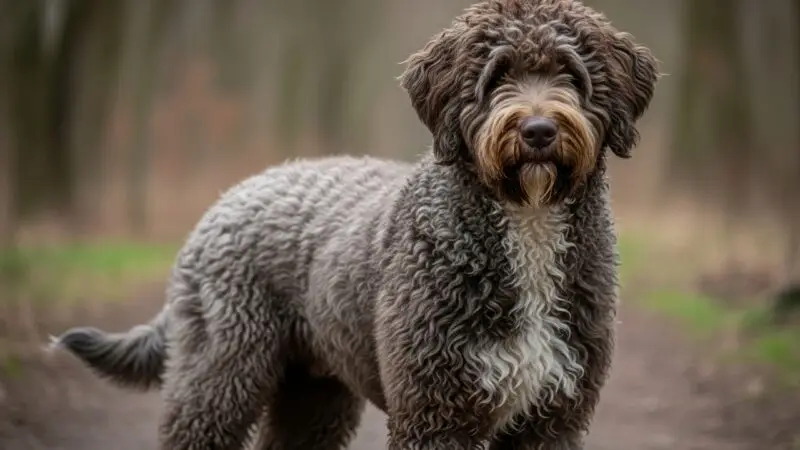
The Lagotto Romagnolo is the world's only specialised truffle dog, FCI Group 8, hypoallergenic from Romagna, withers height 41–48 cm.
03Profile
Key facts and suitability
- Origin
- Italien
- Original purpose
- Truffle hunting and waterfowl hunting in the Romagna
- FCI
- No. 298 · Group 8 · Section 3
- height at the withers
- 41–48 cm
- Weight
- 13–16 kg
- Life expectancy
- 13–15 Years
- Coat type
- Gelockt
- Minimum exercise
- 60 min/day
- Puppy price
- 1'500–3'000 CHF
- Waiting period
- 12 months
- Sports
- Nosework · Mantrailing · Agility · Obedience · Truffle hunting
04Temperament
How the Lagotto Romagnolo shows up in everyday life
The morning walk shows what distinguishes the Lagotto from many other medium-sized dogs: It does not simply walk alongside you. It works. The nose is permanently on the ground, it moves in circles, checks spots twice; its brain is occupied, even if the legs are moving moderately.
The Lagotto's need for social contact is high. It actively seeks closeness to its key person, wants to be involved in decisions and reacts to exclusion or boredom with restlessness. The need for mental work is extremely high: A Lagotto without a daily search task, nose work or structured training begins to seek its own enrichment, usually in the form of digging, barking or dismantling objects. The exercise requirement is moderate; 60 to 90 minutes of active movement per day are sufficient physically, provided the mental component is correct.
Towards strangers, the Lagotto often shows a waiting, reserved attitude. It does not greet unknown people spontaneously, observes first and only approaches once it has assessed the situation. This is not a lack of socialisation, but a breed-typical pattern. With other dogs, it is compatible with good socialisation, without pronounced dominance tendencies.
Those who confuse these two traits and interpret the high need for social contact as general openness towards all people will experience surprises in everyday life. A Lagotto that is affectionate and cooperative towards its family can still appear distinctly reserved towards visitors. Both reactions are breed-typical and not contradictory.
05Needs
What this breed needs daily
The Lagotto Romagnolo requires 60 to 90 minutes of active movement daily: this is the physical minimum, not the optimum. The mental component is decisive: Without structured nose work or mental tasks, even a physically stimulated Lagotto is under-stimulated.
Nose work as a must, not an option
Nose work is not a leisure activity for the Lagotto, but a genetically anchored need. Suitable forms are Mantrailing, truffle hunting (also as a leisure sport), tracking or structured search games. Many Lagotto owners report that 20 minutes of concentrated nose work tires the dog more than an hour of running; this corresponds to the experience level in the nose work community and behavioural biology.
Mental work and training
The need for mental work is very high. Regular training of new tasks, impulse control exercises and problem-solving tasks (e.g. food search games, retrieval tasks) belong in the weekly programme. A Lagotto that does the same programme for weeks loses motivation.
Social inclusion
The need for social contact is high. The Lagotto requires genuine inclusion in the family's everyday life: not just physical presence, but joint activities. Being left alone is possible for up to about four hours if it has been built up gradually. Longer phases without a key person or enrichment lead to stress behaviour.
Grooming as a time commitment
The curly coat requires weekly combing and a professional trim every six to eight weeks. This care effort needs to be factored into your time planning.
Exercise
Medium
mental work
A lot
Social needs
High
training
Easy
06Quick Check
07Suitability
Who this breed suits and who it doesn't
✓Matches
The Lagotto Romagnolo suits people and households that meet the following conditions:
Active owners with an interest in nose work or dog sports: Those who enjoy structured training, whether mantrailing, truffle hunting, tracking or agility, will find a highly motivated partner in the Lagotto. At least 90 minutes of activity time per day, with a substantial portion dedicated to nose work, should be realistically planned for.
Families with children of school age: The Lagotto shows a high need for social contact and willingness to cooperate with its family. Children from about eight years old, who are guided in handling dogs, provide a suitable environment, provided the adults take on leadership and ensure sufficient mental and physical stimulation.
Experienced first-time owners with a willingness to train: With consistent, positive training methods, the Lagotto is also suitable for owners without prior experience, provided they are willing to attend a dog training school and actively engage with nose work. Those who bring structure and consistency will find an eager-to-learn dog.
Owners in rural or suburban environments: A garden or regular access to natural areas significantly facilitates nose work. Keeping the dog in an apartment is possible but requires increased planning effort for daily search sessions.
×Doesn't match
The Lagotto Romagnolo does not suit people and households with the following profiles:
Owners with a limited time budget: Those who are regularly away from home for more than four hours a day and have no care solution organised underestimate the need for social contact of this breed. A Lagotto that waits alone for long periods every day will develop stress behaviour, regardless of how much exercise it receives in the evening.
People without an interest in structured training: Those looking for a dog that is content with daily walks will not be happy with a Lagotto. The need for mental work demands active engagement. Anyone who perceives this need as a burdensome duty should choose a different breed.
Owners who see reserve towards strangers as a problem: Those who expect their dog to spontaneously and warmly greet every visitor will be disappointed by the Lagotto. Its waiting attitude towards unknown people is typical of the breed: not a training error, but also not a trait that can be trained away.
Households that confuse the high need for social contact with general openness: A Lagotto is affectionate and cooperative towards its family; this does not mean it reacts uncomplicatedly in public spaces or towards strangers. Anyone who fails to distinguish between these two aspects will experience frustration on both sides in everyday life.
08Related
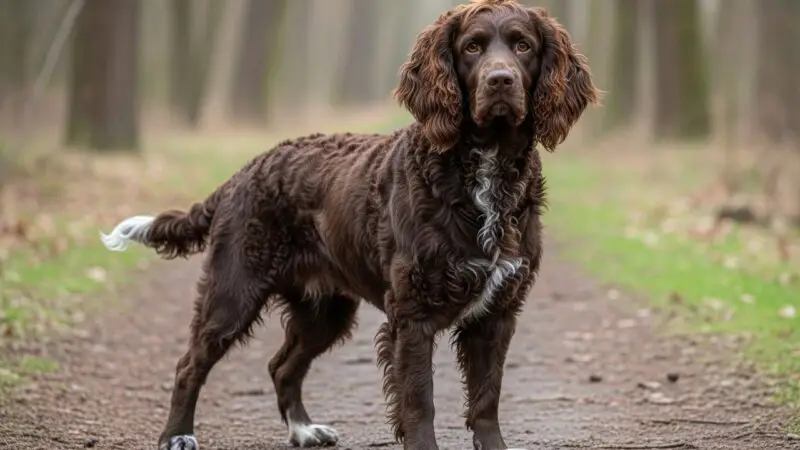
Similar breeds and how they differ

09Line reality
Show line, working line, breeder market
The Lagotto Romagnolo does not have clearly defined working and show lines in the sense of Retriever or Shepherd dog breeds. The line differentiation is more subtle, but relevant for potential buyers.
Truffle work-oriented breeding: Some breeders, particularly in Italy and Switzerland, continue to select primarily for nose performance, endurance when searching and drive strength. These dogs often show a more pronounced work drive and higher need for mental work. They are suitable for owners who actively engage in nose work.
Companion dog-oriented breeding: With the increasing international interest in the breed since FCI recognition in 1995, breeding lines emerged that select more strongly for temperament calmness, social compatibility and show suitability. These dogs are often somewhat more balanced in everyday life, but can still develop behavioural problems if mental and physical stimulation is insufficient.
Regional differences: Italian breeders who work closely with the ENCI often place more emphasis on the original function. In the DACH region, companion dog-oriented lines predominate, although individual breeders actively include truffle work in their selection.
For potential buyers, this means: Before buying, it is worth asking the breeder specifically about the focus of their breeding, and whether the parent dogs are used in nose work. This gives indications of the expected work drive of the puppy.
10Health · Reality
What you need to plan for medically with your Lagotto Romagnolo
The Lagotto Romagnolo is considered a robust breed with a life expectancy of 13 to 15 years. This range is based on information from the FCI standard and breeding association data; reliable population-wide studies on the exact life expectancy are not yet available.
Hip dysplasia (HD): HD occurs in the breed but is controllable with consistent breeding health checks. The Lagotto Club Schweiz requires an HD X-ray examination for breeding dogs. Exact prevalence rates for the total population are not publicly available; prospective buyers should request HD reports for both parent dogs.
Lagoid Ceroid Lipofuscinosis (LN): A hereditary neurological storage disease described in Lagottos. It leads to progressive nerve cell loss and is not curable. Since the development of a gene test (from approx. 2012), carriers can be identified and carrier pairings avoided. Reputable breeders test both parent dogs; prospective buyers should demand proof of the gene test.
Benign familial juvenile epilepsy: A breed-typical form of epilepsy that can occur in puppies between 5 and 9 weeks of age and spontaneously resolves in most cases by the age of 8 to 13 weeks. It is considered benign but should be documented and reported to the vet.
Eye health: Cataracts and other eye conditions are known within the breed. Eye examinations of parent dogs (ECVO screening) are recommended.
Overweight: The Lagotto tends to become overweight with insufficient mental and physical stimulation and overfeeding, which puts strain on joints and metabolism. Regular weight checks at the vet are advisable.
Preventive checklist: HD X-ray, LN genetic test, epilepsy documentation, ECVO eye test; all four points should be documented for breeding dogs.
11Structured data
Health by the numbers
Prone to diseases
Lagotto Romagnolo Storage Disease (LSD, specific to this breed), epilepsy, hip dysplasia
Recommended health tests
DNA test for LSD, hip X-ray
12Myths ↔ Reality
What is often said incorrectly about this breed
Five myths, five realities, five sources.
„The Lagotto is hypoallergenic and does not trigger allergies.
No dog is completely allergy-free. The Lagotto sheds little and releases comparatively little fur into the environment, which reduces allergen exposure from animal hair. However, the main trigger for dog allergies is the protein Can f 1 in saliva and skin flakes, not the fur itself. Allergy sufferers should carry out an allergy test before getting a dog and spend time with the specific dog.
„As a truffle dog, the Lagotto is automatically well stimulated if it is allowed to sniff around in the garden.
Free sniffing in the garden does not replace structured nose work. The Lagotto needs targeted search tasks with clear instructions and rewards, such as mantrailing, truffle hunting or nose work courses. Unstructured sniffing around without a task does not sufficiently reduce the need for mental work and leads to frustration or self-invented activities such as digging in many dogs.
"The Lagotto is an uncomplicated family dog for everyone due to its friendly nature.
The Lagotto shows a strong bond with its family and has a high need for social contact; this does not, however, mean that it is open towards strangers or undemanding in everyday life. It often behaves reservedly towards strangers. Its need for mental work is very high. Without daily mental and physical stimulation, it develops undesirable behaviours such as excessive digging, barking or restlessness.
"The Lagotto's curly coat cares for itself.
The dense, curly coat of the Lagotto mats considerably without regular care. It requires a professional trim every 6 to 8 weeks as well as weekly combing to prevent matting. Matted fur can lead to skin irritation and parasitic infestation. The care effort is an underestimated cost factor for this breed.
"Lagottos are difficult to train due to their sensitivity.
The Lagotto reacts sensitively to harsh corrections; this does not make it difficult to train, but rather demands a consistent, positive training methodology. It learns quickly, works cooperatively and shows high motivation with clear task assignments. Problems do not arise from a lack of learning ability, but from a lack of structure or being overwhelmed by inconsistent signals.
13animal welfare
The animal welfare perspective
Breeder market, designer versions, animal shelter reality: what no one writes in the puppy ad.
The Lagotto Romagnolo is still relatively rare in animal welfare organisations in the DACH region; however, this is changing with the increasing popularity of the breed.
Backyard breeder market and demand pressure
Since FCI recognition in 1995 and growing interest in "hypoallergenic" dogs, demand for Lagottos has risen significantly. This attracts backyard breeders who prioritise quantity over health testing. Puppies without LN genetic tests, without HD results for parent dogs, and without documentation regarding benign juvenile epilepsy are offered on classifieds platforms at prices well below those of breeding clubs. The low price is not an advantage here; it signals a lack of preventive healthcare.
Reasons for surrender in animal welfare
The most common reasons for surrendering Lagottos are underestimated needs for nose work and mental stimulation, as well as the underestimated grooming effort required for their curly coat. Owners who expected a calm companion dog reach their limits when the dog starts seeking its own enrichment. This leads to surrenders that could be avoided through honest information before purchase.
Breeding and husbandry-related problems
The Lagotto is not a breed with extreme anatomical features in the strict sense; it does not exhibit such extremes. The breed-specific health risks (LN, epilepsy, HD) are controllable through breeding health tests. Problematic is the selection in some companion-dog-oriented lines that prioritise temperament calmness over working suitability, without correspondingly reducing the need for mental stimulation.
Adoption as an equally valid option
Anyone looking for a Lagotto should actively consider animal welfare organisations and breed-specific rescues. Older dogs from rescue have the advantage that their temperament and health status are already known. The Lagotto Club Switzerland and the Lagotto Romagnolo Breeding Community e.V. have contacts with rehoming centres. A Lagotto from rescue is not a compromise, but an informed decision.
14Costs · Transparency
What this breed realistically costs
Getting a dog: A puppy from a reputable breeder affiliated with a breeding association costs between 1,800 and 2,800 EUR or CHF in the DACH region. Offers significantly below this, often on classifieds platforms, generally come with missing health tests. A Lagotto from rescue costs a rehoming fee of typically 200 to 500 EUR/CHF.
Ongoing annual costs: Food (quality dry food or BARF) amounts to 600 to 1,200 EUR/CHF, depending on size and food quality. Grooming every 6 to 8 weeks at a groomer costs between 60 and 120 EUR/CHF per session, i.e., 450 to 900 EUR/CHF annually. This item is often underestimated when deciding to get a dog.
Vet costs: Basic care (vaccinations, parasite prevention, annual examination) amounts to 300 to 600 EUR/CHF per year. One-off costs of 150 to 300 EUR/CHF are added for breed-specific preventive examinations (HD check, eye screening).
Insurance: Pet health insurance costs between 40 and 120 EUR/CHF monthly, depending on provider and coverage. Given possible neurological conditions (LN) and orthopaedic findings, insurance is recommended.
Total costs: Realistic ongoing annual costs are 2,500 to 4,500 EUR/CHF, excluding extraordinary vet costs.
15Puppy search
What you need to consider when choosing a breeder
- A reputable Lagotto breeder can be recognised by specific criteria, not by pretty photos or low prices.
- **Health documents as a minimum standard:** Both parent dogs should be able to provide an LN gene test (Lagoid Ceroid Lipofuscinosis), an HD X-ray report, and an ECVO eye screening.
- Anyone who does not show these documents or considers them unnecessary does not meet the minimum standard of reputable breeding.
- **Membership in a breeding association:** Breeders who are members of the Lagotto Club Schweiz (LCS), the Lagotto Romagnolo Club Austria, or the Lagotto Romagnolo Züchtergemeinschaft e.V.
- are subject to breeding regulations with health requirements.
- This is not a quality seal, but a relevant criterion.
- **Puppy visit on site:** A reputable breeder allows you to visit the litter, with the mother dog, in a home environment.
- Puppies that grow up without their mother or in outdoor enclosures without socialisation stimuli are a warning sign.
- **Waiting time as a positive signal:** Reputable breeders have waiting lists.
- Anyone who can deliver immediately should be questioned critically.
- **Adoption as an equally valid alternative:** Animal welfare organisations and breed rescue groups regularly place Lagottos.
- Older dogs have the advantage of a known temperament and health status.
- The Lagotto Club Schweiz and the Züchtergemeinschaft e.V.
- can provide contacts to adoption centres.
FAQ
Frequently asked questions about the Lagotto Romagnolo
Is Lagotto Romagnolo suitable for beginners?
Lagotto Romagnolo is considered suitable for first-time dog owners.
Is Lagotto Romagnolo a family dog?
Lagotto Romagnolo is considered suitable for families with good socialisation and species-appropriate care.
How much exercise does Lagotto Romagnolo need?
At least around 60 minutes of exercise per day.
Does Lagotto Romagnolo suit an apartment?
With enough exercise and enrichment, Lagotto Romagnolo can also be kept in an apartment.
What is the size and weight of Lagotto Romagnolo?
Fully grown, Lagotto Romagnolo reaches about 41–48 cm at the withers and weighs around 13–16 kg.
What is the life expectancy of Lagotto Romagnolo?
The life expectancy of Lagotto Romagnolo is approximately 13–15 years.
Is Lagotto Romagnolo suitable for allergy sufferers?
Lagotto Romagnolo is considered relatively hypoallergenic. There’s never a guarantee — test direct contact beforehand.
Which diseases are common in Lagotto Romagnolo?
Lagotto Romagnolo Storage Disease (LSD, specific to this breed), epilepsy, hip dysplasia
Participate
Do you have a good photo of your Lagotto Romagnolo?
We are looking for expressive images for our breed profiles. Submit yours; the editorial team reviews every submission before publication.
Does this breed suit you?
The world's only truffle dog. Hypoallergenic. Always request a DNA test for LSD before purchase.