
01Summary
In a paragraph
If you only have 30 seconds.
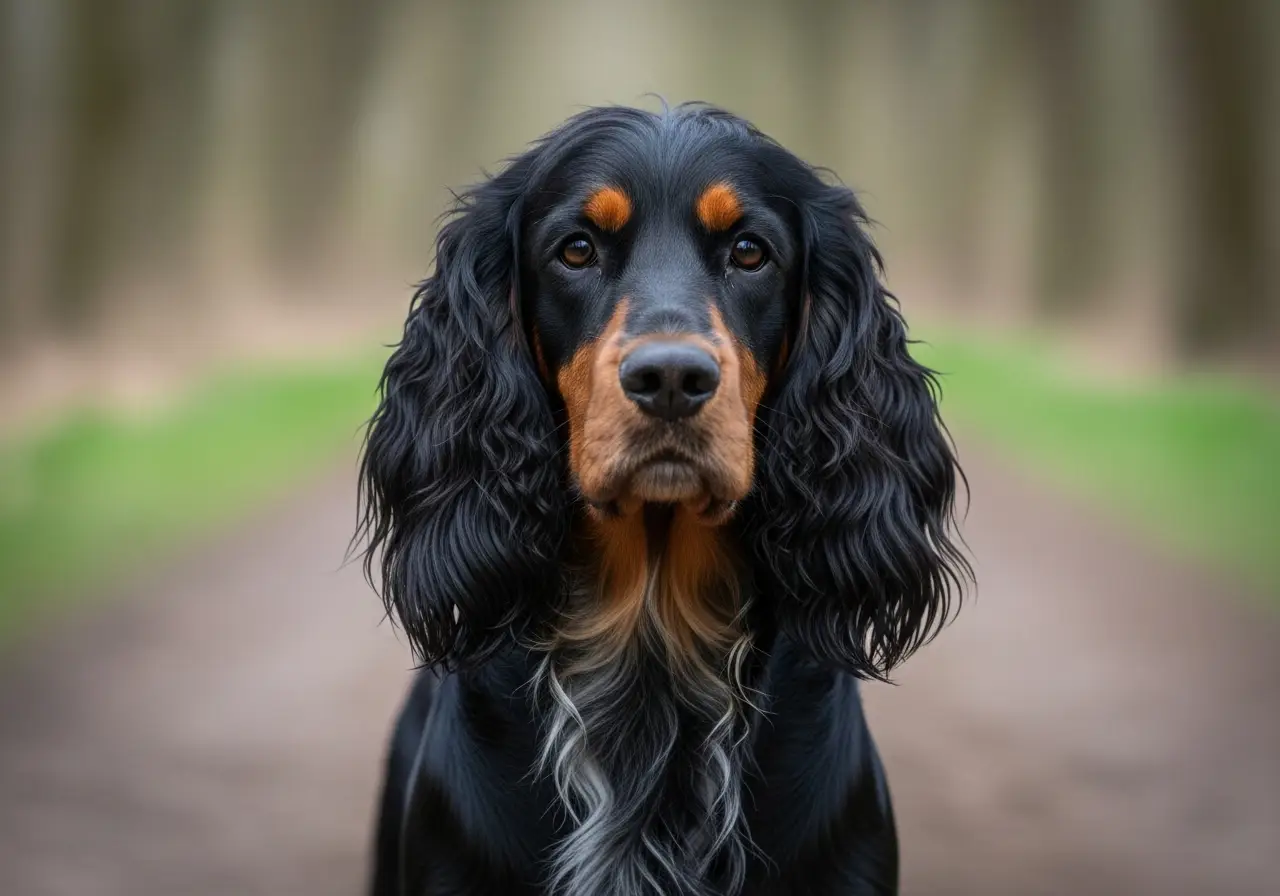
The Field Spaniel is a rare British field spaniel with strong working motivation and a close bond with its primary caregiver. Behind the calm, gentle expression lies an enduring hunting dog that requires 90 to 120 minutes of active exercise daily, as well as scent work or dummy training. Those who provide this receive a cooperative, eager-to-learn companion; those who do not create frustration and behavioural problems.
02Introduction
What makes the Field Spaniel special
The Field Spaniel is a rare British flushing spaniel, FCI Group 8, calm and good-natured, withers height 43–46 cm.
03Profile
Key facts and suitability
- Origin
- Grossbritannien
- Original purpose
- Flushing and retrieving
- FCI
- No. 123 · Group 8 · Sektion 2: Stöberhunde
- height at the withers
- 43–46 cm
- Weight
- 18–25 kg
- Life expectancy
- 11–13 Years
- Coat type
- Long-haired
- Minimum exercise
- 60 min/day
- Puppy price
- 1'200–2'000 CHF
- Waiting period
- 12 months
- Sports
- Hunting · Retrieving · Dummy · Agility
04Temperament
How the Field Spaniel shows up in everyday life
The morning walk reveals what makes the Field Spaniel unique: The nose goes straight to the ground, the dog moves through the terrain in wide arcs and works systematically; this is no coincidence, but genetics. The search drive is active at all times as soon as game scent is present. A stable recall is therefore not optional, but a basic requirement.
At home, the Field Spaniel behaves calmly and evenly, provided its need for movement and enrichment is met. It actively seeks closeness to its primary caregiver, not intrusively, but consistently. Anyone who spends the evening on the sofa will most likely have the dog right next to them.
Here the important distinction between internal need and external behaviour becomes apparent: The Field Spaniel’s need for social contact is high; it requires close bonding and human presence. However, towards strangers it behaves rather reservedly than openly. A dog that appears warm and cooperative within the family circle does not automatically have to be so towards unknown visitors. Anyone who does not know this difference misinterprets the reserve as shyness or a training error.
The Field Spaniel reacts sensitively to pressure or loud corrections. Consistency means clear structure and reliability for this breed, not strictness. Training with positive reinforcement, varied tasks, and calm body language produces the best results. Monotonous repetitions quickly lead to disinterest.
05Needs
What this breed needs daily
The Field Spaniel needs at least 90 to 120 minutes of active exercise daily, divided into several sessions, not as a single round. Pure walks on the leash are not sufficient. The dog needs phases in which it can sniff freely, search, and work independently.
Nose work is not an optional addition for this breed, but a central need. Dummy training, mantrailing, tracking work, or hunting-related enrichment cover the mental workload requirement. Anyone without a hunting background will find suitable alternatives in spaniel working groups or dog sports clubs with search offerings.
The need for social contact is pronounced: The Field Spaniel cannot tolerate long periods of solitude without prior gradual conditioning. Four hours alone are a realistic maximum for a well-conditioned adult; more strains the bond and generates stress. A reliable daily structure with fixed activity and rest phases stabilises behaviour.
Mental stimulation through search games, retrieval tasks, or structured training sessions of 15 to 20 minutes daily meaningfully complements physical exercise. The dog learns cooperatively and with enjoyment, provided the tasks are varied and the handling is calm and clear.
The coat requires regular care: weekly brushing, special attention to ears and feathering, which should be checked for dirt and parasites after every field outing.
Exercise
High
mental work
Medium
Social needs
High
training
Easy
06Sport & Mental and Physical Stimulation
What sports the Field Spaniel is suited for
Realistic in terms of physiology and genetics – not every breed suits every sport.
Structurally and physiologically suitable: Suitable for mantrailing, dummy work and tracking · CaniCross / bikejoring possible.
07Quick Check
08Suitability
Who this breed is suitable for – and who it isn't
✓Matches
The Field Spaniel suits active people or families with children from about 8 years old who can plan at least 90 to 120 minutes of structured outdoor exercise daily, not only on weekends, but reliably every day.
Nature-oriented owners with access to forests, meadows, or fields benefit most from this breed. Anyone who brings interest in dog sports, dummy training, tracking work, or hunting companionship hits the dog’s work drive exactly.
The Field Spaniel is also suitable for first-time owners who are willing to attend a dog training school and work consistently on recall and impulse control. A calm, patient leadership style is required; a loud or hectic household is not.
As the dog tends to be reserved towards strangers, owners who do not expect constant openness towards visitors and allow the dog time to assess situations themselves are well-suited. Households with a structured daily routine and a maximum of four hours of daily absence provide a stable foundation for the Field Spaniel.
×Doesn't match
The Field Spaniel is not suitable for owners who are away from home for more than four hours daily and cannot organise reliable care. The high need for social contact is incompatible with permanent isolation.
Those looking primarily for an amiable, openly friendly dog for frequent visitors, busy urban environments, or dog parks with changing social contacts will be disappointed by the reserved reaction towards strangers. Need for social contact and openness to strangers are two different things in this breed; equating the two underestimates the breed profile.
Households with little physical activity, people with limited mobility, or owners who must limit walks to 30 to 45 minutes daily cannot meet the exercise needs of this breed. The result is frustration, restlessness, and behavioural problems.
Those seeking an uncomplicated companion dog without significant prey drive will not find what they are looking for in a Field Spaniel. The scenting instinct is genetically ingrained and requires active management, especially in areas with abundant wildlife. Hectic, loud households with unpredictable daily routines place a lasting strain on this sensitive dog.
10Line reality
Show line, working line, breeder market
The Field Spaniel does not exhibit such a pronounced line division as, for example, the Cocker Spaniel or the Springer Spaniel, where working and show lines have been bred separately for decades. The total population is too small to form stable parallel lines.
Nevertheless, differences exist between dogs from hunting-oriented breeding lines and those primarily bred for the show ring. Dogs from hunting-focused breeding lines generally show a stronger work drive, higher endurance in the field, and more pronounced nose work. Dogs from show breeding lines may appear more typical in exterior, but are not necessarily worse in the field; the population is too small for sweeping statements.
Anyone looking for a Field Spaniel for hunting work or dog sports with a search focus should specifically ask the breeder about working tests in the pedigree. The FCI standard requires a working test for the breed, an indication that work suitability is to be maintained as a breeding goal.
Regional differences between British breeding lines (country of origin, larger gene pool) and continental European breeding lines (DACH, very small stock) are possible, but difficult to quantify due to a lack of systematic data. Interested parties benefit from researching litters both in Germany and Switzerland as well as in the United Kingdom.
11Health · Reality
What you need to plan for medically with your Field Spaniel
According to the Kennel Club UK, the life expectancy of the Field Spaniel is on average 11 to 13 years, with individual dogs reaching 14 years or older (Kennel Club UK Breed Health Survey, 2014).
Hip dysplasia (HD) is documented in field spaniels. The Jagdspaniel-Klub e.V. recommends an HD X-ray examination for breeding animals before their first use in breeding. Specific HD prevalence rates for the Field Spaniel are not available in a statistically reliable form due to the small population, which is another reason to explicitly ask the breeder for the X-ray results of both parent dogs.
Progressive retinal atrophy (PRA) is a hereditary eye disease that can occur in Field Spaniels and leads to blindness. Reputable breeders have breeding animals examined by a specialist vet for ophthalmology (ECVO eye examination). A DNA test for known PRA variants is recommended.
Ear problems are favoured by the drop ears: poor ventilation of the ear canal promotes moisture and inflammation. After every field outing and bath, the ears should be checked and dried if necessary. Recurrent ear infections require veterinary investigation.
Overweight is a real risk in this breed as soon as the exercise needs are not met. A regular body condition score (BCS) by the vet, at least once a year, helps to detect weight gain early.
12Structured data
Health by the numbers
Prone to diseases
Hip dysplasia, eye problems, thyroid problems
Recommended health tests
Hip X-ray, eye examination
13Myths ↔ Reality
What is often said incorrectly about this breed
Five myths, five realities, five sources.
"The Field Spaniel is like a Cocker Spaniel, just slightly larger and calmer.
Field Spaniel and Cocker Spaniel share historical roots but differ significantly in temperament, build and working style. The Field Spaniel is more enduring, more serious in hunting use and significantly rarer. A calmer demeanour does not mean lower exercise needs; the FCI standard describes it as a dog for hard hunting work, not as a companion dog with reduced drive.
"Spaniels are family dogs that feel comfortable in any apartment.
The FCI standard explicitly states that the Field Spaniel does not suit city life. It needs 90 to 120 minutes of active exercise daily as well as mental stimulation through nose work or hunting-related enrichment. Keeping in an apartment without sufficient compensation leads to frustration and stress behaviour. The dog is designed for a movement-rich, rural or at least nature-close environment.
"Field Spaniels are particularly healthy because of their rarity.
Small gene pools increase the risk of inbreeding depression and the fixation of recessive hereditary diseases, not the other way round. In the Field Spaniel, hip dysplasia (HD), eye diseases (including progressive retinal atrophy) as well as ear problems due to the drop ears are documented. Reputable breeders carry out X-ray and eye examinations before breeding. Rarity is not a health characteristic.
„The gentle expression of the Field Spaniel shows that it does not have a pronounced prey drive.
The calm, serious facial expression is a breed characteristic, but says nothing about the prey drive. The Field Spaniel is genetically programmed to search and retrieve. Its prey drive is clearly present and requires a stable recall as well as consistent training, especially in areas rich in wildlife. Anyone who underestimates this drive risks uncontrolled escape in open terrain.
„As a rare breed, a Field Spaniel puppy is easy to find via the internet.
The extreme rarity of the breed makes it a target for dubious providers who use photos of other spaniels or sell crossbreeds as purebred Field Spaniels. Reputable breeders can be found through recognised breeding clubs (Jagdspaniel-Klub e.V., Spaniel-Club der Schweiz). Anyone who buys a Field Spaniel via classifieds portals without pedigree registration receives, in many cases, no purebred dog.
14animal welfare
The animal welfare perspective
Breeder market, designer versions, animal shelter reality — what no one writes in the puppy ad.
The Field Spaniel is so rare in the DACH region that the backyard breeder market in the classic sense hardly exists. This sounds positive at first, but carries its own risks. Because demand exceeds supply, offers occasionally appear on classifieds portals promising purebred Field Spaniels but without studbook registration or club membership. Interested parties who do not search through the official breed clubs risk acquiring a mixed-breed dog or a mislabelled dog.
Designer versions of the Field Spaniel (e.g., crosses with other spaniels marketed under fanciful names) are not currently a widespread phenomenon. The breed is too unknown to develop trend potential. This could change once social media attention arises. Anyone buying a Field Spaniel because it looks "so beautifully calm" in a photo underestimates the working drive and exercise needs; this is a common pattern with visually appealing, little-known breeds.
Breeding and keeping-related problems in the Field Spaniel centre on the small gene pool: the inbreeding coefficient and genetic diversity are critical parameters for such a rare breed. Reputable breeders collaborate with international partners and occasionally source dogs from British kennels to broaden the gene pool. Anyone buying a puppy should feel free to ask about the inbreeding coefficient of the planned mating.
Finding an adult Field Spaniel through animal welfare organisations or breed preservation groups is rare but possible. Adult dogs offer the advantage of a known character profile and established health status. Those open to this option can find details on dogs seeking a new home via breed clubs, without having to wait for a puppy.
15Costs · Transparency
What this breed realistically costs
A Field Spaniel puppy from reputable breeding, with studbook registration, health checks of the parent animals and club membership, costs between 1,500 and 2,500 EUR in the DACH region. Offers significantly below this without verifiable breeding documentation are a warning sign.
The annual living costs for an adult Field Spaniel realistically amount to 2,000 to 3,500 CHF/EUR, depending on food choice, grooming effort and health status. High-quality dry food or fresh meat diet for a dog of this size costs 60 to 120 EUR per month. Regular grooming (weekly brushing, occasional trimming) can cost 50 to 100 EUR per session if done professionally.
Veterinary costs for routine care (vaccinations, parasite prevention, annual check-ups) amount to 300 to 600 EUR per year. One-off health screening examinations (hip X-rays, eye exams) cost 200 to 400 EUR. Dog health insurance or surgery cost insurance is recommended and costs 30 to 80 EUR monthly depending on the provider and scope of cover. Unexpected treatments, such as for ear infections or orthopaedic problems, can quickly reach 500 to 2,000 EUR per incident.
16Puppy search
What you need to consider when choosing a breeder
- The Field Spaniel is one of the rarest spaniel breeds in the DACH region.
- Reputable breeders can be found through the Jagdspaniel-Klub e.V.
- (Germany) and the Spaniel-Club der Schweiz (SpCS).
- Both clubs maintain studbooks and require health examinations before breeding, including at least hip dysplasia (HD) X-rays and eye examinations (progressive retinal atrophy).
- A reputable breeder allows interested parties to meet the parent dogs in person, shows pedigrees with working tests, and does not release puppies before the eighth week of life.
- Waiting periods of a year or more are normal for this breed; anyone who can buy a puppy immediately should view this as a warning sign.
- Offers on general classifieds portals without studbook registration or club membership should be treated with great caution.
- The rarity of the breed makes it a target for sellers offering mixed-breed dogs or mislabelled dogs.
- Adopting an adult Field Spaniel through breed rescue organisations or animal welfare associations is an equally valid option.
- Adult dogs have the advantage that their character and health status are already known.
- Contact with the breed clubs also helps to find reputable rehoming centres.
FAQ
Frequently asked questions about the Field Spaniel
Is Field Spaniel suitable for beginners?
Field Spaniel is considered suitable for first-time dog owners.
Is Field Spaniel a family dog?
Field Spaniel is considered suitable for families with good socialisation and species-appropriate care.
How much exercise does Field Spaniel need?
At least around 60 minutes of exercise per day.
What is the size and weight of Field Spaniel?
Fully grown, Field Spaniel reaches about 43–46 cm at the withers and weighs around 18–25 kg.
What is the life expectancy of Field Spaniel?
The life expectancy of Field Spaniel is approximately 11–13 years.
Which diseases are common in Field Spaniel?
Hip dysplasia, eye problems, thyroid problems
17Breed clubs
Official breed clubs in DACH
19Related
Similar breeds – and their differences
You might also be interested in

Participate
Do you have a good photo of your Field Spaniel?
We are looking for expressive images for our breed profiles. Submit yours; the editorial team reviews every submission before publication.
Does this breed suit you?
Rare, good-natured flushing spaniel. On the Red List of threatened breeds. Calmer and less widespread than Cocker.