
The Beagle That Changed Everything: Daisy from John Wick
The Beagle from John Wick shows why the breed forms special bonds. Beagles are loyal family dogs, but not suitable for everyone.
Content
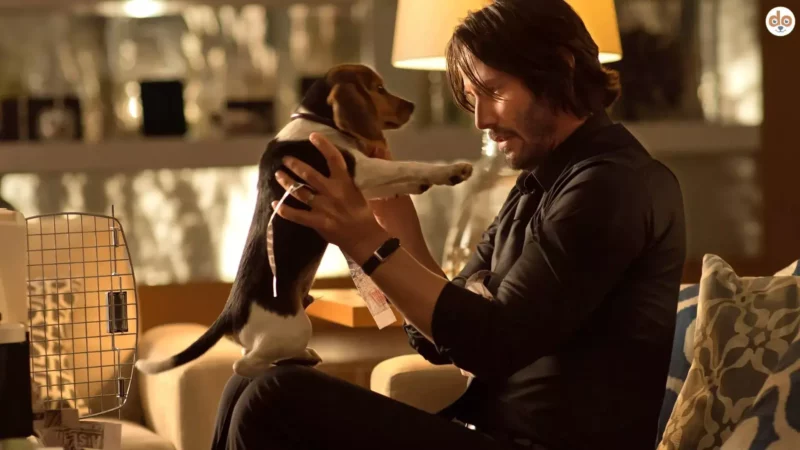
The Beagle puppy Daisy from John Wick (2014) touched millions of people’s hearts – and immediately, in just a few minutes of film. But why did the filmmakers choose a Beagle? That is no coincidence. The answer lies deep in the nature of this breed, and it also tells you a lot about what you are getting into.
Why was a Beagle chosen for John Wick?
Beagles radiate something that hardly any other dog breed conveys so directly: trust. Real, unconditional trust. Originally bred for pack hunting, they are geared towards close cooperation with humans – and you can feel it in them. A Beagle does not push itself on you, it simply seeks your closeness. That is a difference that anyone who has experienced one understands immediately.
That is exactly what makes Daisy so effective in the film. She stands for loyalty that demands nothing and negotiates nothing. Her open face, soft eyes – this intensifies the shock of the scene in a way that a Doberman or a Rottweiler simply could not have achieved. Other breeds appear imposing. A Beagle appears vulnerable.
What makes the Beagle character so special?
Beagles absorb moods like a sponge. Anyone who has one at home knows: they come and put their head on your knee when you have had a bad day – without you saying a word. That is not imagination. These dogs observe their humans with an attentiveness that is sometimes almost eerie.
Three character traits meet you in almost every Beagle:
Willingness to bond: A Beagle that has once grown accustomed to you does not simply take you into its heart – it builds its life around you. That sounds romantic, but practically it also means: it really misses you when you are away.
Basic optimism: Beagles initially assume that every person comes with good intentions. This makes them open and warm – and yes, also a bit naive. This trait has already landed them in trouble more than once, both in the film and in real life.
Desire to communicate: Silence is not an option. Beagles bark, howl, “talk” to you through looks and body language. Anyone who likes to sit quietly in the evening should take this into account.
How does the strong human-Beagle bond develop?
A different kind of relationship develops with a Beagle than with many other breeds. Some dogs respect distance – a Beagle simply does not know it. It will become your shadow. Not because it can do nothing else, but because it wants exactly that.
Two things drive this intensity: Beagles were kept in packs for centuries, closely together, dependent on mutual closeness. This trait is still in them today. Added to this is their size – around 13 to 16 kg – which makes them real cuddle partners. Big enough that you feel them. Small enough for the sofa.
Many Beagle owners describe the same moment at some point: You come home, the dog reacts to a small thing – a facial expression, a movement –, and you wonder if it simply knows you better than most people in your life. That is not mysticism, that is years of observation.
What does the loss of a Beagle mean?
The film scene hits so deep because it hits exactly what Beagle owners really know. These dogs are no longer pets in the classic sense – they become family members with fixed roles, fixed places and fixed rituals.
The first look in the morning when getting up. The sound of paws on the parquet floor. The Beagle that always lies in the same corner of the sofa. When this dog goes, it is not only it that disappears – hundreds of small moments that structured the day without you ever consciously noticing them also disappear.
This emptiness is real. And it surprises many people who could not imagine how deep such a bond actually goes.
Is a Beagle right for you?
Beagles are not for people who prefer to keep their dog and daily life neatly separate. They want to be right in the thick of it – always. In return, they give you something hard to put into words: an affection that doesn’t change, no matter how your day has been.
But beware: this breed was bred for hunting. A Beagle that gets too little mental and physical stimulation will make that clear. Loud, stubborn, sometimes destructive. That’s not a character flaw; it’s an under-stimulated working dog. The famous Beagle stubbornness comes out especially when an interesting scent trail beckons and you have something else on your mind.
Do you need experience for a Beagle?
Prior experience isn’t mandatory, but patience is. Beagles learn quickly – and get just as quickly distracted again the moment an exciting trail occupies their nose. That’s not stupidity; it’s focus on the wrong thing from your perspective.
How much time does a Beagle need daily?
At least two hours of active enrichment. And that doesn’t just mean the usual walk, but real work for the nose: sniffing games, search tasks, scent work. A Beagle that only runs is physically tired – but mentally far from done.
Are Beagles child-friendly?
Yes – but lively. An enthusiastic Beagle can simply run over small children, not out of malice, but out of pure joy. That should be kept in mind.
How loud are Beagles really?
Very loud, when they have something to say. Barking and howling belong to the communication of this breed – that can be mitigated, but not trained away.
Can Beagles be left alone?
Only to a limited extent. Four to five hours are the maximum for most before real stress sets in. Beagles are pack animals – loneliness doesn’t just not bother them.