
The Joys and Challenges of Keeping Multiple Dogs
Keeping multiple dogs costs not only twice as much money – but also three times as much time. These 6 hidden problems you should know before getting a second dog.
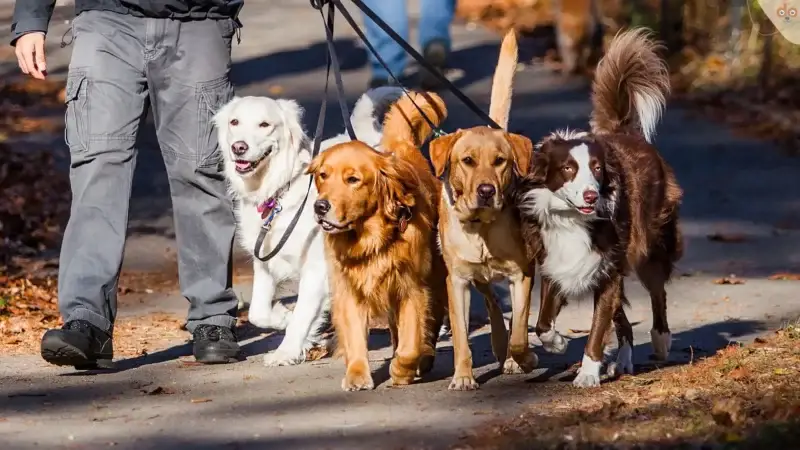
Content
You are thinking about getting a second dog? Then you probably already know the sentence: “Dogs are pack animals – they love company.” That’s true too. Only there is usually quite a lot between this idea and what actually happens.
Does a second dog really only cost twice as much?
As for the basic costs: yes, roughly. Food, insurance, vet – that doubles. With a medium-sized dog, you can quickly add a four-figure sum per year. That’s the part most people keep in mind.
What many underestimate is the time. A dog needs two to three hours of enrichment daily. Two dogs? Not six hours, but often rather five to seven. The reason: you have to train both separately. If you let that slip, they’ll copy each other – and usually the wrong things.
Why do dogs copy exactly the worst behaviour?
Classic scenario: Dog number one barks at the postman. Dog number two apparently thinks: “Must be something important” – and joins in. After a week, you have two barkers instead of one.
This is called social learning. Dogs don’t imitate with intent; they align themselves with the pack’s energy level. A calm, well-established first dog can genuinely help the newcomer settle in. A nervous first dog simply passes on that restlessness – reliably.
The consequence sounds strange at first: you have to train both as if they were single dogs. Separate training sessions, initially separate walks, their own quiet zones for each.
How long does it take for two dogs to really get along?
The honest answer: three to six months for a superficial adjustment. A truly well-coordinated team? Rather one to two years.
In the first two weeks, they sort out the basic questions: Who eats where? Who sleeps where? Who goes through the door first? This phase is crucial – and this is exactly where the most common mistakes happen.
The most popular one: “They’ll sort it out amongst themselves.” They don’t. Or at least not in the way you imagine. You have to set the rules – separate feeding, play only under supervision, a fixed spot for each.
Which dog should be there first?
The first dog should be at least 18 months old and have stable training. Two puppies at the same time? That’s roughly like putting two toddlers into a room without an adult and hoping they’ll entertain themselves.
Ideally, the first dog has already built a real bond with you, knows the house rules, and can serve as a guide for the newcomer – but only if its habits are genuinely good.
Regarding the age rule: A difference of at least two years usually makes the hierarchy more natural. Dogs of the same age compete significantly more often for attention.
What if the chemistry between the dogs just isn’t right?
Not every dog will become friends with the other. Some only tolerate each other – and that’s perfectly fine, it works like that among people too.
Warning signs of genuine incompatibility: One dog hardly eats anymore. One withdraws permanently. There are serious fights – not just occasional growling or snapping, but real conflicts over resources.
Sometimes multi-dog ownership simply doesn’t work despite good preparation. How often, no one knows — there is no survey on this, every quoted figure is an estimate. If it comes to that, the fairest thing for everyone involved is to rehome one of the dogs – even though that’s hard.
How do I know if my dog actually wants a second?
A balanced, relaxed dog doesn’t “need” a partner. Usually, you get the second dog for yourself – not for it. That’s no criticism, but it’s good to know that honestly.
Can I leave two dogs home alone?
Only when they’ve been getting along without problems for at least six months. Before that, they can encourage each other to do quite creative nonsense.
Should both get the same food?
Not necessarily. Different age groups or sizes need adapted food. Feed them separately – that prevents food jealousy from the start.
What does a dog trainer cost for two dogs?
Individual training per dog: 60 to 80 € an hour. Group training only makes sense once both securely master the basics individually.
Do I need a larger flat for two dogs?
Not necessarily larger – but more structured. Each dog needs its own retreat. That can simply be a second transport box in the living room.