How do social structures work in dogs?
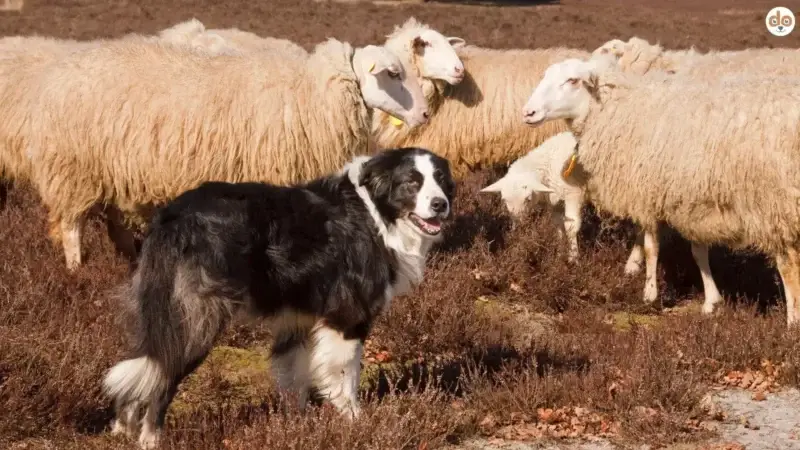
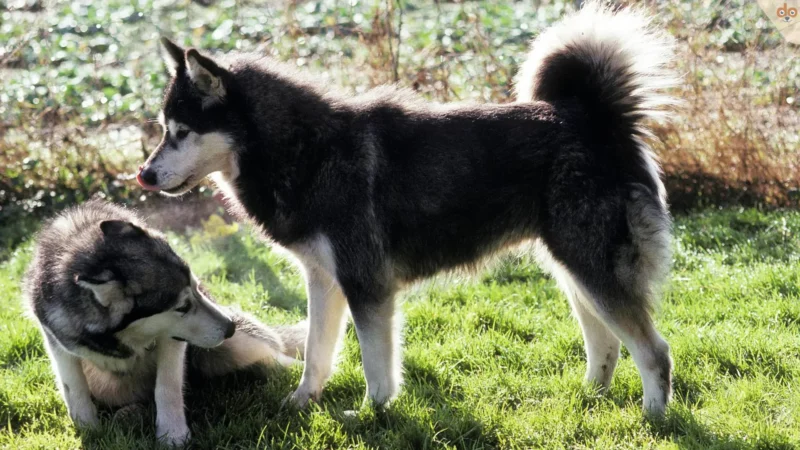
Modern research shows: dogs do not form linear «alpha-beta-gamma» hierarchies. Instead, they have situation-specific preferences and relationships. A dog can be dominant when playing but submissive when eating. The hierarchy is not permanent; it is dynamic and context-dependent. Dogs also have affection. They choose their favourite partners based on compatibility, not rank. A dog can be friends with one dog and neutral towards another. This makes management more complex, but also more humane.
The Pack Alpha Myth: Why It Is Wrong
The behavioural researcher David Mech, who supported the «alpha theory» for wolves in the 1970s, later refuted his own data. He studied wolves in captivity, where behaviour is highly aggressive, and extrapolated this to wild wolves, which live in family structures with caring, not dictatorial, parents. This model was then transferred to dogs, even though dogs have lived alongside humans for over 15,000 years and are no longer «wild». An «alpha» dog that constantly proves its dominance is not normal. This is often a sign of fear or poor management.
Introducing a New Dog: Step by Step
Phase 1: Before the Physical Meeting
Swap sleeping areas. The new dog sniffs the old one’s bed, and the old one sniffs the new one’s. This builds non-verbal familiarity. Observe both dogs: are they compatible in terms of play style and energy? A high-energy adolescent dog plus a calm senior can work but carries potential for conflict. An aggressive dog plus a non-socialised dog is ethically questionable from an animal welfare perspective.
Phase 2: First Meeting at a Neutral Location
A park, not the house, because neutral ground means less territoriality. Both on leads, handlers relaxed, dogs mirror your tension. Short meeting, 5 to 10 minutes, focus on «walking side by side», not on «playing». No drama, no big greeting ritual. Afterwards, both go home separately.
Phase 3: Meeting in the House, with Barriers
First few weeks: doors or baby gates between the dogs. They see each other, sniff under the door, but cannot rush at each other. Feeding is spatially separated; otherwise, there will be resource conflicts. Each dog has its own water, toys, and resting place.
Phase 4: Supervised Time Together
You sit there and observe. As soon as tension rises, growling, stiffening, blocking resources, you interrupt. Not dramatically, simply separate, wait, try again. Dogs learn: tension leads to separation, relaxation leads to time together.
Phase 5: Gradual Integration
After 2 to 4 weeks of good supervision: longer times together. But still with separate feeding and resting areas. After 4 to 8 weeks, depending on the dynamic, full integration is possible. The entire process should take at least 4 to 6 weeks.
Resource Conflicts: The Most Common Problem
Two dogs, one toy: conflict. Two dogs, two toys: okay. Two dogs, one water bowl: conflict. Two dogs, two bowls: okay. The solution lies not in training the dog but in environmental management: enough resources for both. Separate feeding, different rooms or staggered timing, is essential. Treats and chew items must be available to each dog at its safe spot, not shared. A multi-dog household that constantly has resource fights is stressful for everyone.
Feeding in a Multi-Dog Household: The Practical Solution
Ideally, two rooms, two food bowls, simultaneous feeding, then immediately remove the bowls. If you only have one kitchen: baby gate, each dog on its side. A dog that bothers the other while eating must be spatially separated. This is not punishment; it is peace for both. Some dog owners say their dog must tolerate everything. That is an unrealistic ideal. A dog with a full stomach is not rational; it is driven by instinct.
How to Introduce a Second Dog into Your Household
Preparation, Weeks Beforehand
Check-up at the vet for the new dog. Vaccinations up to date? Parasite-free? Stress reduction for the existing dog, more rest, less tension in the weeks beforehand. Spatial preparation: extra water, extra toys, extra resting place.
Meeting and Initial Integration
Follow the 5-phase plan described above.
Long-Term: Monitor Well-Being
After months: look at how the relationship is. Do they play together? Are both relaxed? Or is one constantly tense? If the tension does not decrease after 2–3 months, intervention is needed (trainer, animal behaviour consultant). A stressful multi-dog household is bad for both. Sometimes the honest solution is: the second dog goes to another home (not failure, but realism).
When Is a Second Dog Sensible, and When Not?
Sensible: If your first dog is social and has lots of energy, a play partner helps. If you have time for two, not just one. Not sensible: If your first dog is aggressive without training. If you are short on time, a second dog doubles the effort. If you hope the second dog will «heal» behavioural problems of the first, it will not. Reconsider your motivations honestly.