In short
Small dogs up to 30 cm height at the withers may travel free of charge in transport bags on the train; larger dogs require a discounted ticket or a dog ticket.
Content
Reviewed on October 21, 2025Responsible editor: Roger Klein
Weekend trip, holiday journey or move – many dogs regularly travel by car, train or plane. New environments, unfamiliar smells, unusual noises: this can be quite unsettling – even if you love travelling yourself. With the right preparation, every journey becomes safe and dog-friendly – for everyone involved.
Why good travel preparation is so important
Dogs are creatures of habit. That sounds trivial, but it has real consequences: vehicle vibrations, unfamiliar people, disrupted daily routines – all this creates uncertainty, even in otherwise relaxed four-legged friends. What really helps is no secret: a predictable routine, a few familiar items and enough breaks. Calm routine instead of haste – that makes the difference.
Travelling with your dog by car
The car is still the most flexible way to travel when a dog is along. However, safety and comfort should be considered from the start – not only when things go wrong.
Safe transport options
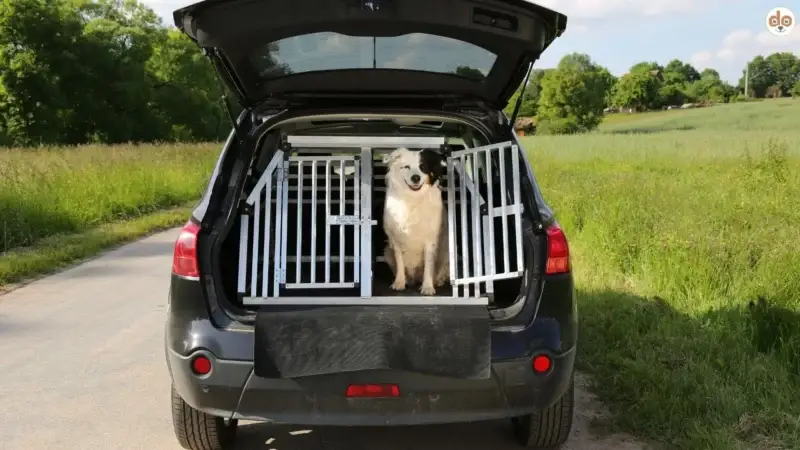
- Transport crate: sturdy, well-ventilated and sized appropriately to the body size. Safest in the boot, placed transversely to the direction of travel.
- Seat belt or dog harness: for smaller dogs on the rear seat – with ISOFIX or a belt adapter.
- Grid or partition: ideal for estate cars or vans. Reliably prevents the dog from jumping into the driver’s area.
Tips for relaxed car travel
- Before the journey: plan a walk and an opportunity to relieve themselves.
- Create positive associations with the car – treats, the favourite blanket, perhaps even a familiar piece of music.
- Do not feed shortly before departure. Nausea is real and no myth.
- Stop every 2–3 hours: water, short movement, catch your breath.
- And yes, this still needs to be said again and again: never leave the dog in a parked car. Heat buildup kills – faster than you think.
Travelling with your dog by train
Train travel can be surprisingly relaxing for dogs. The steady movement, the proximity to people – many dogs like it once they have got used to it. In Switzerland, Germany and Austria, similar rules apply for dog transport, but there are certainly small differences.
What you should know
- Small dogs up to approx. 30 cm height at the withers may travel free of charge in transport bags.
- Larger dogs need a ticket or a discounted fare – in Switzerland, for example, the “dog ticket”, in Germany the discounted dog ticket.
- The leash requirement applies almost everywhere, muzzle requirements depending on the country and railway company as well.
- Avoid peak travel times – more space, less stimulation, less stress.
Relaxation tips for train journeys
- Plan short movement beforehand, then let them settle down calmly.
- Look for a seat at the end of the carriage or in quieter compartments – away from the hustle and bustle.
- Lay out a blanket or mat with a familiar smell.
- Keep a water bottle and collapsible bowl within reach – not at the very bottom of a fully packed rucksack.
Tip: Get your dog used to unfamiliar noises early on: announcements, squeaking doors, the dull vibration of the tracks. The earlier such experiences are made, the calmer most dogs react later as adults.
Flying with your dog
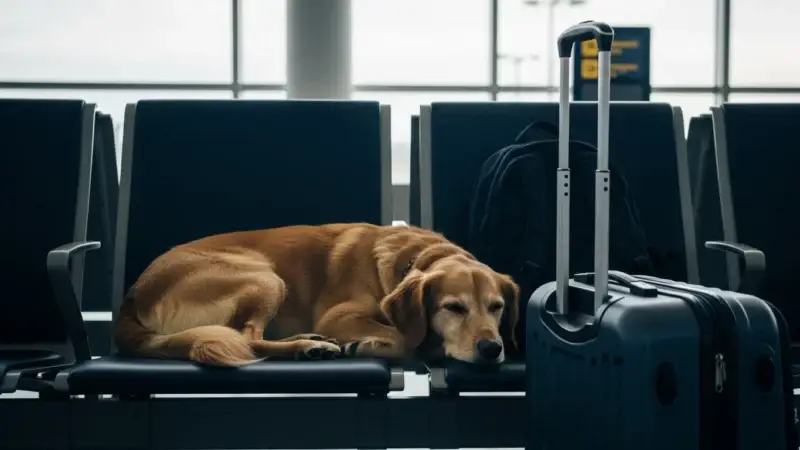
To be honest: air travel is a strain for dogs. Long distances or flights in high temperatures can become really stressful. If you have the choice, it is better to travel by car or train. But if a flight is absolutely unavoidable, then this applies: thorough preparation is mandatory – no shortcuts.
What you must consider
- Every airline has its own rules – weight limits for the cabin are usually around 8 kg including the crate, but this varies.
- Schedule a vet appointment early: health certificate, vaccinations up to date, and any sedation only in direct consultation with the vet – not on your own initiative.
- Transport crate according to IATA standards: sturdy, escape-proof, sufficiently ventilated.
- No flights in extreme heat. And for brachycephalic breeds – Pugs, Bulldogs, Pekingese – special caution applies: breathing difficulties are a real risk.
A direct flight is preferable whenever possible. Less handling, fewer temperature changes, less stress. And for those travelling to countries outside the EU: check entry requirements carefully – quarantine obligations, blood tests, microchip proof can vary greatly depending on the destination country.
Travel first aid kit & documents
A small travel first aid kit for dogs belongs in every piece of luggage – whether it is a short trip or a longer journey:
- Vet contacts and emergency numbers at the destination
- Wound disinfectant, bandage material, tick remover
- Medicines (e.g. for diarrhoea, nausea, allergies) – best discussed with the vet beforehand
- EU pet passport, vaccination record and insurance card
- Spare leash, harness, bowl, water, towels
Arriving relaxed
After the journey, the dog needs time. No more, no less. A calm walk in the new environment helps to shake off tension and process all the new smells. Familiar things – the favourite blanket, a known toy, the usual food – provide orientation when everything else is new.
Tip: Plan the first day at your destination consciously loosely. No sightseeing, no sport, no full programme. Simply let them settle in. Your dog will thank you – and you will have noticeably more relaxed holiday days.
FAQ: Frequently asked questions about travelling with your dog
How do I get my dog used to long car journeys?
Gradually – and without pressure. Start with short trips involving positive experiences, then slowly increase the duration. Praise and calmness work better than distraction through play. If you demand too much too soon, you risk the dog permanently associating the car with stress.
Can my dog come along on the ferry or in the hotel?
Many ferries and hotels are dog-friendly – but by no means all. It is mandatory to enquire beforehand, knowing rules such as leash requirements or surcharges. A familiar sleeping place helps the dog to settle down more quickly, even in an unfamiliar environment.
How do I recognise travel stress in my dog?
Typical signs: panting, increased salivation, restlessness, trembling or a clear refusal to get in at all. If you observe this, you should interrupt the training immediately, calm the dog – and then patiently and positively rebuild from scratch. Pressure makes it worse, not better.