
Small dogs: aggression and its causes
Small dogs are not genetically more aggressive – they learn it through incorrect training. With the right 4-week training plan, aggressive behaviour can be successfully corrected.
Content
- Why do small dogs often behave more aggressively than large ones?
- Which five factors promote aggression in small dogs?
- How do I recognise whether my small dog is developing an aggression problem?
- How do I train away aggressive behaviour?
- What do I do if other owners don’t cooperate?
- When should I seek professional help?
- Frequently asked questions about aggression in small dogs
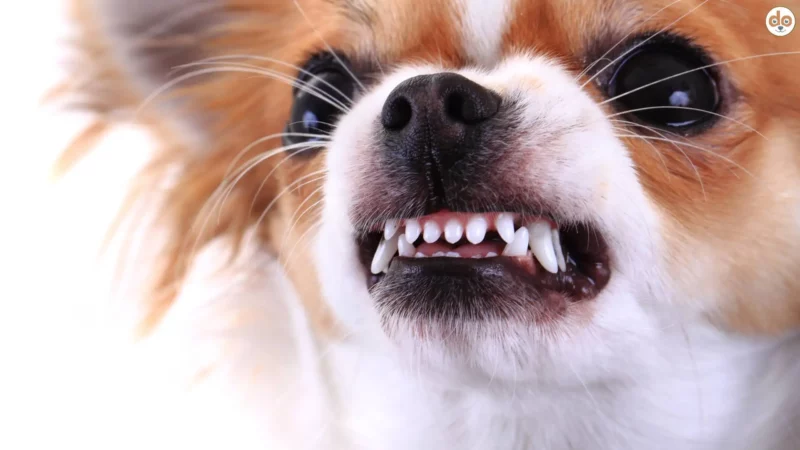
You know the picture: a Chihuahua yaps and snaps – and its owner shrugs. “It’s harmless.” If it were a German Shepherd, a trainer would already be at the door. But for 4 kilos? Oh, come on.
Why do small dogs often behave more aggressively than large ones?
Genetically, small dogs are not more bite-prone. They learn it – because they are allowed to. A Finnish survey of over 9,000 dogs found that small dogs show aggressive behaviour towards people more frequently than medium and large dogs. How often their bites are reported is nowhere recorded, but the specialist literature points out that bite statistics overrepresent large, powerful dogs. Too small, too harmless, too cute. That is the real problem.
What is corrected immediately in a 40-kilo dog is considered character or even cute in a 4-kilo dog. The small dog draws a clear conclusion from this: aggressive behaviour gets it where it wants to go.
Which five factors promote aggression in small dogs?
Overprotection through lifting
As soon as a larger dog appears, the little one ends up on the arm. Well-meaning – but from the dog’s perspective, two messages are conveyed: “There is danger out there” and “You can’t do anything about it, I have to save you.” What is left for the dog? Growling and barking when it is back on the ground. At least that it can do itself.
Lack of socialisation with dogs of similar size
In mixed play groups, small dogs often come off second best – they are overpowered, withdraw or learn nothing useful. What really helps: targeted small group sessions or puppy classes for small breeds, where the balance of power is right.
The “it doesn’t matter” mentality
A growling pug. A growling Rottweiler. The same behaviour, completely different reaction from the environment. The pug learns: growling has no consequences. The behaviour becomes entrenched – quietly and unnoticed, week after week.
Resource guarding is overlooked
Sofa, toys, mistress or master – small dogs defend their resources just as tenaciously as large ones. Because the damage is less severe, people look away. The dog notices that. It takes on the role of guard dog and becomes more territorial over time.
Stress from anthropomorphism
Costume, pram, constantly on the arm – what looks cute from the outside can be a real burden for the dog. Chronic stress makes you irritable. Irritable dogs react more aggressively. That is not malice, that is biology.
How do I recognise whether my small dog is developing an aggression problem?
The early signs are quieter than in large dogs – and are therefore so often overlooked. Look more closely:
Stiff body language and a high-held tail as soon as another dog comes into view. Growling when touching toys or the bowl – even if it is barely audible. Barking and pulling on the lead during dog encounters. Snapping or nipping when being picked up, even though it doesn’t want to at that moment.
Such patterns creep in. At first it is said: “That’s just his character.” Until it escalates after all.
How do I train away aggressive behaviour?
Week 1: laying the foundations
Introduce a clear marker word – “Yes” is enough, or a clicker. Reward every calm moment, even if no other dog is in sight. The “Watch” command is worth its weight in gold: eye contact with you instead of the perceived enemy – reward immediately.
Weeks 2–3: distance work
At least 20 metres’ distance from other dogs when you start training. Your dog sees another dog and stays calm? Reward immediately, no delay. You reduce the distance by only about one metre per day – and really only if it is relaxed. No ambition here.
Week 4: establishing alternative behaviour
“Heel” or “Sit” as an alternative to barking. Your dog should understand: if I stay calmly with my person when other dogs are around, something good happens. That is the actual message.
What do I do if other owners don’t cooperate?
Not everyone will understand what you are practising. That’s okay. A few calm standard phrases help: “We are practising calmness during dog encounters” or “He is still learning to be polite.” Most dog owners nod and move on.
If dogs or owners are intrusive and keep walking stubbornly: change direction, create distance, keep going. Your training success carries more weight than politeness towards strangers.
When should I seek professional help?
A dog trainer is needed if your dog has already bitten, if it is aggressive towards other small dogs too, or if no improvement is visible after six weeks of consistent training.
Find someone who works with positive methods and actually has experience with small breeds. Many trainers underestimate how complex the topic is for small dogs – that is not a criticism, but it is worth asking in detail.
Frequently asked questions about aggression in small dogs
Are small dogs naturally more aggressive?
No. Small dogs do not come with a genetically higher level of aggression. What they often bring is a different upbringing history – and that leaves its mark.
Can I still retrain my small dog if it is already an adult?
Yes, that is possible. It requires more patience than with a puppy, and sometimes more perseverance too. But behavioural change is possible at any age – practice shows this time and again.
Should I protect my small dog from large dogs?
Protection is appropriate, overprotection does harm. Allow controlled, positive encounters – and only intervene when there is genuine danger. Anything else signals to the dog: The world out there is dangerous.
Why does my small dog bark at other dogs but play normally with our second dog at home?
This is a classic sign of leash aggression or territorial behaviour. At home, it feels safe and relaxed. On the lead, it feels restricted – and restricted dogs react differently.
Should I punish my small dog when it is aggressive?
Better not. Punishment usually worsens the problem. The dog associates other dogs with unpleasant experiences – and becomes even more tense, not calmer.