Why not start with “Sit”?
“Sit” is the first signal that most beginners train, yet it is not ideal. “Sit” is a forced behaviour in which you push the puppy‘s bottom down or lure with treats upwards. This works mechanically, but does not teach the puppy that paying attention to you is worthwhile. An 8-week-old puppy can only concentrate for a few minutes. It makes more sense to start with signals that build on natural behaviours and show the puppy that you are interesting.
The five signals for weeks 8 to 12
Signal 1: “Here” or “Come”
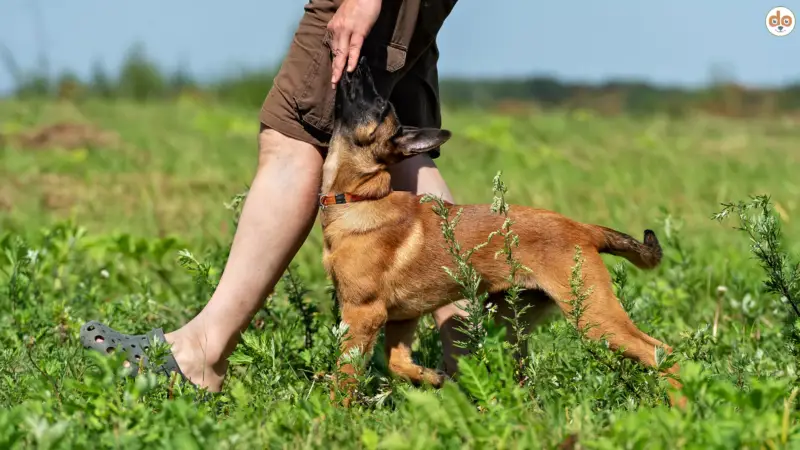
The most important signal is that the puppy comes to you when you call it. You build this up playfully: puppy plays, you make noises (clapping, funny voice), when it runs to you, you give treats and toys. Over days and weeks, “Here” becomes a pure recall word.
This signal must never be punished. When the puppy comes at your call, something positive must follow (treat, praise, continue playing). A puppy that is punished when it comes will learn not to come.
Signal 2: “Yes!” (marker signal)
“Yes!” or a clicker click means: “What you are doing right now was correct. A treat follows.” This is not an obedience command, but a tool. If your puppy happens to make eye contact, you immediately say “Yes!” and give a treat.
This way the puppy learns: eye contact brings something good. A marker signal also teaches the puppy to wait for your feedback, which is the foundation for all later training.
Signal 3: “Sit” (but gently)
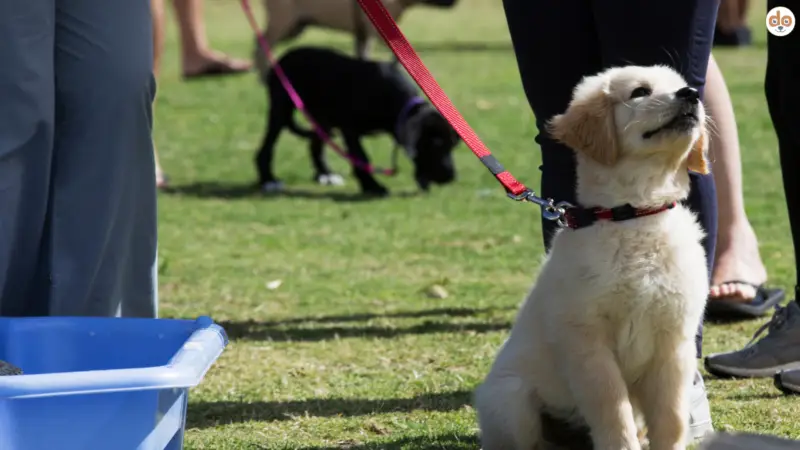
After 3 to 4 weeks with strong marker signals and “Here” training, you can start gently with “Sit”. Not by pushing the bottom, but by luring: treat in front of the nose, slowly upwards. The puppy follows with its gaze and sits down on its own, then “Yes!” plus treat.
After numerous repetitions over weeks, you can add the word “Sit” when the puppy reliably sits. Force is not necessary.
Signal 4: “Down”
After “Sit”, “Down” makes sense, not to enforce obedience, but to show the puppy that relaxation is rewarded. When the puppy sits, you take a treat in front of its nose and slowly guide it to the floor. The puppy follows and lies down, “Yes!” plus treat.
Down is not forced in young weeks. It is an invitation, not a command.
Signal 5: Loose Leash Walking
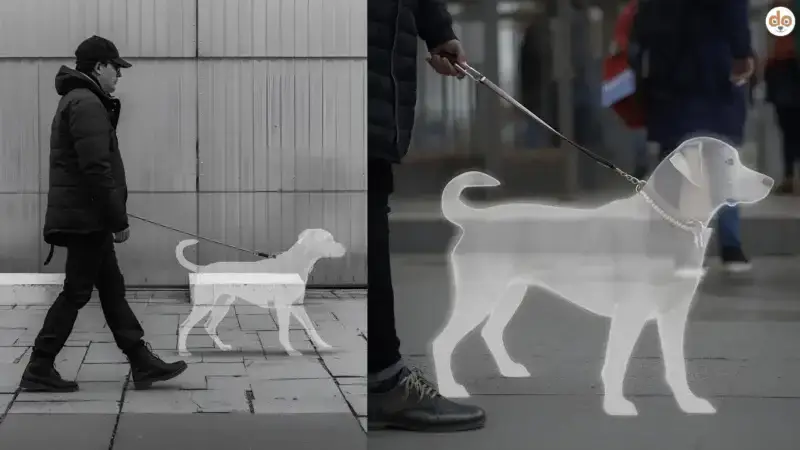
The last signal for this phase is not “Heel” in the strict sense, i.e. rigid positioning, but “Let’s walk together”. You train this through attention: if your puppy walks on a loose leash next to you, you praise regularly and give treats. If it pulls, you stop and wait until the leash is loose again, then continue, with praise.
This is training against pulling, not heelwork.
Step-by-step training in weeks 8 to 12
Weeks 1 to 2: Building the marker signal
Choose a sound, the word “Yes!” or a clicker, and associate it with treats. Click or “Yes!”, immediately treat. Repeat this 20 to 30 times over several sessions per day. The puppy should understand: this sound means something good is coming.
This is the basis for everything else. No obedience commands are needed for this.
Weeks 2 to 3: Building “Here”
Once the marker signal is established, train “Here”. In the play area, the puppy runs around, you make noises and movements. When the puppy comes to you, marker signal (“Yes!”) plus a particularly good treat (cheese, chicken). Repeat this daily, several times.
The distance grows organically. After 2 to 3 weeks, the puppy should come more reliably.
Weeks 3 to 4: Gentle preparation for Sit
For “Here”, take a particularly good treat and lure the puppy into a sit position without pressure. The puppy follows the treat and sits. Marker signal, treat. Do this 3 to 5 times per session, 1 to 2 sessions per day.
A word is not needed yet; that comes later. Quality over quantity: one understood sit is better than 20 poorly understood ones.
Week 4 and later: Combining word and behaviour
After 3 to 4 weeks, when the puppy sits reliably, even without a word, you can add the word “Sit” before holding the treat in front of its nose. This is classical conditioning: word, natural behaviour, marker signal, reward.
Over days, the puppy will understand that “Sit” is a request. Simultaneously train “Down” and loose walking playfully.
Training rules for this phase
Keep it short: 5 minutes per session
An 8- to 12-week-old puppy can only concentrate for a few minutes. Short, frequent sessions work better than long training; 3 to 5 minutes, 2 to 3 times daily is ideal. Afterwards, the puppy needs free time to play and explore.
Always end with success
If you notice that the puppy is getting tired or no longer focused, stop the training with a success. The last signal performed correctly ends the session. This way, the puppy leaves with the feeling: “That was good!”
No punishment
There are no “mistakes” in this phase, only “not yet understood”. If the puppy does not sit during a sit attempt, simply repeat it later. Never scold or correct; that destroys trust.
Only positive reinforcement
Treats, toys, praise and attention are the tools. Punishment, shouting and pressure have no place in this phase.