4 sourcesReviewed on April 27, 2026Responsible editor: Roger KleinText: Miriam Schäfer
01Summary
In a paragraph
If you only have 30 seconds.
The Rhodesian Ridgeback is a large, muscular hunting and guard dog from southern Africa, with a characteristic strip of hair along the back, a pronounced protective instinct, and a prey drive that requires daily management in everyday life. The breed demands experienced owners who do not mistake independence for stubbornness, but classify it as genetic heritage and can guide the dog accordingly.
02Introduction
What makes the Rhodesian Ridgeback special
Rhodesian Ridgeback: South African large dog with the characteristic ridge on its back – brave, independent and weather-resistant
03Profile
Key facts and suitability
- Origin
- Simbabwe/Südafrika
- Original purpose
- Lion hunting Guard dog
- FCI
- No. 146 · Group 6 · Section 3
- height at the withers
- 61–69 cm
- Weight
- 29–41 kg
- Life expectancy
- 10–12 Years
- Coat type
- Short-haired
- Minimum exercise
- 90 min/day
- Puppy price
- 1'800–3'000 CHF
- Waiting period
- 6 months
- Sports
- Lure Coursing Mantrailing Agility
04Temperament
How the Rhodesian Ridgeback shows up in everyday life
On the morning walk, what distinguishes the Rhodesian Ridgeback from many other large breeds becomes apparent: It does not simply run alongside you. It scans the environment, registers movements at the edge of the forest, decides for itself whether a stimulus is relevant, and acts in doubt before you have reacted. The prey drive is not situational, it is permanently active.
At home, the breed behaves calmly and dignifiedly. A Ridgeback that is sufficiently stimulated lies relaxed in the room, observes what is happening and seeks closeness to its key person, without being intrusive. However, this calmness is not a sign of indifference. The dog registers changes in the environment precisely: an unknown vehicle in front of the house, a stranger at the garden gate. Territorial behaviour is clearly pronounced.
This is where two things that are often confused in everyday life diverge: The Ridgeback's need for social contact with its key person is high, as it requires a close bond, clear communication and emotional reliability. The reaction to strangers, on the other hand, is reserved to waiting. A Ridgeback does not automatically open up to visitors. It observes, assesses and decides. Anyone who does not know this difference misinterprets the reserve, either as shyness or as a fault in training.
It lives together without problems with children who treat it respectfully and can read its boundaries. Toddlers who run towards it uncontrollably overwhelm it. The breed does not tolerate unpredictability in direct interaction.
05Needs
What this breed needs daily
The Rhodesian Ridgeback needs at least 90 minutes of active exercise daily, not as a walk at walking pace, but as genuine physical stimulation. Running alongside the bicycle, cross-country runs, mantrailing or canicross are suitable forms. A quiet city walk does not cover the need.
In parallel with physical stimulation, the breed requires mental enrichment. The need for mental work is high: The Ridgeback has been selected over centuries for independent thinking and decision-making. Anyone who does not channel this need specifically will get a dog that finds its own tasks, with consequences that are rarely desired. Nose work, tracking work and structured search tasks are particularly suitable because they build on the original hunting work.
Being left alone is possible for up to five hours with a stable bond and gradual building up. However, it is not a matter of course, but a skill that must be trained. A Ridgeback that is left alone unprepared reacts with restlessness or destructive behaviour.
The property requires a secure fence of at least 1.80 metres in height. The prey drive is strong enough to drive a dog over low obstacles when exposed to appropriate stimuli. Free running without visual contact and without secured terrain is not a suitable everyday option for this breed.
Training requires consistency, calmness and clear body language. Pressure and harshness lead to withdrawal or resistance, not to cooperation. The Ridgeback actively questions inconsistent leadership.
Exercise
High
mental work
A lot
Social needs
Medium
training
Demanding
06Sport & Mental and Physical Stimulation
What sports the Rhodesian Ridgeback is suited for
Realistic in terms of physiology and genetics. Not every breed suits every sport.
Structurally and physiologically suitable: Suitable for mantrailing, dummy work and tracking · CaniCross / bikejoring possible.
07Quick Check
08Suitability
Who this breed suits and who it doesn't
✓Matches
The Rhodesian Ridgeback suits owners with proven experience in dealing with independent, drive-strong dogs. Anyone who has already handled a similar breed and understands how prey and guarding instincts work in everyday life brings the necessary foundation.
A suitable everyday routine looks concretely like this: at least 90 minutes of active exercise daily, with a considerable part in the form of cross-country runs, mantrailing or comparable activities. In addition, regular mental work in the form of nose work or tracking work. A secured property with stable fencing is not an option, but a prerequisite.
Families with children from about eight years of age who have learned to read dogs and respect boundaries can live well together with a Ridgeback, provided the adults take on leadership and establish clear structures. Active individuals or couples with a flexible everyday routine and an affinity for outdoor activities are also suitable profiles.
Anyone who is travelling a lot professionally needs a reliable care solution for the times of absence. The Ridgeback tolerates being alone for up to five hours, with appropriate training and a stable bond.
×Doesn't match
The Rhodesian Ridgeback is not a suitable breed for owners who are keeping a dog for the first time. The combination of prey drive, guarding instinct and independence requires experience that cannot be built up from books or online courses alone.
Anyone who assesses the Ridgeback as an uncomplicated large dog due to its calm, dignified appearance fundamentally underestimates the breed. Calm on the outside does not mean indifferent in this breed; it means control over a strong drive.
Households where many strangers regularly come and go and where the dog is supposed to navigate these situations without clear leadership are unsuitable for a Ridgeback. Reserve towards strangers is typical of the breed and not a training problem that can be trained away.
Anyone who can offer less than 90 minutes of active exercise daily or does not have access to secured free-range areas will not be able to permanently cover the breed's exercise needs. Toddlers under five years of age in the household also pose an increased risk, as the breed poorly tolerates unpredictability in direct interaction. Anyone who expects harmony without clear rules will not be happy with a Ridgeback.
09Related
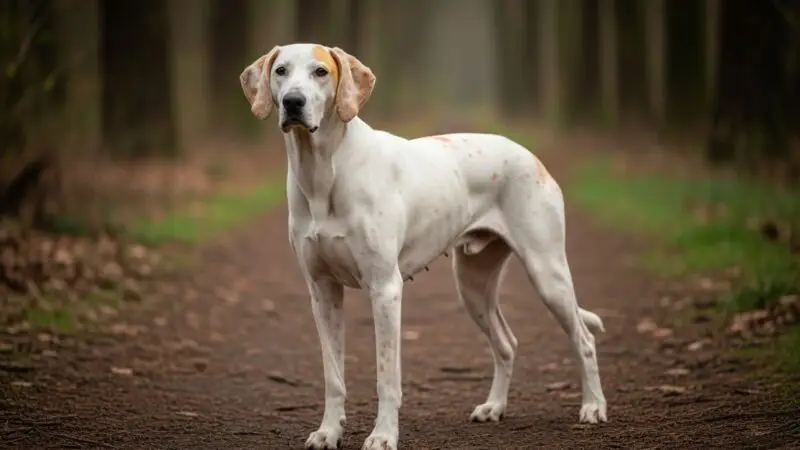
Similar breeds and how they differ


10Line reality
Show line, working line, breeder market
The Rhodesian Ridgeback is listed by the FCI without a working test, which means that no formal separation between working and show dogs is enforced by test requirements. In practice, however, recognisable differences between breeding lines still exist.
Lines with a strong focus on exhibitions tend towards a more pronounced, typical, heavier appearance. The focus is on conformation and movement quality in the ring. Drive strength and hunting endurance are not necessarily breeding goals in these lines.
Lines that select for endurance, working ability and hunting suitability, still actively used in parts of Africa and North America, produce dogs with higher drive intensity and a more pronounced desire for independence. These dogs place higher demands on guidance and mental and physical stimulation.
For interested parties, this means: A conversation with the breeder about the orientation of their line is not an optional step, but necessary. The question of whether the parent animals were shown, worked or both gives indications of the expected character of the puppy. A general statement about "the" Ridgeback character is incomplete without line context.
11Health · Reality
What you need to plan for medically with your Rhodesian Ridgeback
According to an evaluation by the Kennel Club UK (2024), the life expectancy of the Rhodesian Ridgeback is on average 11 to 12 years, with a range of 9 to 14 years depending on health status and living conditions.
The most significant hereditary disease typical for the breed is dermoid sinus: a congenital tubular skin malformation along the spine, which is directly related to the ridge formation. If left untreated, it leads to severe infections and neurological complications. Reputable breeders manually examine all puppies shortly after birth for this malformation. Affected puppies require surgical correction.
Hip dysplasia (HD) is common in large breeds.
Further relevant health points: Gastric dilatation-volvulus (bloat) occurs at an increased rate in deep-chested large dogs. Several small meals daily and no intense exercise directly after eating reduce the risk. Eye examinations (for progressive retinal atrophy) should be considered when selecting parent animals.
Preventive examinations: annual vet check-ups, HD screening of parent animals, dermoid sinus examination for the puppy, eye examination of breeding stock. A dog health insurance policy with surgical cost coverage is recommended for this breed due to the risk of dermoid sinus and the danger of gastric torsion.
12Structured data
Health by the numbers
Prone to diseases
hip dysplasia (HD), dermoid sinus, eye problems
Recommended health tests
hip X-ray, dermoid sinus test, eye examination
13Myths ↔ Reality
What is often said incorrectly about this breed
Five myths, five realities, five sources.
"The Ridgeback is a family dog like any other: gentle, uncomplicated and suitable for everyone."
The FCI standard describes the Rhodesian Ridgeback as explicitly reserved towards strangers. This reserve is not a training error, but a breed-typical characteristic. In addition, there is a pronounced guarding instinct and prey drive, which can lead to serious problems in everyday life without consistent socialisation and experienced guidance. The breed is not suitable for beginners.
"The Ridgeback used to kill lions, so he is dangerously aggressive."
The historical task of the Ridgeback was tracking and facing big game, not killing it. It worked in small groups and kept the game moving until the hunter arrived. Aggression towards people is explicitly not breed-typical according to the FCI standard. Shyness and aggression are considered faults in the standard.
"The Ridge is only a cosmetic feature and has no significance for health."
The Ridge is directly related to dermoid sinus, a congenital skin malformation along the spine. Dogs with ridge predisposition carry an increased risk of this malformation, which must be treated surgically and can lead to severe infections if left untreated. Reputable breeders examine puppies shortly after birth for dermoid sinus.
"A large garden replaces the daily walk, the Ridgeback then moves by itself."
Dogs rarely move sufficiently on their own without incentive. The Rhodesian Ridgeback needs at least 90 minutes of active, guided exercise daily as well as mental and physical stimulation through nose work, mantrailing or structured tasks. A garden facilitates leisure management, but does not replace targeted mental and physical stimulation.
"Because the Ridgeback appears so calm, it gets along well with other dogs."
The dignified, calm aura of the Ridgeback is often confused with social compatibility. The breed has a pronounced guarding instinct and can appear dominant towards unknown dogs. Early and broad socialisation is crucial, but it does not change the genetic basic predisposition; it enables its controlled expression.
14animal welfare
The animal welfare perspective
Breeder market, designer versions, animal shelter reality: what no one writes in the puppy ad.
The Rhodesian Ridgeback belongs to the breeds that end up in animal shelters and rescue stations at above-average rates, not because of aggression, but due to being overwhelmed. The most common reasons for surrender: underestimated exercise needs, uncalculated territorial behaviour, and the expectation that the breed's independence will "grow out of it" over time. It does not.
On the backyard breeder market, the Ridgeback is marketed as a "sovereign family dog with African flair", a framing that systematically downplays the actual demands of the breed. Puppies without HD screening of parent animals, without dermoid sinus examination and without pedigree registration are offered on classifieds platforms for prices between 500 and 1,200 euros. The lower price compared to reputable breeders (1,800–2,500 euros) is not offset by higher vet costs and an increased risk of hereditary diseases.
Designer variants of the Ridgeback, such as crosses with other large breeds marketed under fantasy names, exist on the fringes of the market. They offer no health advantages over purebred dogs from reputable breeding, but completely evade pedigree control.
An adult Ridgeback from adoption is a serious alternative to a puppy for experienced owners. The character of an adult dog can be assessed, and socialisation is complete. Breed protection organisations such as the RRCD's adoption service accompany the handover and remain available as contact persons afterwards. Anyone taking in a Ridgeback from adoption generally receives a dog with a known history, and at the same time relieves an overcrowded system. This is not a worse option, but a different one, with its own advantages.
15Costs · Transparency
What this breed realistically costs
A puppy from reputable breeding with pedigree registration, HD screening of parent animals and dermoid sinus examination costs between 1,800 and 2,500 euros in Germany and Austria. In Switzerland, the price is 2,200 to 2,800 CHF. Offers significantly below this generally come from backyard breeders without pedigree control.
The annual living costs for an adult Rhodesian Ridgeback (approx. 36–41 kg) are composed as follows: High-quality dry food or raw feeding costs between 600 and 1,200 euros per year depending on quality. Care (paws, ears, occasional bathing) is relatively low-maintenance for the breed, at around 100 to 200 euros annually. Dog training school and training in the first year: 400 to 800 euros.
Average vet costs: Basic care (vaccinations, parasite prophylaxis, annual examination) is between 300 and 500 euros annually. Treatment of a dermoid sinus costs between 800 and 2,500 euros surgically depending on the findings. A gastric torsion operation is between 2,000 and 5,000 euros. A dog health insurance policy with surgical cost coverage costs between 60 and 120 euros monthly for this breed and size class, and is a calculable safeguard given the breed-typical risks.
16Puppy search
What you need to consider when choosing a breeder
- A reputable breeder is a member of a recognised breed club (in Germany the Rhodesian Ridgeback Club Deutschland e.V.) (RRCD), in Switzerland the RRCS, in Austria the Rhodesian Ridgeback Club Österreich.
- Membership alone is not a quality feature, but it obliges compliance with the breeding regulations of the respective association.
- Concrete minimum requirements for a reputable breeder: Both parent animals were X-rayed for hip dysplasia (HD) and the result is available in writing.
- The puppies were examined for dermoid sinus shortly after birth.
- The breeder asks questions about your experience, your everyday life and your living situation, and refuses in case of doubt.
- Puppies are handed over at the earliest at eight weeks.
- Anyone looking for a Ridgeback should also consider adoption through breed protection organisations and animal shelters.
- Adult Ridgebacks are surrendered at above-average rates due to underestimated protective instincts and exercise needs.
- An adult dog with a known temperament can be the more reliable choice for experienced owners.
- The RRCD maintains an adoption list for Ridgebacks in need.
FAQ
Frequently asked questions about the Rhodesian Ridgeback
Is Rhodesian Ridgeback a family dog?
Rhodesian Ridgeback is considered suitable for families with good socialisation and species-appropriate care.
How much exercise does Rhodesian Ridgeback need?
At least around 90 minutes of exercise per day. As an active breed, more so — plus mental stimulation.
What is the size and weight of Rhodesian Ridgeback?
Fully grown, Rhodesian Ridgeback reaches about 61–69 cm at the withers and weighs around 29–41 kg.
What is the life expectancy of Rhodesian Ridgeback?
The life expectancy of Rhodesian Ridgeback is approximately 10–12 years.
Which diseases are common in Rhodesian Ridgeback?
hip dysplasia (HD), dermoid sinus, eye problems
Participate
Do you have a good photo of your Rhodesian Ridgeback?
We are looking for expressive images for our breed profiles. Submit yours; the editorial team reviews every submission before publication.
Does this breed suit you?
Dominant hunting dog – requires a strong leader; not suitable for first-time owners.