
01Summary
In a paragraph
If you only have 30 seconds.
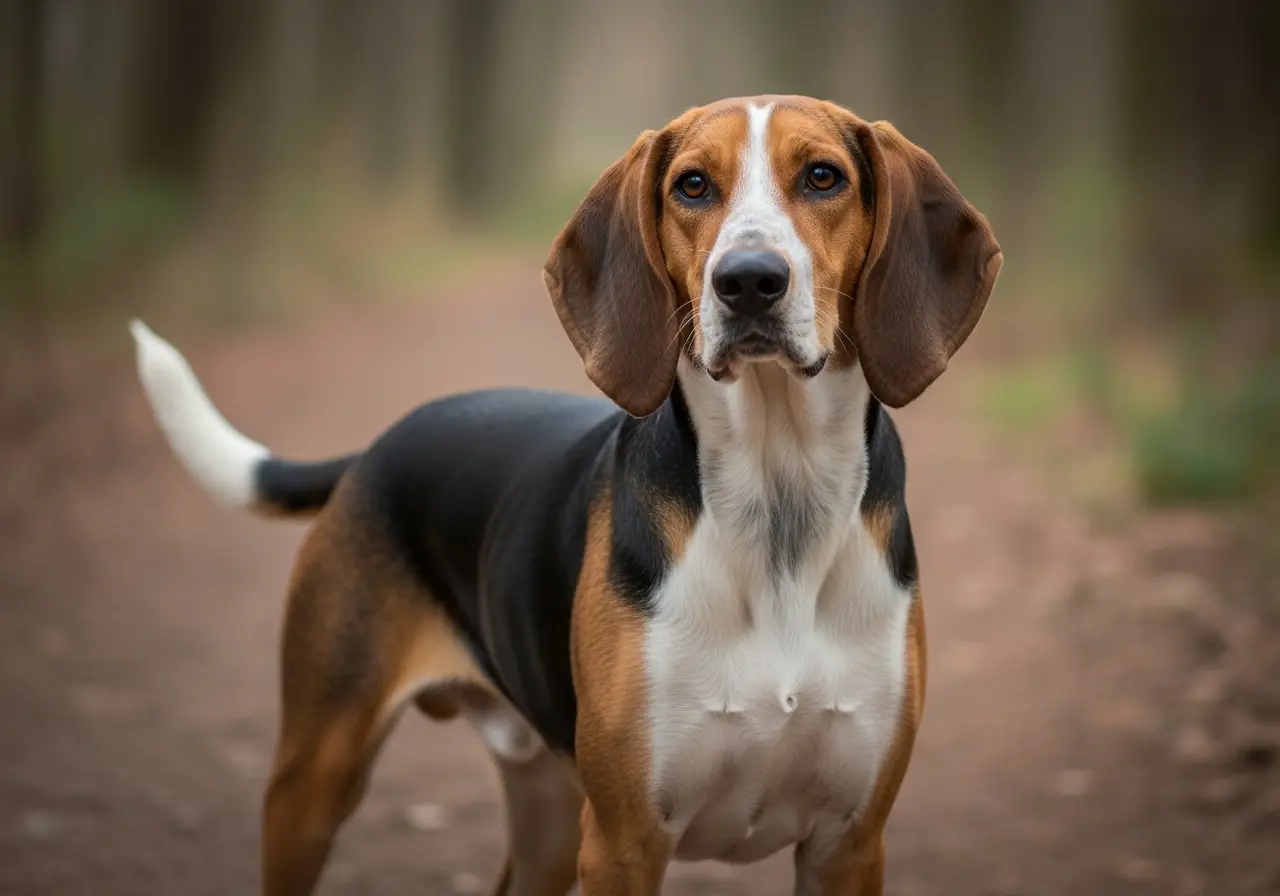
The American Foxhound is a high-performance pack hound bred for fox hunting in extensive terrain. Its desire to follow a scent is genetically deeply rooted, and its exercise needs are significantly above average. In everyday life, this means: consistent management, a rural environment, and an owner who knows and respects scent hound behaviour. For city living or first-time owners without hunting experience, it is the wrong choice.
02Introduction
What makes the American Foxhound special
The American Foxhound is an endurance US pack hound, FCI Group 6, with a strong prey drive and characteristic bay, height at withers 53–64 cm.
03Profile
Key facts and suitability
- Origin
- USA
- Original purpose
- Pack fox hunting
- FCI
- No. 303 · Group 6 · Section 1.1
- height at the withers
- 53–64 cm
- Weight
- 20–34 kg
- Life expectancy
- 10–12 Years
- Coat type
- Short-haired
- Minimum exercise
- 120 min/day
- Puppy price
- 800–1'500 CHF
- Waiting period
- 6 months
- Sports
- Scent work · Mantrailing · Hunting
04Temperament
How the American Foxhound shows up in everyday life
The morning walk reveals what distinguishes the American Foxhound from an average companion dog: the nose goes straight to the ground, the body turns towards the strongest scent, and the dog pulls with an endurance that does not wane even after ten minutes. This is not misbehaviour; it is its work assignment, which it has carried for centuries.
Internally, the American Foxhound requires intensive exercise and mental stimulation daily. Its need for mental work is high: tracking work, mantrailing, or hunting-related enrichment correspond to its nature significantly better than fetching exercises or obedience courses. It tolerates being left alone for up to about four hours if it has been sufficiently stimulated beforehand; longer periods lead to stress behaviour.
Externally, it behaves openly towards strangers and without pronounced territoriality. Protective or guard dog behaviour should not be expected. Towards conspecifics, it generally shows tolerance, which corresponds to its pack background. However, this external openness must not be confused with manageability: a friendly dog on a trail will still not respond to recall.
In the evening, after sufficient stimulation, it is a calm housemate. It lies down, relaxes, and seeks proximity to its key people. Anyone who implements this rhythm (intensive stimulation, then rest) consistently experiences a balanced dog. Anyone who underestimates it gets a dog that finds its own enrichment: loud, enduring, and on its own account.
05Needs
What this breed needs daily
The American Foxhound requires at least two hours of active exercise daily, not walking, but movement with intensity. Running alongside a bicycle, extensive cross-country runs, or controlled tracking work cover its needs more realistically than city walks on a lead.
Mental stimulation is just as indispensable as physical exercise. Its need for mental work is high. Scent training, mantrailing, or structured nose work correspond to its genetic orientation. Pure obedience exercises without a scent component are not sufficient to satisfy it.
The need for social contact is pronounced. The dog is oriented towards community, originally the pack, in the household its key people or conspecifics. Keeping as a single dog is possible but requires more daily attention and enrichment. It tolerates being left alone for up to about four hours if it has been stimulated beforehand.
A securely fenced exercise area is not a comfort solution but a safety measure. The prey drive is strong enough to turn any unsecured area into an escape route. Fences must be high and sturdy; the dog is enduring and motivated.
Free running in wildlife-rich terrain without reliable recall management is not realistic. Anyone who does not have a secured area available must accept a long lead and consistent lead management as a permanent solution.
Exercise
Very high
mental work
A lot
Social needs
Medium
training
Demanding
06Sport & Mental and Physical Stimulation
What sports the American Foxhound is suited for
Realistic in terms of physiology and genetics – not every breed suits every sport.
Structurally and physiologically suitable: Suitable for mantrailing, dummy work and tracking · CaniCross / bikejoring possible.
07Quick Check
08Suitability
Who this breed is suitable for – and who it isn't
✓Matches
The American Foxhound suits owners who can plan at least two hours of active exercise in nature daily, not occasionally, but structurally anchored in everyday life. A rural environment with access to extensive terrain is advantageous.
It is suitable for owners with experience in handling hunting or running dogs who know the difference between obedience and drive management. Anyone who actively practises tracking work, mantrailing, or hunting-related enrichment will find a motivated partner in it.
Families with children of school age can keep it if the exercise need is met jointly by all adults in the household and a securely fenced area is available. Its external openness towards people makes it manageable in family life, provided its internal needs for stimulation and nose work are fulfilled.
Sportily active individuals or couples who regularly run, hike, or engage in dog sports in the terrain are also suitable owners. The decisive factor is not household size but the daily willingness for intensive enrichment and consistent drive management.
×Doesn't match
The American Foxhound is not suitable for owners who are away from home for eight or more hours a day and do not have a dog care plan. Its need for social contact and exercise requirements cannot be postponed to weekends.
It is not suitable for first-time owners without experience with high-drive scent hounds. Anyone who equates its external openness towards strangers with general manageability fundamentally underestimates the dog. Friendliness and trainability on the trail are two different axes; confusing them leads to a loss of control in the terrain.
City dwellers without access to secure open areas and without the possibility for daily off-leash runs should not choose this breed. Keeping it in an apartment is only justifiable if mental and physical stimulation and nose work are implemented daily and consistently, which is structurally difficult to realise in urban conditions.
Anyone looking for a dog that reliably runs off-leash and responds to recall at all times will regularly be disappointed with the American Foxhound in wildlife-rich terrain. Its prey drive is not a training problem that can be trained away; it is the foundation of its breed.
10Line reality
Show line, working line, breeder market
The American Foxhound exists in several functionally distinct lines that developed in the USA during the 19th and 20th centuries.
The pack hound line is geared towards classic fox hunting on horseback. These dogs are kept in large groups, are conditioned to work closely with conspecifics, and have a particularly strong bay. Their physique is designed for endurance over long distances.
The field trial line is selected for speed and individual drive on the trail. These dogs are generally lighter, faster, and more independent than pack hounds. Field trial competitions in the USA measure pace and tracking work, not cooperation with the owner. Dogs from this line are even more demanding to handle in everyday life.
The drag hunt line follows an artificially laid trail instead of wild animals. These dogs are frequently used in Great Britain and Ireland and are comparable to the pack hound line in terms of drive intensity.
In Europe, the breed is rare overall. A clear differentiation of lines is hardly possible with European breeders due to low breeding numbers. Anyone acquiring an American Foxhound in Europe should specifically ask the breeder about the line of origin and the hunting use of the parent dogs.
11Health · Reality
What you need to plan for medically with your American Foxhound
The American Foxhound is considered a robust breed with functional anatomy and without the extreme breeding characteristics that lead to structural health problems in other breeds. According to the American Kennel Club, life expectancy is 11 to 13 years (AKC Breed Health Statement, as of 2023).
Hip dysplasia (HD) occurs in the breed but is documented less frequently than in large Retriever breeds. Reliable breed-specific HD rates for the American Foxhound are not available in European databases due to low breeding numbers. The Orthopedic Foundation for Animals (OFA) records an HD rate of approximately 17% of examined dogs for the breed (OFA database, as of 2024), a value that makes preventive examinations of parent dogs sensible.
Ear problems are increased in a breed-typical manner: The long, close-fitting ears promote moisture retention and thus otitis externa. Regular ear checks and cleaning are part of basic care.
Due to the high exercise needs and endurance load, controlled training during growth is important. Intensive off-leash runs should only take place in full extent after the completion of bone growth, usually from the 18th month of life, to avoid joint damage.
Overweight is rare in sufficiently exercised dogs of this breed but can occur with under-stimulation and uncontrolled feeding. Weight should be checked regularly, as overweight places long-term strain on joint health.
12Structured data
Health by the numbers
Prone to diseases
Hip dysplasia, Thrombocytopenic Purpura (rarely breed-typical), ear problems
Recommended health tests
Hip X-ray
13Myths ↔ Reality
What is often said incorrectly about this breed
Five myths, five realities, five sources.
The American Foxhound is a calm house companion content with a daily walk.
The American Foxhound has been selected for endurance and scent drive over centuries. Its exercise needs amount to at least two hours of active movement daily, supplemented by nose work or scent training. A short walk does not come close to meeting this need. Underestimated lack of exercise leads to frustration and stress behaviour such as persistent barking or destructive behaviour.
Because the American Foxhound is friendly towards people, it is also suitable for inexperienced owners.
Friendliness towards strangers is an external behavioural axis and says nothing about the dog's manageability. The American Foxhound has a strongly pronounced prey drive that can override any obedience exercise in open terrain. A reliable recall in wildlife-rich terrain is not realistic without consistent management and experience with scent hounds.
The American Foxhound can easily run off-lead because it naturally stays with humans.
The opposite is true. The dog is genetically predisposed to follow a scent independently and over long distances. Once it picks up game scent, it focuses entirely on the trail. Off-lead running without secure terrain or reliable recall management carries considerable risk, for the dog and for wildlife.
Due to its pack background, the American Foxhound is a typical family dog that feels comfortable in any environment.
Pack compatibility means the dog gets along well with conspecifics, not that it feels comfortable in urban or low-stimulus environments. The American Foxhound requires access to extensive terrain, regular nose work and a clear activity structure. In a city apartment without sufficient stimulation, it develops stress behaviour.
The American Foxhound hardly barks because it is a calm scent hound.
The bay, the characteristic barking on the trail, is a deliberately selected trait of the breed. The dog indicates its trail acoustically so that the pack and the hunter can follow. In pet keeping, this means: the dog may bark loudly and persistently, particularly if it is under-stimulated or excited. Neighbour disputes in densely populated areas are not uncommon.
14animal welfare
The animal welfare perspective
Breeder market, designer versions, animal shelter reality — what no one writes in the puppy ad.
The American Foxhound is an exceptionally rare breed in Europe. On the one hand, this limits the risk of backyard breeding and mass production; on the other hand, it means that reputable breeders are hard to find and waiting times can be long.
In the USA, where the breed is widespread, Foxhounds are regularly surrendered or end up in shelters. The most common reason: owners underestimate the exercise needs and prey drive. Dogs bred for pack hunting do not automatically fit into an average household, and if everyday life does not provide this, keeping often ends in overburdening on both sides. American rescue organisations such as the American Foxhound Rescue regularly place such dogs.
In Europe, there is no significant backyard breeding market for this breed. The risk of acquiring a dog of questionable origin nevertheless exists: Anyone searching via classifieds portals occasionally finds offers from Eastern European breeds without comprehensible health documentation. Missing HD examinations of parent dogs and no proof of working trials are warning signs.
Designer versions or targeted crosses of the American Foxhound are not widespread in Europe. Breeding-related extreme characteristics, as they occur in brachycephalic breeds, do not exist in this breed.
Rescue is also an equally valid option for this breed. Those willing to take in an adult dog will generally receive a dog with known behaviour and completed socialisation. Animal welfare organisations in the USA also facilitate placements in Europe; the effort involved is greater, but the dog is no worse for it.
15Costs · Transparency
What this breed realistically costs
A puppy from a reputable breeder, complete with pedigree, health documentation and litter assessment, costs between 1,200 and 2,000 EUR in Europe. Offers significantly below this range often originate from breeding operations without verifiable health testing.
Annual living costs consist of food (approx. 600–900 EUR/year for a large, active dog on quality dry food or raw feeding), basic grooming (ear cleaning, nail care, occasional bathing: approx. 100–200 EUR/year) as well as accessories and equipment (long line, safety harness, transport crate: one-off cost of approx. 200–400 EUR).
Veterinary costs for routine care (vaccinations, annual check-up, parasite prevention) amount to approx. 300–500 EUR/year. Potential treatment costs for ear infections, which occur more frequently in this breed as a breed-typical issue, must be added. Pet insurance costs between 40 and 100 EUR/month depending on the provider and scope of cover, and is recommended for a breed with a high activity level.
Total costs in the first year (including getting a dog and initial equipment) realistically amount to 3,500–5,000 EUR. From the second year onwards, ongoing costs of 1,500–2,500 EUR/year should be budgeted, depending on health status, feeding style and insurance model.
16Puppy search
What you need to consider when choosing a breeder
- Reputable breeders of the American Foxhound are rare in Europe.
- The first step is to contact the breed club within the respective national kennel club (VDH in Germany, ÖKV in Austria, SKG in Switzerland).
- Affiliated breeders with stud book numbers and litter approvals are listed there.
- Characteristics of reputable breeding: Both parent dogs have been tested for hip dysplasia (OFA or A-stamp certificate available), the puppies grow up in a household environment, the breeder asks questions about the planned keeping and refuses a sale if the conditions are not suitable.
- Litter approval by the breed club and a pedigree are standard.
- Warning signs: No proof of health examinations of the parent dogs, immediate availability without waiting time, sale without personal conversation, prices significantly below market level or significantly above it without justification.
- Adopting an adult dog from animal welfare is an equally valid alternative.
- In the USA, specialised rescue organisations also facilitate international placements.
- An adult dog has the advantage that temperament and exercise needs are already assessable, which is particularly relevant for this breed.
- rundum.dog lists placement organisations in a separate directory.
FAQ
Frequently asked questions about the American Foxhound
Is American Foxhound a family dog?
American Foxhound is considered suitable for families with good socialisation and species-appropriate care.
How much exercise does American Foxhound need?
At least around 120 minutes of exercise per day. As an active breed, more so — plus mental stimulation.
What is the size and weight of American Foxhound?
Fully grown, American Foxhound reaches about 53–64 cm at the withers and weighs around 20–34 kg.
What is the life expectancy of American Foxhound?
The life expectancy of American Foxhound is approximately 10–12 years.
Which diseases are common in American Foxhound?
Hip dysplasia, Thrombocytopenic Purpura (rarely breed-typical), ear problems
17Breed clubs
Official breed clubs in DACH
19Related
Similar breeds – and their differences
You might also be interested in
Participate
Do you have a good photo of your American Foxhound?
We are looking for expressive images for our breed profiles. Submit yours; the editorial team reviews every submission before publication.
Does this breed suit you?
Keen-to-run hunting dog for active owners with plenty of space and fenced land. Extremely loud hunting barker – not suitable for dense housing.