
Massage and Relaxation Techniques for Paws
Content
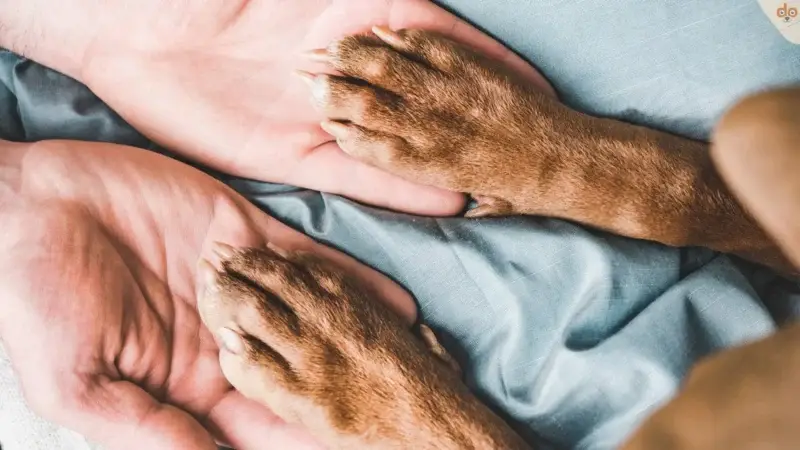
Touching paws – for some dogs this is perfectly normal, for others it is a real stress factor. A gentle paw massage can promote blood circulation and help dogs become calmer. But: many four-legged friends are initially sceptical, flinch or become ticklish. No cause for concern – with a little patience and the right build-up, it almost always works.
Why paw massage makes sense
- Blood circulation: Especially in older dogs or during the cold season, blood circulates more poorly in the paws – regular massage can noticeably improve this.
- Stress reduction: Touch has a calming effect on many dogs and can reduce fear and inner tension.
- Trust: Anyone who touches their dog regularly builds a deeper bond – and the dog learns that touch is not threatening.
- Early detection: Small cuts, ingrown hairs, foreign bodies between the toes – regular palpation reveals such issues early on, before they become a problem.
Training plan: getting your dog used to paw touch
Most dogs do not simply tolerate paw touches right from the start – this is completely normal. This plan helps to build this up step by step. Only take the steps your dog actually needs – some jump straight to step 3 or 4, others need weeks for the first two.
Step 1: Building Trust
- Goal: The dog notices that approaching its paws means something good.
- Method: Place your hand near the paws – but do not touch them yet. If the dog remains calm, reward immediately. Repeat this over several days until it reacts calmly.
Step 2: Touch
- Goal: The dog allows a brief touch.
- Method: Lightly tap the paw, no pressure, reward immediately afterwards. Short and frequent – not long and rare.
Step 3: Extending Contact Duration
- Goal: The dog tolerates longer contact – and remains relaxed while doing so.
- Method: Gradually increase the duration before the reward comes. The goal is for the dog to visibly relax during the touch.
Step 4: Introducing Gentle Movements
- Goal: The dog accepts that something is moving on its paw.
- Method: Gently rotate the paw, slightly bend the toes or massage with small circular motions. Reward calm behaviour immediately.
Step 5: Increasing Intensity
- Goal: The dog gets used to slightly more pressure or tickling stimuli.
- Method: Apply gentle pressure or light tickling – but really only if the dog remains calm. Increase very slowly, never abruptly.
Step 6: Associating a Command
- Goal: Introduce a signal that tells the dog: Touch is coming now, stay calm.
- Method: Say a word like “paw” or “still” shortly before touching. If the dog responds and remains calm, reward it.
Step 7: Increasing Duration and Distraction
- Goal: The dog remains composed even when there is activity around.
- Method: Practice in different environments, consciously include small distractions. Gradually extend the duration before the reward.
Training Tips:
- Positive Reinforcement: Praise and treats for desired behaviour – not for enduring stress.
- Regularity: Short sessions of 2–3 minutes, daily, are more effective than one long session per week.
- Patience: Every dog is different. Some need three days for a step, others three weeks – both are fine.
- Stop if Stressed: If the dog pants, pulls away or freezes, stop training immediately. Do not push through – this only makes it worse.
How Paw Massage Works
Preparation
- Choose a quiet, familiar place – no distractions, no stress in the room.
- The dog should already be relaxed, not just worked up after a walk.
- Start with general stroking so the dog can settle in first.
Massage Technique
- Massaging paw pads: Hold the paw loosely in your hand. Perform small circular motions on the pads with your thumb and forefinger – gentle pressure, no kneading.
- Massaging each toe individually: Take each toe between your thumb and forefinger and work through it gently. Really not too hard – the structures there are sensitive.
- Stroking from toes towards leg: Work upwards from the toes with light stroking motions, this noticeably deepens relaxation.
- Stimulating pressure points: Gentle, targeted pressure on the pads can have a calming effect. Always pay attention to the dog’s reaction and adjust the pressure accordingly.
After the Massage
- Praise the dog for its calm participation – this reinforces the positive association.
- Observe how it reacts afterwards: Does it fall asleep? Does it seek closeness? This shows what feels good to it.
Important Notes
- Always proceed slowly – haste is immediately transferred to the dog.
- If there is discomfort or signs of pain, stop the massage immediately and consult a vet if necessary.
- Dry, cracked paw pads? A good paw balm helps – best applied directly after the massage when the skin is still warm.
Those who massage regularly not only care for the paws but also notice changes early on – and the dog learns in the process that being touched is something nice. This also pays off during vet visits.