
shaking
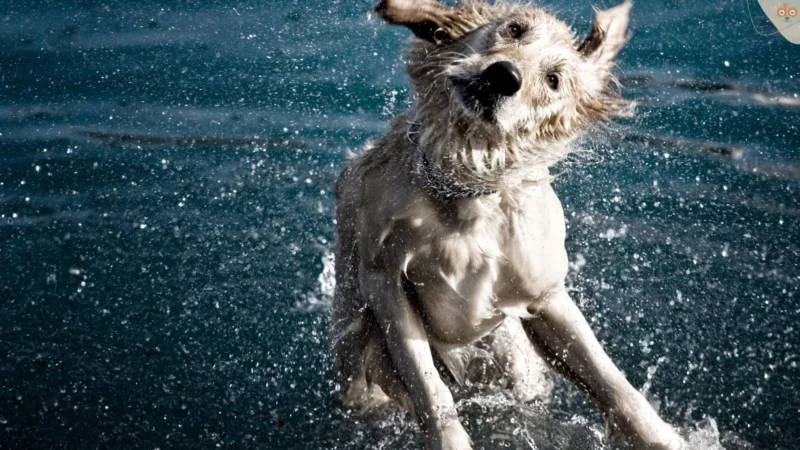
Shaking is a reflex-like behaviour in which dogs move their body jerkily to remove water, foreign bodies or reduce stress.
Content
Shaking is a reflex-like behaviour in which dogs jerk their bodies to get rid of water, foreign objects or stress.
A Golden Retriever comes soaking wet from the lake and shakes so vigorously that water droplets fly three metres. You know this. But why does the same dog also shake after a nap on the sofa?
Why do dogs shake after bathing?
After contact with water, a dog flings up to 70 percent of the water out by shaking, which is sitting in its coat. The water hangs in tufts of hair that vibrate along during the shaking.
The shaking is triggered via touch receptors in the hairy skin, not by the water itself. That is why your dog also shakes when it has a blade of grass hanging on its back, and usually only once it is out of the water.
What does shaking after getting up mean?
Your dog “resets” its body after rest periods. The movement loosens tense muscles and removes dust or loose hair.
Some older dogs visibly need longer for this; their joints get going more slowly.
Is my dog shaking because of stress?
After stressful situations, the vet, loud road traffic, dog encounters with conflict, dogs shake as a displacement activity. They build down accumulated tension this way.
You can recognise stress shaking by the timing: directly after the stressful situation, often combined with deep exhaling or yawning.
When does head shaking indicate ear problems?
One-sided, repeated head shaking signals ear complaints. Breeds with floppy ears, Cocker Spaniel, Basset Hound, are more susceptible. The poor ventilation is a contributing factor here, not the cause: behind this often lies a skin disease, such as an allergy.
The warning signal is not the frequency, but the type: the dog shakes one-sidedly, then scratches its ear or tilts its head to the side.
If the ear smells noticeably, that is always a finding; which pathogen is behind it is decided by the ear swab at the vet, not by the owner’s nose. A dark, crumbly deposit that looks like coffee grounds makes ear mites likely.
Can skin problems trigger shaking?
Itching from fleas, mites or allergies leads to whole-body shaking. The dog tries to resolve the irritation mechanically.
You recognise this by the timing: the shaking follows scratching or licking of certain body parts. Check the belly, armpits and groin area for redness or small black spots (flea faeces).
When does shaking become worrying?
Go to the vet if your dog:
- Repeatedly shakes its head one-sidedly or scratches its ear while doing so
- Shakes its head one-sidedly and loses its balance in the process
- Whimpers while shaking or shows other signs of pain
- Appears disoriented or stumbles after shaking
The shaking is the protection, not the problem: wet coat hardly insulates, and small dogs carry particularly much water in relation to their body. Whoever takes a small dog out of the water in cold weather lets it shake first and then rubs it dry; a dog coat is then not an indulgence, but protection.
How do I react correctly to shaking?
After bathing: Let your dog shake first. This removes up to 70 percent of the water from the coat in seconds; you only get the rest out with a towel.
After stress: Give your dog five minutes of peace. Addressing or stroking can intensify the tension rather than relieve it.
If you suspect an ear infection: Touch the pinna gently. If your dog flinches or pulls away, book a vet appointment promptly.
More from the Wiki
All wiki entries →Plum
The plum is a stone fruit of the genus Prunus. Its stone contains cyanogenic glycosides; the …
Rhubarb
Rhubarb is a knotweed whose leaves are rich in soluble oxalic acid. For dogs, the leaves …
Why is dog faeces white?
White dog faeces occurs when normal digestion is disrupted or certain substances change the colour of …
Dog licks its anus, what to do?
Anal licking in dogs is a normal grooming behaviour that serves for cleaning and emptying the …