
Hand-feeding dogs to build trust?
Hand-feeding dogs can promote attention, but can also lead to food aggression. Problematic as a long-term solution, quite useful as a temporary training tool.
Content
What is hand-feeding for dogs?
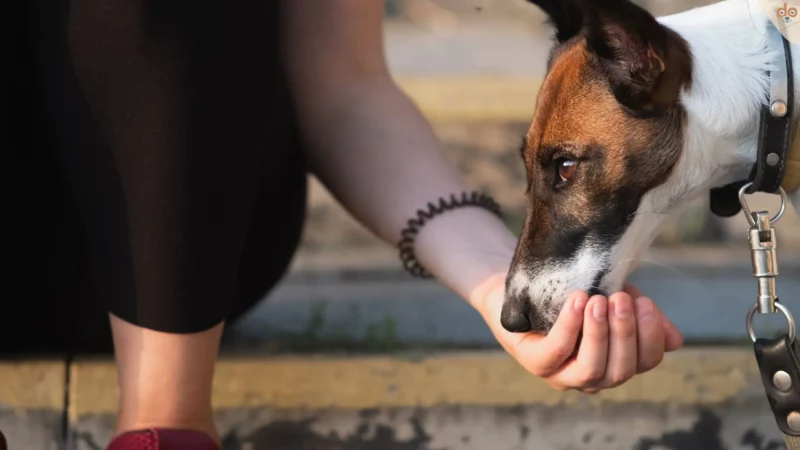
In hand-feeding, the dog does not get its food from the bowl, but directly from the owner’s hand. The basic idea behind it: whoever controls and distributes the food becomes the central primary caregiver.
In classic training approaches, hand-feeding was used as an instrument of dominance. Modern dog schools use it more specifically, for example for attention training or to improve recall.
What problems can exclusive hand-feeding cause?
Certain behavioural patterns occur more frequently with permanent hand-feeding:
Many dogs develop a strong dependence on food from humans. Other reinforcers such as toys or social affection lose value, training becomes one-sided and revolves only around food.
Some dogs show increased food aggression. Without a fixed feeding place, they lack an area that they perceive as safe. The constant uncertainty about when and where food is available can cause stress.
Recall can deteriorate. Dogs without a fixed feeding place lack a routine that leads them home. Instead, their attention constantly revolves around the next food reward.
Does hand-feeding strengthen the bond with the dog?
That depends on what is meant by bonding. If a dog is only attentive because the human represents its sole source of food, this is more likely dependence than genuine bonding.
Bonding arises through shared positive experiences, trust, and security. A dog that knows its food will be available in its bowl at fixed times can behave more calmly. It does not need to remain constantly on alert.
As a time-limited training aid, hand-feeding can certainly work. It only becomes problematic when it turns into a permanent strategy for bonding issues.
When does hand-feeding a dog make sense?
In certain situations, hand-feeding can be sensible for a limited period:
In cases of severe attention problems during walks, two to three weeks of hand-feeding can help redirect the dog’s focus back to the owner. Subsequently, you should gradually switch back to bowl feeding.
Hand-feeding can also support trust-building in fearful dogs from animal welfare shelters. However, once a foundation has been established, the bowl should be introduced.
In cases of existing food aggression, hand-feeding is counterproductive. Here, the dog needs fixed feeding times and locations to develop a sense of security.
What alternatives are there to hand-feeding?
Bonding can be built in various ways without creating permanent food dependence:
Shared rituals: Regular routines, such as morning search games before bowl feeding, create structure and anticipation.
Jackpot rewards: Instead of constant hand-feeding, special achievements are rewarded with several treats at once. The element of surprise enhances the effect.
Paying attention to body language: Recognising relaxed moments in the dog and reinforcing them with attention builds long-term trust.
How long does it take to switch a hand-fed dog to bowl feeding?
For most dogs, the transition works within five to seven days. The proportion of hand-feeding is reduced daily, while more food goes into the bowl.
Can I combine hand-feeding with bowl feeding?
Yes, the combination is often ideal: main meals from the bowl provide routine and security, while short training sessions with hand-feeding specifically promote attention.
My dog only eats from my hand now – what should I do?
Place the bowl down and wait for 10 minutes. If the dog does not eat, remove the bowl. At the next feeding time, it will be less picky. Healthy dogs easily survive a missed meal.