
Dog Language: These Signals You Should Know
Wagging tail does not always mean joy – sometimes it is pure tension. These 5 body signals reveal what your dog really thinks.
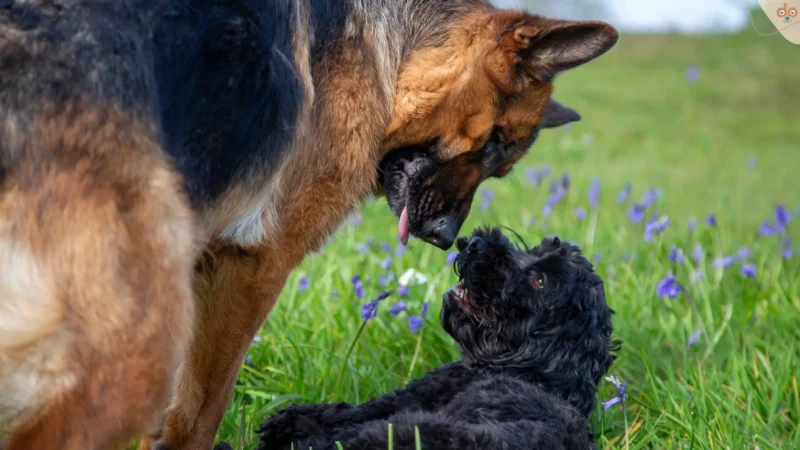
Content
Your dog growls when you stroke it, but you think it’s happy? Its tail is wagging while it stares fixedly at the neighbour’s dog? Such misinterpretations happen daily – and can become tricky. Dog language has nuances that go far beyond “tail up = happy”.
When does tail wagging signal stress rather than joy?
Wagging doesn’t automatically mean joy. A stiff, upward-stretched tail that snaps quickly back and forth signals tension. This is usually accompanied by a rigid body with a fixed gaze.
Recognise the difference: Relaxed wagging happens in wide arcs, with the whole body swaying along. Under tension, only the tip of the tail moves – like a metronome under high voltage.
A tail tucked between the legs? Most people know that one. But a horizontally extended, stiff tail also shows uncertainty. The dog is assessing the situation before making a decision.
How do you distinguish attentive ears from aggressive ones?
Ears pointing forwards can mean both interest and a threat display. The rest is decisive: A relaxed body posture with pricked-up ears indicates curiosity. A stiff body with ears pushed forward means “keep your distance”.
It gets trickier with floppy-eared breeds. Pay attention to whether the base of the ears is tense. A Dachshund can’t prick up its ears – but it can pull them back or wrinkle its forehead.
Ears pinned back against the head don’t always mean fear. When running or sniffing intensely, dogs often flatten their ears aerodynamically. Context is key.
What does direct eye contact with dogs really mean?
Staring is a challenge – but only under certain circumstances. A dog that looks at you while panting relaxedly is seeking contact. The same look with a rigid body and closed mouth is a provocation.
The “whale eye” phenomenon reveals stress: If you see the whites of its eyes in the corner while the dog turns its head away, it’s overwhelmed. This is especially common with children who insist on cuddling.
Slow blinking, on the other hand, has a calming effect. Dogs use it to ease tensions. You can return the gesture – a peace offering on equal footing.
Is your dog yawning from tiredness or stress?
Yawning after waking up is normal. Yawning at the vet, during dog encounters, or when guests arrive? That’s a release valve for tension.
Observe the timing: Does your dog yawn while an unfamiliar dog approaches? It’s trying to de-escalate – signalling that it poses no threat and the encounter should remain calm. Owners often overlook this gesture on both sides.
Excessive lip-licking goes hand in hand with this. Not after eating, but in tense moments. The dog briefly licks its lips – a mini-reset for the nerves.
When does a play bow become appeasement?
You know the classic play bow: front end down, rear end up, wagging tail. But the same posture can also mean “please don’t be angry”.
The difference lies in the dynamics. A genuine play bow is brief and leads into movement. An appeasing bow is held longer, often with the head turned away.
The body language afterwards also differs: After a play bow, there’s usually jumping around. After an appeasing bow, it’s more likely to be slow, cautious approach.
Why does my dog growl when I stroke it?
Growling during petting is a polite warning. The dog is signalling: this is too much for it, it wants you to stop. If you ignore the signal, it may escalate.
Can tail wagging also show uncertainty?
Yes, rapid wagging in a low position shows submissiveness or nervousness. The dog isn’t aggressive, but it’s not relaxed either.
How should I respond correctly to stress signals?
Give the dog space and reduce pressure. Don’t force contact, don’t approach head-on. Let it decide for itself when it’s ready.
Do all breeds show the same signals?
In principle, yes, but the expression varies. Pugs can’t yawn as distinctly, Bulldogs can’t communicate as expressively with their ears. The basic patterns remain the same.
When should I intervene?
As soon as multiple stress signals appear simultaneously: fixed gaze, pinned-back ears, stiff tail. Then defuse the situation before it tips.