
When the Puppy Becomes a Fighting Dog…
If your puppy growls or snaps, it is showing normal communication – not aggression. Here you will learn to recognise the causes and react correctly with concrete training steps.
Content
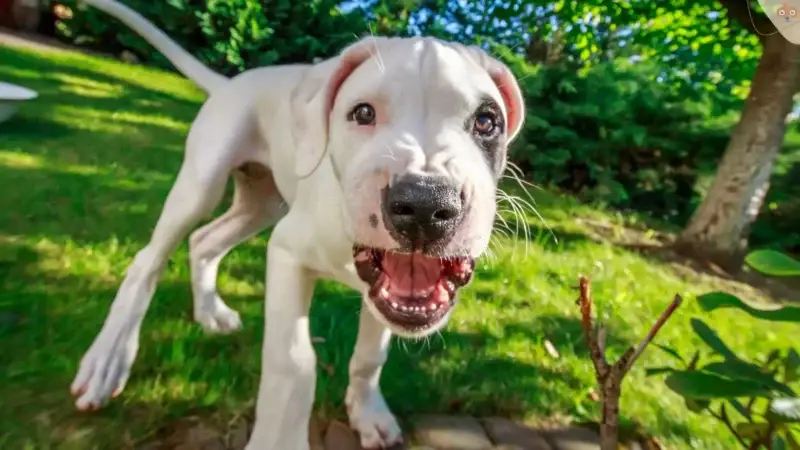
Your nine-week-old puppy growls at you when you take the toy away. Or it snaps at you when you want to pick it up. Such moments shock new dog owners – yet the little one is simply showing what all puppies must learn: appropriate communication.
Why is my puppy suddenly growling?
Growling is communication, not aggression. The puppy is saying: “This is too much for me” or “This belongs to me”. Three situations trigger this most frequently:
A puppy that growls while eating has often learned that food is scarce – particularly from an animal shelter or from breeders providing little food per puppy. This behaviour usually disappears within weeks once the dog realises there is always enough available.
Pain manifests differently: the puppy avoids being touched in certain areas, moves stiffly or whimpers. Growling when its paws are handled often indicates embedded thorns or awns.
Overtiredness affects puppies much like toddlers. A puppy that has been playing for two hours becomes grumpy and snaps at everything – including its beloved primary caregiver.
When does it become problematic?
Genuine warning signs are: a stiff body posture with raised head, direct eye contact without blinking, and growling without an apparent trigger. If your puppy remains tense for more than five minutes several times a day, something is wrong.
Normal behaviour, by contrast, includes: brief growling during play, snapping at toys (not at you), and retreating to the sleeping area when overwhelmed.
The rule of thumb is: a relaxed puppy switches from tension back to normal behaviour within two minutes. If it remains tense longer, it needs help.
How should I react correctly if my puppy snaps?
Stop the activity immediately. You walk away without scolding or threatening. This shows the puppy that snapping ends the game – not in its favour.
Never growl back or try to dominate. A puppy that feels pressured only learns that humans are unpredictable. This reinforces defensive behaviour.
Instead, after a five-minute break, you offer an alternative: a chew toy instead of fingers, or you wait until it comes to you on its own. From my experience, puppies learn within a week that friendly approach yields more rewards than snapping.
Which training steps help concretely?
The “exchange training” works reliably for resource guarding: you have an even better treat ready when the puppy has something forbidden. If you show it to the puppy and wait until it drops the forbidden item, it receives the treat – and you take the other item away.
Never simply snatch it away. This only strengthens the impulse to bite harder next time.
When training touch tolerance, you start with one second of gentle touch on a non-problematic area – usually the chest. If the puppy remains relaxed, it gets a treat. Increase by one second daily and move to other body parts.
When should I worry?
A puppy under 16 weeks that bites without warning and causes damage requires professional assessment. This is extremely rare – but when it happens, it is usually due to neurological issues or severe trauma.
More commonly problematic are puppies that refuse all physical contact from the 12th week onwards and freeze in the process. This indicates a lack of socialisation during the first weeks of life.
The good news is: almost everything can still be corrected well up to the 16th week. Afterwards, it becomes more involved, but not impossible.
Can I ignore snapping during play?
No. Puppies must learn bite inhibition – ideally with other puppies that squeal and end the game if it gets too rough. You replace this feedback with consistent stopping of play.
Does ignoring help with growling puppies?
To some extent. Attention-seeking growling stops if it yields nothing. But growling out of fear or pain worsens when ignored. You need to identify the cause.
Should I punish the puppy for growling?
Absolutely not. A punished puppy will no longer warn before biting – the growling is suppressed. This makes it more dangerous, not better.
How long does it take for the behaviour to improve?
With consistent training, first results appear after three to five days. Full improvement usually takes two to four weeks – depending on the puppy’s age, breed and prior experience.