
Dog Bites Waiter – Causes and Measures for Better Behaviour
Biting incidents in restaurants have legal and financial consequences for dog owners. Concrete training and correct first aid measures prevent the worst.
Content
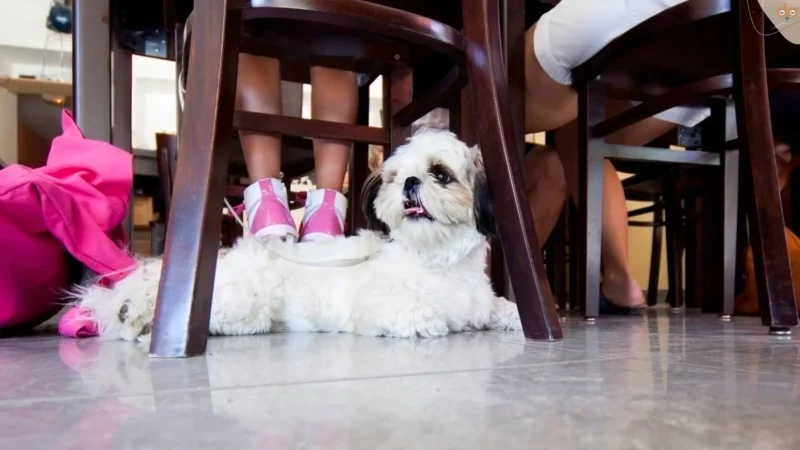
You are sitting relaxed in the beer garden, your dog is lying under the table. The waiter brings the food – and suddenly your dog snaps. A nightmare that unfortunately occurs more often than one might think. The consequences range from compensation for pain and suffering to a temperament test.
Why does a dog bite the waiter?
Resource guarding is the most common reason. Your dog regards you and the table as its territory – the approaching waiter is seen as a threat. Dogs with unclear hierarchies in particular show this behaviour.
Sensory overload also plays a major role. Clattering crockery, strange smells, people walking by – for an unsocialised dog, the restaurant is simply too much. It falls into “fight-or-flight” mode.
Pain or illness further exacerbate aggressive reactions. A dog with joint problems lying under a narrow restaurant table reacts more quickly with irritation to touches or sudden movements.
What are the legal consequences if my dog bites?
In Switzerland, as a dog owner you are liable for all damages regardless of fault. This means: even if the waiter provoked the dog, you pay treatment costs, compensation for pain and suffering and any loss of earnings.
The costs can be considerable depending on the severity of the injury. A deep bite wound often requires plastic surgery, physiotherapy and psychological support. Without liability insurance, this can quickly become a financial burden.
In case of serious injuries, a temperament test or even an order for euthanasia may also be threatened. The authorities check whether your dog poses a danger to the public.
How do I train my dog for restaurant visits?
Start with 5-minute training sessions at home. Let your dog lie under the kitchen table while you eat. Completely ignore begging attempts – no eye contact, no words.
Practice “down and stay” with distractions. Throw treats past it, let family members walk around the table. Only when your dog remains lying down relaxed for 20 minutes do you move on to the next step.
For initial practice visits, choose dog-friendly cafés at quiet times in the morning. Order only a drink and leave the establishment at the first sign of stress from your dog.
The “touch” exercise can help redirect snapping: train your dog to touch foreign hands with its nose instead of snapping. Reward every gentle approach immediately with a treat. Important: if your dog has already snapped or bitten, no single exercise replaces working with a qualified behaviour consultant.
What must I do immediately after a biting incident?
Secure the wound immediately. Press a clean cloth onto heavily bleeding bite wounds and call emergency services. For superficial wounds, thorough rinsing with tap water is sufficient.
Record everything: photos of the wound, names of witnesses, exact time. Your liability insurance will need this information later.
Apologise sincerely and cover medical costs immediately. Give the injured person your insurance details and an emergency number – this shows a sense of responsibility and can mitigate legal consequences.
Report the incident to your liability insurance within 24 hours. Do not hide anything – even small details can become important.
My dog has never bitten before – can this still happen?
Yes, any dog can bite under extreme stress. Even the sweetest family dog has limits that are quickly reached in unfamiliar situations.
How do I recognise stress in my dog at a restaurant?
Panting without physical exertion, a fixed stare, ears pinned back and a stiff body are warning signs. If you notice these signals, leave the restaurant immediately.
Can I completely train my dog not to bite?
Biting is a natural protective reflex – you can control it, but not eliminate it completely. Training significantly reduces the likelihood, but it can never be ruled out 100 per cent.
Does my insurance cover all costs?
Standard liability insurance covers bite damage, but not in cases of intentional provocation or if the dog is classified as dangerous. Check your policy carefully.
At what age should I start restaurant training?
Start with short café visits from the 16th week of life. Young dogs learn faster, but adult dogs can also learn this behaviour – it just takes longer.