
Training for Bite Inhibition in Puppies and Adult Dogs
Content
Your puppy is nibbling on your fingers and you are wondering at what point it becomes too much? Or does your adult dog snap harder when playing than you like? Bite inhibition is your dog’s ability to control the force of its jaw, and you can train it.
What happens if a dog doesn’t learn bite inhibition?
A dog without bite inhibition cannot assess when its bite causes pain. This means: even during harmless play, it can injure people or other dogs, without having any malicious intent.
Bite inhibition normally develops between the 3rd and 18th week of life. During this time, the puppy learns from its mother and siblings how much force is appropriate. If this learning phase is missing, for example because the puppy was separated from its mother too early, you have to take on this role.
How do I recognise whether my dog has bite inhibition?
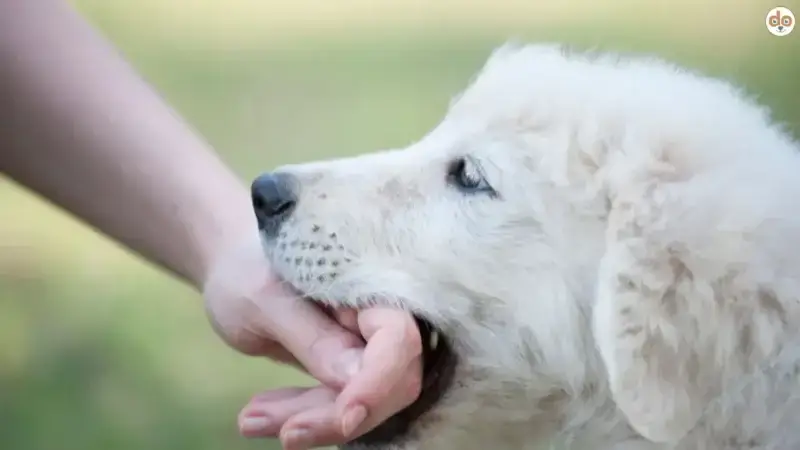
A dog with good bite inhibition can use its teeth without causing damage. You notice this by: it takes your hand into its mouth, but you only feel the pressure of the teeth, no pain or scratches.
If bite inhibition is missing, playful gnawing already leaves red spots or small scratches on your skin. In adult dogs, this can show itself through harder grabbing during toy tug-of-war or by snapping at the hand when feeding.
Which training method works best with puppies?
The most effective training imitates natural learning in the pack. As soon as your puppy bites too hard, you say “Ouch!” loudly and pull your hand away. This reaction corresponds to the yelping of a sibling puppy.
The timing is crucial: The “Ouch!” must come in the same second that the bite becomes too hard. Then you interrupt the play for about 30 seconds. Stand up, turn away, ignore the puppy completely. This way it learns: Biting too hard = play over.
After the short break, you continue playing, but only if it becomes gentler. You repeat this cycle consistently over several weeks. Most puppies understand the principle after 5-10 repetitions.
Why is training with adult dogs more difficult?
An adult dog has already lived for years without appropriate bite inhibition. Its habits are established, and retraining takes longer, usually 2-6 months instead of fewer weeks with a puppy.
In addition, other factors can play a role in adult dogs: pain, stress or negative experiences. A dog that suddenly bites harder than before should first go to the vet. Sometimes toothache or other health problems are behind it.
The training itself works similarly to with a puppy, but with more patience. You say “No” instead of “Ouch!”, interrupt the activity and redirect to a toy. The difference: you may repeat this process 50-100 times before the behaviour changes.
What do I do if my dog bites out of fear?
Fear biting requires a different approach than missing bite inhibition training. A fearful dog does not bite out of exuberance, but as a last resort for self-defence.
The only help here is: create distance, identify triggers and teach the dog alternative strategies. Punishment makes fear biting worse. Instead, you work on making your dog feel safer in critical situations.
If your dog snaps at the vet, you first practise touching paws and ears at home, with positive reinforcement. With food guarding, you feed from the hand and build trust, instead of taking the food away.
How long does it take for bite inhibition to kick in?
For puppies between 8-16 weeks: 2-4 weeks with consistent training. For adult dogs: 2-6 months, depending on the history and training intensity.
Can I do the training alone or do I need a trainer?
You can manage basic bite inhibition training alone. You need a dog trainer if your dog bites out of aggression, has already injured people or if you see no progress after 4 weeks.
What do I do if the training doesn’t work?
Check your consistency: Do you really react the same way every time? Sometimes the problem is also due to excessive excitement of the dog. In that case, more physical and mental stimulation before training often helps.
From what age can I start training?
The training ideally starts from the 8th week of life. Earlier, the puppy is still too young to understand the connections. With adult dogs, you can start immediately, it is never too late.
Should my dog never bite or gnaw at all?
Gnawing and gentle mouth contact is normal and allowed. Bite inhibition does not mean a ban on biting, but bite control. Your dog may take your hand into its mouth, it should only learn how gently this must happen.