Calmness Training for Dogs: Guide, Exercises & Tips for Real Relaxation
Calmness training for dogs helps your dog find real relaxation without pressure. Learn the basics, exercises and daily structure for lasting calm.
In short
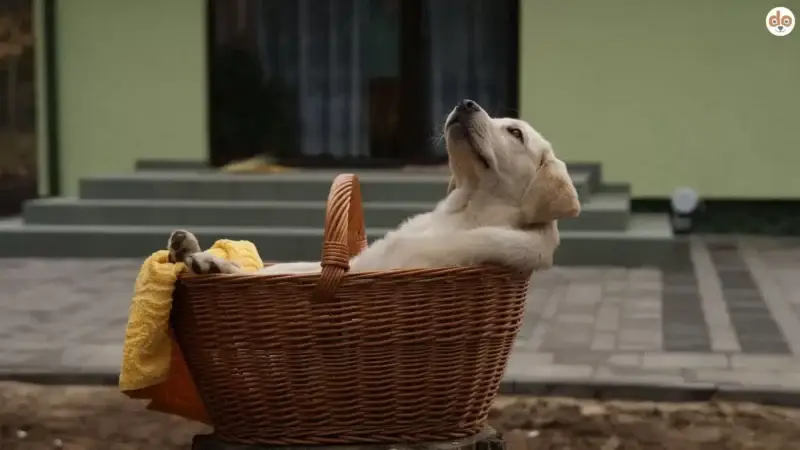
Real calmness in a dog shows itself through a soft facial expression, relaxed muscles and slow breathing – not just by lying still, which can also occur with inner tension.
Content
- What is real calm?
- Behaviour or feeling: what is calm really?
- Preparation: environment, daily structure & mind-body balance
- The basic structure of calmness training: Settle, Matwork & Cue
- From behaviour to relaxation: a focus on classical conditioning
- Practical methods: lure, head halter & SOFT techniques
- Everyday training: building duration & distraction
- Considering physiology: stress markers, HRV & wellbeing
- Special challenges: young, sporting & high-energy dogs
- Sources of error & ethical reflection
- Evaluation & long-term integration
- Conclusion: calm is relationship, not obedience
Reviewed on July 21, 2025Responsible editor: Roger Klein
Stimuli, people, cars, hustle and bustle: many dogs find it hard to settle down in everyday life. Young, active or sensitive dogs in particular often fail to develop adequate strategies for regulating themselves. The consequences are constant stress, problem behaviour, poor concentration and a greater susceptibility to illness.
Calmness training for dogs is about relief. It helps your dog reach a calm state on its own, without pressure, punishment or force. This strengthens its emotional balance and its health.
What is real calm?
Calm is not the same as “not moving”. A dog can lie still and be very tense inside, for example while waiting in front of the food bowl or when it is being suppressed.
Real calm shows in:
- a soft facial expression
- a loose body
- slow breathing
- a relaxed tail and muscles
- quiet, occasional sighing
Calmness training builds this state deliberately: first through behaviour, then through feeling and repetition.
Practical guide: a first observation exercise
Before you start training, watch your dog closely for a few days and take notes:
- When is it calm and relaxed of its own accord?
- In which situations is it restless?
- How long does it sleep or doze during the day?
- How excited is it after walks, play or feeding?
Observation log (3 days):
| Time | Situation | Behaviour | Arousal level (1 to 5) | Duration |
|---|---|---|---|---|
| 08:00 | After the walk | Dozing in its basket | 2 | 25 min |
| 13:30 | Visitors arrive | Panting, barking, pacing around | 5 | 40 min |
This way you tailor your training plan to your dog’s real needs instead of copying just any method.
Checklist: when does calmness training make sense?
| Question | Answer |
|---|---|
| Does my dog often react in an overexcited or frantic way? | Yes / No |
| Does it struggle to come down again after excitement? | Yes / No |
| Does it often lie awake scanning its surroundings? | Yes / No |
| Is it unable to relax when alone? | Yes / No |
| Does it seem sensitive to stimuli or quickly overwhelmed? | Yes / No |
If you ticked “Yes” several times, calmness training is particularly important for your dog.
Your goal in this chapter:
- You understand what real calm means.
- You recognise signs of tension or relaxation in your dog.
- You document typical phases of the day and its resting behaviour.
Behaviour or feeling: what is calm really?
Why “lying quietly” does not always mean calm
Many training methods aim to get the dog to lie down, keep still or appear calm. That alone is not enough. A dog can be calm on the outside and stressed on the inside, for example if it has learned that excitement is unwanted.
Typical signs of tension despite a resting posture:
- tense posture (high muscle tone)
- pricked ears, wide-open eyes
- laboured panting
- constant scanning of the surroundings
- sudden reactions such as jumping up or barking
The goal is not prescribed stillness but real emotional regulation: the dog feels calm, it does not just behave that way.
Recognising and changing emotional states
Feelings are harder to influence than behaviour, but they can be conditioned. You link a neutral stimulus (for example a mat or a scent) with relaxation through repetition and reliability.
Example: every day after the walk your dog lies on its mat, you breathe calmly, stroke it gently or give it a quiet chew toy. Over time an expectation of calm develops. That is classical conditioning.
Practical guide: reading body language correctly
Sit down with your dog without distractions and observe:
- What does it look like when it is deeply relaxed? Breathing, eyes, mouth, posture?
- What signs do you see when it is tense? Forehead wrinkles, muscle trembling, retracted or splayed claws?
- Write down both states.
Mini exercise: Complete the table with positive and negative body signals:
| State | Signs of body language |
|---|---|
| Relaxed | Soft eyes, closed muzzle, loose paws |
| Tense | Staring eyes, visible pupils, tense back |
This teaches you not to judge the behaviour but to recognise the state behind it.
Checklist: emotion or behaviour?
| Statement | Emotion? | Behaviour? |
|---|---|---|
| The dog lies still | no | yes |
| The dog dozes with a soft face | yes | yes |
| The dog fixates on the door at a noise | yes (tension) | yes |
| The dog shakes itself off after getting up | yes (release) | yes |
| The dog pants while lying down | yes (stress?) | yes |
Ideally you recognise both and train specifically towards emotional relaxation.
Your goal in this chapter:
- You recognise the difference between calm behaviour and real relaxation.
- You read body language better and know what matters when observing.
- You name and document your dog’s emotional states.
Preparation: environment, daily structure & mind-body balance
Why preparation is often more important than training
Calm does not come from a single training step but from the conditions of everyday life. If the day is overstimulating, unstructured or does not give the dog enough to do, it will hardly settle, no matter how often you say “Settle”.
That is why environment and daily structure are the foundation of successful calmness training.
Creating the right environment
Dogs need a clear, safe retreat where they are not constantly disturbed or called.
Tips for the rest zone:
- distance from doors, windows and walkways
- no view of birds, neighbours or children
- mat, basket or den (for example a crate with an open grille)
- muffled sounds, such as quiet music or white noise
- no sudden activity by people or animals nearby
Your dog should learn: Here I can wind down, here nothing is expected of me.
Daily structure with a focus on balance
An unbalanced dog cannot stay calm: either it lacks physical exercise, or there is too much stress without time to process it.
Ideal structure for a “calm day”:
| Time of day | Content |
|---|---|
| Morning | Exercise with off-lead time or scent work |
| Afterwards | Feeding, followed by at least 1 h rest break |
| Late morning | short mental exercise (for example a snuffle mat) |
| Midday | a nap together or rest zone |
| Afternoon | walk or targeted training session |
| Evening | cuddling, chewing, winding down |
Important: between stimuli there need to be real rest phases so your dog can process what it has experienced. Like children, dogs process in their sleep.
Mind-body balance: exercise suited to the type of dog
Not every dog needs the same amount of exercise, and not every activity creates balance. Ball games tend to make many dogs more restless. Calm, focused activities are better.
Physically and mentally balanced:
- on-lead walks with plenty of sniffing time
- targeted searching (dummy, treat search, scent discrimination)
- clicker for calm tricks (for example “head down”, “paw on mat”)
- chew bone or lick mat after the walk
Rule of thumb: The more your dog thinks, the less it has to run.
Practical guide: find your “calm daily structure”
Create a simple weekly structure with three building blocks per day:
- physical exercise
- mental exercise
- planned rest periods (not automatically sleep)
As a template for a spreadsheet, whiteboard or notebook:
| Day | Exercise | Brain work | Fixed rest time |
|---|---|---|---|
| Monday | Forest walk | Food search game | 11:00 to 13:00 |
| Tuesday | Lunging | Snuffle mat | 14:00 to 15:30 |
Stay flexible, but consistent.
Checklist: is my dog even “ready” for calm?
| Statement | True? |
|---|---|
| My dog has a fixed, low-disturbance retreat. | Yes / No |
| I plan targeted rest periods every day (at least 2× 1 h). | Yes / No |
| I make sure there is a balance between exercise and brain work. | Yes / No |
| My dog sleeps or dozes 16 to 20 hours a day. | Yes / No |
| I have fixed routines that give my dog a sense of security. | Yes / No |
If you still have many “No” answers, it is best to start calmness training exactly there and not straight away with “sit on the mat”.
Your goal in this chapter:
- You set up a fixed rest zone.
- You create a first daily structure with planned rest periods.
- You observe how your dog responds to different forms of exercise.
The basic structure of calmness training: Settle, Matwork & Cue
The path to relaxation begins with a clear ritual
Calm can be trained, but not through pressure, rather through positive associations and repetition. Your dog learns to relax on its own as soon as a particular place, routine or signal appears, for example a mat, the word “Relax” or a particular touch.
Training usually builds on three elements:
- a fixed place (for example a mat or basket)
- a signal (for example “Calm”, “Settle”, “Relax”)
- a relaxed atmosphere in which calm behaviour is rewarded
Training goal of this chapter:
Your dog lies down on a fixed target (the mat) and stays calm there. Not out of compulsion, but because it pays off and it has learned to feel safe and relaxed there.
Preparation: what you need
- non-slip mat or basket (soft, but not a playground)
- small, high-value treats (for example cubes of cheese or dried meat)
- clicker or marker word (for example “Yes!”)
- a time slot with few distractions (for example in the morning after the walk)
Step by step: building “mat relaxation”
Phase 1: the mat becomes interesting
- Lay out the mat.
- As soon as your dog happens to step on it or look at it, mark (“Yes!”) and place a treat on the mat.
- Repeat this several times without luring. Your dog should interact with the mat voluntarily.
- Goal: it goes onto the mat of its own accord because the mat signals good things.
Phase 2: staying on the mat
- When it stands on the mat with all four paws: marker and reward.
- From now on reward only on the mat, not from your hand.
- Wait to see whether it sits or lies down, then reward calmly, for example with a treat on the floor or something to chew slowly.
Important: no excitement, no wild praise. The atmosphere should be calm and safe.
Phase 3: introducing a signal (“Settle”, “Relax” or similar)
- Once your dog has lain down voluntarily several times, say “Settle” or “Calm” as it lies down.
- Repeat this over several sessions.
- Do not introduce the signal beforehand, only once the behaviour is established.
Bonus: adding calming elements
- chew bone (for calming after lying down)
- massage or gentle touch (only if your dog likes it)
- music with an even rhythm (for example “Through a Dog’s Ear”)
- lavender or chamomile scent (use sparingly)
Duration & repetition
- Training session: 5 to 10 minutes a day
- Weeks 1 and 2: establish the mat as a resting point
- Weeks 3 and 4: increase duration, link the signal
- From week 5: transfer the exercise to new places (for example terrace, café, visitors)
Checklist: are the basics in place?
| Behaviour | Achieved? |
|---|---|
| Dog steps onto the mat voluntarily | Yes / No |
| Dog sits or lies down without a command | Yes / No |
| Mat is associated with calm and safety | Yes / No |
| Dog stays lying relaxed for at least 30 seconds | Yes / No |
| Signal (for example “Settle”) is understood | Yes / No |
Your goal in this chapter:
- Your dog knows the mat as a place of calm.
- It lies down on it voluntarily.
- You begin to name and consolidate the behaviour.
From behaviour to relaxation: a focus on classical conditioning
Behaviour alone is not enough, the feeling is needed too
If a dog is lying quietly, that does not mean it also feels calm. That is why calmness training goes beyond pure behaviour training.
The goal: positive feelings such as security, contentment or tiredness are linked so strongly with a place, a signal or a routine that the dog automatically finds its way into this state.
Classical conditioning: understanding the principle
In classical conditioning, a neutral stimulus is paired with an emotional state until the stimulus triggers that state by itself.
Example:
- Neutral stimulus: the mat
- Emotional state: relaxation
- Repetition: the mat always appears at moments when the dog feels good
- Result: the mat becomes a trigger for calm
The goal is not: “Sit on the mat.”
But rather: “The mat feels good, I can relax there.”
Practical guide: conditioning states of calm
Exercise 1: the mat moment after the walk
Timing is everything: after the walk your dog has had its exercise and has wound down hormonally. That is the best basis for real relaxation.
- After the walk, lay out the mat and have a chew bone or lick mat ready.
- Your dog may lie down on its own, without being asked.
- As soon as it is lying relaxed: calm voice, possibly a gentle touch.
- After 15 to 30 minutes, put the mat away again.
Repeat this ritual daily, always in the same sequence and ideally at the same time. The routine creates security and expectation.
Exercise 2: signalling relaxation with scent, sound or touch
Choose a stimulus that will stand for relaxation from now on:
- a scent (for example a lavender sachet nearby)
- a sound (for example a particular piece of quiet music)
- a touch (for example gently stroking over the shoulder)
Link this stimulus only with truly calm moments, never with hectic situations.
Sample log:
| Stimulus | When | Effect |
|---|---|---|
| Lavender | only when lying relaxed | positive |
| Piece of music | only during the mat break | calming |
| Hand on the chest | only with calm breathing | security |
After two to three weeks, a single stimulus can already help with calming down.
Important note: do not reward “fake calm”
If your dog is lying still but is clearly tense (staring eyes, tense back, fast breathing), do not reward. Make the environment less stimulating or try again later. The goal is real relaxation, not mere functioning.
Checklist: have I built good calm triggers?
| Point | Achieved? |
|---|---|
| I have a fixed routine after the walk (mat ritual). | Yes / No |
| I use scents, music or touch only for calm. | Yes / No |
| My dog shows relaxed body language on the mat. | Yes / No |
| The routine also works without food rewards. | Yes / No |
| I recognise when my dog is not really calm. | Yes / No |
Your goal in this section:
- You deliberately link emotional calm with places, stimuli and routines.
- You recognise the difference between prescribed behaviour and inner relaxation.
- You build lasting calm anchors into everyday life.
Practical methods: lure, head halter & SOFT techniques
Every dog needs its own way into calm
Not every dog can be guided into calm with the same method. One goes onto the mat voluntarily and relaxes there. Another needs more guidance, security or physical support, especially when insecure, nervous or very highly aroused. Here are three proven approaches you can combine depending on the type of dog, its training level and the situation.
Lure technique: guiding and shaping calm behaviour
When “luring”, you guide the dog into a desired position with a treat, here onto the mat and into a down.
Step by step:
- Hold the treat to your dog’s nose.
- Guide it calmly in an arc onto the mat.
- Lower your hand slowly to the floor. Your dog follows and lies down.
- As soon as it is lying down: marker and treat on the mat.
- Then keep still. Reward only if it stays calm (calm breathing, relaxed body).
Goal: your dog learns the movement that leads to relaxation, without hustle.
Caution: do not use this with overexcited dogs. Such dogs often get even more expectant and aroused when lured.
Head halter or short lead: gently guiding into a resting position
This helps especially with large, strong or impulsive dogs that find it hard to settle.
How it works:
- Use a short lead or a head halter (such as a Gentle Leader or Halti).
- Guide your dog slowly to the mat or the desired spot.
- Keep the lead gently taut until it sits or lies down by itself (principle of pressure and release).
- As soon as it relaxes, the lead goes slack and the reward follows calmly.
- Important: no pulling, no forcing.
The method works on the principle: tension leads to relaxation, and relaxation is rewarded. This helps especially in public situations, for example at the vet, with visitors or when meeting other dogs in a waiting area.
SOFT techniques: bodywork and touch for the nervous system and the bond
SOFT stands for “Slow, Observant, Fair & Touch-based“, that is slow, attentive, fair work with a focus on touch. The approach combines elements of Tellington TTouch, Feldenkrais and medical handling.
Ideas for use:
- Gentle stroking along the spine or over the shoulders
- Gentle circling with two fingers on the chest or neck
- Resting your hands calmly on the chest or hip and breathing together
Only use this if your dog likes physical contact and is not stressed.
Never force it in cases of panic, pain or overexcitement.
Goal: to calm feelings through physical contact, promote self-awareness and regulate the nervous system.
Combine rather than be dogmatic
Often a combination of the methods works best, for example:
- lure to get started, then
- SOFT touch to deepen it, and
- a fixed routine with signal and music for conditioning.
Checklist: which method suits my dog?
| Behaviour / type | Suitable method |
|---|---|
| Active, curious, food-motivated | Lure technique |
| Large, powerful, hard to control | Head halter |
| Loves physical contact, sensitive | SOFT techniques |
| Gets wound up by food | No lure, better mat and ritual |
| Panicky or overwhelmed in unfamiliar surroundings | No pressure, better closeness & contact |
Your goal in this chapter:
- You find the methods that suit your dog best.
- You work consciously with body, space and feeling, not just with commands.
- You connect behaviour with emotional relaxation.
Everyday training: building duration & distraction
From “5 seconds of calm” to composure in everyday life
Your dog has learned to wind down on the mat or in a particular place. Now it is about extending the duration and adding distractions step by step, so that it can also relax in real everyday situations, for example in a café or when visitors arrive.
Building duration: slowly, but consistently
How to do it:
- Start small: reward your dog when it stays calm for 5 seconds.
- Increase gradually: extend by 5 to 10 seconds per repetition, as long as it stays relaxed.
- Lengthen the intervals between rewards: every 5 seconds at first, later after 10, 20, 30 seconds.
- Reward variably: sometimes after 5 seconds, sometimes after 20. This teaches your dog that waiting a long time pays off.
Tip: if your dog gets restless, go back a step and reward more often.
Training distractions in a targeted way
Do not add distractions too early. Only once duration works at home do you gradually introduce external stimuli.
Distraction ladder (examples):
- Level 1: noises in the distance (for example a radio)
- Level 2: family members walk through the room
- Level 3: visitors come in and ignore the dog
- Level 4: short exercises outdoors (garden, balcony)
- Level 5: calm in a café or at friends’ homes
Tip: always take the mat or a familiar resting place with you. The familiar spot serves as an emotional anchor and provides security.
Aids for everyday training
- Lick mats or chews: encourage relaxed lying.
- Fixed calm signals: for example “Relax”.
- Managing the environment: if there is too much distraction (for example near a playground), it is better to create distance.
Practical exercise: “café test at home”
Simulation:
- Lay out a blanket in the living room, as you would later in the café.
- Play background noise through a speaker (voices, clinking plates).
- Let your dog relax on the blanket and reward calm moments.
- After a few sessions, take the blanket to a real café at a quiet time, such as mid-morning.
Mistakes that sabotage progress
- Increasing too quickly: your dog is overwhelmed and jumps up.
- Constant rewards: with too many treats it just waits for food.
- Lack of routine: without fixed rest periods it stays on alert.
- Wrong timing: rewarding restless moments.
Checklist for everyday training
| Point | Achieved? |
|---|---|
| Dog stays calm on the mat for 1 to 2 minutes | Yes / No |
| Duration is increased gradually (up to 5 to 10 minutes) | Yes / No |
| Distractions are introduced systematically | Yes / No |
| Dog can relax in at least one everyday situation (for example in a café) | Yes / No |
Your goal in this chapter:
- Your dog gradually stays calm for longer.
- You add distractions without overwhelming it.
- You prepare it for real everyday situations.
Considering physiology: stress markers, HRV & wellbeing
Why behaviour alone is not enough
A dog can appear calm and still be full of stress hormones. If you want to train real calm behaviour, you should also know the physical signs of relaxation and stress. This lets you steer your training better and respond to your dog’s state, not just its posture.
What is real relaxation from a physiological point of view?
In real relaxation, the following change:
- the breathing (slower, even)
- the muscle tension (loose, soft)
- the heart rate (calm and variable)
- the overall expression (soft gaze, relaxed tail, calm behaviour)
- the release of stress hormones (cortisol falls, oxytocin rises)
In everyday life you cannot measure these features directly, but you can assess them well through behaviour and body language.
Measurable parameters from research
1. HRV: heart rate variability
HRV shows how flexibly the heart responds to internal and external stimuli. A high HRV indicates wellbeing, a low one stress, tension or overload.
HRV can be measured with trackers (for example PetPace or special chest straps). This is of interest in dog sports or with anxious dogs, for example.
2. Cortisol
Cortisol is a well-known stress hormone. It rises with fear, overload or physical stress. Blood or saliva tests are possible at the vet, but they tend to make sense in research or for chronic problems.
3. Oxytocin
Oxytocin, also called the “bonding hormone”, rises with pleasant social contact and touch. Stroking, a calm voice and closeness can promote oxytocin and so support relaxation.
In practice: body language as an indicator
These signs help you in everyday life:
| Relaxation | Tension |
|---|---|
| soft gaze, half-closed eyes | eyes wide open (scanning) |
| calm, even breathing | panting without exertion |
| lying loosely on its side | sitting stiffly or holding a sphinx position |
| tail loose, resting lightly | tail tense or tucked |
| occasional sighing | no signs of release |
Observe your dog in different situations: after the walk, with visitors, during calm exercises. Note down what it looks like when it is really relaxed.
Practical exercise: observing the “calm window”
- Let your dog lie on its mat, ideally after exercise.
- Wait 10 minutes in a quiet environment.
- Observe how breathing, posture, facial expression and ears change.
- Note down:
- How long does it take for real calm to set in?
- What does your dog look like before and after?
Template:
| Time | Breathing | Posture | Eyes / head |
|---|---|---|---|
| 0:00 | fast, shallow | upright, alert | awake, scanning |
| 7:30 | calm, deep | on its side, loose | half closed |
Checklist: insights into physical relaxation
| Point | Achieved? |
|---|---|
| I recognise visible signs of relaxation. | Yes / No |
| I can tell tension apart from tiredness. | Yes / No |
| I regularly observe breathing patterns and muscle tone. | Yes / No |
| I promote oxytocin through touch, closeness and routine. | Yes / No |
| I watch for stress peaks in everyday life and balance them out. | Yes / No |
Your goal in this chapter:
- You use body language as a mirror of inner states.
- You understand how physical markers relate to training.
- You adapt your training to your dog’s real state, not just its posture.
Special challenges: young, sporting & high-energy dogs
Not every dog has a “calm gene”
With young dogs, herding dogs, sporting lines or very sensitive types, calmness training is a real challenge. These dogs are alert, quick to react and eager to learn, but often also quickly overstimulated or frustrated. They can still learn to settle. The path there is simply more systematic and longer.
The typical difficulties
- quick arousal, slow release
- eagerness to learn: wrong rewards lead to constant tension
- high frustration level when inactive
- fast generalisation (for example “mat = action”)
- long waking phases and little deep sleep
These dogs have to learn calm, and it needs fixed rituals.
Three levers for success with hyperactive dogs
Structure & predictability
- fixed routines (feeding, walk, rest time)
- clearly separated activity and rest phases
- regular physical and mental exercise, not just one or the other
Rule of thumb: planning replaces control. A hyperactive dog that knows what comes when will become calmer in the long run.
Reducing stress through controlled activity
An overactive dog does not need more exercise but meaningful activity that suits its nervous system.
Suitable options:
- Mantrailing or object search (focusing and tiring)
- Retrieving with impulse control (for example not running off immediately)
- On-lead walks with lots of sniffing stops
- Concentration training (for example “look at me”, “give paw”, “box”)
Ball throwing, wild running games or constant rewards during arousal, on the other hand, are counterproductive.
Emotional regulation rather than mere obedience
An important shift in thinking: not “The dog should lie there nicely”, but “The dog may find calm inside”. That also means:
- practising tolerating frustration, for example when waiting
- rewarding inactivity, not activity
- shaping calm as a state, not just as a command
Sometimes detours are needed, for example 10 minutes on the lick mat after a training session and then the calm exercise.
Practical example: daily plan for a highly active young dog
| Time | Content |
|---|---|
| 07:00 | short walk with a search game |
| 08:00 | feeding with a lick mat, then a rest phase |
| 11:00 | concentration exercise (for example target or trick) |
| 13:00 | long rest time (crate or mat, darkened) |
| 16:00 | mantrailing or impulse control game |
| 18:00 | chew and relaxation music |
| 20:00 | relaxing together (sofa, massage) |
Calm does not happen by itself. It needs space, time and training.
Checklist: is my dog overwhelmed or simply active?
| Statement | True? |
|---|---|
| My dog barks, whines or paces restlessly during breaks. | Yes / No |
| It rarely sleeps deeply and for long. | Yes / No |
| It often seems driven, even after activity. | Yes / No |
| It shows frustration (jumping, biting, pulling on the lead). | Yes / No |
| Calm exercises cause it more stress than relaxation. | Yes / No |
Several “Yes” answers mean: no training with pressure. Focus on planning, emotional security, structured exercise and small islands of calm.
Your goal in this chapter:
- You recognise typical challenges with driven, young or sporting dogs.
- You steer calm through daily structure, not through commands.
- You use suitable activities for release and focus.
Sources of error & ethical reflection
Why calmness training is often misunderstood
Calmness training is popular. Often, however, it is oversimplified, applied incorrectly or even misused to sedate dogs instead of truly relaxing them. These are the most common pitfalls.
1. Calm is not the same as calm
A dog lying down is not automatically relaxed. Many dogs learn:
- “If I move, something unpleasant happens.”
- “If I keep completely still, I get a treat.”
That is functional immobilisation, but not emotional regulation.
Better: only reward when your dog is really loose and calm (see chapters 2 and 8).
2. Relaxation is forced
Unfortunately, unfair methods like these are widespread:
- The dog is forced to lie down with the lead or body pressure.
- Calm exercises in overwhelming situations (for example at the vet)
- imposed “bonding exercises” or holding the dog down with body contact
On the outside this looks calm, but inside stress, frustration or helplessness develop. That is not fair dog training.
3. Overload from expectations that are too high
Many people expect too much too quickly:
- “Surely he must be able to just keep still for once!”
- “He could already do it yesterday!”
- “Other dogs can do it too!”
Every dog has its own pace, its own history and its own way of processing stimuli. Calm comes from security and trust, not from strictness.
4. Badly timed rewards
Wrong timing means that:
- restlessness is rewarded (“He was just barking, but I wanted to calm him down …”)
- tension is reinforced (“He is lying down but fixating on everything, I reward him anyway.”)
- an expectation develops (“If I lie nicely, the next action treat is coming!”)
The art is not to “feed” calm but to reinforce it when it is really there.
Ethics check: what makes calmness training humane?
| Question | Your answer |
|---|---|
| Do I never physically force my dog into a position? | Yes / No |
| Do I pay attention to its body signals and stop when it gets too much? | Yes / No |
| Is my goal inner relaxation, not mere outward control? | Yes / No |
| Do I reward only real calm, not tense stillness? | Yes / No |
| Do I have patience for its own learning path? | Yes / No |
If you can say “Yes” everywhere, you are on a good path.
Reflection for you as a human
- Calmness training changes you too: it demands patience, powers of observation and mindfulness.
- It is not a trick but a long process.
- It also means questioning your own expectations and your own rhythm, and making room for what your dog really needs.
Calm arises where trust, security and free will come together.
Your goal in this chapter:
- You recognise common mistakes and avoid them.
- You train with respect and empathy.
- You rely on voluntary calm, not on control.
Evaluation & long-term integration
What does it achieve, and how do you recognise real progress?
Calmness training is not a sprint. Some effects show quickly, others take weeks or months. So ask yourself regularly: What is really changing, in the dog, in you, in everyday life?
1. How to recognise real success
Your dog …
- … withdraws voluntarily, without being asked
- … seeks out the mat when it is tired or overwhelmed
- … lies relaxed for longer, even without constant rewards
- … tends to stay calm in new situations
- … shows stress reactions to stimuli less often
- … sleeps more and more deeply overall
- … shows softer, more attentive social behaviour
The goal is not for your dog to function, but for it to feel safe enough to let go.
2. Review & progress journal
Record weekly:
| Week | Duration of calm lying | Reaction to distraction | Voluntary withdrawal | Comment |
|---|---|---|---|---|
| 1 | max. 30 seconds | jumps up at noises | never | very restless |
| 4 | 3 to 5 minutes | looks briefly, stays lying down | goes onto the mat by itself after the walk | progress |
This way you also see the small steps forward that often get lost in everyday life.
3. Integration into real life
So that calm does not remain a training matter but becomes lived everyday life:
At home:
- plan fixed rest phases (for example 11 am to 1 pm and 3 pm to 5 pm)
- clear signals for “break”, for example relaxation music, mat, scent
- no constant background noise (radio, television, children’s hustle and bustle)
On the go:
- always have the mat or blanket with you
- a calm exercise before the walk (for example “Settle” on the mat)
- deliberately initiate relaxation after activity
With the family:
- inform all family members about the rest times
- children learn: “When the dog is lying on the mat, we leave it in peace.”
4. Transfer to new areas of life
Calm is valuable everywhere, not just at home:
| Situation | Benefit of calmness training |
|---|---|
| Vet visit | less stress, better cooperation |
| Holidays with your dog | less strain, more relaxation |
| Dog sports / training | better handling of arousal |
| New stimuli (for example moving house) | familiar rituals help with settling in |
| Living with other animals | fewer conflicts thanks to places to retreat |
5. Aids & tips for long-term support
- Calm ritual box: mat, lick mat, lavender spray, music
- App or diary: for example for HRV values or the daily structure
- Trainer: get regular feedback, reflect with some distance
- Alternation: 3 days calm, 1 day active (for regeneration)
Final checklist: has integration succeeded?
| Statement | True? |
|---|---|
| My dog has fixed rest times every day. | Yes / No |
| It withdraws on its own. | Yes / No |
| I can call up calm even when out and about. | Yes / No |
| I observe long-term changes in behaviour. | Yes / No |
| I no longer train, I live the calm. | Yes / No |
If you can tick many boxes, you have improved your dog’s quality of life.
Conclusion: calm is relationship, not obedience
- Calm is a gift you give your dog, not a performance it has to deliver.
- Calm comes from time, repetition and real connection.
- The training is worth it for both of you.