
The hand touch – versatile and clever to use
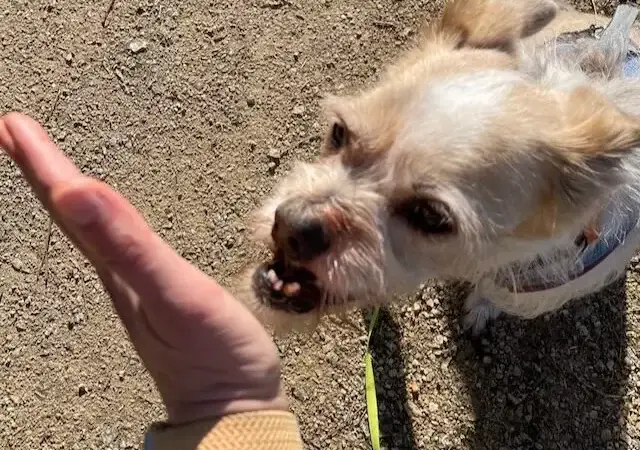
The hand touch is the emergency signal for dog owners: your dog nudges your hand with its nose, thereby shifting its attention from problems to you.
Content
What is the hand touch for dogs?
Your dog nudges your palm with its nose. That’s it. Sounds simple, but it is nevertheless one of the most useful tricks of all.
You always have the equipment with you. No forgotten treats, no toy left at home. Your hand is enough. This makes the hand touch an emergency signal that works even when you have nothing else to hand.
When does the hand touch help in everyday life?
Three situations in which you will need the hand touch:
Regaining focus: Your dog is fixated on another dog, a squirrel or whatever. The hand touch gently interrupts this fixation. It has to break eye contact and look at you.
Indicating direction: You want it to go left around the tree instead of right? Hold your hand where you want it to go. It follows the touch and automatically goes in the desired direction.
Alternative behaviour during stress: Dog sees a fear trigger. Instead of fleeing or freezing, it can perform the hand touch. This gives it a concrete task and simultaneously creates some distance from the problem.
How do I teach my dog the hand touch?
The build-up takes place in five steps. Plan for about a week if you practise for 5-10 minutes daily.
Step 1 – First touch (Day 1-2): Hold your palm about 10 cm in front of the dog’s nose. Most dogs will automatically sniff it. The moment the nose touches the hand, comes the “Yes!” or the click. Give a treat immediately. Repeat this 10-15 times per session.
Step 2 – Introducing the signal (Day 2-3): Say “Touch” shortly before you place your hand. Dog touches hand, then “Yes!”, then treat. After 20-30 repetitions, it associates the word with the action.
Step 3 – Increasing distance (Day 3-4): Hand 20 cm, then 50 cm away from the nose. Dog has to take a step towards you. Only reward when it consciously goes for the hand, not just when it bumps into it by chance.
Step 4 – Varying position (Day 4-5): Hold your hand sometimes left, sometimes right, sometimes higher, sometimes lower. Dog should learn that it has to come to any hand position.
Step 5 – Adding distractions (Day 6-7): Practise with toys in the room, other family members or outside with mild distractions. If it works reliably here, the hand touch is ready for real-life situations.
What are the most common mistakes in hand touch training?
Moving your hand towards the dog: Your hand stays still, the dog comes to it. If you move your hand towards it, it may get startled or learn that it should wait until the hand comes.
Testing too early in stressful situations: First living room, then garden, then quiet street, then real-life situation. If you skip steps, it won’t work at the crucial moment.
Timing when rewarding: The “Yes!” must come in the second that nose and hand touch. Two seconds later, it no longer understands what the reward was for.
Which dogs is the hand touch suitable for?
Basically all dogs. Some take longer, others are done after two days.
Fearful dogs: Particularly valuable because the touch conveys security. They learn: “When uncertain, I go to the hand and get confirmation.”
Hunting dogs with drive: The touch can interrupt fixations. Not always, but often enough to have it as a tool.
Puppies: Perfect first signal. Easy to understand and builds trust.
Seniors: Works even with declining hearing, as long as they can see you.
How long does it take until my dog reliably masters the hand touch?
A week of daily training for 5–10 minutes. Some dogs understand it after three days, others need two weeks. What matters is not the speed, but that they do it reliably in various situations.
Can I train the hand touch without treats?
Yes, but food is the easiest way at first. Later you can switch to praise, petting or short play sessions. Important: The reward must be valuable for your dog.
What do I do if my dog grabs too hard?
Gentle contact with the tip of the nose is the goal. If it bites or scratches, you interrupt the training, say “No”, wait a moment and then try again. Reward only the gentle touches.
Does the hand touch also work during dog encounters?
If they know it reliably: yes. But practise this step by step. First with relaxed dogs at a distance, then closer. In highly aroused situations the touch may reach its limits.
How often should I use the hand touch per day?
Frequently during the learning phase. Later sparingly, so that it retains its value. As an emergency signal it should remain something special, not become routine.