In short
Happy Visits are 2-3-minute clinic visits without medical intervention, where the dog only receives treats and gets to know the rooms – this method reduces vet anxiety.
Content
- “Happy Visits”: Establishing the Vet Practice as a Positive Place
- Desensitisation: Practising Step by Step at Home
- Making car rides and waiting times positive
- Choosing Low-Stress and Fear-Free practices
- Equipment and distraction on site
- Exercise before the appointment
- Stay calm yourself
- If necessary: use anti-anxiety aids
- Professional support for severe anxiety
- FAQ
- Do I really have to go to the practice with the puppy without an examination?
- My dog is extremely touch-averse – what helps?
- Anti-anxiety medication – useful or risky?
- How do I know if the stress is too high?
- Bibliography
10 sourcesReviewed on August 27, 2025Responsible editor: Roger Klein
In short: Stress-free vet visits can be trained: “Happy Visits” make the practice a positive place, while desensitisation practises routines calmly at home. With some preparation, the appointment becomes significantly more relaxed for both dog and owner.
The most important points in brief
- “Happy Visits”: establish the practice as a positive place without treatment.
- Desensitisation: practise routines such as being touched and giving paws at home in small steps.
- Reward and patience are the key, not force.
- A relaxed dog makes the examination safer for the practice team too.
The trip to the vet is real high tension for many dogs – strange smells, hands from strangers, the clacking of nails on smooth floors. No wonder some lose their nerve at the mere sight of the transport box. The good news: with the right preparation, a lot can be turned around – for the dog and also for you, because a relaxed dog on the table is simply different.
“Happy Visits”: Establishing the Vet Practice as a Positive Place
The term “Happy Visits” comes from behaviour-oriented veterinary medicine. The idea is simple: you go to the practice with your dog – but without an examination, no needle, no unpleasant intervention whatsoever. The visit has only one goal: your dog should associate this place with something good, not with pain or stress.
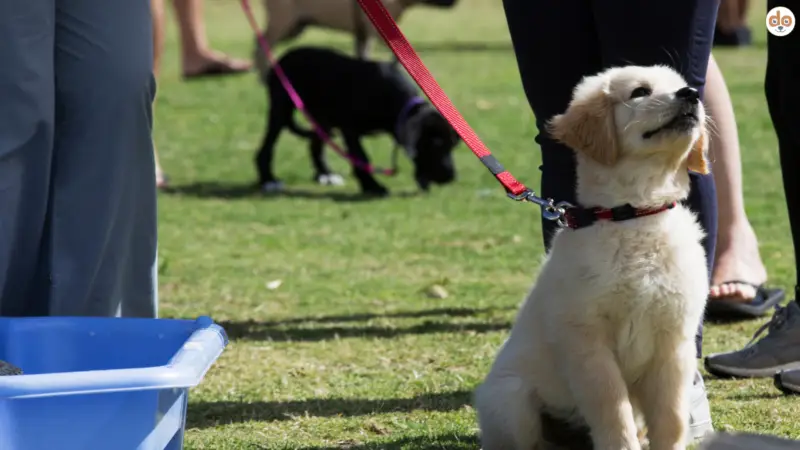
In practice, it goes roughly like this: you enter the practice, greet the team, your dog sniffs around a bit, maybe gets a treat, steps briefly on the scale – and then you leave. Done. The whole fun might last five minutes. But these five minutes can make a huge difference in the long run.
Why this works
Dogs learn through associations – that is no secret. If your dog is in the practice again and again without anything bad ever happening, the environment loses its threatening character. For puppies, this is particularly valuable: those who know the practice before their first vaccination and file it away as a neutral place start life with vet appointments differently. But even an adult dog with moderate experience can rebuild trust through regular Happy Visits. It may take time – but it works.
How to implement Happy Visits
- Call the practice briefly beforehand and explain that you are coming only for a training visit – most teams appreciate this and are happy to help.
- Bring treats your dog really loves: cheese, liverwurst or dried meat are often unbeatable.
- Your dog decides for themselves how far they go – no pushing, no holding back, no “come on now”.
- Repeat this regularly: 2–3 times a month, especially during puppyhood or if your dog tends to be anxious.
Extra tip
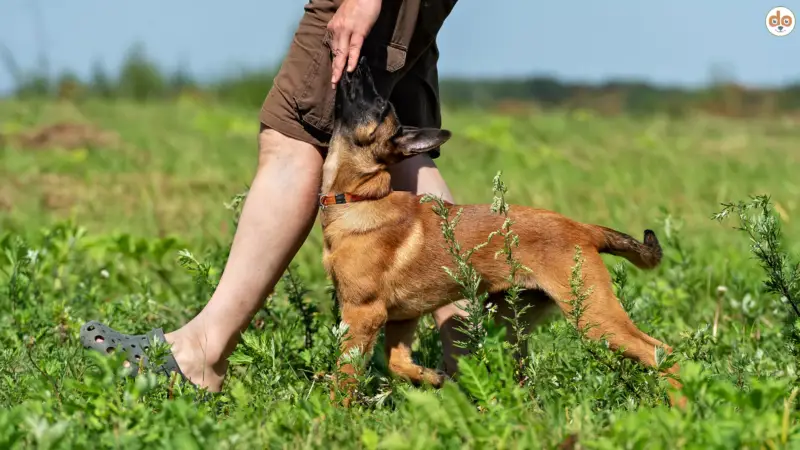
Even the car ride to the practice and simply entering the waiting room – without subsequent treatment – is valuable training. Combine the return journey with a walk or a short play session. This creates a routine that your dog associates not with tension, but with something nice. Dogs who know the practice as a safe place react less panically and are significantly easier to examine.
Desensitisation: Practising Step by Step at Home
Many dogs do not like examinations – not because they are vicious, but because they simply cannot categorise unfamiliar touches, tight restraints and strange smells. This can be changed. At home, calmly, without time pressure.
The principle behind it is called desensitisation and counter-conditioning: you get your dog used to certain stimuli in tiny steps – such as touching the paws or opening the mouth – and simultaneously associate these stimuli with something positive (treats, praise, play).
Structuring training
- Choose calm moments – after the walk or in the evening on the sofa, when your dog has already calmed down a bit.
- Short sequences are sufficient: touch the paw for 1–2 seconds, then reward immediately. If your dog remains relaxed, gradually increase the stimulus.
- Work through systematically: paws → ears → lifting lips → opening mouth → gentle pressure on chest or belly → lifting (for small dogs).
- Positive reinforcement: food, play or pets – depending on what really motivates your dog.
Important
Never push. The training should be voluntary – otherwise the whole thing backfires. If you see signs of discomfort (backing away, licking lips, averting gaze), take a step back and make the exercise easier. Ten small successes in a row are better than too much at once.
Long-term benefits
A dog that has learned that touches all over the body mean nothing bad is a different one at the next vet visit – calmer, more responsive, more cooperative. You can tell, and the vet practice notices it too.
Making car rides and waiting times positive
For many dogs, riding in a car means almost exclusively: vet. No wonder they start trembling as soon as they get in or refuse the car altogether. It is worth starting early here.
Consciously integrate positive car rides into your daily routine – without the destination being the vet practice. Drive to your favourite walk, to a quiet forest path, to friends with dogs. Short trips, followed by play or food. Your dog should learn that riding in a car can simply be nice. It sounds trivial, but it works.
Training in small steps
- Let your dog get into the stationary car first, give them a treat or toy there – and get out again without driving off. Consciously do nothing else.
- Increase gradually: short distances, then with the engine running, then an actual drive with a return home or to a pleasant place.
Waiting time without stress
The waiting room is often the worst part of the visit for sensitive dogs: other animals, new smells, slippery floors, people who are tense themselves. If your dog reacts poorly to this, simply ask about alternatives:
- Can you wait in the car until you are called?
- Is a side entrance directly to the treatment room possible?
- Is there a quieter waiting area?
Many practices are open to such solutions – especially if they work according to the Fear-Free approach or with Low-Stress Handling. With some planning in advance, the appointment becomes more predictable and therefore more relaxed for your dog too.
Choosing Low-Stress and Fear-Free practices
If you have a choice: actively look for practices whose team is trained in Low-Stress Handling or Fear-Free methods. There, examinations are carried out on the floor rather than on the table wherever possible, white coats are sometimes dispensed with, and restraint of the dog is reduced to a minimum. This is not a luxury, it makes a real difference.
Equipment and distraction on site
- Treats, familiar toys, Kongs or LickiMats – anything that distracts during the examination and has a positive association helps.
- Blankets or the favourite toy from home provide security in an unfamiliar environment – a familiar smell can make a big difference.
Exercise before the appointment
A thorough walk or a round of playing directly before the appointment helps to release pent-up energy. A tired dog is often much more relaxed in the practice than one that has been lying on the sofa for hours and is suddenly thrown into an unfamiliar environment.
Stay calm yourself
Dogs read us like an open book. If you are tense, your dog registers that – body language, breathing rhythm, voice. If you are relaxed, it has a calming effect in return. Breathe calmly, speak quietly and composedly. Sounds simple, is sometimes not so easy – but it helps.
If necessary: use anti-anxiety aids
For particularly sensitive dogs, additional measures can be useful: calming pheromones (as a collar or spray), calm coats or – in consultation with the vet – also medication before the visit. This is not a defeat, it is sometimes simply the most sensible thing. Important: always use in consultation with experts, never on your own initiative.
Professional support for severe anxiety
If the anxiety is really pronounced – panic, refusal, physical stress signs even at the sight of the dog leash –, professional help is worth it. Certified trainers with Fear-Free or Low-Stress training, behaviour therapists or mobile vets who offer home visits can be real solutions here. Sometimes the first step is the hardest – but it is worth it.
FAQ
Do I really have to go to the practice with the puppy without an examination?
Yes – Happy Visits lay exactly the foundation that makes later examinations so much easier. The effort is worth it.
My dog is extremely touch-averse – what helps?
Very gradual desensitisation at home, starting with the tiniest touches plus immediate reward. For pronounced anxiety, also seek therapeutic support.
Anti-anxiety medication – useful or risky?
Only use in consultation with the vet. They can be very helpful temporarily, but must be dosed and monitored professionally – no self-medication.
How do I know if the stress is too high?
Heavy panting, trembling, panic, refusal of treats or excessive reactions to small stimuli – if you see that, your dog is overwhelmed. Then it is better to stop and plan anew.
Bibliography
- American Animal Hospital Association (AAHA). How Can My Pet Have Stress-Free Veterinary Visits? Comprehensive guide with practical tips for stress-free veterinary visits.
- American Kennel Club (AKC). How to Make Vet Visits Less Stressful Explains concrete steps for desensitisation, dealing with fears and preparation.
- Cornell University College of Veterinary Medicine. How to Make Veterinary Visits Less Stressful for Dogs Expert article on behavioural biology and the role of owners in low-stress vet visits.
- Bark Busters International. Preparing Your Dog for a Vet Visit Experience-based contribution focusing on daily routines and positive conditioning.
- CityDog Veterinary Clinic. Vet Appointment Anxiety – What You Can Do Recommendations for training in advance, relaxation techniques and medical options.
- VCA Animal Hospitals. Reducing Fear of Veterinary Visits for Dogs Emphasises the importance of calm communication and familiar objects in the clinic.
- Madison Animal Care Hospital. Vet Visit Anxiety in Dogs Tips from the perspective of a clinic team for dogs with vet anxiety – including distraction and environment design.
- Cary Street Veterinary Hospital. 5 Easy Ways to Ease Your Pet’s Veterinary Visit Stress Five concrete everyday tips focusing on environmental stimuli, training and communication.
- The Spruce Pets. Why Dogs Fear the Veterinarian and What to Do About It Well-prepared introduction to causes of fear and measures for dog and owner.
- Family Friends Veterinary Hospital. Preparing Your Pet for a Visit to the Vet Summary of typical preparation errors and recommended behaviours.