
01Summary
In a paragraph
If you only have 30 seconds.
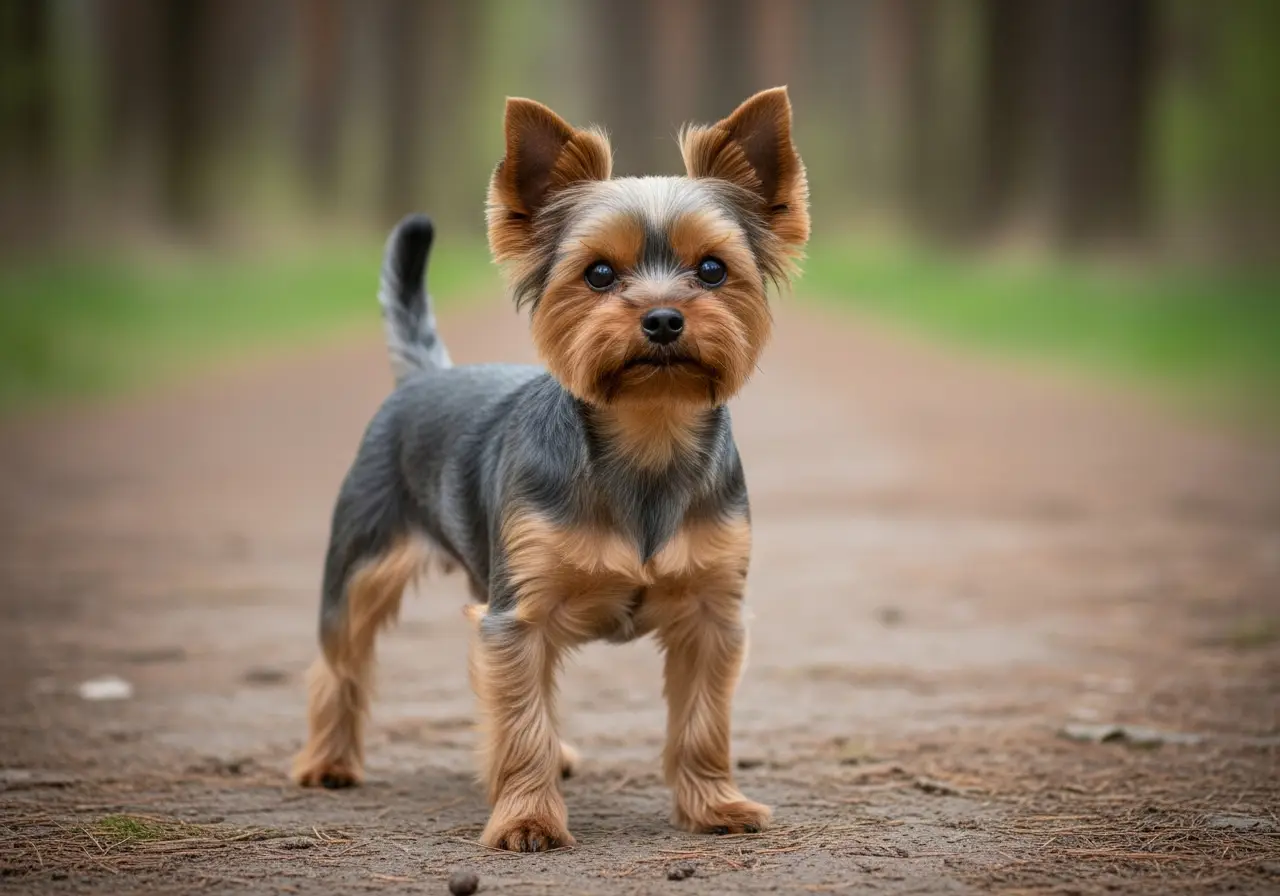
The Yorkshire Terrier carries a working terrier in pocket format. Its silky coat is deceptive: behind the elegant appearance lies a watchful, people-oriented dog with pronounced prey drive and distinct alerting behaviour. Anyone expecting a quiet lapdog will be surprised by the terrier character. Those who accept it for what it is gain an attentive, trainable companion with a considerable life expectancy of 13 to 16 years.
02Introduction
What makes the Yorkie special
Yorkshire Terrier: small English terrier with silky coat, lively and self-confident, and despite its pocket size not a lap dog
03Profile
Key facts and suitability
- Origin
- Grossbritannien
- Original purpose
- Rat hunting in mines
- FCI
- No. 86 · Group 3 · Section 4
- height at the withers
- 18–23 cm
- Weight
- 2–3 kg
- Life expectancy
- 11–15 Years
- Coat type
- Long-haired
- Minimum exercise
- 30 min/day
- Puppy price
- 1'200–2'200 CHF
- Waiting period
- 4 months
- Sports
- Agility Tricks
04Temperament
How the Yorkie shows up in everyday life
When you come home, the Yorkshire Terrier loudly announces every visitor, not out of fear but out of terrier instinct. This alert behaviour is genetically anchored and can be trained but not bred out. Anyone living in a rented flat with thin walls should assess this realistically before purchase.
Internally, the Yorkshire Terrier shows a high need for social contact: it actively seeks proximity to its primary caregiver, follows them through the flat and reacts to prolonged solitude with restlessness. This need for social contact does not mean that it is open towards strangers; on the contrary. Externally, it behaves watchfully and reservedly towards unknown people. A Yorkshire Terrier that joyfully jumps into someone’s lap during a stranger’s first visit is the exception, not the rule.
On a walk, it shows interest in movement stimuli: a bird in the bushes, a mouse under the hedge; the prey drive is present. The lead is mandatory in unsecured areas, as the dog hardly responds to recall commands when in hunting mode.
In everyday life with children, the Yorkshire Terrier works well if the children know how to handle small dogs. Rough handling or loud boisterousness quickly overwhelms it. It then avoids contact or shows its teeth, not out of malice but as clear communication. Children from about eight years old who treat dogs respectfully get along well with it.
With other dogs, it shows compatibility with good socialisation but appears confident, even towards significantly larger conspecifics. This self-assurance is terrier nature and not a training error, but it requires early, broad socialisation.
05Needs
What this breed needs daily
The Yorkshire Terrier requires 45 to 60 minutes of active exercise daily. This does not mean walks at a walking pace but structured rounds with the opportunity to sniff, explore and occasionally run freely in secured terrain. Its exercise requirement is moderate for a small dog but should not be underestimated.
Mental stimulation is just as important as physical exercise. The Yorkshire Terrier learns quickly and attentively; short training sessions of five to ten minutes, two to three times daily, keep it mentally stimulated. Search games, nose work or small fetching tasks correspond to its working background and noticeably reduce barking behaviour.
The need for social contact is high. The dog requires regular contact with its primary caregiver and tolerates solitude only in moderation, a maximum of four hours, if being alone has been built up gradually and consistently. Anyone who regularly has longer absences requires a reliable care solution.
Grooming is a distinct time factor: daily brushing prevents matting, and a trim or cut at the dog groomer is required every six to eight weeks. Having the coat clipped short significantly reduces maintenance effort, at the expense of the typical appearance.
Sensitivity to cold is typical for the breed. In winter, the Yorkshire Terrier needs a well-fitting dog coat, especially at temperatures below five degrees Celsius. This is not a matter of style, but of animal welfare.
Exercise
Low
mental work
Medium
Social needs
High
training
Medium
07Quick Check
08Suitability
Who this breed is suitable for – and who it isn't
✓Matches
The Yorkshire Terrier suits people who can plan 45 to 60 minutes of active exercise daily and enjoy regular training. A structured daily routine benefits the dog; it orients itself to routines and responds to reliability with calmness.
The breed is suitable for individuals or couples who spend a lot of time at home and are looking for an attentive companion. Families with children from about eight years old, who are experienced in respectful handling of dogs, also get along well with the Yorkshire Terrier, provided that everyday life offers sufficient quiet retreat options for the dog.
Keeping the dog in an apartment is possible if exercise and mental stimulation are implemented consistently. A garden is not a must, but secure outdoor space for occasional free running is an advantage.
People who already have experience with terriers or stubborn breeds will find a trainable, character-strong dog in the Yorkshire Terrier. First-time owners are also suitable if they are willing to attend a supportive dog training school and understand training as an ongoing process, not as a one-off task in the first few weeks.
×Doesn't match
The Yorkshire Terrier does not suit people who expect a calm, independent dog that can occupy itself alone for hours without problems. Anyone who is out of the house for more than four hours daily and has no care solution will not meet the high need for social contact of this breed.
The breed is not suitable for households where barking behaviour is considered unacceptable and there is no willingness to actively train it. The alerting behaviour of the Yorkshire Terrier is typical of terriers and cannot be stopped by ignoring; it requires consistent, patient training.
People looking for a dog that reacts openly and warmly to strangers from the start will be disappointed by the reserved outward appearance of the Yorkshire Terrier. Anyone who equates the dog's high need for social contact with openness towards strangers fundamentally misunderstands the breed; these two axes diverge significantly.
Families with very young children under six years old, who have not yet learned controlled handling of dogs, should carefully weigh their decision. The Yorkshire Terrier does not tolerate rough handling permanently without reaction. People who cannot or do not want to plan for regular grooming are also ill-advised with this breed.
10Line reality
Show line, working line, breeder market
The Yorkshire Terrier is bred exclusively as a companion dog today; a formal working line no longer exists. The FCI standard lists it without a working test. Nevertheless, two breeding directions can be observed in practice that have different impacts on everyday life.
Show-line dogs are bred for the classic, floor-length coat and a very compact format. They correspond to the FCI appearance but more frequently have dental problems due to the very small jaw and require significantly higher care effort. The terrier character is present but often appears somewhat less pronounced than in dogs from less selective breeding.
Dogs from breeding less focused on shows often show a more robust build, a less demanding coat and a more pronounced prey drive. In everyday life, they are often livelier and require more mental stimulation.
The term “teacup” or “miniature Yorkshire” is not an recognised line term but a marketing term without basis in the FCI standard. Dogs that fall significantly below the breed weight carry an increased health risk and do not descend from an recognised breeding line.
11Health · Reality
What you need to plan for medically with your Yorkie
According to the VetCompass study by the Royal Veterinary College (2013), the life expectancy of the Yorkshire Terrier is on average 12.5 to 16 years, making it one of the longest-lived dog breeds overall. This longevity is not automatic, but the result of consistent preventive care.
Patellar luxation is the most common orthopaedic disease in the breed. According to VetCompass data, small dogs like the Yorkshire Terrier are disproportionately affected. Examination of the kneecaps by the breeder for the parent dogs and veterinary checks for the puppy are minimum standards. Severe cases (Grade III–IV) require surgery, with costs ranging between 1,500 and 3,500 euros.
Tracheal collapse, a collapsing of the windpipe, occurs more frequently in Yorkshire Terriers than in the breed average. Symptoms include characteristic coughing that sounds like goose honking. Overweight significantly worsens the condition. Body weight should be monitored regularly; the dog must not gain more than 3.1 kg.
Dental problems arise due to the small jaw: baby teeth often remain and must be removed by a vet. Regular tooth brushing, at least three times a week, significantly reduces the risk of periodontitis.
Recommended preventive examinations: annual dental treatment by the vet, semi-annual weight checks, patella check when buying a puppy and during the first year of life, as well as heart auscultation from the fifth year of life onwards.
12Structured data
Health by the numbers
Prone to diseases
Kneecap problems Liver shunts Dental problems
Recommended health tests
Kneecap check Liver examination Dental check
13Myths ↔ Reality
What is often said incorrectly about this breed
Five myths, five realities, five sources.
"The Yorkshire Terrier is a quiet lap dog that requires little enrichment.
The Yorkshire Terrier descends from a working line with an active prey drive. It exhibits pronounced alert behaviour, reacts to movement stimuli and requires 45–60 minutes of exercise and mental stimulation daily. Without structured enrichment, it develops behavioural problems such as excessive barking or destructive behaviour.
“Small dogs do not require consistent training; for the Yorkshire Terrier, this does not matter.
The Yorkshire Terrier is a terrier with pronounced stubbornness and a high need for social contact. A lack of boundaries statistically leads to the most common reasons for surrender in animal shelters: uncontrolled barking and intolerance towards conspecifics. Consistent, positive training from day one is not an option but a fundamental prerequisite.
“The silky coat of the Yorkshire Terrier is easy to care for and grows back easily.
The coat of the Yorkshire Terrier grows continuously and requires daily brushing to avoid tangles. Without regular care, at least every 6–8 weeks at a dog groomer, painful mats can form that may reach down to the skin. The care effort is considerable and should be realistically factored in before purchase.
“Yorkshire Terriers are robust and have hardly any health problems.
The breed shows an increased prevalence of patellar luxation, tracheal collapse and dental problems due to the small jaw. According to a study by the Royal Veterinary College (2013), small dogs such as the Yorkshire Terrier belong to the breeds most frequently affected by patellar luxation. Regular veterinary preventive care is essential.
“The Yorkshire Terrier automatically gets along well with other dogs because it is so small.
The Yorkshire Terrier displays confident, sometimes dominant behaviour towards conspecifics, regardless of the body size of the counterpart. Without early and broad socialisation, it can react temperamentally to aggressively towards other dogs. Body size says nothing about social compatibility.
14animal welfare
The animal welfare perspective
Breeder market, designer versions, animal shelter reality — what no one writes in the puppy ad.
The Yorkshire Terrier is one of the breeds that end up in animal shelters above average frequency in the DACH region. The main reason is not a character flaw of the dog, but an expectation gap on the part of the owner: anyone who expects a calm lapdog and receives a vigilant, bouncy terrier will sooner or later give the dog away. This gap often arises already at the point of purchase, and backyard breeders exploit it deliberately.
Yorkshire puppies are regularly offered on classifieds portals at prices between 300 and 600 euros. These dogs often come from operations without veterinary control of the parent animals, without socialisation and without club membership. The follow-up costs (vet, behavioural therapy, booster vaccinations) usually exceed the supposed savings significantly.
Another problem is the demand for particularly small specimens, so-called "teacup" Yorkshire Terriers. This term is not an recognised breeding term, but a marketing word for dogs that fall well below the breed standard. Such animals have an increased risk of hypoglycaemia, heart problems and bone fractures from everyday falls. The FCI standard does not recognise any "teacup" variant.
Adopting an adult Yorkshire Terrier from an animal shelter or via the breed protection of KfT is a fully valid alternative to buying a puppy. Adult dogs show their character openly; barking behaviour, social compatibility and being left alone can be assessed realistically before taking them on. Anyone who adopts a Yorkshire Terrier does not receive a "problem dog", but usually a dog whose previous owner underestimated the breed.
15Costs · Transparency
What this breed realistically costs
A Yorkshire Terrier from reputable breeding with club membership costs between 1,200 and 2,000 euros in the DACH region. Offers significantly below this are a warning signal. The acquisition costs additionally include initial equipment (transport box, lead, bowl, sleeping place): realistically 200 to 400 euros.
The annual living expenses consist of food (high-quality dry food or BARF for a small dog: 300–600 euros/year), grooming at the dog groomer (every 6–8 weeks, 40–80 euros per session: 300–650 euros/year) as well as basic vaccinations and annual vet preventive care (150–300 euros/year).
Vet costs for breed-typical illnesses can be considerable: an operation for patellar luxation costs 1,500 to 3,500 euros. Dog health insurance with surgery cover lies at 30 to 60 euros per month for a Yorkshire Terrier, depending on provider and excess. The weighing up between insurance and savings is individual, but a conscious decision before purchase.
16Puppy search
What you need to consider when choosing a breeder
- A reputable breeder is a member of a recognised breed club, in Germany the Klub für Terrier e.V.
- (KfT), and in Switzerland the Kleinhunde Club Schweiz (KCS).
- They have the parent dogs tested for patellar luxation and heart health and present the results transparently.
- Puppies leave the breeding facility no earlier than at eight weeks of age, are vaccinated, dewormed, and documented with an EU pet passport.
- Warning signs for dubious offers: no visit to the breeder possible, puppies presented without mother, prices significantly below 1,000 euros, offers via classifieds portals without club membership.
- Such puppies often come from puppy mills with unknown health status of the parent dogs.
- Adoption via animal shelters and breed rescue organisations is an equally valid option.
- Yorkshire Terriers are surrendered disproportionately frequently, often due to underestimated barking behaviour or lack of training.
- An adult dog from adoption comes with a known character and needs a new home, not pity.
- Points of contact include the KfT breed rescue and specialised terrier adoptions in the DACH region.
FAQ
Frequently asked questions about the Yorkie
Is Yorkshire Terrier suitable for beginners?
Yorkshire Terrier is considered suitable for first-time dog owners.
Is Yorkshire Terrier a family dog?
Yorkshire Terrier is considered suitable for families with good socialisation and species-appropriate care.
How much exercise does Yorkshire Terrier need?
At least around 30 minutes of exercise per day.
Does Yorkshire Terrier suit an apartment?
With enough exercise and enrichment, Yorkshire Terrier can also be kept in an apartment.
What is the size and weight of Yorkshire Terrier?
Fully grown, Yorkshire Terrier reaches about 18–23 cm at the withers and weighs around 2–3 kg.
What is the life expectancy of Yorkshire Terrier?
The life expectancy of Yorkshire Terrier is approximately 11–15 years.
Is Yorkshire Terrier suitable for allergy sufferers?
Yorkshire Terrier is considered relatively hypoallergenic. There’s never a guarantee — test direct contact beforehand.
Which diseases are common in Yorkshire Terrier?
Kneecap problems Liver shunts Dental problems
17Breed clubs
Official breed clubs in DACH
19Related
Similar breeds – and their differences
You might also be interested in

Participate
Do you have a good photo of your Yorkie?
We are looking for expressive images for our breed profiles. Submit yours; the editorial team reviews every submission before publication.
Does this breed suit you?
Characterful dog despite size – groom coat daily or clip short