
01Summary
In a paragraph
If you only have 30 seconds.
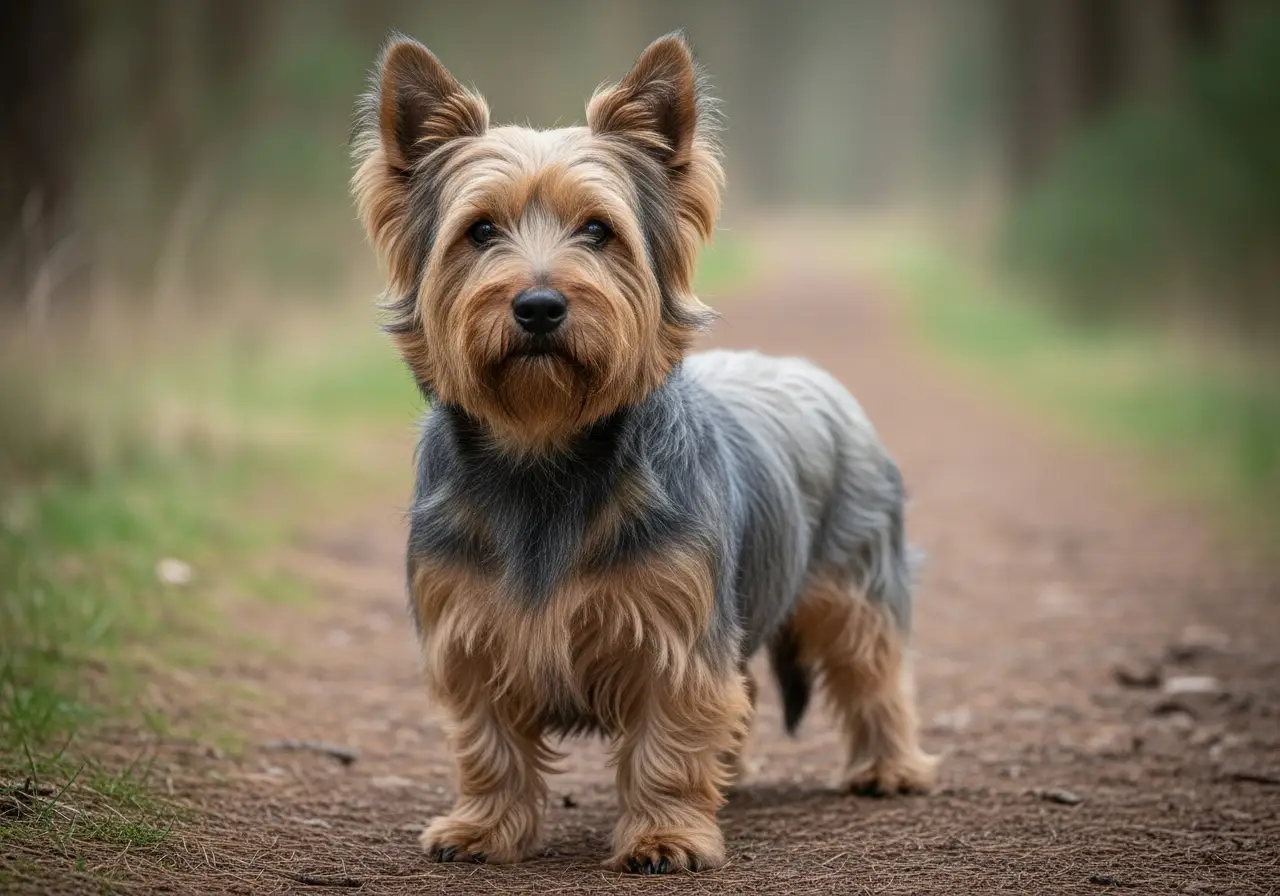
The Skye Terrier is one of the oldest Scottish terrier breeds and counts today among the rarest dogs worldwide. Behind the long, silky coat lies a self-confident, independent character with pronounced prey drive and deep bond to few key people. The breed demands consistent leadership, regular grooming, and an owner profile that understands terrier traits not as faults but as core nature.
02Introduction
What makes the Skye Terrier special
Skye Terrier: one of the rarest terriers from Scotland, loyal and courageous with a long coat and short legs
03Profile
Key facts and suitability
- Origin
- Schottland
- Original purpose
- Badger hunting
- FCI
- No. 75 · Group 3 · Section 2
- height at the withers
- 23–25 cm
- Weight
- 16–18 kg
- Life expectancy
- 12–15 Years
- Coat type
- Long-haired
- Minimum exercise
- 45 min/day
- Puppy price
- 2'000–3'500 CHF
- Waiting period
- 6 months
- Sports
- Earthdog work
04Temperament
How the Skye Terrier shows up in everyday life
When returning home, the Skye Terrier greets its primary caregiver with genuine joy, calmly but clearly. It approaches an unknown visitor with distance and observation. This is not a behavioural error but the FCI standard in practice: ‘suspicious of strangers, but never malicious.’
Internally, what the dog needs: The Skye Terrier has a moderate need for social contact. It wants to be near its primary caregiver but does not demand permanent interaction. It can stay alone for up to four hours if this has been built up gradually. Mental work and nose work challenge it more than pure running distances. On a walk, any movement in the undergrowth immediately attracts it; the prey drive is active and cannot be trained away, only managed.
Externally, how the dog reacts: It remains reserved towards strangers, even after repeated contact. Trust grows slowly and must be earned. Towards other dogs, it appears self-confident; with unknown conspecifics, it can react assertively, especially if it feels pressured. Small animals in the household are a risk factor due to the pronounced prey drive.
In everyday life, this means: the Skye Terrier does well in calm, structured households. Loud, unpredictable environments (frequent visitors, changing key people, restless children) cause stress. Anyone who fails to distinguish between these two axes (strong bond inwardly, reserve outwardly) systematically underestimates the breed.
05Needs
What this breed needs daily
The Skye Terrier requires 60 to 90 minutes of active exercise daily, divided into at least two sessions. Simple walks are not enough; the dog needs terrain that engages it: forest, meadow, uneven ground. Off-leash walking is only sensible in secure areas, as the prey drive is strongly pronounced and the dog cannot be reliably recalled upon sight of game or small animals.
Mental stimulation has at least the same importance as physical exercise. Nose work, search games, and fetching exercises challenge the Skye Terrier in a way that makes it calm and balanced in the evening. Monotonous repetitions bore it; training must remain variable and consistent.
Training requires patience and clear structures. The Skye Terrier questions instructions it cannot understand or that are communicated inconsistently. Positive reinforcement works; pressure and harshness lead to withdrawal or stubbornness. A dog training school with terrier experience is recommended, especially in the first months.
The long coat requires care several times a week: brushing, combing, checking for tangles, especially behind the ears and on the legs. Regular baths and professional trimming complement basic grooming. Anyone who underestimates this time investment risks skin problems under the dense coat.
Due to the long spine, stairs, jumps from greater heights, and extreme stress in everyday life should be minimised. This is not a restriction on quality of life, but preventive keeping.
Exercise
Medium
mental work
Medium
Social needs
Medium
training
Demanding
06Sport & Mental and Physical Stimulation
What sports the Skye Terrier is suited for
Realistic in terms of physiology and genetics – not every breed suits every sport.
Structurally and physiologically suitable: no jumping sports (risk of slipped disc) · Suitable for mantrailing, dummy work and tracking.
07Quick Check
08Suitability
Who this breed is suitable for – and who it isn't
✓Matches
The Skye Terrier suits owners with terrier experience who seek a close, exclusive bond with a dog and are prepared to build this bond long-term and consistently. Specifically: individuals or couples with a calm household who can ensure 60 to 90 minutes of active exercise daily and enjoy grooming.
Families with children from about ten years old are suitable if all family members handle the dog calmly and respectfully and leadership is clearly vested in one person. A garden is helpful but not essential; daily stimulation is decisive.
Owners who rarely receive visitors or whose social circle is stable and familiar to the dog cope well with the breed-typical distrust of strangers. Anyone prepared to introduce new people slowly and structured will experience a dog that builds trust deeply and durably.
The breed is also suitable for people living in rural or quiet urban environments who can regularly provide the dog with access to terrain with stimuli, without unsupervised off-leash exercise.
×Doesn't match
The Skye Terrier does not suit owners looking for an amiable, socially open dog that is friendly and immediately accessible towards strangers. Anyone who views the distrust of unknown people as a temporary problem that will "grow out of it" fundamentally underestimates the nature of this breed.
The breed is not suitable for first-time dog owners without guidance from an experienced dog training school; the independence of the Skye Terrier demands leadership competence that does not reveal itself intuitively. Anyone who misunderstands consistency as harshness or gives in to resistance loses leadership permanently.
Households with small animals such as rabbits, guinea pigs, or cats unfamiliar to the dog carry a real risk due to the active prey drive. Households with very young children who act unpredictably on the dog are also unsuitable.
Anyone who has little time for grooming or cannot actively reduce spinal stress from frequent stairs and jumps should critically assess ownership. And: anyone looking for a dog that quickly and uncomplicatedly adapts to changing everyday situations will not be happy with the Skye Terrier.
10Line reality
Show line, working line, breeder market
The Skye Terrier is kept exclusively as a companion dog and in show breeding today. An active separation into working lines and show lines, as exists with other terrier breeds, is not pronounced in this breed due to the extremely small breeding population.
The FCI standard classifies the breed in Group 3, Section 2 (Lowland Terriers), without a working test. This means: conformation shows are the primary framework for breeding. Breeders align with standard specifications regarding proportions, coat, and temperament, rather than performance tests.
Nevertheless, differences in emphasis exist within the small breeding community: some lines place greater focus on type consistency and coat quality for the show ring, others on depth of character and suitability for everyday life. As the total number of puppies in Germany is under 30 per year, these differences should be understood less as a formal separation of lines and more as breeder-specific focuses within a very small community.
Interested parties should specifically ask breeders about the temperament type of the parent dogs, rather than relying solely on show success as a quality indicator. Temperament, health screenings, and socialisation of the puppies are the decisive criteria.
11Health · Reality
What you need to plan for medically with your Skye Terrier
The life expectancy of the Skye Terrier is between 12 and 15 years, a typical range for low-slung terriers. Reliable breed-specific health statistics are difficult to obtain due to the very small breeding population; the available data comes predominantly from breed club surveys and British Kennel Club reports.
The greatest breed-typical health risk is Skye Terrier Disease, also known as hepatoportal microvascular dysplasia (MVD), a liver disease that occurs frequently in the breed and can lead to growth disorders and liver failure. Affected puppies often show symptoms early on, such as slowed growth and lethargy. Reputable breeders have breeding stock tested for this condition.
Due to the long spine and short legs, there is an increased risk of disc disease (chondrodystrophy-associated IVDD). Stairs, jumping, and overweight significantly increase this risk. A study by the Kennel Club (UK, 2014) identified disc problems as a relevant health burden in low-slung breeds of this body shape.
Recommended preventive examinations include: liver examination (MVD screening) for puppies and breeding animals, regular spinal checks by the vet from the 5th year of life onwards, as well as eye examinations, since progressive retinal atrophy (PRA) is documented in the breed.
The long coat predisposes to skin problems if care is neglected; eczema and fungal infections under the dense undercoat are avoidable if brushing and checking are carried out consistently.
12Structured data
Health by the numbers
Prone to diseases
Back problems Eye problems Liver diseases
Recommended health tests
Spinal X-rays Eye examination Liver examination
13Myths ↔ Reality
What is often said incorrectly about this breed
Five myths, five realities, five sources.
‘The Skye Terrier is a high-maintenance fashion dog without real character due to its long coat.’
The Skye Terrier’s coat is historically functional: it protected the dog from weather and injuries during earthdog hunting in rough terrain. The character is distinctly terrier-typical, self-confident, determined, with an active prey drive. The breed was not bred for the salon but for physically demanding work in the Scottish Highlands.
‘A Skye Terrier that is reserved towards strangers has been poorly socialised.’
The FCI standard explicitly describes the Skye Terrier as suspicious of strangers; this is not a socialisation deficit but a genetically ingrained trait. The breed was developed as a guard and hunting dog that judges independently. Early socialisation can moderate reactions, but the basic suspicion towards unknown people remains typical for the breed.
‘Due to its short legs, the Skye Terrier requires little exercise.’
The short legs are an anatomical adaptation for earthdog hunting, not an indication of low exercise needs. The Skye Terrier requires 60 to 90 minutes of active exercise daily, as well as mental stimulation. Under-stimulated individuals develop behavioural issues such as excessive barking or destructive behaviour. Body size and workload requirements do not directly correlate in terriers.
‘The Skye Terrier is a one-person dog and therefore unsuitable for families.’
The close bond with few primary caregivers does not preclude family life, but requires all family members to handle the dog consistently. Children must treat the dog respectfully; the breed tolerates unpredictable interactions poorly. In structured family households with terrier experience, keeping the dog works well, provided there is clear leadership from all involved.
‘Greyfriars Bobby was a Skye Terrier, so the breed is particularly obedient and easy to handle.’
Bobby’s loyalty to his deceased owner demonstrates the exceptional depth of bond characteristic of the breed, not its trainability. The Skye Terrier questions inconsistent handling and acts independently; both are terrier traits that were vital for survival in earthdog hunting. Obedience in the sense of on-demand compliance must be achieved over the long term and consistently.
14animal welfare
The animal welfare perspective
Breeder market, designer versions, animal shelter reality — what no one writes in the puppy ad.
The Skye Terrier is one of the most endangered native dog breeds in Great Britain. The Kennel Club has listed it for years on the list of "Vulnerable Native Breeds", breeds with fewer than 300 registrations per year in Great Britain. In Germany, the annual number of puppies is under 30. This rarity has direct consequences for the market.
Backyard breeders and dubious suppliers are not a mass phenomenon with this breed; the breeding population is too small for commercial puppy trading to be worthwhile. However, this does not mean that the market is free from problems. Occasionally, puppies are imported from abroad whose origin and health status are difficult to trace. Differences in diligence regarding health checks and socialisation also exist within the small breeding community.
Designer versions or crosses with the Skye Terrier as a base are currently not a relevant market phenomenon. The breed is simply too unknown and too rare to serve as starting material for trend breeders.
Breeding- and keeping-related problems mainly affect the spine: overweight and incorrect living conditions (frequent stairs, jumping) demonstrably increase the risk of IVDD. Owners bear direct responsibility here. Anyone keeping a Skye Terrier in a multi-storey household should use ramps and climbing aids consistently.
Adoption as an option: Since the Skye Terrier is practically non-existent in animal welfare, the path to a dog of this breed leads almost exclusively through reputable breeders. Anyone who nevertheless wishes to take in an older dog can inquire with the Klub für Terrier e.V. or the Schweizer Club für Terrier SCFT about returned dogs or dogs given up; this is rare but possible and is an equivalent option to taking in a puppy.
15Costs · Transparency
What this breed realistically costs
A puppy from a reputable breeder costs between 1,500 and 2,500 EUR or CHF in Germany and Switzerland. Offers significantly below this should be critically examined; with such a rare breed, low prices are often an indication of missing health checks or unclear origin.
Annual living costs amount to approximately 2,000 to 3,500 EUR, depending on food quality, care effort, and health status. The coat requires care several times a week and professional trimming two to three times a year; costs of 150 to 300 EUR per session are realistic.
Average vet costs: Basic care (vaccinations, parasite prevention, annual check-up) amounts to 300 to 600 EUR per year. In addition, possible costs for spinal diagnostics (X-ray: 150 to 400 EUR) or liver examinations (MVD screening: 200 to 500 EUR) may arise. Pet insurance costs between 50 and 120 EUR monthly depending on the provider and scope of benefits and is recommended for this breed due to the known health risks.
Total costs over the lifespan (12–15 years) can amount to 30,000 to 55,000 EUR, a realistic framework that should be known before making a decision.
16Puppy search
What you need to consider when choosing a breeder
- As the Skye Terrier is one of the rarest dog breeds in Germany and Switzerland, waiting times of one to two years are no exception.
- Reputable breeders can be found via the Club for Terrier e.V.
- (kft-online.de) and the Swiss Club for Terrier SCFT (terrierclub.ch); both associations maintain breeder lists and facilitate contacts.
- Characteristics of reputable breeding: The parent animals were tested for MVD (hepatoportal microvascular dysplasia) and progressive retinal atrophy.
- The breeder shows puppies only after the fifth week of life and releases them no earlier than eight weeks old.
- On-site visits to the breeder are possible and welcome.
- The breeder asks questions about the living conditions and rejects buyers who do not suit the dog.
- Warning signs: puppies without pedigree, missing health certificates of the parents, immediate availability without a waiting list, sale via animal markets or platforms without proof of breeding.
- Adoption is an equally valid option: occasionally, returners or older dogs can be requested through the breeding associations.
- This is rare but possible and often a sensible alternative to a puppy for experienced owners.
FAQ
Frequently asked questions about the Skye Terrier
Is Skye Terrier a family dog?
Skye Terrier is considered suitable for families with good socialisation and species-appropriate care.
How much exercise does Skye Terrier need?
At least around 45 minutes of exercise per day.
Does Skye Terrier suit an apartment?
With enough exercise and enrichment, Skye Terrier can also be kept in an apartment.
What is the size and weight of Skye Terrier?
Fully grown, Skye Terrier reaches about 23–25 cm at the withers and weighs around 16–18 kg.
What is the life expectancy of Skye Terrier?
The life expectancy of Skye Terrier is approximately 12–15 years.
Which diseases are common in Skye Terrier?
Back problems Eye problems Liver diseases
17Breed clubs
Official breed clubs in DACH
19Related
Similar breeds – and their differences
You might also be interested in

Participate
Do you have a good photo of your Skye Terrier?
We are looking for expressive images for our breed profiles. Submit yours; the editorial team reviews every submission before publication.
Does this breed suit you?
Rare Scottish terrier – stubborn and with long hair that must be regularly groomed