
01Summary
In a paragraph
If you only have 30 seconds.
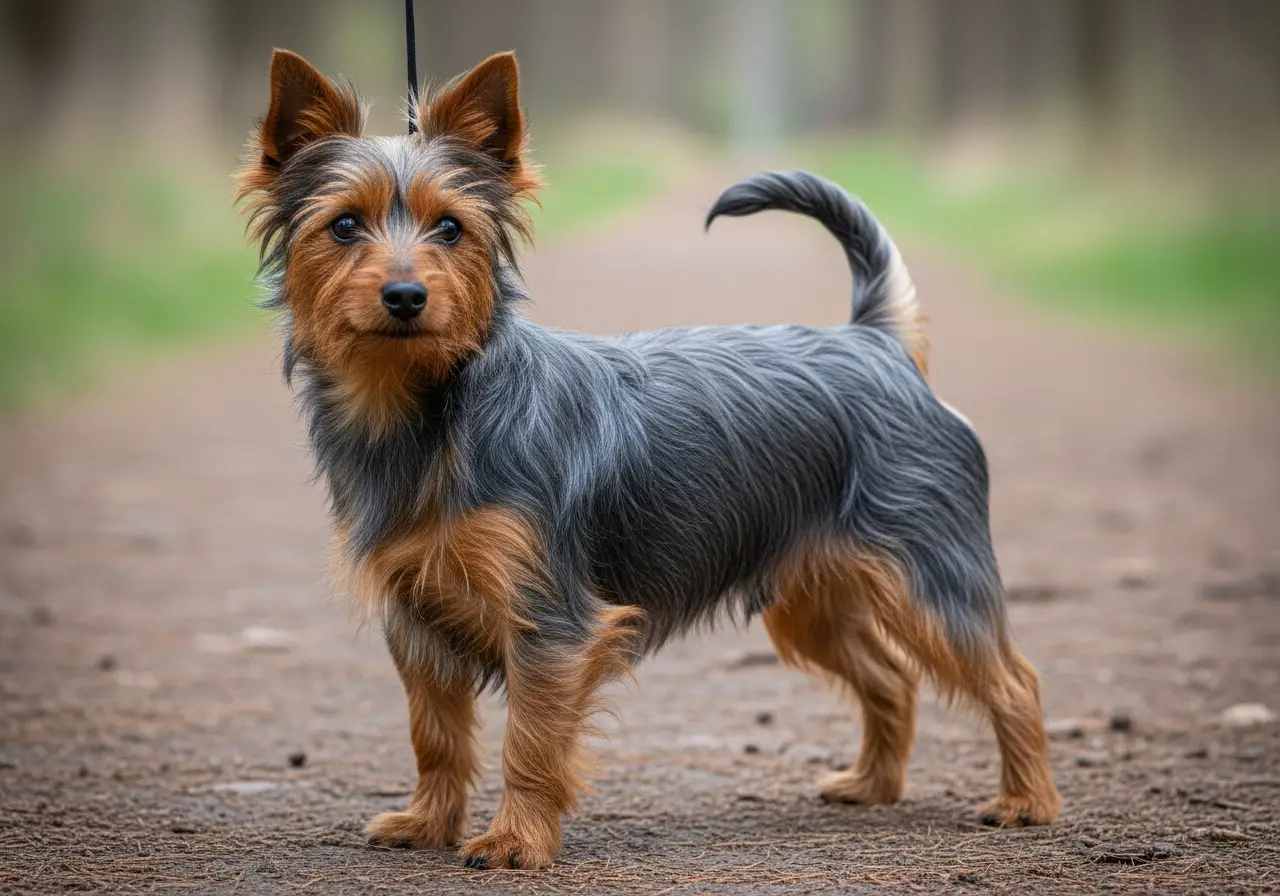
The Australian Silky Terrier looks like a lap dog and thinks like a working terrier. The silky coat is deceptive: Behind the elegant appearance lies an alert, self-assured dog with a pronounced prey drive and clear territorial awareness. Anyone keeping this breed needs consistency, time for daily mental and physical stimulation, and willingness to perform regular grooming. Beauty and substance do not exclude each other here; they are interdependent.
02Introduction
What makes the Australian Silky Terrier special
The Australian Silky Terrier is a delicate Australian terrier, FCI Group 3, with a blue silky coat and a withers height of 23–26 cm.
03Profile
Key facts and suitability
- Origin
- Australien
- Original purpose
- Companion dog, pest control
- FCI
- No. 236 · Group 3 · Section 4
- height at the withers
- 23–26 cm
- Weight
- 3–5 kg
- Life expectancy
- 12–15 Years
- Coat type
- Long-haired
- Minimum exercise
- 30 min/day
- Puppy price
- 1'200–2'000 CHF
- Waiting period
- 9 months
- Sports
- Agility · Obedience
04Temperament
How the Australian Silky Terrier shows up in everyday life
When you come home, the Australian Silky Terrier greets its primary caregiver with clear attention; it registers every change in the room, every visitor, every noise from outside. This guarding behaviour is not a mistake, but an expression of its typical terrier temperament.
Internally, the Silky Terrier requires a high degree of social closeness to its primary caregiver. It actively seeks contact, follows you through the apartment and wants to be included in daily routines. At the same time, it is not a dog that passively consumes affection; it demands enrichment if it is under-stimulated.
Externally, it behaves reservedly towards strangers initially. Friendliness towards unknown people is in the middle range: it is neither aggressive nor overly open. These two poles (high need for social contact with the primary caregiver, reserve towards strangers) must not be confused. A Silky that is closely bonded to its owner does not mean that it warmly welcomes every visitor.
On a walk, the prey drive becomes clearly apparent: small animals, birds or rustling leaves immediately activate its attention. A reliable recall requires consistent training over months. On the lead, it shows endurance and curiosity; off-lead areas without security are only suitable with a reliable recall.
With conspecifics, it is compatible if socialised early, but can assert itself towards dogs of the same sex. Towards small animals in the household, the prey drive remains a permanent risk that requires consistent separation.
05Needs
What this breed needs daily
The Australian Silky Terrier needs at least 60 minutes of active exercise daily. This session should not consist exclusively of walks on the lead; sniffing rounds, search games or controlled off-lead time on secure terrain meaningfully complement the programme.
Mental stimulation is not an optional addition for this breed, but a basic requirement. Nose work, trick training and small fetching tasks correspond to its working background. A Silky Terrier that is only physically exercised without receiving mental work will develop signs of frustration such as excessive barking or destructive behaviour.
Being left alone should be built up gradually. Up to four hours are realistic for a well-socialised Silky Terrier; longer absences without preparation and habituation lead to stress symptoms. Dog care or a daily structure with a midday walk should be planned in case of full-time employment.
Grooming is an independent time factor: daily brushing prevents matting, regular trimming or clipping every six to eight weeks is necessary. Anyone who underestimates this effort risks skin problems and discomfort for the dog.
Training requires consistency and patience. The Silky Terrier learns quickly, but also quickly tests whether rules really apply. Positive reinforcement combined with clear structure shows the best results. Attending a dog training school during the puppy and young dog phase is recommended.
Exercise
Medium
mental work
Medium
Social needs
High
training
Medium
06Sport & Mental and Physical Stimulation
What sports the Australian Silky Terrier is suited for
Realistic in terms of physiology and genetics – not every breed suits every sport.
Structurally and physiologically suitable: Suitable for mantrailing, dummy work and tracking.
07Quick Check
08Suitability
Who this breed is suitable for – and who it isn't
✓Matches
The Australian Silky Terrier suits people or families who can plan at least 60 minutes of active exercise daily as well as additional enrichment sessions. Suitable are active individuals or couples who appreciate an alert, strongly bonded dog with personality and are prepared to train consistently.
Families with children from around eight years of age are suitable, provided that the handling of the dog is respectful and calm and supervision is ensured. Toddlers and the Silky Terrier require special attention, as the dog may react to loud, unpredictable movements by withdrawing or showing defensive behaviour.
Owners who have already gained experience with self-assured or typically terrier-like dogs will find a keen-to-learn, attentive companion in the Silky Terrier. First-time owners are not excluded as such, but they need to be willing to inform themselves professionally and use a dog training school consistently.
Keeping the dog in an apartment is possible if daily mental and physical stimulation is ensured. Both city and country living are equally suitable. Owners who regularly receive visitors should factor the dog's initial reserve towards strangers into their daily planning and actively work on socialisation.
×Doesn't match
The Australian Silky Terrier is not suitable for people looking for a purely decorative companion dog without significant training effort. Anyone who perceives the silky coat as the main feature and ignores the terrier character behind it will be permanently overwhelmed by this dog.
Households in which the dog regularly spends more than four hours a day alone, without a care solution existing, are unsuitable. The high need for social contact of the Silky Terrier is incompatible with long, unstructured absences.
People who keep small animals such as rabbits, guinea pigs or birds and cannot ensure consistent separation should not choose this breed. The pronounced prey drive is genetically anchored and cannot be trained away.
Anyone looking for a dog whose coat requires little grooming effort will be surprised by the daily brushing requirement and regular trimming appointments. The Silky Terrier's coat looks elaborate, and it is.
Families with very young children who cannot yet assess how they should behave towards a dog should postpone their decision. The Silky Terrier reacts to unpredictable interactions by withdrawing or showing defensive behaviour.
10Line reality
Show line, working line, breeder market
The Australian Silky Terrier is today primarily bred worldwide as a companion dog. A pronounced differentiation between working lines and show lines, as exists in larger utility dog breeds, is not established in this breed.
Differences can nevertheless be observed within breeding: breeders focused on exhibition success place the emphasis on coat quality, body structure and proportions according to the FCI standard. Breeders with a stronger focus on temperament and health additionally check for patellar luxation and tooth alignment.
As the breed is very rare in Germany and Switzerland, there is no broad breeder community with clearly differentiated lines. Interested parties should specifically look for breeders who document health examinations and provide puppies with traceable socialisation. The Club for Terriers e.V. (KfT) is the responsible breeding organisation in Germany and maintains a stud book.
Imported dogs from Australia, Great Britain or the USA can vary slightly in character and body structure, as breeding standards are weighted differently regionally. Anyone importing a Silky Terrier from abroad should check the health documentation particularly carefully.
11Health · Reality
What you need to plan for medically with your Australian Silky Terrier
The Australian Silky Terrier is considered a robust breed with a life expectancy of 12 to 15 years. This places it in the upper range among small terrier breeds.
Patellar luxation is the most frequently documented orthopaedic condition in this breed. Studies show a prevalence of up to 25% in small terrier breeds in general (Breitschwerdt et al., JAVMA). Breeders who have their dogs tested for patellar luxation demonstrably reduce this risk. When purchasing a puppy, the testing of both parent dogs should be documented.
Dental problems are common in small dog breeds: tartar, gingivitis and retained deciduous teeth occur above average. Regular dental care from puppyhood and annual veterinary dental check-ups are recommended.
Overweight is an underestimated risk in Silky Terriers. Due to their small body size, even 200–300 g of excess weight has a significant proportional impact on joints and metabolism. Portion control and regular weighing are sensible preventive measures.
Preventive examinations that owners should plan for: annual general check-up, dental check-up, weight monitoring, and orthopaedic assessment in case of signs of lameness. Eye diseases are not documented as a breed-specific focus for this breed, but should be assessed as part of the routine examination. Status of information: 2024.
12Structured data
Health by the numbers
Prone to diseases
Tracheal collapse, Legg-Calvé-Perthes disease, diabetes, intervertebral disc disease
Recommended health tests
X-ray of the spine, blood count
13Myths ↔ Reality
What is often said incorrectly about this breed
Five myths, five realities, five sources.
“The Silky Terrier is a lap dog without significant exercise needs.
The Australian Silky Terrier needs at least 60 minutes of active exercise daily as well as additional mental stimulation. Its working background as a pest controller is genetically anchored. A dog kept exclusively on the sofa often develops behavioural issues such as excessive barking or destructive behaviour.
“The silky coat of the Silky Terrier is low-maintenance and largely cares for itself.
The long, silky-smooth coat of the Silky Terrier tangles quickly without regular care. Daily brushing as well as regular trimming or clipping are necessary to avoid skin problems and matting. The care effort is comparable to that of a Yorkshire Terrier.
“The Silky Terrier gets along easily with small animals such as rabbits or guinea pigs.
The Australian Silky Terrier has a pronounced prey drive, which is particularly strong towards small animals. Keeping them together with rodents, rabbits or birds without consistent separation and supervision is not risk-free. This drive can be reduced through training, but not completely suppressed.
“As a small dog, the Silky Terrier is automatically suitable for beginners.
A dog’s size tells little about the effort required for its training. The Silky Terrier shows typical terrier independence and consistently tests boundaries. Without clear rules and structured training, it quickly develops dominant guarding behaviour or excessive barking. Experience in dealing with confident dogs is an advantage.
“The Silky Terrier is suitable for any living situation due to its size.
Keeping a dog in an apartment is possible, but requires sufficient daily stimulation. A dog of this breed in a small apartment without regular walks, play sessions and mental work will develop signs of frustration. The size of the apartment alone is not a criterion for suitability.
14animal welfare
The animal welfare perspective
Breeder market, designer versions, animal shelter reality — what no one writes in the puppy ad.
The Australian Silky Terrier is one of the rare breeds in Germany and Switzerland. This low prevalence has two sides: On the one hand, there is no broad backyard breeder market with questionable production conditions, as seen with more popular breeds. On the other hand, the rarity tempts some suppliers to offer puppies without studbook registration or with unclear origins at inflated prices.
Anyone looking for a Silky Terrier on classifieds portals should check particularly carefully: if the pedigree is missing, no breeder association is specified, or the puppy is offered immediately without a waiting period, these are warning signs. Imports from Eastern European puppy mills have also been documented even for rare breeds.
Designer versions of the Silky Terrier, such as crosses with other small breeds under new fantasy names, can occasionally be found on the market. These dogs are not subject to studbook registration and offer no guarantee of health checks for the parent animals.
Breeding- and keeping-related problems are less dramatic in this breed than in brachycephalic breeds, but not absent: patellar luxation due to insufficient selection and overweight due to underestimating the need for exercise are real risks.
Adopting adult Silky Terriers through animal welfare organisations or purebred dog rescue associations is a fully valid alternative to buying a puppy. Adult dogs come with a known character, are often already house-trained and socialised. Anyone willing to forgo a puppy will often find in adoption a dog that fits their daily life very precisely. Breed-knowledgeable adoption agencies and the KfT can assist with the search.
15Costs · Transparency
What this breed realistically costs
A puppy from a reputable breeder with a pedigree costs between 1,200 and 2,000 EUR in Germany. Offers significantly below this without studbook entry should be treated with caution. Due to the low prevalence of the breed, waiting periods should be planned for.
The annual living costs consist of: food (high-quality wet food or dry food for small breeds) approx. 400–700 EUR/year, grooming (stripping or clipping every 6–8 weeks at the groomer) approx. 600–1,200 EUR/year, basic equipment (leash, collar, transport box, toys) approx. 200–400 EUR one-off.
Average vet costs: annual preventive check-up incl. vaccinations approx. 150–250 EUR. For patellar luxation treatment or surgery, costs of 1,500–3,500 EUR per joint can arise. Pet insurance for small dogs of this breed costs approx. 30–60 EUR/month (depending on provider and scope of cover, as at 2024).
Dog tax varies by municipality: in German cities between 60 and 150 EUR/year. Dog liability insurance approx. 40–80 EUR/year. Anyone who realistically sums up all cost items comes to total annual costs of at least 1,500–3,000 EUR, excluding extraordinary vet costs.
16Puppy search
What you need to consider when choosing a breeder
- Reputable breeders of the Australian Silky Terrier can be found in Germany via the Klub für Terrier e.V.
- A reputable breeder has parent dogs tested for patellar luxation and dental health, documents the results, and releases puppies no earlier than eight weeks of age.
- Concrete indicators of reliability: The breeder asks questions about the living situation, allows a visit to the litter in its familiar environment, and shows both parents or at least the mother.
- Sales contracts with a buy-back guarantee are another quality feature.
- Warning signs: Puppies that are available immediately without a waiting period, offers without a pedigree or with unclear origins, and prices significantly below the market average.
- Due to the low prevalence of the breed, waiting times of several months to over a year are realistic.
- Adoption through animal welfare organisations or purebred dog rescue associations is an equally valid option.
- Adult dogs from adoption come with a known character and are often already socialised.
- Breed-knowledgeable adoption agencies can specifically search for Silky Terriers.
- Anyone open to this option should inquire directly with the KfT or animal welfare organisations with a breed focus.
FAQ
Frequently asked questions about the Australian Silky Terrier
Is Australian Silky Terrier suitable for beginners?
Australian Silky Terrier is considered suitable for first-time dog owners.
Is Australian Silky Terrier a family dog?
Australian Silky Terrier is considered suitable for families with good socialisation and species-appropriate care.
How much exercise does Australian Silky Terrier need?
At least around 30 minutes of exercise per day.
Does Australian Silky Terrier suit an apartment?
With enough exercise and enrichment, Australian Silky Terrier can also be kept in an apartment.
What is the size and weight of Australian Silky Terrier?
Fully grown, Australian Silky Terrier reaches about 23–26 cm at the withers and weighs around 3–5 kg.
What is the life expectancy of Australian Silky Terrier?
The life expectancy of Australian Silky Terrier is approximately 12–15 years.
Is Australian Silky Terrier suitable for allergy sufferers?
Australian Silky Terrier is considered relatively hypoallergenic. There’s never a guarantee — test direct contact beforehand.
Which diseases are common in Australian Silky Terrier?
Tracheal collapse, Legg-Calvé-Perthes disease, diabetes, intervertebral disc disease
17Breed clubs
Official breed clubs in DACH
19Related
Similar breeds – and their differences
You might also be interested in

Participate
Do you have a good photo of your Australian Silky Terrier?
We are looking for expressive images for our breed profiles. Submit yours; the editorial team reviews every submission before publication.
Does this breed suit you?
Elegant small terrier with a silky coat. Despite its small stature, it is a true terrier – curious and self-confident. Well suited for city life.