4 sourcesReviewed on December 10, 2021Responsible editor: Roger KleinText: Roger Klein
01Summary
In a paragraph
If you only have 30 seconds.
The Jämthund, officially known as the Swedish Elkhound, is a Nordic hunting dog that has been selected over centuries for independent elk and bear hunting. This genetic mandate remains fully active today. Anyone keeping the breed without a hunting context or without intensive alternative stimulation underestimates a dog that makes independent decisions before the owner has even reacted.
02Introduction
What makes the Swedish Elkhound special
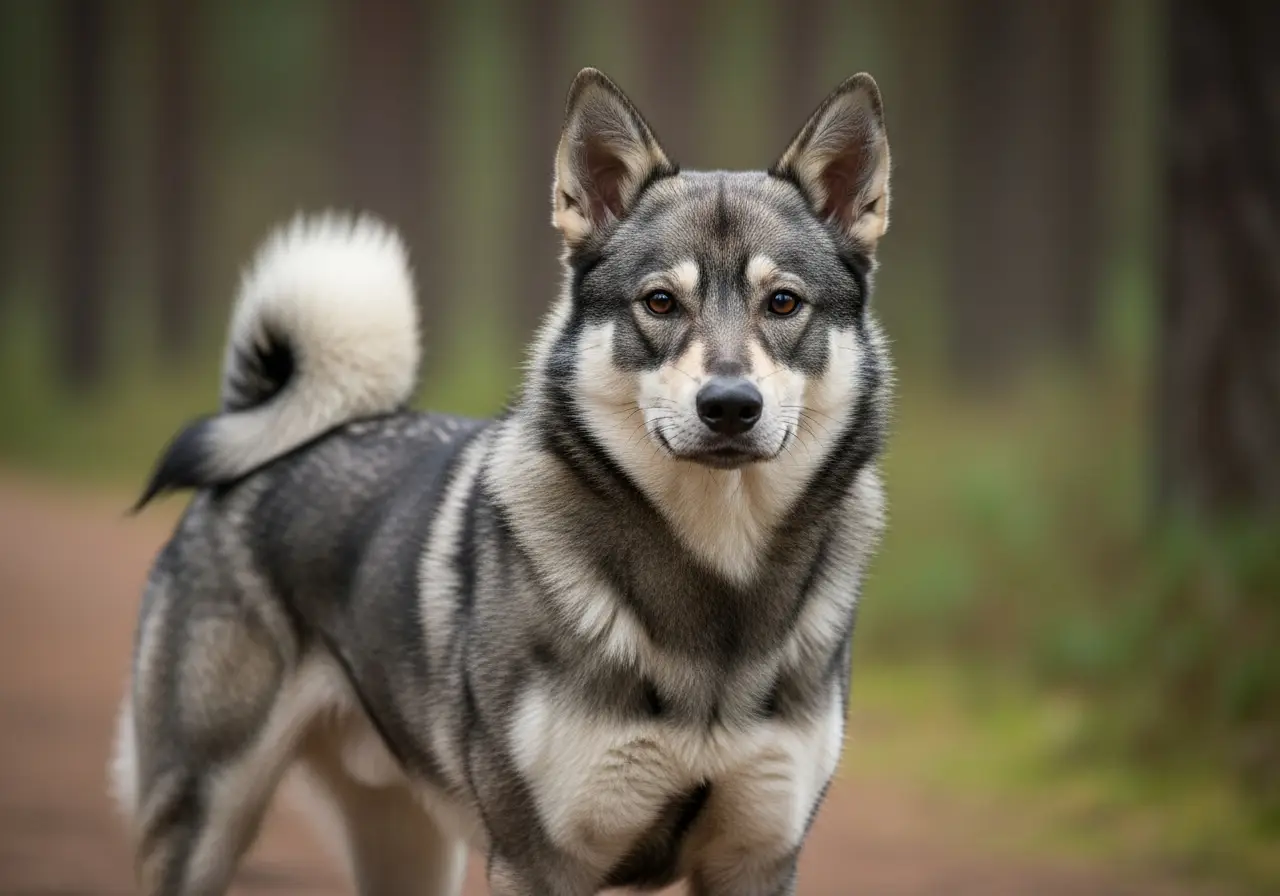
Swedish Elkhound (Jämthund): sturdy Nordic spitz, bred for elk and bear hunting with strong self-drive
03Profile
Key facts and suitability
- Origin
- Schweden
- Original purpose
- Elk hunting
- FCI
- No. 42 · Group 5 · Section 2
- height at the withers
- 52–65 cm
- Weight
- 20–30 kg
- Life expectancy
- 12–13 Years
- Coat type
- Doppel
- Minimum exercise
- 120 min/day
- Puppy price
- 1'000–2'000 CHF
- Waiting period
- 5 months
- Sports
- Scent work Mantrailing
04Temperament
How the Swedish Elkhound shows up in everyday life
The morning walk shows what distinguishes the Jämthund from many other dogs: It actively scans the surroundings, picks up scents, and makes independent decisions about which stimulus deserves attention. This is not disobedience; this is its genetic mission.
At home, the Jämthund requires a great deal of exercise, nose work, and mental stimulation. An owner who walks through the park for 45 minutes in the morning and takes a lap around the house in the evening will experience a permanently under-stimulated dog. The need for social contact is moderate; the Jämthund seeks closeness to its primary caregivers without being intrusive. Being left alone is possible for up to four hours if it has been built up early and systematically.
Towards strangers, the Jämthund reacts with reserve. These two traits, a high need for social contact within the family and simultaneous distance towards unknown people, must not be confused. A Jämthund that closely accompanies its owner is not a dog that warmly greets every visitor.
When game scent comes into play, the Jämthund switches to a mode that is hardly interruptible by calling alone. Barking (originally the means to hold down game) can also occur loudly and persistently in everyday life, for example when excited or under-stimulated. In a residential area with thin walls, this is a relevant factor. The Jämthund requires secure terrain and an owner who knows these reactions and can assess them.
05Needs
What this breed needs daily
The Jämthund needs at least 90 to 120 minutes of active exercise daily, and this does not mean a moderate walk on a lead, but exercise with a stimulating character: terrain runs, bikejoring, mantrailing, tracking work, or hunting-related activities.
Mental stimulation is equivalent to physical exercise. The need for mental work is high. Nose work in the form of search games, tracking, or structured mantrailing covers part of this need. Without regular mental work, frustration arises, which can manifest as vocalisation, destruction, or hyperactivity.
A securely fenced area is not a recommendation, but a basic prerequisite. The pronounced prey drive makes off-leash walking in unsecured terrain permanently risky, regardless of training level. A fence with a minimum height of 180 cm and a secured bottom edge should be realistically planned.
The need for social contact towards the reference group is present; the Jämthund wants to be part of everyday life, not kept in a kennel or alone permanently. Being left alone is possible for up to four hours if it has been built up gradually and early. Longer absences without a care solution are incompatible with the needs of this breed.
Experience with hunting-motivated dogs is not an optional additional qualification. The Jämthund requires a primary caregiver who knows its joy in making decisions, can assess it, and leads it with consistent, clear body language, without pressure but with reliability.
Exercise
Very high
mental work
A lot
Social needs
Medium
training
Demanding
06Sport & Mental and Physical Stimulation
What sports the Swedish Elkhound is suited for
Realistic in terms of physiology and genetics. Not every breed suits every sport.
Structurally and physiologically suitable: Suitable for mantrailing, dummy work and tracking · CaniCross / bikejoring possible.
07Quick Check
08Suitability
Who this breed suits and who it doesn't
✓Matches
The Jämthund suits owners who actively hunt or have access to a comparable hunting-related environment, such as foresters, professional hunters, or owners with access to tracking and mantrailing structures. At least 90 to 120 minutes of daily activity time are non-negotiable, ideally in terrain with a nose work component.
An owner with experience in handling independently working dogs is a prerequisite, not a recommendation. Anyone who has successfully handled a hunting dog, a livestock guardian dog, or another high-drive dog brings the necessary foundation.
The living environment should provide access to extensive, secure terrain. A house with a fenced garden (min. 180 cm) and access to forest or field paths is significantly more suitable than a city apartment. Rural or semi-rural locations in the DACH region correspond to the needs of this breed.
Families with children from about ten years old, in which at least one adult takes on the hunting-related leadership role and brings sufficient time daily, can live with a Jämthund, provided the children are guided in dealing with an independently acting dog. Anyone looking for the breed as a companion dog for calm everyday situations will not find the right profile here.
×Doesn't match
The Jämthund is not suitable for owners who are away from home for more than four hours a day and cannot organise reliable care. Its need for social contact and requirements for mental and physical stimulation are incompatible with long absences without compensation.
First-time dog owners should not choose this breed. The Jämthund requires a primary caregiver who understands, contextualises and structurally supports its prey drive; without this experience, leadership gaps arise that the dog will fill independently.
Urban owners without access to secure terrain and regular field runs systematically underestimate the exercise needs of this breed. A daily city walk does not meet these needs. Anyone who perceives the Jämthund as a calm Northerner because it appears balanced indoors is confusing exhaustion with composure.
Owners looking for an open, friendly dog for social situations (cafés, markets, visitors at home) will be surprised by the Jämthund’s reserved reaction to strangers. Anyone who views this reserve as a problem and attempts to train it away is working against the breed’s nature.
Anyone who regards prey drive as an overridable trait that can be switched off with sufficient consistency should engage intensively with the genetics of hunting-selected dogs before making a decision.
09Related
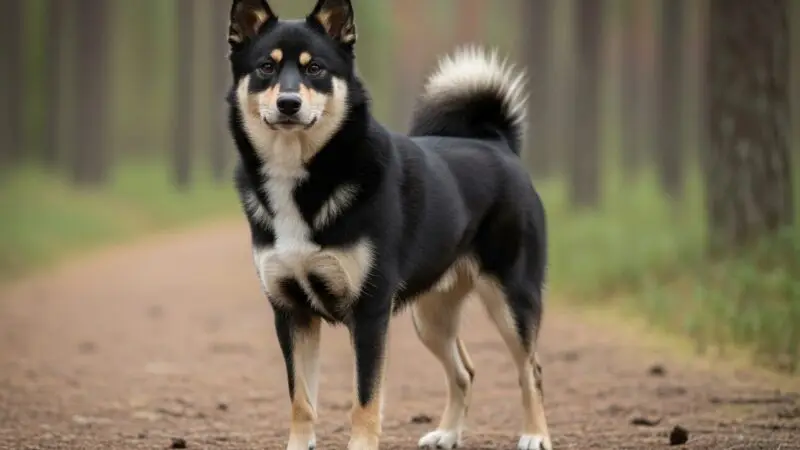
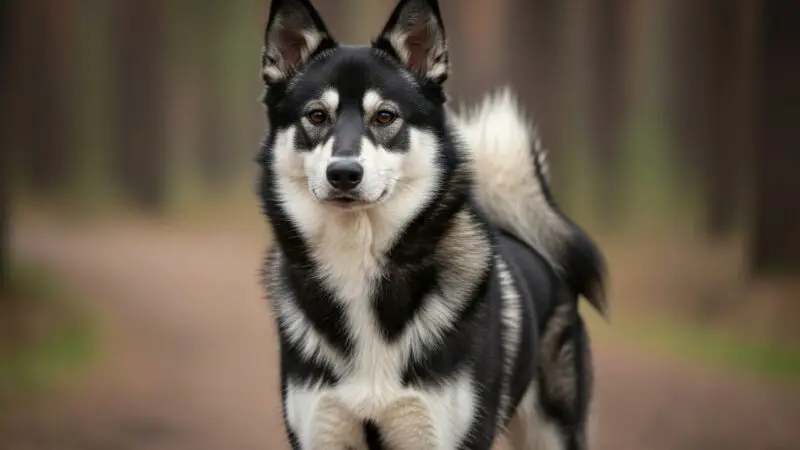
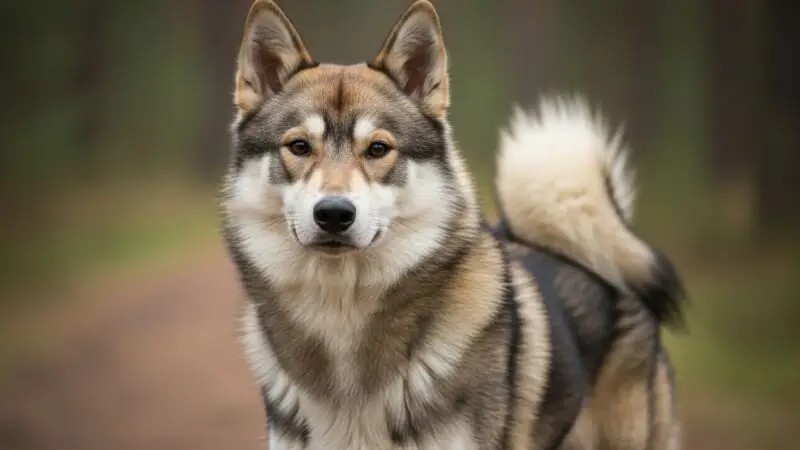
Similar breeds and how they differ
10Line reality
Show line, working line, breeder market
In Scandinavia, the Jämthund is still primarily kept and bred as a working hunting dog today. The separation between working and show lines is less pronounced than in other breeds; in Sweden and Norway, hunting performance and exterior assessment traditionally merge. Working trials are restricted to Nordic countries (Sweden, Norway, Finland) according to the FCI standard and are considered a central breeding criterion.
In the German-speaking region, the breed is very rare. The population is limited to a few breeders who predominantly maintain contact with Scandinavian working lines. A pronounced show line with significantly altered working behaviour has not established itself in the DACH region, which means that puppies from reputable breeding generally come with full prey drive, regardless of whether the owner hunts or not.
Anyone who acquires a Jämthund from a Scandinavian working line is getting a dog whose ancestors actively worked on moose and bears. This genetic heritage is noticeable in everyday life, in its independence, prey drive, and endurance. An owner who knows this line affiliation can develop realistic expectations. Anyone who ignores it will be surprised by the intensity of the dog.
11Health · Reality
What you need to plan for medically with your Swedish Elkhound
Among Nordic hunting dogs, the Jämthund is considered a comparatively robust breed. The average life expectancy is 12 to 13 years, with well-managed, sufficiently stimulated dogs occasionally reaching 14 years.
Relevant health risks include hip dysplasia (HD) and elbow dysplasia (ED). Reliable breed-specific prevalence rates for the Jämthund are difficult to establish due to the small population size in the DACH region. For Nordic hunting dogs of similar size and use, the Society for Kynological Research (GKF) recommends HD/ED X-ray examinations before breeding. Reputable breeders provide X-ray reports for both parent dogs; this should be actively requested when buying a puppy.
As a large, active hunting dog, the Jämthund is prone to injuries during work: paw injuries, muscle strains and cuts from undergrowth are not uncommon in everyday hunting. Regular care checks after field work are advisable.
The dense double coat requires intensive care, particularly during the shedding periods (spring and autumn), to avoid matting and skin problems. Overweight is an underestimated risk in this breed: dogs receiving sufficient stimulation generally regulate their weight well, but under-stimulation combined with unchanged food intake can quickly lead to overweight, stressing the joints. Weight checks by the vet every six months are recommended.
12Structured data
Health by the numbers
Prone to diseases
Hip dysplasia Eye problems
Recommended health tests
Hip X-ray Eye examination
13Myths ↔ Reality
What is often said incorrectly about this breed
Five myths, five realities, five sources.
The Swedish Elkhound is a calm Northerner who is content with moderate walks.
The Jämthund was selected for multi-hour, independent hunting in difficult terrain. Its exercise requirement is at least 90 to 120 minutes of active stimulation daily, plus mental work. A moderate walk does not come close to covering this need. Dogs that are chronically under-stimulated develop pronounced stress behaviour.
The strong prey drive can be completely switched off through consistent training.
The Jämthund's prey drive is genetically hard-wired and has been actively reinforced over generations. Training can structure the handling of it and promote impulse control, but does not eliminate the drive. In contact with game, even well-trained recalls regularly reach their limits. Off-leash exercise without secure terrain remains a permanent risk.
Because the Jämthund is loyal to its family, it is also open and sociable towards strangers.
Family bonding and friendliness towards strangers are two different things. The Jämthund shows loyalty and reliability towards its reference group, but typically reacts neutrally to reservedly towards strangers. This reserve is typical for the breed and not a sign of insufficient socialisation; it should not be confused with openness.
As a working dog from the North, the Jämthund is robust and requires little veterinary preventive care.
Although the breed is considered relatively healthy, large, active hunting dogs are also susceptible to joint problems such as hip dysplasia and injuries during hunting use. Regular orthopaedic checks, especially in puppy and young dog age, as well as preventive examinations by the vet are recommended even for robust breeds.
The Swedish Elkhound is suitable as a family dog because it appears child-friendly and balanced.
The Jämthund can live in a structured family environment with sufficient stimulation. However, its suitability as a family dog does not depend on its basic temperament, but on whether the family can permanently meet its need for exercise and mental engagement. Without hunting or equivalent alternative stimulation, frustration arises, which can have problematic effects in everyday life with children.
14animal welfare
The animal welfare perspective
Breeder market, designer versions, animal shelter reality: what no one writes in the puppy ad.
The Jämthund is a rare breed in the German-speaking region. This means that the market for puppies is manageable, and reputable breeders are known and connected. At the same time, this rarity creates fertile ground for backyard breeders who respond to demand without prioritising breeding health or temperament tests. Anyone looking for a Jämthund should plan for waiting periods of a year or more; this is a sign of reputable breeding, not a problem.
Designer versions or hybrid trends are currently not a relevant issue for the Jämthund. The breed is too rare and too specialised to appear in broader lifestyle trends. This protects it from certain negative developments but also makes it less accessible to owners looking for a quick solution.
The central animal welfare issue with this breed is different: misplacement due to underestimation. Owners expecting a calm Northerner and receiving a strong-driven hunting dog often surrender the dog after just a few months. According to assessments by the SKNH and related clubs, the reasons for surrender are almost always the same: underestimated prey drive, insufficient stimulation, surprise at the dog’s independence. These dogs rarely end up in traditional animal shelters; they are usually rehomed through breed rescue or breeder take-back.
Rehoming an adult Jämthund via a specialised breed rescue is an equivalent option to buying a puppy. Adult dogs show their character more clearly, and experienced rescuers can assess whether the dog and owner are a good match. Anyone open to this option should contact Nordic dog clubs such as the SKNH, where information about dogs available for rehoming is collected.
15Costs · Transparency
What this breed realistically costs
The purchase price for a Jämthund puppy from reputable breeding with pedigree typically ranges between 1,200 and 1,800 euros in the DACH region. Offers significantly below this should be critically examined; missing health checks of the parent animals or rearing under poor conditions are frequent causes for low prices.
Annual living costs consist of food (for a large, active dog approx. 600 to 1,000 euros/year depending on food quality), grooming (accessories and occasional groomer visits approx. 100 to 200 euros/year) as well as basic equipment, leads, collars and accessories.
Veterinary costs vary considerably. Annual preventive examinations, vaccinations and parasite prevention cost approx. 200 to 400 euros/year. Orthopaedic examinations (HD/ED X-rays) cost a one-off approx. 150 to 300 euros. For hunting use, injuries must be planned for; an emergency budget of 1,000 to 2,000 euros is realistic.
A dog liability insurance costs approx. 80 to 150 euros/year for this size class. A health insurance for the dog ranges from 400 to 900 euros/year depending on the tariff and can be sensible for orthopaedic diseases. The total annual costs realistically amount to 1,500 to 3,000 euros, excluding extraordinary veterinary costs.
16Puppy search
What you need to consider when choosing a breeder
- Reputable Jämthund breeders in the DACH region are rare.
- Waiting periods of twelve months or more are normal and not a warning signal; they indicate that the breeder does not produce on demand.
- The following criteria help with assessment: The breeder voluntarily provides hip/elbow dysplasia X-ray reports for both parent dogs.
- The puppies are raised in a household environment, not in kennels.
- The breeder asks counter-questions regarding experience, daily routine and terrain conditions.
- A breeder who accepts every interested party without asking questions is not a good sign.
- Be cautious with offers lacking a pedigree, very short waiting periods and prices significantly below market average.
- Reputable puppy prices for the Jämthund in the DACH region typically range between 1,200 and 1,800 euros.
- Adopting an adult Jämthund through Nordic breed rescue or breeder take-back is a fully valid alternative.
- Adult dogs show their temperament and drives much more clearly than puppies.
- The Swiss Club for Nordic Dogs (SKNH) is a first point of contact for information on breeders and adoptions in the German-speaking region.
FAQ
Frequently asked questions about the Swedish Elkhound
Is Swedish Elkhound a family dog?
Swedish Elkhound is considered suitable for families with good socialisation and species-appropriate care.
How much exercise does Swedish Elkhound need?
At least around 120 minutes of exercise per day. As an active breed, more so — plus mental stimulation.
What is the size and weight of Swedish Elkhound?
Fully grown, Swedish Elkhound reaches about 52–65 cm at the withers and weighs around 20–30 kg.
What is the life expectancy of Swedish Elkhound?
The life expectancy of Swedish Elkhound is approximately 12–13 years.
Which diseases are common in Swedish Elkhound?
Hip dysplasia Eye problems
Participate
Do you have a good photo of your Swedish Elkhound?
We are looking for expressive images for our breed profiles. Submit yours; the editorial team reviews every submission before publication.
Does this breed suit you?
Independent Nordic dog – very hunting-oriented and not suitable for city life