
01Summary
In a paragraph
If you only have 30 seconds.
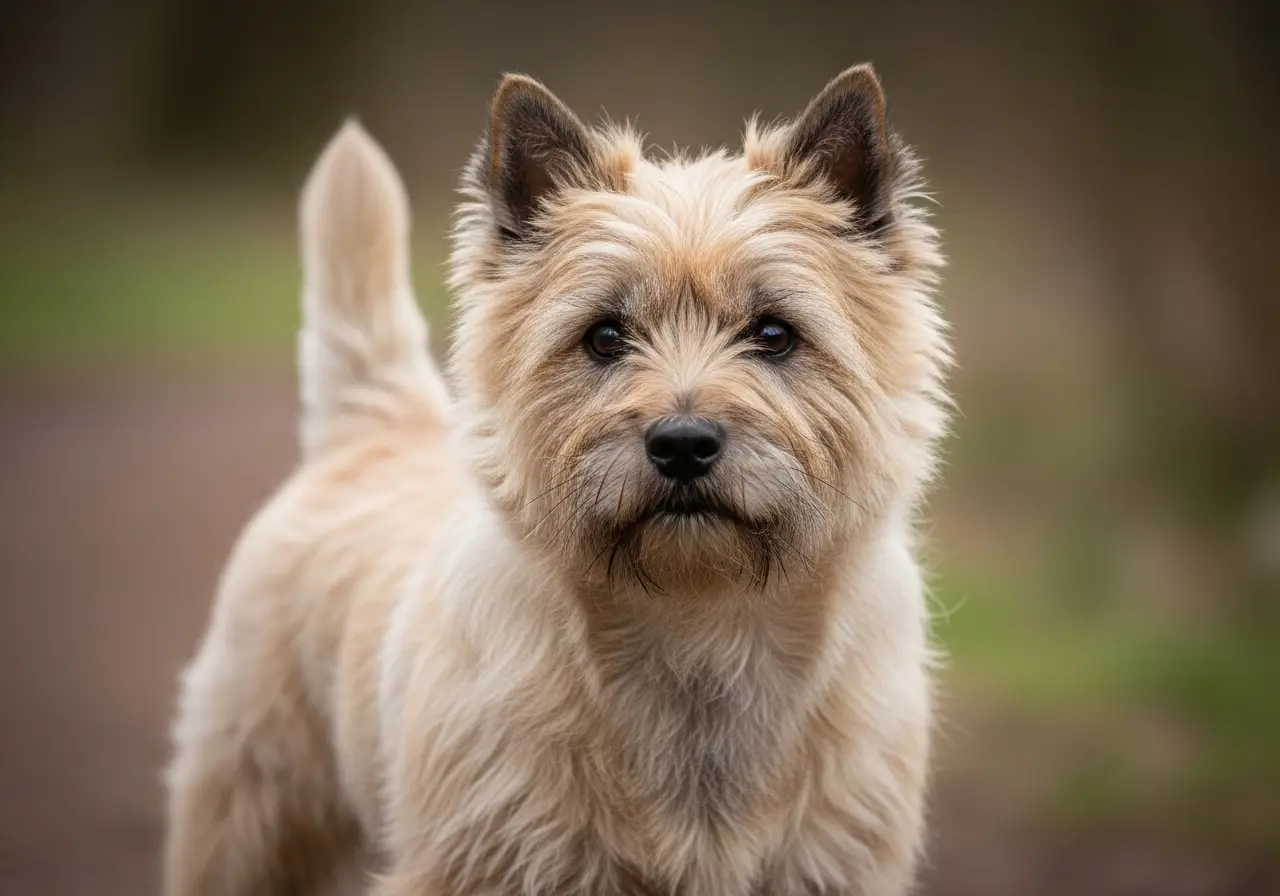
The Cairn Terrier is a robust Scottish small terrier with a pronounced prey drive, high need for social contact, and a head that prefers independent decision-making. Those who provide 60 to 90 minutes of active exercise daily, consistent guidance, and mental and physical stimulation will receive a long-lived companion with a strong character. Anyone expecting an uncomplicated lapdog fundamentally underestimates this breed.
02Introduction
What makes the Cairn Terrier special
The Cairn Terrier is a robust Scottish small terrier, FCI Group 3, one of the longest-lived terriers, known as "Toto", withers height 28–31 cm.
03Profile
Key facts and suitability
- Origin
- Grossbritannien
- Original purpose
- Fox hunting in Scottish rock formations
- FCI
- No. 4 · Group 3 · Section 2
- height at the withers
- 28–31 cm
- Weight
- 6–7 kg
- Life expectancy
- 12–17 Years
- Coat type
- Wire-haired
- Minimum exercise
- 45 min/day
- Puppy price
- 1'000–1'800 CHF
- Waiting period
- 9 months
- Sports
- Agility · Earthdog work · Obedience
04Temperament
How the Cairn Terrier shows up in everyday life
The morning walk reveals what defines the Cairn Terrier: its nose immediately goes to the ground, and its body follows every scent with determination. If a rabbit appears, it switches into hunting mode within seconds; recall then competes with millennia of selection. This is not an obedience problem, but its working profile.
Internally, what the dog needs: The Cairn Terrier has a need for social contact of 4 out of 5 and a mental workload requirement of 4 out of 5. It actively seeks contact with its primary caregiver, wants to be included, and reacts to isolation with restlessness. Being left alone can be built up to a maximum of four hours, gradually and with positive conditioning. Mental stimulation through nose work, trick training or search games is not a bonus; it is a basic need.
Externally, how the dog reacts: It shows moderate openness (score 3 out of 5) towards strangers. It is neither obtrusively friendly nor shy, but observant and self-confident. This reserve is not mistrust, but terrier-typical independence. Anyone who equates the high need for social contact with broad friendliness towards strangers will be surprised: The Cairn Terrier bonds intensively with its family, but opens up to unknown people at its own pace.
At home, it is present and attentive. It follows the daily routine of the family, claims its place on the sofa and reliably announces visitors. Boredom manifests itself loudly in this breed; barking and digging are classic symptoms of an under-stimulated Cairn Terrier, not character flaws.
05Needs
What this breed needs daily
The Cairn Terrier needs at least 60 to 90 minutes of active exercise daily. It is not just the duration that counts, but the quality: sniffing walks in varied terrain, where the dog can use its nose, meet the need better than uniform city rounds. Off-lead walking is possible, but requires a reliable recall; given its pronounced prey drive, this is a training goal that requires months of consistent work.
Mental stimulation is equal in importance to physical exercise. A mental workload requirement of 4 out of 5 means: the dog needs daily tasks that challenge its brain. Nose work, mantrailing, trick training or agility correspond to its profile. Short, varied training sessions of 10 to 15 minutes are more effective than long, monotonous exercise blocks; the Cairn Terrier quickly loses interest with repetition and begins to seek its own enrichment.
The need for social contact is high. The dog needs regular, active contact with its primary caregiver; passive coexistence is not enough. Anyone who is out of the house all day must organise a reliable care solution. Being left alone can be built up to four hours, but only with systematic training.
Keeping it in an apartment is possible if exercise and structure are implemented consistently. A garden offers added value, but does not replace joint activities, and must be secured against digging attempts. The prey drive makes stable recall training a duty, not an option.
Exercise
Medium
mental work
A lot
Social needs
High
training
Medium
06Sport & Mental and Physical Stimulation
What sports the Cairn Terrier is suited for
Realistic in terms of physiology and genetics – not every breed suits every sport.
Structurally and physiologically suitable: Suitable for mantrailing, dummy work and tracking.
07Quick Check
08Suitability
Who this breed is suitable for – and who it isn't
✓Matches
The Cairn Terrier suits active individuals or families who can plan at least 60 to 90 minutes daily for exercise and additional time for mental stimulation. Children from about eight years of age, who have learned to treat dogs respectfully, cope well with its self-confident nature.
Owners with experience in handling independent or high-drive dogs are clearly at an advantage. First-time owners are not fundamentally excluded, but need a dog training school with experience in terrier breeds from the start.
Anyone living in an apartment can keep this breed, provided that exercise and structure are implemented consistently and neighbours are tolerant of a dog that reliably announces visitors. A secured garden is an advantage, but not a prerequisite.
Regarding the external axis: Anyone who regularly receives guests and expects an immediately sociable dog should know that the Cairn Terrier is reserved towards strangers and establishes contact at its own pace. Households with a calm to moderately social daily routine are a better fit than those with constantly changing people.
×Doesn't match
The Cairn Terrier does not suit owners who have little time for active enrichment. Anyone who is out of the house for eight hours daily and cannot organise a reliable care solution structurally overloads this dog; high need for social contact and under-stimulation result in an unfavourable combination.
Anyone looking for a calm, low-demand companion dog that is satisfied with short walks makes the wrong choice with the Cairn Terrier. Its prey drive is genetically anchored and cannot be trained away; it can only be managed. Owners who expect off-lead walking without prior recall training risk dangerous situations.
Regarding the external axis: Anyone who equates the high need for social contact with broad friendliness towards strangers and expects a dog that warmly greets every visitor immediately will be disappointed. The Cairn Terrier opens up to unknown people at its own pace; this is not a flaw, but a characteristic that must fit with daily life.
Households with very young children under four years of age, who do not yet know boundaries in dealing with dogs, should carefully weigh the decision. Not because of aggression, but because this dog reacts clearly to boundary violations.
10Line reality
Show line, working line, breeder market
The Cairn Terrier is today predominantly bred as a companion dog. A pronounced differentiation between working and show lines, such as exists in the Labrador Retriever or Border Collie, is less distinct in this breed, but not entirely absent.
In the UK, there are still breeders who select for field suitability and working type. These dogs generally show a more pronounced prey and digging drive as well as a higher activity threshold than pure show dogs. Anyone acquiring a Cairn Terrier from such a line obtains a dog with increased stimulation needs.
Show-oriented lines focus on exterior characteristics according to the FCI standard: coat structure, body build and gait. The character remains terrier-typical, but the drive is often less pronounced than in field-bred lines.
In the DACH region, companion-dog-oriented breeding dominates. Differences between individual lines are difficult for laypeople to discern; a conversation with the breeder about the working history of the parent animals and their everyday behaviour provides more insight than the certificate alone. Anyone looking for a dog with moderate drive should specifically ask for lines that have been selected for companion dog traits over several generations.
11Health · Reality
What you need to plan for medically with your Cairn Terrier
The life expectancy of the Cairn Terrier is between 12 and 15 years, placing it among the longer-lived dog breeds in its size class. This range is no coincidence: The breed was selected for robustness and workability over centuries, without the extreme exterior changes that have led to structural health problems in other breeds.
The following health areas are relevant for the breed: Patellar luxation occurs disproportionately frequently in small terrier breeds. A study by the Orthopedic Foundation for Animals (OFA, as of 2023) shows that around 4–6% of examined Cairn Terriers exhibit patellar luxation. Regular orthopaedic check-ups with the vet are recommended, especially for dogs that jump frequently or show signs of lameness.
Globoid cell leukodystrophy (Krabbe disease) is a rare but breed-typical hereditary disease in Cairn Terriers. A DNA test is mandatory before breeding and should also be requested when buying a puppy. Reputable breeders provide test results for both parent animals.
Skin problems, including allergic reactions and seborrhoeic dermatitis, are observed in the breed. The coat requires regular trimming; clipping permanently alters the hair structure and can impair the protective function of the double coat.
Overweight is a real risk: Cairn Terriers tend to gain weight with excessive calorie intake and insufficient exercise, which puts strain on joints and metabolism. Annual veterinary preventive examinations and dental care from puppyhood are standard.
12Structured data
Health by the numbers
Prone to diseases
Legg-Calvé-Perthes, Krabbe disease (globoid cell leukodystrophy), thyroid problems, eye problems
Recommended health tests
GCL DNA test, eye examination, thyroid screening
13Myths ↔ Reality
What is often said incorrectly about this breed
Five myths, five realities, five sources.
"The Cairn Terrier is an easy-to-care-for beginner's dog because it is so small.
Body size and care requirements do not correlate. The Cairn Terrier has a pronounced prey drive, a high need for social contact and genetically ingrained independence. Recall training requires consistent management, especially in areas with abundant wildlife. Owners without experience of high-drive dogs regularly underestimate this effort.
"Cairn Terriers are aggressive towards other dogs.
The FCI standard describes the breed as fearless and cheerful, but not aggressive. Terrier-typical assertiveness in social contact is not synonymous with aggression. With early and consistent socialisation, Cairn Terriers generally show tolerant behaviour towards conspecifics. Problems often arise from a lack of socialisation or inconsistent handling.
"The Cairn Terrier's coat cares for itself; it does not need a groomer.
The weather-resistant double coat of the Cairn Terrier requires regular hand-stripping to maintain its texture and protective function. Clipping permanently damages the hair structure and alters coat quality. Professional hand-stripping is recommended two to three times a year; regular brushing is also necessary to prevent matting.
"Cairn Terriers are lap dogs that require little exercise.
The Cairn Terrier was bred for physically demanding work in rough terrain. Its exercise requirement is at least 60 to 90 minutes daily, supplemented by mental stimulation. A dog that does not have these needs met often develops undesirable behaviours such as excessive barking, digging or destructive behaviour in the home.
"Because Toto was so well-behaved in *The Wizard of Oz*, Cairn Terriers are generally easy to handle.
Film dogs undergo intensive professional training over months. The everyday Cairn Terrier displays its genetic profile: independent thinking, prey drive and a pronounced willingness to make its own decisions. These traits require experienced, consistent handling; it is not a self-starter.
14animal welfare
The animal welfare perspective
Breeder market, designer versions, animal shelter reality — what no one writes in the puppy ad.
The Cairn Terrier is not a fashion breed in the classical sense; nevertheless, a backyard breeder market exists that profits from the breed's enduring popularity. Dogs from irresponsible breeding are often offered without health tests for the parent animals, without socialisation, and without a puppy protection contract. The price is often significantly lower than that of a reputable breeder, but the follow-up costs due to behavioural and health problems regularly exceed the savings.
A concrete warning sign: Anyone offering a Cairn Terrier puppy without proof of DNA testing for globoid cell leukodystrophy in both parent animals is acting irresponsibly. This test is inexpensive and definitive; its absence is no oversight.
Breeding and husbandry-related problems in Cairn Terriers arise less from exterior extremes than from a misjudgement of the character profile. The most common reasons for surrender to animal welfare are underestimated prey drive, undesirable barking, digging in the garden, and a lack of trained recall. These dogs are not "broken"; they display their genetic profile in an environment that was not prepared for it.
Cairn Terriers from animal welfare or adoption agencies are an equally valid option to buying a puppy. Animal welfare organisations such as TASSO or breed-specific rescue centres regularly place Cairn Terriers and Cairn crossbreeds. An initial inquiry with the Klub für Terrier e.V. or the Swiss Club for Terriers SCFT can help establish contact with reputable adoption agencies.
Anyone importing a Cairn Terrier from abroad or buying via online platforms should exercise particular diligence: vaccination record, microchip, proof of origin, and personal contact with the breeding facility are minimum standards, not points for negotiation.
15Costs · Transparency
What this breed realistically costs
The purchase price of a Cairn Terrier puppy from reputable breeding in the DACH region is between €1,200 and €1,800. Dogs without papers or from non-association-affiliated breeding are offered at lower prices, but follow-up costs due to missing health tests or inadequate socialisation can quickly exceed this difference.
Annual maintenance costs consist of: food (high-quality dry food or fresh meat diet) between €400 and €700 annually, depending on quality and feeding method. Professional hand trimming costs between €60 and €120 per session, depending on the region and effort; with two to three sessions annually, this amounts to €120 to €360.
Basic veterinary care (vaccinations, annual prevention, parasite prevention) costs between €200 and €400 annually. Unplanned vet costs, for example in cases of patellar luxation or skin problems, can quickly reach €500 to €2,000. Pet insurance for a Cairn Terrier costs between €30 and €80 monthly, depending on the provider and scope of benefits, and significantly reduces financial risk in the event of major treatments.
Total costs in the first year, including getting a dog, basic equipment, and initial vaccinations: realistically €2,500 to €3,500.
16Puppy search
What you need to consider when choosing a breeder
- A reputable breeder is a member of the Klub für Terrier e.V.
- (Germany) or the Schweizer Club für Terrier SCFT (Switzerland/Austria) and breeds under the breeding conditions of the respective association.
- This means: health tests for both parent animals, in particular the DNA test for Globoid Cell Leukodystrophy, are available in writing.
- The breeder asks questions about the buyer's daily routine and refuses a sale if the profile does not fit.
- Puppies leave the breeding facility no earlier than at eight weeks.
- Viewings take place at the breeding facility, not in car parks or via intermediaries.
- The mother is present and displays balanced behaviour.
- A puppy protection contract, pedigree, and vaccination record are standard.
- Warning signs: No proof of health tests, puppies under eight weeks old, sale without personal contact, prices significantly below €1,000 without a verifiable justification.
- Adoption through animal welfare organisations or breed-specific rescue centres is an equally valid alternative.
- Adult dogs have a known character profile, which makes it easier to assess whether the dog fits into your daily life.
- An inquiry with the Klub für Terrier e.V.
- or the SCFT can help establish contact with reputable adoption agencies.
FAQ
Frequently asked questions about the Cairn Terrier
Is Cairn Terrier suitable for beginners?
Cairn Terrier is considered suitable for first-time dog owners.
Is Cairn Terrier a family dog?
Cairn Terrier is considered suitable for families with good socialisation and species-appropriate care.
How much exercise does Cairn Terrier need?
At least around 45 minutes of exercise per day.
Does Cairn Terrier suit an apartment?
With enough exercise and enrichment, Cairn Terrier can also be kept in an apartment.
What is the size and weight of Cairn Terrier?
Fully grown, Cairn Terrier reaches about 28–31 cm at the withers and weighs around 6–7 kg.
What is the life expectancy of Cairn Terrier?
The life expectancy of Cairn Terrier is approximately 12–17 years.
Is Cairn Terrier suitable for allergy sufferers?
Cairn Terrier is considered relatively hypoallergenic. There’s never a guarantee — test direct contact beforehand.
Which diseases are common in Cairn Terrier?
Legg-Calvé-Perthes, Krabbe disease (globoid cell leukodystrophy), thyroid problems, eye problems
17Breed clubs
Official breed clubs in DACH
19Related
Similar breeds – and their differences
You might also be interested in



Participate
Do you have a good photo of your Cairn Terrier?
We are looking for expressive images for our breed profiles. Submit yours; the editorial team reviews every submission before publication.
Does this breed suit you?
Robust, long-lived small terrier. Known as Toto from *The Wizard of Oz*. Good-natured for a terrier, but with a mind of its own.