
01Summary
In a paragraph
If you only have 30 seconds.
The Australian Terrier is one of the smallest working terriers and one of the most demanding. It comes with a pronounced prey drive, alertness and independence. Those who expect it to be a decorative lapdog fundamentally underestimate it. Those who provide clear structures, daily exercise and mental stimulation receive a loyal, robust companion with real character and a life expectancy of 12 to 15 years.
02Introduction
What makes the Australian Terrier special
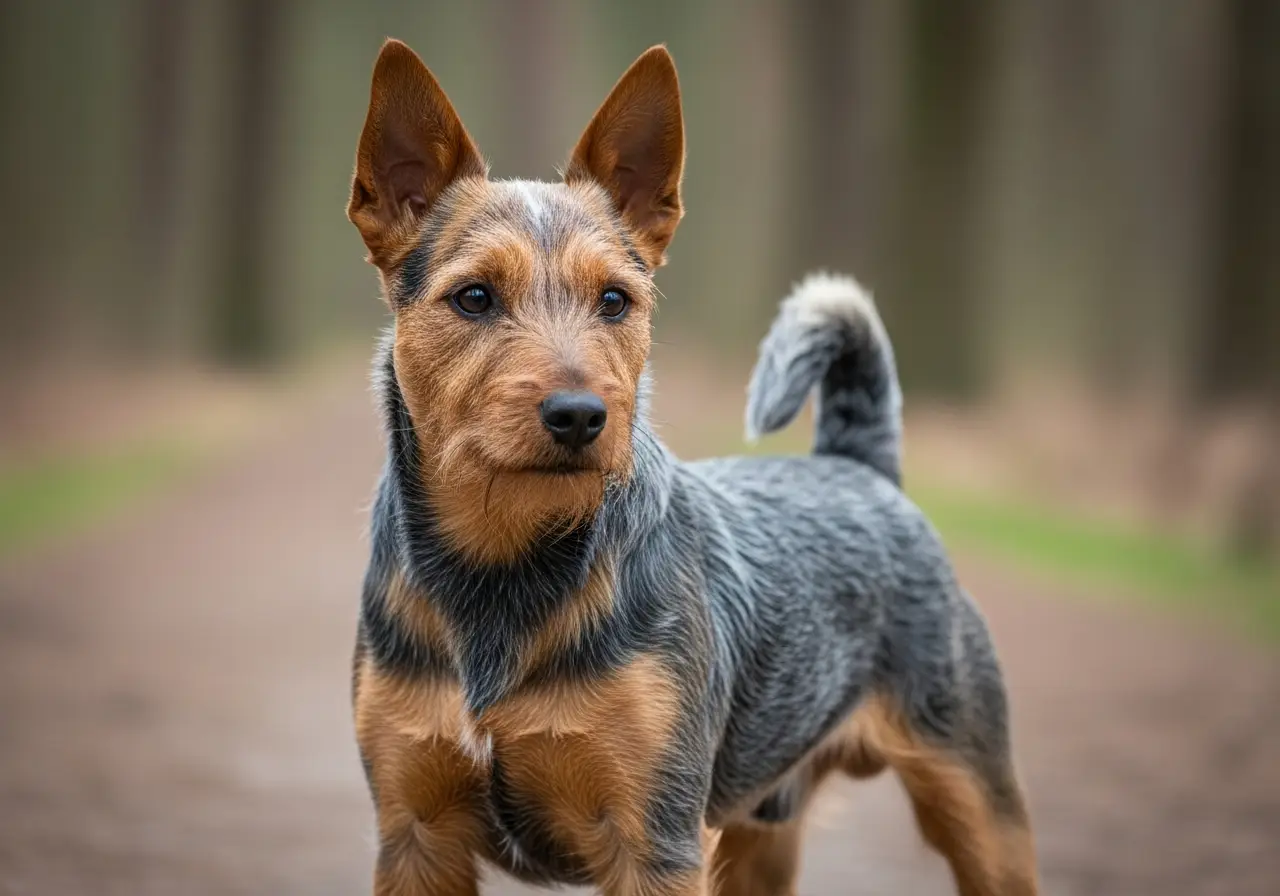
The Australian Terrier is a robust Australian small terrier, FCI Group 3, originally bred for pest control, height at withers 23–28 cm.
03Profile
Key facts and suitability
- Origin
- Australien
- Original purpose
- Rat and snake control
- FCI
- No. 8 · Group 3 · Sektion 2: Kleinere Terrier
- height at the withers
- 23–28 cm
- Weight
- 4–7 kg
- Life expectancy
- 11–15 Years
- Coat type
- Wire-haired
- Minimum exercise
- 45 min/day
- Puppy price
- 1'000–1'800 CHF
- Waiting period
- 9 months
- Sports
- Agility · Obedience · Earthdog work
04Temperament
How the Australian Terrier shows up in everyday life
When you come home, the Australian Terrier greets you emphatically: It announces itself, observes the situation and then decides whether relaxation is appropriate. This alertness is not a mistake; it is breed character.
Internally, the Australian Terrier requires an intense bond with its primary caregiver. The need for social contact is high: It actively seeks contact, wants to be included and reacts to exclusion with restlessness or vocalisations. At the same time, it is not a dog that passively cuddles up. It wants to be occupied, not just to be there.
Externally, it shows clear reserve towards strangers. Friendliness towards unknown people is poorly developed; it observes, assesses and reserves the right to decide when it allows contact. These two axes diverge: A high need for social contact within the family does not mean openness towards every visitor. Anyone who confuses this will be surprised by its behaviour.
On a walk, it reacts quickly to movement stimuli: A bird, a cat, a rustling bush – the prey drive kicks in without warning. On a lead, it requires an owner who knows these impulses and leads, not one who is dragged behind.
In everyday life with children, it works with clear structure and respectful handling. It tolerates no infringements and communicates boundaries clearly. Toddlers under four years of age and an Australian Terrier without consistent supervision are a combination that owners should carefully weigh up.
05Needs
What this breed needs daily
The Australian Terrier requires at least 60 to 90 minutes of active exercise daily, divided into several sessions, not ticked off as a single walk. Pure walks are not enough. It needs phases in which it can run, sniff and explore.
Mental stimulation is equivalent to physical exercise. Nose work, search games, structured fetching or trick training correspond to its work drive. Without mental challenge, it develops strategies for self-occupation that rarely align with the owner’s expectations.
Being left alone is trainable but requires a gradual build-up. Four hours are a realistic upper limit for a well-conditioned dog. Longer absences without preparation lead to stress behaviour.
Living in an apartment works if stimulation is consistently secured. A garden is a bonus, not a replacement for active enrichment, and must be secure, as the Australian Terrier is an endurance digger.
Training requires consistency and clarity. Positive reinforcement works when combined with clear boundaries. The Australian Terrier actively exploits inconsistency, not out of malice, but because it thinks independently and fills gaps in leadership. A supporting dog training school is not an option for owners without terrier experience, but a recommendation with practical benefit.
Exercise
Medium
mental work
A lot
Social needs
High
training
Medium
06Sport & Mental and Physical Stimulation
What sports the Australian Terrier is suited for
Realistic in terms of physiology and genetics – not every breed suits every sport.
Structurally and physiologically suitable: Suitable for mantrailing, dummy work and tracking.
07Quick Check
08Suitability
Who this breed is suitable for – and who it isn't
✓Matches
The Australian Terrier suits owners who are active and can plan at least 60 to 90 minutes daily for exercise and enrichment. Those who enjoy structured training and appreciate a dog that thinks along and solves tasks will find an engaged partner in this breed.
It is suitable for individuals or couples with experience in handling confident breeds, who take clear leadership for granted. Families with children from about eight years of age, who are trained in dealing with dogs and respect boundaries, are also an option, provided that supervision is consistent.
City owners with secure exercise opportunities and the willingness to integrate nose work or trick training into everyday life can keep an Australian Terrier well. Those who regularly receive visitors should know that the dog remains reserved towards strangers and socialisation must be actively promoted. Owners looking for a dog with a strong bond to one main reference person and willing to actively fulfil this role make a suitable choice with this breed.
×Doesn't match
The Australian Terrier does not suit owners who expect a calm, uncomplicated companion dog that occupies itself. Those who want to invest little time in training or view training as a one-off phase will experience lasting conflicts with this dog.
Households where the dog is regularly left alone (more than four hours daily, without gradual introduction) are unsuitable for this breed. Those who keep small animals such as rabbits, guinea pigs or birds must factor in the pronounced prey drive as a permanent risk that cannot be trained away.
Those who confuse the high need for social contact of the Australian Terrier with general openness towards strangers underestimate its reserve. Households with very frequent visitor traffic and the desire for a friendly greeting dog for all guests will be disappointed. Families with toddlers under four years of age should carefully weigh up the combination; the dog communicates boundaries clearly and unambiguously. Owners without any dog experience who do not wish to use professional support are better advised to choose another breed.
10Line reality
Show line, working line, breeder market
The Australian Terrier is kept and bred today predominantly as a companion dog. A pronounced differentiation into working and show lines, as exists with larger utility dog breeds, is not established in this breed.
However, differences in orientation exist within breeding: Some breeders focus on show success and align closely with the FCI standard regarding coat structure, pigmentation and body build. Other breeders prioritise temperament traits such as work drive, resilience and balance, characteristics that correspond to the original purpose as a working terrier.
As the breed represents a niche population in Europe, the breeder base in the German-speaking region is small. This means: The selection of litters is limited, waiting times are usual, and the possibility to search specifically for certain lines is more restricted than with widespread breeds. Interested parties should contact active breeders early on and ask specifically for health certificates of the parent animals.
11Health · Reality
What you need to plan for medically with your Australian Terrier
The Australian Terrier is considered a robust breed with a life expectancy of 12 to 15 years. This range is realistic for a small terrier and supported by breeder reports and breed club documentation.
Breed-specific health risks include patellar luxation and genetically determined eye problems. Patellar luxation, a displacement of the kneecap, occurs more frequently in small terrier breeds than in the overall average for all dogs. According to an evaluation by the Orthopedic Foundation for Animals (OFA), the rate of patellar luxation in small terrier breeds is between 5 and 15 percent depending on the population (OFA, as of 2023). Due to the small breeding population, there are no reliable individual studies specifically for the Australian Terrier, which is all the more reason to insist on appropriate preventive examinations of the parent animals when choosing a breeder.
Diabetes mellitus occurs more frequently in the Australian Terrier than in many other breeds. Studies from the veterinary field indicate that terrier breeds generally have an increased risk of diabetes (Guptill et al., Journal of Veterinary Internal Medicine, 2003). Regular blood tests from the seventh year of life are recommended.
Overweight is an underestimated risk: The Australian Terrier tends to gain weight with insufficient exercise and uncontrolled feeding, which additionally strains joints and metabolism.
Preventive examinations that owners should plan for: annual eye examination, patella check in puppyhood and again in adulthood, blood tests from the seventh year of life, and dental checks, as small breeds often tend to develop tartar.
12Structured data
Health by the numbers
Prone to diseases
Diabetes mellitus, Legg-Calvé-Perthes, thyroid problems
Recommended health tests
Blood sugar check, thyroid screening
13Myths ↔ Reality
What is often said incorrectly about this breed
Five myths, five realities, five sources.
“The Australian Terrier is a low-maintenance small dog for relaxed owners.
The Australian Terrier was bred as a working terrier and comes with the corresponding drive. It requires 60 to 90 minutes of active exercise daily, as well as mental stimulation through training or nose work. Without sufficient enrichment, it develops undesirable behaviours such as excessive barking or digging.
“Small dogs have no significant prey drive.
The Australian Terrier was explicitly used for pest and snake control. Its prey drive is genetically ingrained and shows clearly towards small animals, birds and fast-moving objects. Off-leash walking without a secure environment is a calculable risk with this dog that owners must be aware of.
“Australian Terriers are suitable for beginners due to their size.
A dog’s body size tells little about the effort required for its training. The Australian Terrier actively questions unclear leadership, shows independence and tests boundaries. Owners without experience with confident breeds need professional guidance to avoid typical terrier mistakes such as taking over decision-making authority.
“The Australian Terrier gets along easily with all other dogs.
The Australian Terrier can display dominant behaviour towards conspecifics if socialisation is insufficient, particularly towards dogs of the same sex. Early and consistent socialisation is crucial. A general compatibility with all dogs does not correspond to the breed profile.
“The wiry coat of the Australian Terrier looks after itself.
The hard, wiry topcoat requires regular brushing and ideally professional trimming several times a year. If the coat is not trimmed but clipped, the coat structure changes permanently; the topcoat loses its characteristic hardness and weather protection function.
14animal welfare
The animal welfare perspective
Breeder market, designer versions, animal shelter reality — what no one writes in the puppy ad.
In Switzerland, the Australian Terrier is a niche breed with a small breeding population. This has direct consequences for the market: reputable breeders are rare, waiting times for puppies are long, and price pressure due to demand is real.
It is precisely in this environment that offers arise which appear attractive at first glance: puppies without waiting times, at bargain prices, often via classifieds portals or from abroad in Europe. Puppy mills and dog traders exploit the low prevalence of the breed to appeal to interested parties who do not know how a reputable breeder works. Puppies from such sources frequently arrive without health certificates for the parent animals, without initial veterinary care and without socialisation, with corresponding follow-up costs for the vet and behaviour training.
Designer variants of the Australian Terrier exist on the market, for example crosses with other terrier breeds under fanciful names. These animals are neither FCI-recognised nor predictable in their health development. Interested parties should not be guided by designations such as "Mini Aussie Terrier" or similar constructions.
Breeding and keeping-related problems with the Australian Terrier mainly concern socialisation: puppies from small breeders with little external contact more frequently show pronounced shyness or excessive vigilance. This is not a character flaw of the breed, but a socialisation deficit, and it is avoidable if breeders systematically accustom their puppies to everyday stimuli.
Placement via animal shelters or breed protection organisations is a realistic option for the Australian Terrier, even though animals of this breed rarely appear in German or Swiss animal shelters. Breed club contacts occasionally lead to surrendered animals or dogs from emergency situations. Those who are flexible regarding the age of the dog will find an equivalent path here, often with the advantage that the temperament and health status of the animal are already known.
15Costs · Transparency
What this breed realistically costs
A puppy from a reputable breeder costs between 1,200 and 2,000 euros in the German-speaking region. Offers significantly below this often originate from puppy mill breeding without health screening; follow-up costs regularly exceed the savings.
The annual living costs for an Australian Terrier realistically lie between 1,500 and 2,500 euros, depending on food choice, grooming effort and vet needs. High-quality dry food or fresh meat nutrition for a dog of this size costs between 40 and 80 euros monthly.
The coat requires professional trimming several times a year, costing between 60 and 120 euros per session depending on the region and effort. Those who trim themselves save costs but require training and suitable tools.
Vet costs in case of illness are difficult to estimate as a flat rate. Annual preventive care including vaccination boosters, parasite prevention and basic examination amounts to 150 to 300 euros. Operations for patellar luxation can cost between 800 and 2,500 euros depending on the severity.
Dog health insurance or pet health insurance is recommended for this breed. Monthly premiums for an Australian Terrier lie between 25 and 60 euros depending on provider and scope of benefits (as of 2024, DACH market).
16Puppy search
What you need to consider when choosing a breeder
- A reputable breeder of Australian Terriers is a member of a recognised breed club; in the German-speaking area, these are the Klub für Terrier e.V.
- (KFT) or the Schweizer Club für Terrier (SCFT).
- Membership alone is not a quality feature, but it serves as an initial filter.
- Concrete criteria for reputable breeding: The parent animals have been tested for patellar luxation and eye health, with written proof available.
- The breeder allows visits before the puppies are given away and shows the mother with the puppies in their familiar environment.
- Puppies are handed over at the earliest at eight weeks of age, vaccinated, dewormed and microchipped.
- Waiting periods of several months are normal for this niche breed; those who receive a puppy immediately should regard this as a warning sign.
- Adoption through breed rescue organisations or animal shelters is equally worth considering.
- Breed club contacts occasionally lead to surrendered dogs.
- An adult dog with a known temperament can be the better choice for experienced owners than a puppy with unknown development.
- Offers on general classifieds portals without club membership, without health certificates and with immediate availability should be treated with caution.
- The price alone says nothing about the quality of the breeding.
FAQ
Frequently asked questions about the Australian Terrier
Is Australian Terrier suitable for beginners?
Australian Terrier is considered suitable for first-time dog owners.
Is Australian Terrier a family dog?
Australian Terrier is considered suitable for families with good socialisation and species-appropriate care.
How much exercise does Australian Terrier need?
At least around 45 minutes of exercise per day.
Does Australian Terrier suit an apartment?
With enough exercise and enrichment, Australian Terrier can also be kept in an apartment.
What is the size and weight of Australian Terrier?
Fully grown, Australian Terrier reaches about 23–28 cm at the withers and weighs around 4–7 kg.
What is the life expectancy of Australian Terrier?
The life expectancy of Australian Terrier is approximately 11–15 years.
Which diseases are common in Australian Terrier?
Diabetes mellitus, Legg-Calvé-Perthes, thyroid problems
17Breed clubs
Official breed clubs in DACH
19Related
Similar breeds – and their differences
You might also be interested in



Participate
Do you have a good photo of your Australian Terrier?
We are looking for expressive images for our breed profiles. Submit yours; the editorial team reviews every submission before publication.
Does this breed suit you?
Robust, self-confident small terrier. Good for first-time owners who like terrier stubbornness. No small dog cliché – full of personality.