
01Summary
In a paragraph
If you only have 30 seconds.
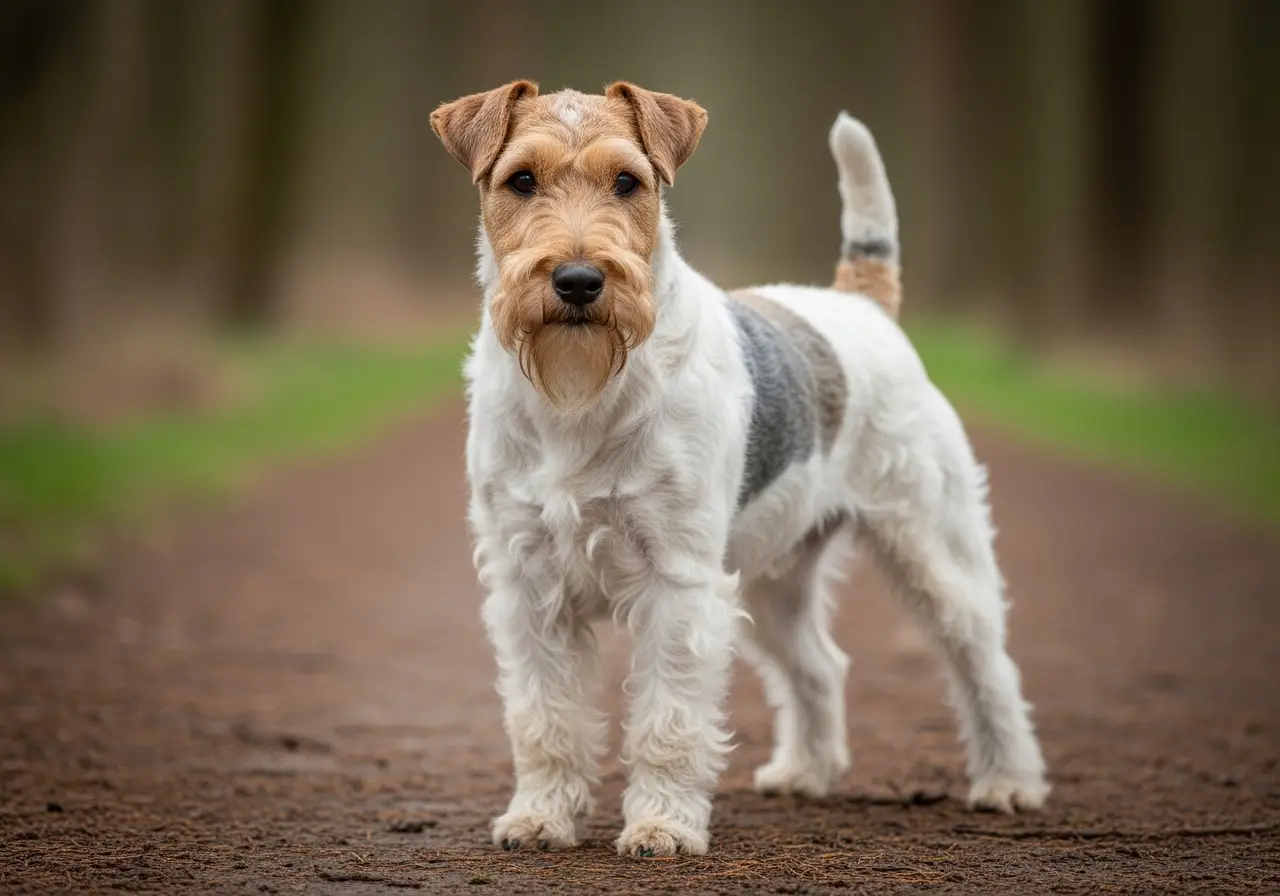
The Sealyham Terrier deceives with its compact, almost cosy appearance. Behind the distinctive beard and white wiry coat lies a hunting terrier bred for burrowing and small game hunting, independent, resolute, and with a pronounced prey drive. The breed requires consistent guidance, daily mental stimulation, and an owner who understands terrier-typical stubborn behaviour not as a fault but as part of its nature.
02Introduction
What makes the Sealyham Terrier special
Sealyham Terrier: Welsh ground terrier with white wire-haired coat, stubborn but trusting towards the family
03Profile
Key facts and suitability
- Origin
- Wales
- Original purpose
- Badger hunting Otter hunting
- FCI
- No. 74 · Group 3 · Section 2
- height at the withers
- 25–31 cm
- Weight
- 8–10 kg
- Life expectancy
- 12–14 Years
- Coat type
- Wire-haired
- Minimum exercise
- 45 min/day
- Puppy price
- 2'000–3'000 CHF
- Waiting period
- 5 months
- Sports
- Earthdog work
04Temperament
How the Sealyham Terrier shows up in everyday life
The morning walk reveals what defines the Sealyham Terrier: The nose immediately goes down to ground level, every gap in a wall and every bush is systematically searched. The prey drive is not situational; it is permanently active. A Sealyham that picks up a scent decides independently whether to follow it. Loose-leash walking and a reliable recall command are therefore not optional extras but basic prerequisites for any off-leash activity.
Internally (i.e., in what the dog brings with it from its genetics), the Sealyham Terrier shows a moderate need for social contact: It appreciates the closeness of its primary caregiver but does not demand it permanently. It requires clear daily structures and reacts to inconsistent handling with independent solutions, which are rarely in the owner’s interest. Mental work in the form of nose work, search games, or structured training is gratefully accepted; without it, the dog will become inventive.
Externally, i.e., in its reaction to environmental stimuli, the Sealyham Terrier behaves attentively to reservedly towards strangers. This reserve is not a sign of insecurity but breed-typical vigilance. Anyone expecting a dog that greets every visitor joyfully will be disappointed. Towards its own family, it shows itself as affectionate and loyal without being intrusive.
At home, it is calmer than many other terriers, provided its needs for movement and occupation are met. Keeping it in an apartment works if sufficient daily exercise and mental stimulation are guaranteed. Being left alone for up to four hours is possible but must be built up gradually and consistently.
05Needs
What this breed needs daily
The Sealyham Terrier requires 60–90 minutes of active movement daily. A leisurely walk is not sufficient; the dog needs opportunities to sniff, explore, and search. Cross-country runs, structured search games, or nose work correspond much better to its working profile than monotonous laps on paved paths.
Mental stimulation is equal in importance to physical exercise. Daily training sessions of 10–15 minutes (calm, clear, and with a positive reinforcement approach) keep the dog mentally challenged. The Sealyham Terrier learns attentively but questions inconsistent signals. Short, varied sessions are more effective than long, monotonous repetitions.
Social structure is another core need. The dog requires a reliable primary caregiver with clear body language and calm steadiness. Loud, hectic households without recognisable rules do not overwhelm it physically but structurally; it fills resulting leadership gaps independently.
The coat requires professional trimming every 8–12 weeks or regular hand-stripping by the owner themselves. Clipping permanently alters the coat structure. Anyone who underestimates this care requirement deprives the dog of its breed-typical protection and incurs additional costs with the groomer in the medium term.
Being left alone for up to four hours is possible but must be built up systematically. Abrupt long absences without preparation lead to stress behaviour. A regulated daily routine with predictable absence times considerably supports habituation.
Exercise
Medium
mental work
Medium
Social needs
Medium
training
Demanding
06Sport & Mental and Physical Stimulation
What sports the Sealyham Terrier is suited for
Realistic in terms of physiology and genetics – not every breed suits every sport.
Structurally and physiologically suitable: Suitable for mantrailing, dummy work and tracking.
07Quick Check
08Suitability
Who this breed is suitable for – and who it isn't
✓Matches
The Sealyham Terrier suits owners who have experience with independent dogs or are prepared to build this up specifically. Specifically: people who can plan 60–90 minutes of structured exercise daily, enjoy nose work or field training, and see consistency in everyday life not as an effort but as a basic attitude.
Families with children from around 8 years old are suitable if the handling of the dog is respectful and calm. Experience shows that toddlers and the terrier-typical stubbornness of the Sealyham do not get along well, not because of aggressiveness, but because of the unpredictability on both sides.
Owners living in an apartment can keep a Sealyham Terrier provided daily exercise in nature is guaranteed. A garden is an advantage, but not mandatory; more important is the willingness to go out daily, regardless of the weather.
Those who already have a dog and bring experience with socialisation between dogs are at an advantage. The Sealyham Terrier can get along well with other dogs if the introduction is structured and takes place early on.
×Doesn't match
The Sealyham Terrier does not suit owners looking for a low-maintenance companion dog without significant training effort. Anyone who expects the dog to figure out rules by itself or to respond reliably on command without systematic development will end up in permanent conflict with this terrier.
Households where the dog is regularly left alone for more than four hours and no dog care concept exists are unsuitable. Likewise, people who take physical closeness and openness towards strangers as self-evident characteristics of a dog: The Sealyham Terrier is devoted to its family but reserved towards strangers; these two axes must not be confused.
Anyone who underestimates the maintenance effort of the wiry coat or has no access to an experienced groomer should postpone getting a dog. The same applies to owners who rely on reliable off-leash freedom: The pronounced prey drive makes a secure exercise area a basic requirement, not an option.
First-time owners without accompanying dog training school and without willingness for professional guidance are overwhelmed by this breed, not because the dog is dangerous, but because its stubbornness is hard to assess without experience.
10Line reality
Show line, working line, breeder market
The Sealyham Terrier is today bred predominantly as a show dog. An active working line in the sense of tested hunting suitability practically no longer exists in the DACH region; the FCI standard itself does not provide for a working test. The breed is listed in Group 3, Section 2 (Lowland Terriers) without a working test.
The difference between show lines and the historical working type is nevertheless relevant: Show lines have been selected over decades for exterior characteristics such as head width, coat structure, and body build. The prey drive has not disappeared in this process, but its intensity varies between individual breeding establishments. Anyone looking for a dog with a particularly pronounced work drive should specifically ask about breeders who place value on temperament tests.
In Great Britain, there are occasional efforts to preserve the original working type, as the breed is on the Kennel Club’s “Vulnerable Native Breeds” list. This conservation breeding places particular emphasis on genetic diversity and health, not primarily on show success.
In the DACH region, the breeding base is so small that a clear differentiation of lines is hardly possible. Interested parties should ask less about “lines” and more about proven health tests, temperament assessments, and pedigree records.
11Health · Reality
What you need to plan for medically with your Sealyham Terrier
According to the Kennel Club (UK) and breed club data, the life expectancy of the Sealyham Terrier is on average 12–14 years, with healthy dogs occasionally reaching 15 years.
Eye diseases represent the most well-known health risk for the breed. Primary lens luxation (PLL) is genetically determined and can lead to blindness. A DNA test for PLL is available before breeding and should be documented for every breeding dog. The Animal Health Trust (UK) developed this test; reputable breeders openly provide test results.
Back problems occur frequently in low-slung breeds with long backs and short legs. The Sealyham Terrier is fundamentally at risk due to its body structure, even if it is less extremely proportioned than, for example, the Dachshund. Overweight significantly increases the risk of disc problems; the ideal weight according to the FCI standard is approx. 9 kg (males) or 8.2 kg (females) and should be consistently maintained.
Skin problems and allergies occur occasionally but are not a breed-specific focus. Ear problems can be favoured by the drop ears; regular checks are recommended.
Due to the small population size (under 100 new registrations/year in Great Britain according to the Kennel Club), genetic diversity is a central issue. Inbreeding coefficients should be actively requested from the breeder. Preventive examinations: PLL DNA test, eye examination (recommended annually), weight check at the vet.
12Structured data
Health by the numbers
Prone to diseases
Eye problems Deafness
Recommended health tests
Eye examination BAER test
13Myths ↔ Reality
What is often said incorrectly about this breed
Five myths, five realities, five sources.
"The Sealyham Terrier is a calm lap dog that requires little stimulation.
The Sealyham Terrier was bred for demanding burrow and small game hunting. It has a pronounced prey drive and needs 60–90 minutes of exercise daily as well as mental enrichment. Under-stimulation manifests in independent, often undesirable behaviours. Its compact build deceives regarding the existing endurance and determination.
"White terriers are fundamentally more aggressive than other dogs.
Coat colour and aggression tendency have no scientifically proven connection. The FCI standard explicitly describes the Sealyham Terrier as 'steadfast, fearless, and clever' and 'alert and fearless, yet friendly'. Reserved behaviour towards strangers is typical for the breed and not a sign of aggressiveness, but of watchfulness.
"As a rare breed, the Sealyham Terrier is particularly healthy because it has not been overbred.
A small population size increases the risk of inbreeding and limited genetic diversity. The Kennel Club (UK) lists the breed on the 'Vulnerable Native Breeds' list. Known health risks include eye diseases (including lens changes) as well as back problems. Health tests before breeding are indispensable, especially for rare breeds.
“The Sealyham Terrier gets along easily with all other dogs.
Terriers were historically bred for independent, assertive work. The Sealyham Terrier can display dominant behaviour towards dogs of the same sex or unfamiliar conspecifics. Early and consistent socialisation reduces conflicts but does not eliminate the typical terrier character.
“The white wiry coat of the Sealyham Terrier is easy to care for and requires little effort.
The hard, wiry topcoat with a weather-resistant undercoat requires regular trimming, usually every 8–12 weeks. Clipping permanently alters the coat structure and is not permitted for show dogs. Those who do not wish to visit a trimmer must learn hand-stripping themselves. The care effort is considerable and should be planned for before getting a dog.
14animal welfare
The animal welfare perspective
Breeder market, designer versions, animal shelter reality — what no one writes in the puppy ad.
The Sealyham Terrier is one of the rarest terrier breeds in the DACH region. This rarity does not automatically protect against problems; it shifts them.
Backyard breeder market and import risk: Because reputable breeding facilities are rare and waiting times of a year or more are not exceptional, some interested parties turn to offers from abroad or from the internet. Puppies without papers, without health tests and from unknown living conditions end up in the DACH region this way. The risk: genetically burdened dogs, missing PLL test results and puppies that were separated from their mother too early. Prices under 1,500 euros for a Sealyham Terrier with VDH/FCI papers are a warning signal, not a bargain.
Breeding and husbandry-related problems: The small breeding base increases the risk of inbreeding. Reputable breeders actively cooperate with international partners to keep the inbreeding coefficient low. Anyone buying a puppy has the right to ask for the inbreeding coefficient of the mating, and should do so.
Obesity as an underestimated risk: The Sealyham Terrier tends to become overweight with incorrect feeding and too little exercise. Given its body proportions, every excess kilogram noticeably increases the pressure on the spine and joints. This risk is often underestimated in everyday life.
Adoption as an equivalent option: Since the breed rarely occurs in classical animal welfare, adoption via breed club contacts or specialised terrier rescue stations is a more realistic route than an animal shelter. The Klub für Terrier e.V. and the Swiss Club for Terriers SCFT occasionally place adult dogs. An adult Sealyham with a known character and completed socialisation is the more suitable choice for many owners than a puppy, without this representing a compromise.
15Costs · Transparency
What this breed realistically costs
A Sealyham Terrier puppy from a reputable VDH/FCI-recognised breeding facility costs between 1,800 and 2,500 euros in the DACH region. Offers significantly below this without verifiable health tests and pedigree are associated with increased risk.
The annual living costs consist of several items: High-quality food for a dog of this size costs between 600 and 900 euros per year. Regular trimming every 8–12 weeks by a professional groomer comes to 60–120 euros per session, resulting in annual costs of 300–600 euros for grooming alone. Anyone who learns hand stripping themselves reduces this item considerably, but invests time and tools (one-off costs approx. 80–150 euros) instead.
Basic veterinary care (vaccinations, parasite prevention, annual check-up) amounts to 200–400 euros per year. In addition, there are costs for the recommended annual eye examination (approx. 80–150 euros). In case of illness or surgery, individual costs of 1,000–3,000 euros can arise.
Dog health insurance for this breed and size class costs between 40 and 90 euros monthly, depending on the provider and scope of benefits. Given the breed-typical eye risks, coverage is recommended. The total costs over the life expectancy of a Sealyham Terrier (12–14 years) realistically lie between 25,000 and 45,000 euros.
16Puppy search
What you need to consider when choosing a breeder
- Reputable Sealyham Terrier breeders are rare in the DACH region.
- The first point of contact is the Klub für Terrier e.V.
- (Germany) or the Schweizer Club für Terrier SCFT; both maintain current breeder lists and facilitate contacts with certified breeding facilities.
- Waiting times of 6–18 months are normal for this rare breed and are not a sign of lacking reliability.
- Characteristics of a reputable breeding facility: The breeder provides PLL DNA test results for both parent animals, proves an up-to-date eye examination, and gives information about the inbreeding coefficient of the mating.
- Puppies leave the breeding facility no earlier than at 8 weeks, are vaccinated, dewormed, and come with a pedigree.
- The breeder asks questions about the prospective owner's everyday life; this is not mistrust but responsibility.
- Warning signs: No visit to the breeder possible, mother dog not visible, price significantly below 1,500 euros, immediate availability without waiting time, missing health certificates.
- Finding an adult Sealyham Terrier through breed club contacts is an equally valid alternative.
- Adult dogs come with a known character, which reduces uncertainties that are unavoidable with puppies.
- Inquiries to the breed clubs are worthwhile here too.
FAQ
Frequently asked questions about the Sealyham Terrier
Is Sealyham Terrier a family dog?
Sealyham Terrier is considered suitable for families with good socialisation and species-appropriate care.
How much exercise does Sealyham Terrier need?
At least around 45 minutes of exercise per day.
Does Sealyham Terrier suit an apartment?
With enough exercise and enrichment, Sealyham Terrier can also be kept in an apartment.
What is the size and weight of Sealyham Terrier?
Fully grown, Sealyham Terrier reaches about 25–31 cm at the withers and weighs around 8–10 kg.
What is the life expectancy of Sealyham Terrier?
The life expectancy of Sealyham Terrier is approximately 12–14 years.
Which diseases are common in Sealyham Terrier?
Eye problems Deafness
17Breed clubs
Official breed clubs in DACH
19Related
Similar breeds – and their differences
You might also be interested in

Participate
Do you have a good photo of your Sealyham Terrier?
We are looking for expressive images for our breed profiles. Submit yours; the editorial team reviews every submission before publication.
Does this breed suit you?
Rare Welsh breed – calmer than many terriers but with pronounced stubbornness