4 sourcesUpdated September 12, 2026Responsible editor: Roger KleinText: Roger Klein
01Summary
In a paragraph
If you only have 30 seconds.
The Hokkaido is one of the six primitive Japanese dogs, bred for bear hunting on one of Japan's harshest islands. This origin shapes it to this day: strong prey drive, pronounced reserve towards strangers, close bond with its own family. Those who keep it as a companion dog take responsibility for a dog that thinks independently and views consistent leadership not as an option, but as a basic requirement.
02Introduction
What makes the Hokkaido special
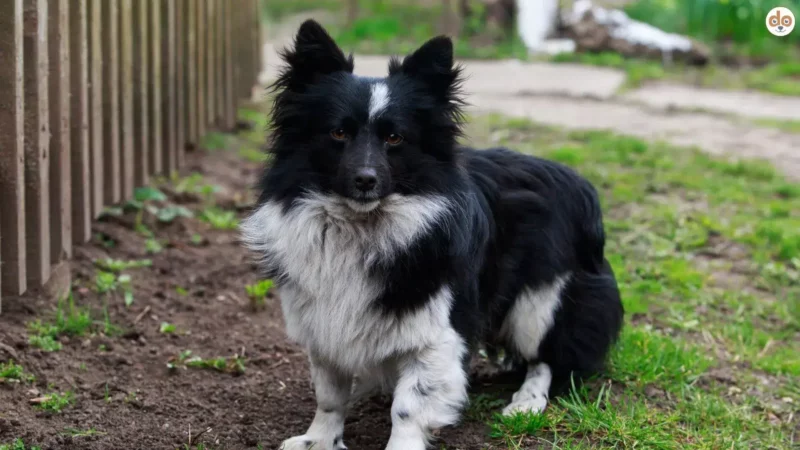
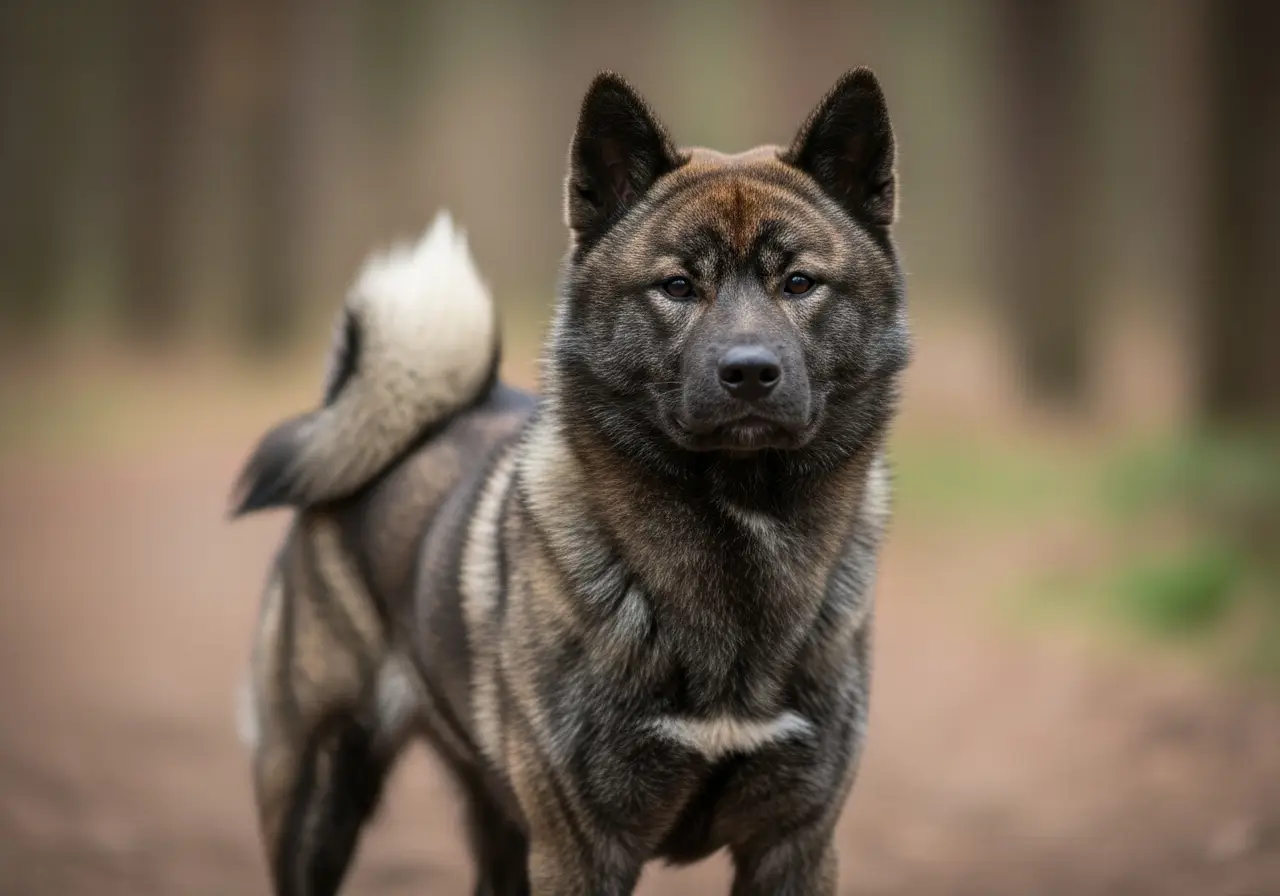
The Hokkaido is a Japanese primitive spitz, FCI Group 5, bred for bear hunting on the island of Hokkaido, withers height 48–52 cm.
03Profile
Key facts and suitability
- Origin
- Japan
- Original purpose
- Bear hunting on Hokkaido
- FCI
- No. 261 · Group 5 · Section 5
- height at the withers
- 48–52 cm
- Weight
- 20–30 kg
- Life expectancy
- 12–15 Years
- Coat type
- Doppel
- Minimum exercise
- 90 min/day
- Puppy price
- 1'500–3'000 CHF
- Waiting period
- 12 months
- Sports
- Hunting · Agility · Scent Work
04Temperament
How the Hokkaido shows up in everyday life
During the morning run in the forest, the Hokkaido reacts to every movement in the undergrowth with immediate focus; its head lowers, its body tenses, and its gaze fixes. This is not exuberance, but genetically anchored hunting behaviour. Anyone who does not communicate clearly at this moment loses control of the situation.
At home, the same dog behaves calmly and attentively. It observes the family, positions itself so that it has doors and entrances in view, and reacts to unfamiliar noises with a short, controlled sound. The guarding instinct is present, not hysterical, but distinct.
Here the central tension in the Hokkaido’s character becomes apparent: within the family, it needs intensive stimulation, close bonding, and clear leadership, with high needs for social contact, movement and mental work. Towards strangers, it reacts reservedly to mistrustfully. These two traits do not run in parallel; a dog with a high need for social contact is not automatically sociable. The Hokkaido wants an intensive bond with its family, not with every person.
Visitors it does not know are initially observed. A greeting does not occur spontaneously. Anyone who pressures it into contact will reap withdrawal or tension. Anyone who gives it time will experience a dog that builds trust in small steps.
With children who handle it calmly and respectfully, everyday life works, provided that clear rules apply consistently to all family members. Hectic behaviour, loud interactions, and unpredictable movements cause stress.
05Needs
What this breed needs daily
The Hokkaido needs at least 90 to 120 minutes of active exercise daily, not as a leisurely walk, but as structured stimulation with varying stimuli. Off-leash runs in terrain, nose work, mantrailing, or fitness-oriented training cover its need for movement better than monotonous city walks.
Mental stimulation is equivalent to physical exercise. A Hokkaido that is physically tired but mentally under-stimulated will develop strategies for self-entertainment, rarely to the owner’s delight. Search games, dummy work, or structured training sessions with clear tasks keep its mind occupied.
Being left alone poses a real challenge. The Hokkaido is strongly bond-oriented; more than three hours alone are a strain for most dogs of this breed. Anyone who regularly has longer absences needs a reliable care solution.
A rural or at least suburban environment with access to natural terrain meets its needs significantly better than a pure city apartment. A secure outdoor area, not an open garden without a sturdy fence, is advisable, as the prey drive can be strongly activated by appropriate stimuli.
Socialisation begins early and does not end with the first year of life. The Hokkaido requires continuous, positive encounters with various people, environments, and situations, not to eliminate its reserve, but to keep it manageable. A dog training school with experience in primitive breeds is not an optional extra, but a foundation.
Exercise
High
mental work
A lot
Social needs
High
training
Demanding
06Sport & Mental and Physical Stimulation
What sports the Hokkaido is suited for
Realistic in terms of physiology and genetics. Not every breed suits every sport.
Structurally and physiologically suitable: Suitable for mantrailing, dummy work and tracking · CaniCross / bikejoring possible.
07Quick Check
08Suitability
Who this breed suits and who it doesn't
✓Matches
The Hokkaido suits owners with proven experience in handling independent, drive-strong dogs, ideally with knowledge of primitive or Nordic breeds. A structured daily routine with 90 to 120 minutes of active stimulation per day must be realistically implementable, not just theoretically planned.
A calm, consistent approach is suitable: The Hokkaido responds to clear body language and stable leadership, not to loud corrections or emotional inconsistency.
Families with children from about 8 years of age who are trained in dealing with dogs and adhere to rules may be suitable, provided all family members maintain the same consistent handling. A rural or suburban environment with access to natural terrain and a secure outdoor area meets its living requirements.
Those who enjoy nose work, mantrailing, or conditioning-oriented training and are looking for a dog that builds a deep, exclusive bond rather than being open to every person will find a reliable partner in the Hokkaido. The willingness to wait long periods when searching for a puppy and to conduct intensive preliminary research is part of the profile.
×Doesn't match
The Hokkaido does not suit owners who are keeping a dog for the first time. Those who have previously only gained experience with socially uncomplicated breeds tend to underestimate the leadership demands of this breed.
Those who are away from home for more than three hours daily and do not have a reliable care solution will structurally overwhelm a Hokkaido, regardless of the otherwise high quality of its keeping.
Those who expect a sociable dog that warmly greets visitors and quickly warms up to strangers confuse the Hokkaido's close bond with its family with openness towards everyone. These two traits diverge in this breed: close family bonding does not mean social accessibility towards every person.
Urban keeping without daily access to natural terrain, without a secure outdoor area, and without structured stimulation leads to under-stimulation and the associated behavioural problems. Those looking for a dog that is content with short city walks make the wrong choice with the Hokkaido. The same applies to households with toddlers where calm, respectful handling cannot yet be reliably ensured.
09Related
Similar breeds and how they differ



10Line reality
Show line, working line, breeder market
The Hokkaido does not have a pronounced differentiation between show and working lines, as documented for example in the German Shepherd or Labrador Retriever. Breeding focuses worldwide on a relatively small population, centred in Japan.
Within Japan, regional breeding traditions exist that may differ slightly in body structure and temperament, but a formalised line differentiation according to the Western model (working/show/field trial) is not established.
In Europe and the DACH region, the breeding base is so small that one cannot speak of lines in the strict sense. Interested parties should instead pay attention to individual pedigree: Were the parent dogs tested for hunting suitability? Do they come from Japanese lines with documented health care? These questions are more informative than a line categorisation.
The FCI standard defines the Hokkaido as a hunting and companion dog; both uses are equally anchored in the standard. In practice, most Hokkaidos in Europe are kept as companion dogs without active hunting work. The hunting traits remain genetically present and require appropriate management, regardless of the intended use.
11Health · Reality
What you need to plan for medically with your Hokkaido
The life expectancy of the Hokkaido is approximately 12 to 15 years according to available breeder information and breed club data, an above-average span for medium-sized dogs that points to the relatively low inbreeding and robust origin of the breed.
Hip dysplasia (HD) is documented in the breed. Reliable population-wide HD rates for the Hokkaido are not available for the DACH region due to the low number of animals. The Swiss Club for Asian Spitz SKAS recommends HD X-ray examinations of parent dogs before breeding as a minimum standard. Interested parties should exclusively choose puppies from litters where both parents have been radiologically examined and assessed.
Hereditary eye diseases, including progressive retinal atrophy (PRA), are known in the breed. An ophthalmological examination of breeding dogs by a specialist veterinary surgeon for ophthalmology is advisable and should be requested from the breeder.
Overweight poses a real risk for the Hokkaido if its exercise needs are not met. A dog that requires 90 to 120 minutes of active stimulation daily and does not receive it tends to gain weight with corresponding consequences for joints and metabolism.
Preventive examinations: annual veterinary check-up, dental status, weight control, ophthalmological and orthopaedic assessment if abnormalities are detected. Vaccination and deworming plan according to the current STIKO guidelines (as of 2024).
12Structured data
Health by the numbers
Prone to diseases
Heart problems (pulmonary), Collie Eye Anomaly
Recommended health tests
Heart examination, eye examination
13Myths ↔ Reality
What is often said incorrectly about this breed
Five myths, five realities, five sources.
"The Hokkaido is like a Shiba Inu, just slightly larger and equally city-compatible.
While the Hokkaido and Shiba Inu share the Urspitz type, they differ significantly in size, hunting intensity, and guarding instinct. The Hokkaido was bred for bear hunting in extreme terrain; its prey drive and guarding instinct are much more pronounced than in the Shiba. City compatibility requires intensive socialisation, consistent management, and daily stimulation for the Hokkaido; it does not arise automatically.
“Original breeds are more robust and do not need to see a vet as often.”
Robustness against cold and physical exertion does not mean immunity from hereditary diseases. Hip dysplasia (HD) and hereditary eye diseases are documented in the Hokkaido. Regular preventive examinations, particularly X-rays of the hips and ophthalmological checks, are medically sensible for this breed as well.
“A well-trained Hokkaido is open and friendly towards strangers.”
Reserve towards strangers is not a lack of training, but breed-typical behaviour. The FCI standard describes the Hokkaido as loyal and brave, not as sociable. Even with optimal socialisation, a certain distance towards unknown people remains characteristic. Anyone looking for a sociable dog that runs joyfully to greet visitors is choosing the wrong breed.
“The Hokkaido is suitable as a beginner’s dog because it is so loyal.”
Loyalty and trainability are two different traits. The Hokkaido bonds closely with its primary caregiver, but actively questions inconsistent leadership. Its pronounced prey drive, guarding instinct, and independent decision-making require owners with experience in handling original breeds. A lack of consistency does not lead to a well-behaved dog, but to one that sets its own rules.
“As a hunting dog, the Hokkaido must also go hunting, otherwise it will suffer.”
The Hokkaido does not need active hunting work to be balanced. Its need for mental and physical stimulation can be met through structured enrichment, nose work, mantrailing, or fitness-oriented activities. What is decisive is that the stimulation takes place daily, is demanding, and is consistent, not the specific form of hunting.
14animal welfare
The animal welfare perspective
Breeder market, designer versions, animal shelter reality: what no one writes in the puppy ad.
The Hokkaido is not a trend breed in Europe, which offers relative protection. Because demand is low, there is no significant backyard breeder market for this breed in the DACH region. Anyone looking for a Hokkaido will not find one in pet shops and hardly on large sales platforms. This reduces the risk of dubious origins but increases the requirements for research.
The few surrenders that occur in the German-speaking region follow a recognisable pattern: the prey drive was underestimated, the leadership demands overwhelmed the owners, or the expectation of a "loyal family dog" clashed with the actual reserve towards strangers. These dogs rarely end up in classic animal shelters; they are more likely to be found in specialised rescue stations or rehomed privately.
Designer versions or crossbreeds under the name "Hokkaido" are hardly documented in Europe. Nevertheless, dogs with no traceable pedigree occasionally appear on sales platforms, offered as Hokkaido or "Ainu-Ken". Without an FCI pedigree from a recognised association, reliable breed determination is not possible.
Rehoming an adult Hokkaido from a reputable surrender situation is an equivalent option to searching for a puppy and, in some cases, the more realistic one. An adult dog already shows how it reacts to strangers, how strongly its prey drive can be activated, and how it copes with being left alone. This transparency is not available with a puppy.
Anyone considering getting a Hokkaido would do well to contact the Swiss Club for Asian Spitz SKAS or comparable specialist associations, not only to find a breeder but also to realistically assess whether their own living situation actually meets the demands of this breed.
15Costs · Transparency
What this breed realistically costs
A Hokkaido puppy from a reputable breeder with FCI papers, health examinations of the parent animals and professional rearing costs between 1,500 and 2,500 EUR in the DACH region based on experience. Offers significantly below this without traceable pedigree and health documentation are a clear warning sign.
The annual living costs for an adult Hokkaido (approx. 20–30 kg) realistically amount to 1,800 to 2,800 EUR, depending on food quality, care effort and training costs. The double-coat fur requires intensive care during moulting periods; professional grooming is optional but helpful with heavy shedding (approx. 60–100 EUR per session).
Veterinary costs: Basic care including vaccinations, annual check-ups and parasite management amounts to 300 to 500 EUR annually. Orthopaedic or ophthalmological assessments can cost an additional 200 to 600 EUR. Pet insurance (surgery insurance) for this weight class is approx. 30 to 60 EUR monthly and is a sensible consideration given potential HD treatment costs.
Training costs for a dog training school with experience in primitive breeds: 150 to 400 EUR for a basic course, ongoing individual sessions depending on the region 60 to 120 EUR.
16Puppy search
What you need to consider when choosing a breeder
- The Hokkaido is exceptionally rare in the DACH region.
- Reputable breeders are scarce; waiting times of a year or more are not exceptional.
- Those searching for a puppy should plan long-term and research thoroughly.
- Reputable breeders provide evidence of hip dysplasia (HD) and eye examinations for parent dogs, allow multiple visits before handing over the puppy, and ask questions about the living situation.
- A puppy available without any questions and without a waiting period is a warning sign.
- Occasionally, dogs appear on sales platforms offered as Hokkaidos without pedigree documentation.
- A pedigree from a recognised association (FCI member) is not a luxury, but the minimum standard for such a rare breed.
- The Swiss Club for Asian Spitz SKAS (skas-cssa.ch) is a reputable contact point for contacts and breeder recommendations in the German-speaking area.
- In Switzerland, this club serves as a key resource.
- Rehoming an adult Hokkaido from a reputable surrender situation is an equally valid option.
- Surrenders often occur due to underestimated prey drive or lack of experience on the part of the original owners; the dog bears no responsibility for this.
- An adult dog has the advantage that character and drive structure are already assessable.
FAQ
Frequently asked questions about the Hokkaido
Is Hokkaido a family dog?
Hokkaido is considered suitable for families with good socialisation and species-appropriate care.
How much exercise does Hokkaido need?
At least around 90 minutes of exercise per day. As an active breed, more so — plus mental stimulation.
What is the size and weight of Hokkaido?
Fully grown, Hokkaido reaches about 48–52 cm at the withers and weighs around 20–30 kg.
What is the life expectancy of Hokkaido?
The life expectancy of Hokkaido is approximately 12–15 years.
Which diseases are common in Hokkaido?
Heart problems (pulmonary), Collie Eye Anomaly
Participate
Do you have a good photo of your Hokkaido?
We are looking for expressive images for our breed profiles. Submit yours; the editorial team reviews every submission before publication.
Does this breed suit you?
Rarest of the Japanese spitz dogs in Europe. Extremely cold-resistant, loyal to the family.