
01Summary
In a paragraph
If you only have 30 seconds.
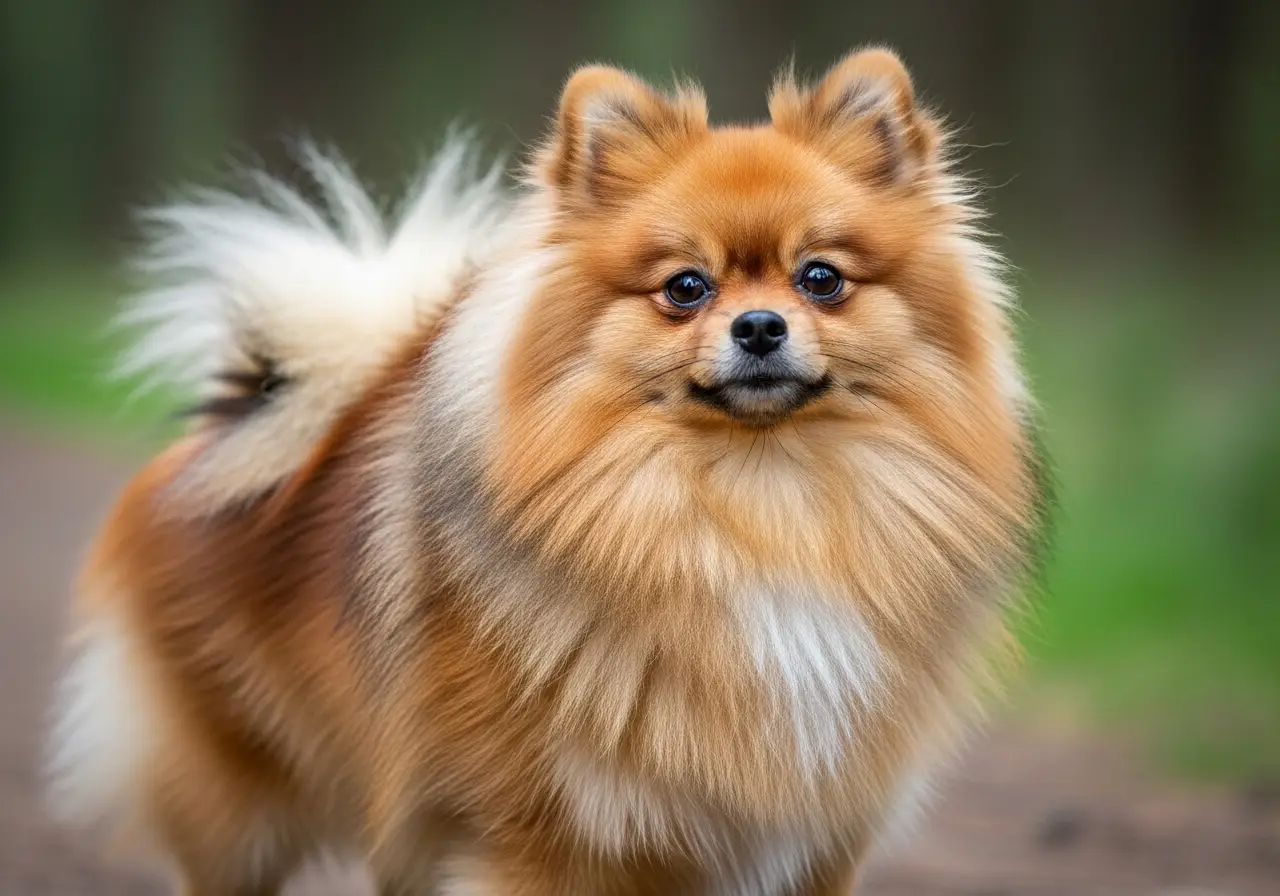
The Zwergspitz is not a lap-dog cliché, but a full-fledged Spitz in miniature format: watchful, fond of barking, closely bonded to its owner and reserved towards strangers. Anyone who plans 45 to 60 minutes of exercise, daily mental work, grooming several times a week and consistent training regarding alert behaviour obtains an attentive, eager-to-learn companion for 12 to 16 years. Anyone looking for a quiet apartment dog without training effort should decide against the breed; its trend status obscures the real demands.
02Introduction
What makes the Pomeranian special
Pomeranian: smallest Spitz variant, lively self-confident and with fluctuating breeding quality due to trend demand
03Profile
Key facts and suitability
- Origin
- Deutschland
- Original purpose
- Companion dog Watchdog
- FCI
- No. 97 · Group 5 · Section 4
- height at the withers
- 18–22 cm
- Weight
- 1–4 kg
- Life expectancy
- 12–15 Years
- Coat type
- Doppel
- Minimum exercise
- 30 min/day
- Puppy price
- 2'000–4'000 CHF
- Waiting period
- 6 months
- Sports
- Tricks Agility
04Temperament
How the Pomeranian shows up in everyday life
The Zwergspitz is a Spitz in miniature format, and that is exactly how it behaves. When the doorbell rings, it barks reliably and persistently. On your return home, it greets its primary caregiver loudly and then follows them from room to room. When left alone, it orients itself according to the familiar routine: if this is built up gradually, you can leave it alone for three to four hours without it falling into constant barking or separation stress.
Here, the dual-axis profile becomes clearly apparent: the need for social contact with its own family is high (level 4 out of 5), whereas the reaction to strangers is reserved to distant (friendliness level 2 out of 5). Do not confuse these two poles; a close bond with the owner does not mean being open to every visitor. In the park, it trots concentratedly beside the owner, sniffs at stimuli and barks at other dogs from a distance of 20 metres. It often meets large dogs with exaggerated posturing, which becomes a habit without correction.
In everyday life, it is keen to learn and remembers routines quickly. It recognises the sound of the food tin from three rooms away and stands ready at the lead on time for walks. Living together with children from about eight years old works well if they respect its small body size; it may only want to be picked up by trusted persons. The prey drive is low, but stimulus openness is high: squirrels, cyclists and joggers can throw it off balance. Those who challenge it receive an attentive, affectionate companion with a clear opinion.
05Needs
What this breed needs daily
The Zwergspitz needs around 45 to 60 minutes of exercise daily, divided into two to three walks. Due to its short legs, distance is not what counts, but rather variety: different surfaces, sniffing passages, small encounters. In heat above 22 degrees, walks should be moved to the morning and evening hours, as the dense double coat restricts heat dissipation.
Mental stimulation is at least equally important. The need for mental work is at a medium level (3 out of 5); an under-stimulated Spitz will invent tasks, usually acoustic ones. Daily training sessions of 10 to 15 minutes have proven effective: tricks, target training, search games in the apartment, food dummies, small retrieval tasks. Dog sports such as Rally Obedience, Dog Dance or Trickdog suit its eagerness to learn.
A central training point is barking behaviour. It cannot be switched off, but regulated: establish a release signal early, reward stimuli specifically when it remains calm, do not reinforce attention by picking it up or speaking to it while it is barking. Anyone who is inconsistent here will have a constant barker within a few months.
Grooming is not optional. Work through the coat two to three times a week with a coarse comb and soft brush, daily during moulting (spring and autumn). Clipping should be avoided, as the guard hair grows back irregularly afterwards (post-clipping alopecia). Check claws, teeth and anal glands weekly. Social contacts with other dogs are important but should be controlled; puppy playgroups with similarly sized partners and low-stimulus encounters with calm adults are more sensible than uncontrolled dog park encounters with large dogs.
Exercise
Low
mental work
Medium
Social needs
High
training
Medium
07Quick Check
08Suitability
Who this breed is suitable for – and who it isn't
✓Matches
The Zwergspitz suits people looking for a small, present companion dog with a clear Spitz personality and who are prepared to lead consistently. Specifically: singles, couples or families with children from eight years old, who plan at least one hour of active enrichment daily, combining exercise plus mental work. Keeping it in an apartment works provided the living situation tolerates barking behaviour (not a sound-conducting multi-unit building with sensitive neighbours). Seniors with a calm, structured routine benefit from its affectionate nature, but should be physically capable of managing grooming. An owner who avoids coddling, enforces clear rules and regulates alert behaviour from puppyhood obtains an attentive, eager-to-learn dog. Prior experience is helpful but not essential; attending a dog training school with Spitz or small dog expertise is mandatory. Anyone planning to travel with their dog will find in the Zwergspitz a cabin-compatible companion suitable for air travel, with high adaptability to changing environments.
×Doesn't match
The Zwergspitz is not suitable for households that are absent for eight or more hours daily and do not arrange care; the need for social contact with the primary caregiver is too high. Also unsuitable for people who confuse its plush appearance with a lap-dog mentality and wish to keep it as a living accessory. Anyone who underestimates the typical Spitz alert behaviour or lives in a sound-conducting rented house with conflict-averse neighbours will be unhappy with this breed. Families with toddlers under six years old should refrain: its small size makes it prone to injury, and its sensitivity to stimuli does not mesh well with unpredictable movements. Owners who equate training with harshness or, conversely, soften every rule out of pity will fail with its self-confident nature. Anyone looking for a dog for hour-long jogging sessions, bike tours or hikes over 15 kilometres is better advised to choose another breed; the small build sets clear limits.
10Line reality
Show line, working line, breeder market
With the Zwergspitz, there is no classic division into working and show lines as seen with hunting or herding dogs. Instead, three other differentiations shape the market: the FCI standard type, the American Pomeranian show type and the trend/breeder market.
The FCI standard type follows the German breed standard with a fox-like muzzle, clearly defined stop and balanced proportions. VDH breeders and the Verein für Deutsche Spitze maintain this type and place value on health examinations. These dogs appear less plush but are in better health.
The American show type, bred mainly in the USA and partly in Asia, emphasises a compact, round appearance with a denser neck ruff and shorter muzzle (the so-called teddy bear look). This line has moved away from the original Spitz phenotype and more frequently brings issues related to airways and tear flow. The FCI recognises this variant as the same breed type, while critical voices see it as creeping brachycephalisation.
The trend/breeder market produces for aesthetics: teacup sizes, extreme coat volume, merle colours (not permitted in the FCI standard). These dogs often come from mass breeding operations in Eastern Europe without health examinations. Anyone looking for a Zwergspitz should actively ask about the line, meet the parent dogs and orient themselves by the FCI standard, not by an Instagram picture.
11Health · Reality
What you need to plan for medically with your Pomeranian
The life expectancy is 12 to 16 years, with documented individual cases up to 18 years. A study of the Royal Veterinary College VetCompass database (UK, 2024) determined a mean life expectancy of 11.2 years for the Pomeranian; selection for responsible breeding lines significantly raises this value.
The most common health issues are clearly documented. Patellar luxation occurs disproportionately in small breeds; studies on Pomeranians show prevalences between 10 and 20 percent, often hereditary. The VDH/Club for German Spitzes recommends patellar examination of breeding dogs. Dental problems are nearly universal: due to the reduced jaw structure, 42 dog teeth stand in too little space, leading to early plaque and tartar formation. Daily tooth brushing and annual check-ups are standard; professional dental cleanings under anaesthesia are often necessary multiple times during a dog's life.
Tracheal collapse affects small breeds with soft cartilage; typical symptoms include coughing when pulling on the collar. A harness instead of a collar is mandatory. In extremely short-nosed breeding lines (so-called teddy bear look), respiratory problems occur, which are not breed-typical but caused by breeding practices. Other relevant topics: hypothyroidism, Alopecia X (Black Skin Disease) and open fontanelles in extremely small specimens.
Overweight is an underestimated risk in Zwergspitze. Just 500 grams too much corresponds to a weight gain of 20 percent for a 2.5-kilogram dog, comparable to 16 kilograms of overweight in humans. Prevention includes an annual vet check, patellar and heart control, dental cleaning as needed and consistent weight management.
12Structured data
Health by the numbers
Prone to diseases
Kneecap problems Tracheal problems Heart problems
Recommended health tests
Kneecap check Respiratory tract check Heart examination
13Myths ↔ Reality
What is often said incorrectly about this breed
Five myths, five realities, five sources.
The Pomeranian is an easy-to-care-for beginner dog because it is so small.
Small does not mean undemanding. The double-layered stock hair requires brushing several times a week, daily during moulting. In addition, there is the Spitz-typical alert behaviour, which quickly becomes constant barking without consistent training. Training errors due to coddling are particularly common in this breed.
A Pomeranian requires little exercise and is satisfied with short garden rounds.
The exercise requirement is 45 to 60 minutes daily, combined with mental stimulation. Spitzes are attentive and eager to learn, they are suitable for trick training, mantrailing in mini format and dog sports such as Rally Obedience. Anyone who under-challenges them receives a stimulus-sensitive barker.
The so-called Teacup Pomeranian is its own reputable variant.
There is no official teacup variety. The FCI standard specifies a height at the withers of 18 to 24 centimetres and a weight of approximately 1.9 to 3.5 kilograms. Dogs below this minimum size usually stem from selection for extreme smallness, carrying an increased risk of hypoglycaemia, tracheal collapse, open fontanelles and patellar luxation. The term is a sales label, not a quality feature.
Pomeranians only bark if they are poorly trained.
Barking behaviour is genetically ingrained in the Spitz and was desired for centuries. Training can regulate the threshold and duration, but cannot switch off the behaviour. Anyone who needs absolute quiet in a multi-storey building should plan this realistically before purchase.
14animal welfare
The animal welfare perspective
Breeder market, designer versions, animal shelter reality — what no one writes in the puppy ad.
Since around 2010, the Zwergspitz has been at the centre of a trend market that raises significant animal welfare issues. The German Animal Welfare Association regularly points to the rise in puppy imports from large-scale breeding operations in Eastern Europe. These puppies are separated from their mother too early, are often sick and poorly socialised. The buyer meets the seller on car parks or via online platforms, which may seem like a good deal but often ends up with vet bills in the four-figure range and behavioural problems that accompany the dog for its entire life.
The so-called teacup or mini variant is particularly problematic. An official variety does not exist; the FCI standard recognises only one size (18 to 24 centimetres, 1.9 to 3.5 kilograms). Dogs below this minimum size are produced through selection for underweight, often by breeding the smallest puppies together. Consequences include increased risks of hypoglycaemia, tracheal collapse, open fontanelles and bone fractures from minor falls. Anyone buying a teacup dog is funding a selection process that disregards animal welfare principles.
The trend towards the so-called teddy bear Pomeranian with a shortened muzzle and round forehead also leads in the direction of brachycephaly problems, which are alien to the breed. Shortened airways, tear duct disorders and heat intolerance are not matters of aesthetics but of quality of life. The reputable FCI standard describes a fox-like muzzle; anyone seeing photos of extremely flat-faced dogs from a breeder should avoid that line.
Adoption is an equally valid option to buying a puppy. Animal shelters and breed-specific rescue centres regularly have Zwergspitze whose previous owners underestimated the barking behaviour or grooming needs. An adult dog with a recognisable temperament can be the better choice, especially for owners who cannot or do not want to undertake puppy training. Animal welfare does not begin with accusations but with an informed decision before purchase.
15Costs · Transparency
What this breed realistically costs
Getting a dog from a reputable VDH breeder costs between 1,800 and 2,800 euros, depending on the line and region. Imports or backyard breeder offers start at 600 to 1,200 euros; the difference is paid by the owner later in vet bills, often reaching five figures over the dog's lifetime. Adoption fees from animal welfare organisations range between 250 and 500 euros.
Ongoing annual costs include food (200 to 350 euros for premium dry food or a BARF component), grooming at the dog groomer every 8 to 12 weeks (40 to 70 euros per session; those who groom themselves save here), care equipment (brushes, comb, dental care around 80 euros per year), routine vet visits with vaccination, deworming and check-up (150 to 250 euros), tax (depending on the municipality 50 to 180 euros) and liability insurance (50 to 90 euros).
Surgery insurance costs 250 to 450 euros annually and makes sense for this breed: patella surgery costs 1,500 to 2,500 euros per knee, professional dental treatment under anaesthesia 400 to 900 euros. Realistically, the owner should plan for living costs of 1,200 to 1,800 euros per year, plus a reserve fund for medical interventions. Over 14 years of life, this results in a total sum of 20,000 to 30,000 euros.
16Puppy search
What you need to consider when choosing a breeder
- The trend boom has made the Zwergspitz market confusing.
- Buyers can identify responsible breeding by several criteria: membership in the VDH/Club for German Spitzes (or a comparable FCI-affiliated body), a maximum of one to two litters per year and female dog, rearing in the home environment with socialisation to everyday stimuli, patellar examination of the parent dogs, heart check and eye examination.
- Puppies are handed over no earlier than eight to ten weeks of age, with an EU pet passport, microchip, vaccinations and pedigree.
- A responsible breeder asks counter-questions, shows the dam and accepts multiple visits.
- Warning signs: sales via classifieds portals, handover at car parks, puppies under eight weeks, missing paperwork, advertising with terms like Teacup or Mini, prices under 1500 euros for purebred puppies.
- Imports from Eastern Europe often originate from mass breeding operations with disease risks (parvovirus, giardia) and poor socialisation.
- Adoption via animal welfare organisations is an equally valid option.
- Zwergspitze regularly end up in animal shelters when barking behaviour or grooming needs have been underestimated.
- Adult dogs often already have a discernible temperament, which facilitates selection.
FAQ
Frequently asked questions about the Pomeranian
Is Pomeranian suitable for beginners?
Pomeranian is considered suitable for first-time dog owners.
Is Pomeranian a family dog?
Pomeranian is considered suitable for families with good socialisation and species-appropriate care.
How much exercise does Pomeranian need?
At least around 30 minutes of exercise per day.
Does Pomeranian suit an apartment?
With enough exercise and enrichment, Pomeranian can also be kept in an apartment.
What is the size and weight of Pomeranian?
Fully grown, Pomeranian reaches about 18–22 cm at the withers and weighs around 1–4 kg.
What is the life expectancy of Pomeranian?
The life expectancy of Pomeranian is approximately 12–15 years.
Which diseases are common in Pomeranian?
Kneecap problems Tracheal problems Heart problems
17Breed clubs
Official breed clubs in DACH
19Related
Similar breeds – and their differences
You might also be interested in


Participate
Do you have a good photo of your Pomeranian?
We are looking for expressive images for our breed profiles. Submit yours; the editorial team reviews every submission before publication.
Does this breed suit you?
Pomeranian: Heavily overbred due to fashion trend – reputable breeders test for kneecaps, heart and trachea